 Where to Eat Near Penn Station That Isn't a Chain
US Open 2026
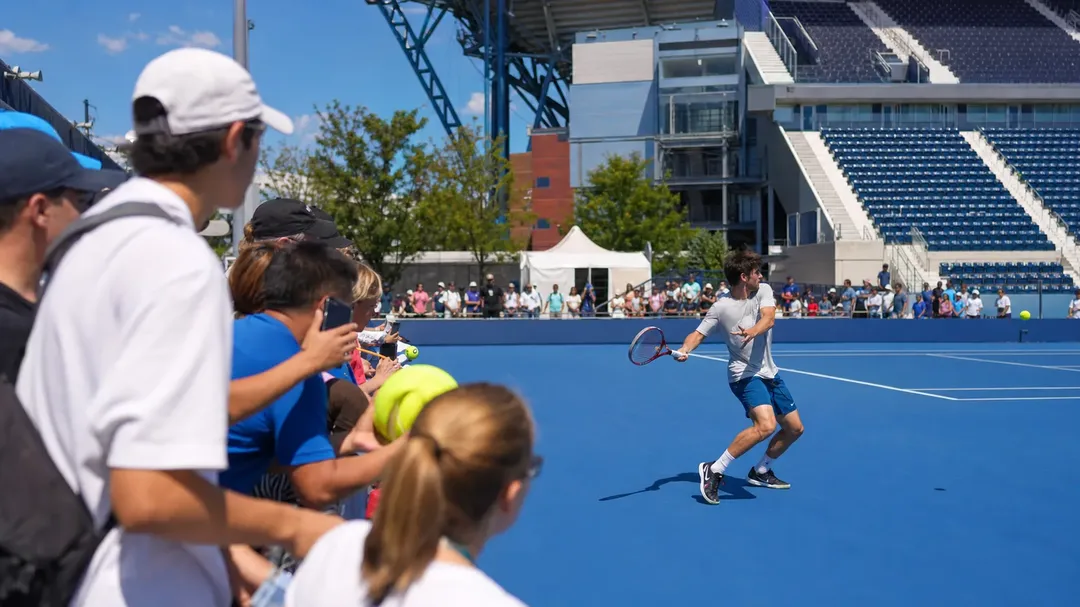
Wimbledon Breakouts Who Could Carry Momentum into the US Open
Wimbledon can reveal poise, serve confidence, and problem-solving, but New York asks whether those gains can survive a different hard-court test.
Wimbledon always creates a few new names, revived contenders, or suddenly believable second-week threats, and it is tempting to carry that excitement straight into the US Open conversation. The safer reading is to treat those results as evidence, not as a forecast. A strong run in London can show who handled grass-court points, scoreboard pressure, and the emotional weight of a major stage. It can also reveal cleaner serving patterns, sharper returns, or better problem-solving under stress. But New York asks different questions. Hard courts usually give players more reliable footing, higher-bouncing exchanges, and more chances to turn defense into offense. A player who looked fearless on grass still has to prove that the same weapons work when rallies lengthen, returns come back with more shape, and opponents can load up from the baseline. The goal is not to dismiss Wimbledon form. It is to translate it carefully.
Text Karpo Now: Tell us what matters most for Wimbledon Breakouts Who Could Carry Momentum, and Karpo can turn current US Open updates into a practical plan before you go.
Signals That Travel
The most useful Wimbledon signal is not simply winning on grass; it is how a player wins uncomfortable points. A breakout built on first-strike serving can matter in New York if the server also shows second-serve nerve, clean plus-one patterns, and the ability to steady a service game after missed chances. Grass may shorten rallies, but pressure still exposes decision-making. If a player repeatedly found the right target at deuce, mixed body serves with wider looks, and avoided panic after losing momentum, that is form with a chance to carry.
Return quality is another strong clue, especially against bigger servers. On grass, clean returns are hard because the bounce stays low and the serve can skid through the court. A player who blocks returns deep, reads tosses early, or turns defensive returns into neutral balls is showing timing rather than surface comfort alone. On hard courts, that timing can become even more valuable because returners often get a little more bounce to work with. The player still has to handle pace, conditions, and match tension, but the underlying skill is real.
- Pressure points: tiebreak composure, break-point shot selection, and calm after lost sets.
- Serve structure: not only aces, but repeatable locations and reliable second-serve patterns.
- Return depth: compact swings, early reads, and the ability to neutralize first serves.
- Physical durability: energy across multiple rounds rather than one brilliant afternoon.
Grass Clues To Discount
Some Wimbledon breakouts are real achievements but weaker predictors. Slice-heavy patterns, chip-and-charge returns, and ultra-low attacking balls can be exaggerated on grass because the surface rewards skidding contact and punishes rushed footwork. Those tools can still help on a hard court, especially as change-ups, but they are less likely to dominate entire matches by themselves. A player who lived almost exclusively on short exchanges needs more proof before fans assume the same run is coming in Queens.
Movement is the trickiest translation. Grass asks for balance, small adjustment steps, and comfort when footing is uncertain. Hard courts ask for explosive stopping, repeated recovery, and the strength to absorb heavier rallies. A grass mover who looked elegant because they stayed low and redirected pace may be tested when opponents drive higher balls into the corners. Conversely, a player who looked awkward on grass may be better suited to New York than the Wimbledon result suggests.
Fans should also be careful with draw-based conclusions. A player can beat the opponents in front of them and still benefit from matchups that fit their grass strengths. That does not diminish the result; it only limits what can be projected. Without confirmed US Open draws or matchups, the responsible takeaway is conditional: if the same serving discipline, return clarity, and emotional control appear on hard courts, the Wimbledon surge becomes meaningful evidence. If the run depended mainly on low bounces and rushed opponents, it may be more surface-specific.
Breakout Profiles To Watch
Instead of guessing future entries or draws, group Wimbledon breakouts by profile. The first profile is the power server who finally paired pace with patience. On grass, that player can look untouchable, but the New York question is whether service games remain efficient when more returns come back. Watch for body serves, kick-serve placement, and the first groundstroke after the serve. If the plus-one ball lands heavy and deep rather than rushed and flat, the game has hard-court legs.
The second profile is the all-court problem solver. This player may not lead highlight reels, but they win by varying height, pace, and direction. Wimbledon often rewards that variety, especially against opponents who dislike moving forward or handling low contact points. For the US Open, the key is whether the variety is backed by a sturdy rally ball. Drop shots, slices, and net approaches can work in New York, but they work best when the opponent first respects the baseline pattern.
The third profile is the young or newly confident baseliner who handled a major-stage atmosphere. That kind of breakout can translate because crowd noise, television attention, and scoreboard pressure are not surface-specific. Still, hard courts ask for cleaner spacing on higher balls and more endurance in neutral rallies. If the Wimbledon surge included smart shot tolerance, not just bold winners, fans have a stronger reason to keep that player on the radar.
- Power server: check second-serve protection and first forehand quality.
- All-court player: check whether variety rests on a reliable baseline base.
- Counterpuncher: check court position, not just retrieving speed.
- Young riser: check response after momentum swings and noisy environments.
New York Translation Test
The US Open is not just Wimbledon with louder nights. Hard courts can create higher bounces, more physical rallies, and more stable footing for players to load up on returns. That means a Wimbledon breakout must pass a different tactical exam. Can they defend the backhand corner when the opponent gets a full swing? Can they redirect crosscourt pace without relying on a skid? Can they finish points after three or four extra shots instead of one sharp volley or one low slice?
The best viewing habit is to separate momentum from certainty. Momentum means a player has banked confidence, useful match reps, and proof that they can solve problems under major pressure. Certainty would mean assuming the same result on another surface, which tennis rarely allows. Even confirmed Wimbledon success does not guarantee US Open participation, health, draw position, or results. Official tournament pages remain the proper place to verify player information and schedule details as the event approaches.
There is also a mental translation. A player who survived Centre Court pressure or late-round scrutiny may enter the next stretch with a different internal standard. Belief changes shot selection: the same player who once bailed out early may now trust a safer target under pressure. But belief can be fragile if early hard-court matches expose technical gaps. That is why the first hard-court performances after Wimbledon often matter less for the scoreline than for the patterns: serve locations, rally tolerance, return position, and emotional resets after mistakes.
Practical Notes
If you are planning a US Open visit, treat Wimbledon form as a watchlist tool, not a booking guarantee. Check official player information and the event schedule for confirmed details as the tournament gets closer. For scouting, practice courts can be useful when available because breakout players often reveal habits there that are harder to see in a quick match warmup: serve targets, movement comfort, and tactical emphasis. Day and night sessions can also feel different in New York, so build flexibility into your expectations. The smartest approach is to follow profiles, not promises, and let the hard-court evidence update the Wimbledon story.
Tags: #USOpen2026 #Tennis #GrandSlam #NewYorkTennis #ArthurAsheStadium #FlushingMeadows #USOpenGuide #TennisFans #SportsTravel #HardCourt #NewYork #KarpoFinds
Sources consulted: wimbledon.com — Official reference · usopen.org — Official reference · usopen.org — Official reference
All trademarks are the property of their respective owners.
Ask Karpo first
Want to know what is confirmed, when to show up, and how to make wimbledon breakouts who could carry momentum work for your day? Ask Karpo for current US Open updates, a respectful fan plan, and a live route around Flushing Meadows.
Ask Karpo for more information.
Keep reading
- Where to Eat Near Penn Station That Isn't a Chain
 Andytown Coffee in the Outer Sunset: The Snowy Plover Explained
- Best Things to Do in Chicago: What the City Gives Away