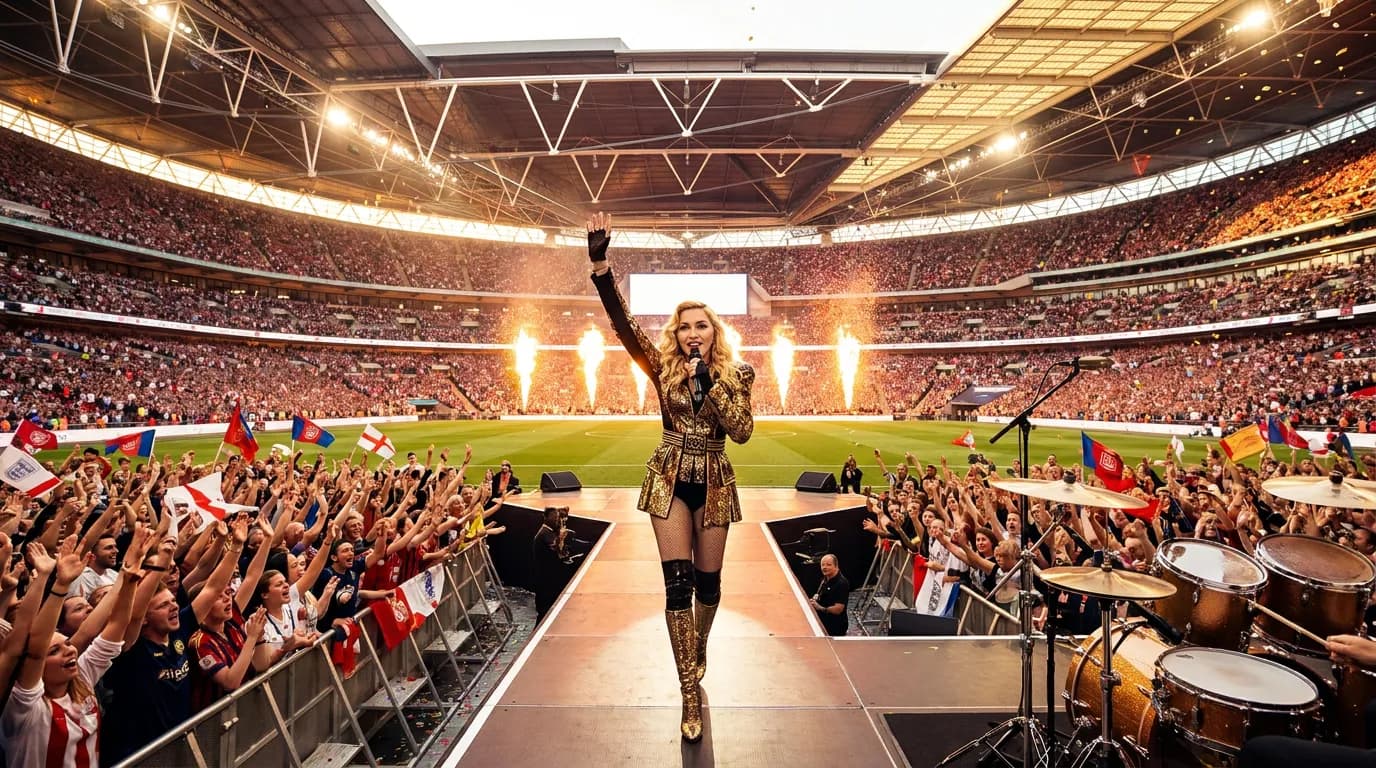
The Numbers Don't Lie
Strip away the emotion, the politics, and the post-mortem finger-pointing, and the USMNT's World Cup failure can be explained by a single statistic: the United States created 47 chances across three group-stage matches and converted just three of them. A conversion rate of 6.4 percent is the lowest of any team at the 2026 World Cup — lower than Saudi Arabia (8.1 percent), lower than Costa Rica (9.2 percent), and dramatically lower than the tournament average of 12.8 percent. Pochettino set up his team to create chances. The players failed to finish them. That is not a coaching failure. That is an execution failure.
Want the real analysis on the USMNT? Text Karpo for player ratings, tactical breakdowns, and what needs to change for American soccer.
The Missed Chances Against England
The US-England match in the group stage encapsulated the team's finishing problems. The United States created six clear-cut chances — defined by Opta as situations where the probability of scoring exceeds 30 percent — and converted zero. Christian Pulisic's miss in the 38th minute, when he shot wide from 8 yards with only the goalkeeper to beat, was the most egregious. Tim Weah's header from 6 yards, which hit the crossbar in the 61st minute, was the most unlucky. Gio Reyna's shot from the edge of the box, saved routinely by Jordan Pickford when it should have been placed in the corner, was the most representative. The US lost 1-0 to a Kane penalty. They should have won 3-1.
Defensive Errors: Self-Inflicted Wounds
If the attack was profligate, the defense was suicidal. The USMNT conceded five goals in three matches, and four of them came from defensive errors that would embarrass a college team. Against Japan, both goals originated from the same sequence: a failure to track a runner from midfield through the center of defense. Against Senegal, the decisive second goal came from a corner kick that the US failed to clear despite having a numerical advantage in the box. Pochettino's defensive system — a high press that required center-backs to play 15 meters higher than they were accustomed to at club level — was ambitious but not unreasonable. The errors were individual, not systemic.
Pulisic's Tournament: Talent Without Output
Christian Pulisic's World Cup was a microcosm of the USMNT's campaign. The AC Milan forward was consistently the team's most dangerous attacking player, completing more dribbles (17), creating more chances (11), and drawing more fouls (14) than any other US player. Yet he finished the tournament with zero goals and zero assists — the first time in his international career that he has gone three consecutive matches without a goal contribution. Pulisic's inability to convert his dominance into goals reflected a psychological burden — the weight of captaining his country at a home World Cup — that talent alone could not overcome.

The Weston McKennie Problem
Weston McKennie, the Juventus midfielder who has been a mainstay of the USMNT for five years, was arguably the team's biggest disappointment. Deployed in the box-to-box role that has produced his best club performances, McKennie completed just 71 percent of his passes (his career average is 84 percent), lost possession 23 times in three matches, and failed to make a single tackle in the match against Senegal. His performance was so far below his established level that several US commentators speculated about an undisclosed injury. McKennie denied any fitness issues, telling reporters simply: "I wasn't good enough. There's no excuse."
The System Worked — The Players Didn't
Pochettino's tactical approach at the World Cup was clear, coherent, and well-suited to the squad's strengths. His high-pressing 4-3-3, with Pulisic and Weah providing width and McKennie arriving in the box from midfield, created more chances per match (15.7) than any previous USMNT squad at a World Cup. The pressing triggers, the positional rotations, and the set-piece routines were all well-drilled and executed at a structural level. What failed was not the system but the individual decisions within the system — the missed shots, the misplaced passes, the defensive switches-off that turned good positions into conceded goals.
What Needs to Change
The USMNT's failure demands accountability, but directing that accountability at the coach rather than the players would be a mistake that compounds the original error. What needs to change is not the tactical approach but the psychological preparation. The USMNT's players have demonstrated at club level — at AC Milan, Juventus, Leeds, and across the Premier League — that they possess the technical quality to compete at the highest level. What they have not demonstrated is the ability to replicate that quality under the specific pressure of a home World Cup. The next cycle must address that gap, whether through sports psychology, increased exposure to high-pressure friendlies, or a cultural shift within the program that normalizes World Cup expectations.
Tags: USMNT, World Cup 2026 failure, Pochettino, Pulisic, McKennie, missed chances, defensive errors, analysis, home World Cup, player accountability
Sources consulted: ESPN · The Athletic · CBS Sports · Fox Sports
All trademarks, team names, league names, and player likenesses mentioned in this article are the property of their respective owners and are used here for informational and editorial purposes only.
Ask Karpo First
Want a deeper analysis of the USMNT's World Cup failure? Ask Karpo for match-by-match player ratings, a comparison of Pochettino's system to previous USMNT coaches, and the development pathway for the next generation of American players.