 Where to Eat Near Penn Station That Isn't a Chain
US Open 2026
Why the US Open Moved to Hard Courts
The US Open moved from grass to clay and then to hard courts, a surface history that explains why modern New York tennis rewards pace, resilience, and fast problem-solving.
The US Open’s hard courts are not just a backdrop for late-summer tennis in New York. They are the result of a long surface evolution that changed how the tournament looked, sounded, and played. The event’s path from grass to clay to hard courts mirrors the sport’s larger move away from a private-club image and toward a faster, more public, more physically demanding game. Surface affects everything: how high the ball bounces, how much time a returner has, whether a net-rusher can finish quickly, and how brutally a defender must move to stay alive in a rally. To understand why the US Open feels distinct from Wimbledon and Roland Garros, start with the court beneath the players’ feet.
Text Karpo for a current, low-friction plan for why the us open moved to hard courts—including timing, route checks, and practical options that fit your day.
Grass Roots at Forest Hills
The championship that became the US Open began in the 19th century and spent much of its classic identity on grass. Forest Hills, home of the West Side Tennis Club, became central to that era. Grass rewarded a game built on quick forward movement, low contact points, and short exchanges. A strong serve, a sharp first volley, and the nerve to close at the net could decide points before a baseline rally ever developed.
That surface suited the older image of tennis as a club sport. It also placed real limits on the kind of tennis spectators saw. Grass can play unevenly as a tournament wears on, especially near the baselines and service boxes. The ball often stays low, which makes it harder for players to create heavy topspin or reset the point from defensive positions. As rackets, training, and professional tactics changed, the grass-court version of the American championship began to feel less connected to the courts on which many Americans actually learned the game.
The contrast mattered. Across the United States, recreational tennis was spreading on public hard courts, school courts, and municipal facilities rather than manicured grass lawns. The national championship still carried prestige, but its surface no longer fully reflected the sport’s expanding base. That tension helped set up the tournament’s willingness to experiment.
The Brief Clay Experiment
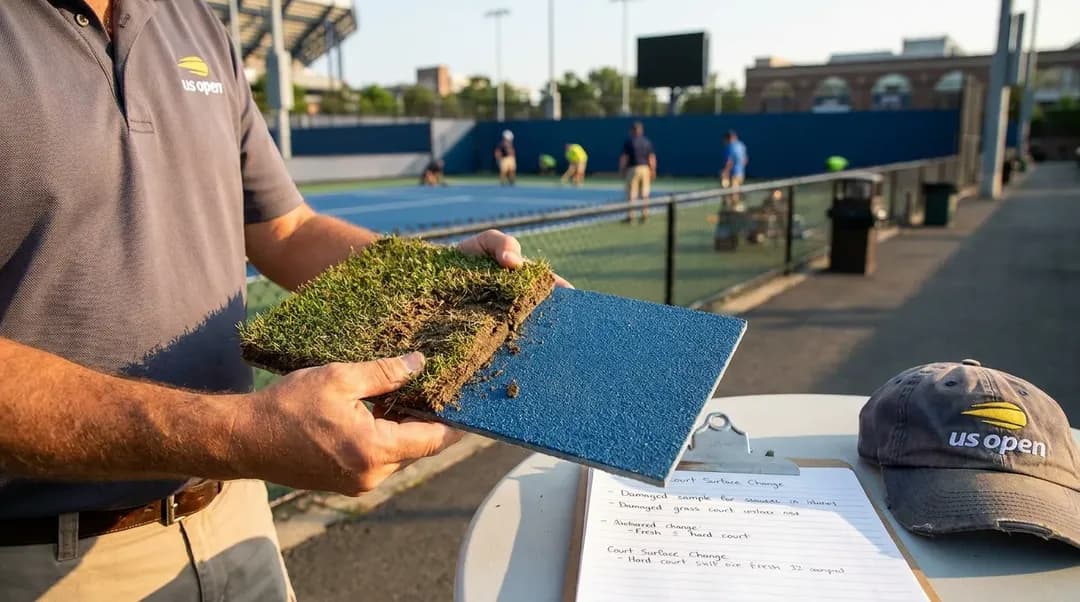
In 1975, the tournament moved from grass to clay at Forest Hills. The change lasted through 1977, making it a short but important chapter. Clay asked completely different questions of players. It slowed the ball, raised the bounce, and gave defenders more time to build points. Instead of rewarding only the fastest path to the net, it made patience, construction, balance, and endurance more visible.
The clay years proved that surface could reshape the championship’s competitive identity. Players who thrived on longer rallies gained more room to work. Attackers had to choose their moments with greater care. Spectators saw more extended exchanges and a different rhythm from the grass era. The shift also showed that tradition was not immovable: the American major could change its court and, with it, the kind of tennis it encouraged.
Still, clay did not become the tournament’s permanent home. It offered variety, but it did not solve every practical or symbolic problem. The US championship needed a durable surface for a growing event, and it needed an identity that felt native to American tennis rather than borrowed from European red-clay culture. The brief clay period became a bridge between Forest Hills tradition and the hard-court future in Queens.
Why Hard Courts Took Over
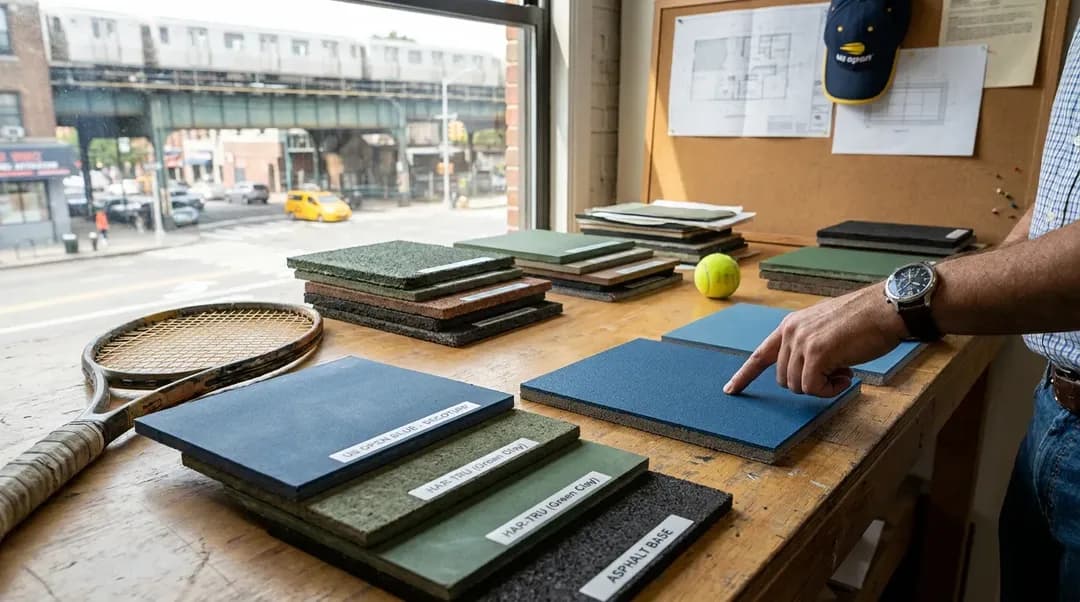
The decisive break came in 1978, when the tournament moved to the USTA National Tennis Center in Flushing Meadows and adopted hard courts. That move joined surface, scale, and city in one transformation. The event left the more enclosed world of Forest Hills for a larger Queens venue, and the new court surface matched the change. Hard courts were practical for a major tournament, familiar to American players, and aligned with the public-court culture that had shaped the sport’s growth across the country.
On court, the choice created a compelling middle ground. Hard courts do not play like grass, where the ball can skid low and points can disappear in a flash. They also do not play like clay, where the surface gives players more time to slide, recover, and extend patterns. A hard court offers a truer bounce and enough speed to reward aggressive serving, bold returning, and early ball-striking. At the same time, elite defenders can still absorb pace, change direction, and turn a point around.
- Grass favored low bounces, short exchanges, and fast net attacks.
- Clay encouraged patience, higher contact points, and longer rallies.
- Hard courts blended pace and predictability, giving both attackers and defenders a route into the match.
That blend helped define modern US Open tennis. The surface rewards first-strike power, but it does not reduce the sport to serving alone. Returners can take the ball early because the bounce is reliable. Baseliners can redirect pace because the court gives them a consistent platform. All-court players can move forward when they earn the chance, but they must still defend explosively if the opponent finds depth. The result is a style built on quick decisions rather than one narrow tactic.
How Queens Shaped the Game
Flushing Meadows changed more than the footing. It changed the tournament’s civic meaning. The US Open became a New York event in the fullest sense: loud, compressed, restless, and built around momentum swings. Hard courts fit that atmosphere because they feel like city tennis elevated to a major stage. They echo the surfaces in parks and schoolyards, even while the stadium setting is far more polished and intense.
The surface also shapes how fans read a match from the stands. A four-shot point may look simple, but on hard courts it often reveals a chain of pressure. Did the serve pull the returner wide enough to open the next ball? Did the return land deep enough to block the server’s first strike? Did the defender recover through the center before changing direction? Because the bounce is dependable and the court is quick enough to punish hesitation, intentions become easier to see.
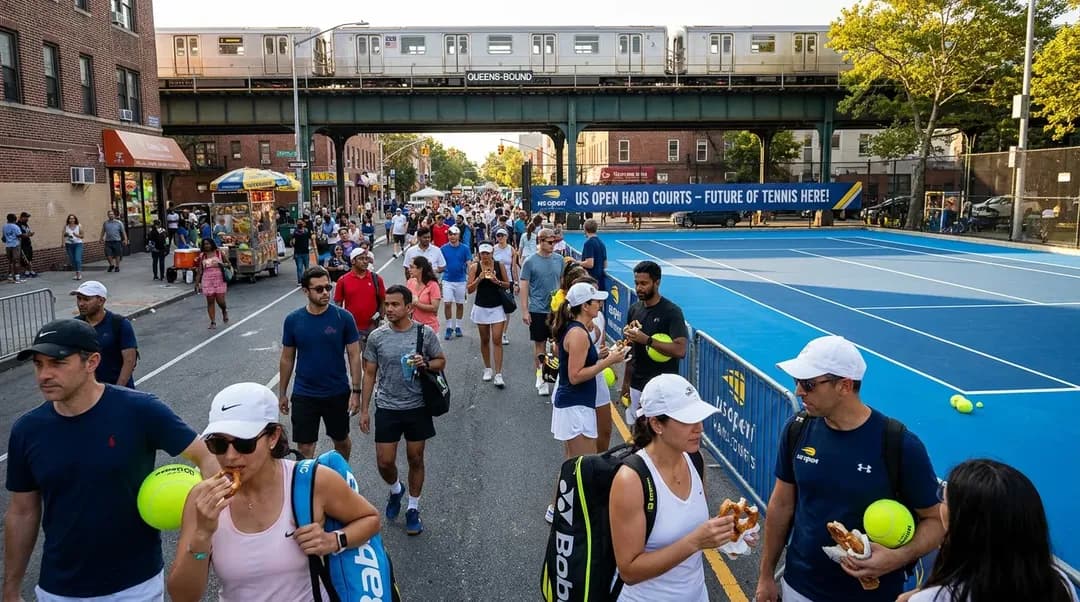
That is why the US Open’s hard-court identity feels different from the other majors. Wimbledon’s grass emphasizes tradition, precision, and the value of taking time away. Roland Garros’ clay emphasizes patience, spin, and repeated physical problem-solving. New York’s hard courts emphasize impact under pressure. They give a big hitter room to impose, but they also give a great mover enough traction to counterpunch. The best points often turn when one deep, central ball prevents an opponent from attacking cleanly.
The influence extends beyond the main stadiums. Generations of American players have built games on hard courts, where the serve, return, first forehand, backhand tolerance, and recovery step all matter. The US Open’s surface made the national championship feel connected to that pathway. It did not imitate another tennis culture; it turned a common American playing surface into the defining stage of the country’s Grand Slam.
Practical Notes
For “Why the US Open Moved to Hard Courts,” the useful 2026 calendar anchor is August 23 through September 13, with singles main-draw play beginning August 30. Before travel, use the official schedule and visit information because event details can change. Before acting on “Why the US Open Moved to Hard Courts,” recheck the official security page; its current limit is one searchable bag per guest, no larger than 12 by 12 by 16 inches.
For watching the tennis itself, use the surface history as a guide. From higher seats, track depth, recovery, and court position rather than only winners. Notice how often a hard-court rally turns on the first neutral ball after the serve and return. That is the legacy of the US Open’s move to hard courts: a tournament built for speed, adaptation, and pressure in New York.
Tags: #USOpen2026 #Tennis #NewYork #Queens #FlushingMeadows #USOpenGuide #TennisFans #SportsTravel #NYCEvents #HardCourt #KarpoFinds #Karpo
Sources consulted: usopen.org — Official reference · usopen.org — Official reference · usopen.org — Official reference
All trademarks are the property of their respective owners.
Ask Karpo first
Want to know what is confirmed, when to show up, and what is actually open to the public? Ask Karpo for the latest US Open updates and a practical New York plan for why the us open moved to hard courts.
Ask Karpo for more information.
Keep reading
- Where to Eat Near Penn Station That Isn't a Chain
 Andytown Coffee in the Outer Sunset: The Snowy Plover Explained
- Best Things to Do in Chicago: What the City Gives Away