 Haaland Has Seven Goals and Norway Runs Entirely Through Him
⚽️2026 FIFA WORLD CUP
When Does a World Cup Final Use Penalty Kicks
A World Cup final can reach penalty kicks only after regulation and extra time fail to separate the teams. The rule is simple, but the timing matters for anyone following the biggest match from East Rutherford, New York City, or anywhere in North America.
Penalty kicks are one of the most dramatic endings in soccer, but they are not available just because a final is close, tense, or tied late in regulation. In a knockout World Cup final, the match first runs through the standard game period, then moves to extra time if the score is level. Only if the teams are still level after extra time does the contest proceed to kicks from the penalty mark. For fans asking how many minutes in a soccer game before penalties can happen, the answer depends on whether regulation and extra time have both been exhausted.
Text Karpo before or after the final and get a personalized recap, viewing plan, celebration route, food idea, or city plan built around where you are watching in the New York City area or beyond.
The Short Answer: Penalties Require a Tie After Extra Time
A World Cup final uses penalty kicks only when the score is still level after extra time. The match does not jump from the end of regulation straight into a shootout unless the competition rules specifically say so, and a World Cup final does not work that way. The final is a knockout match, so it must produce a winner. If regulation ends level, the next step is extra time, not penalties. Penalties become available only after that added playing period also fails to decide the match.
That distinction is important because many fans use “penalties” as shorthand for any late-game decider, but the laws and competition format are more precise. Kicks from the penalty mark are a tie-breaking procedure used after the match itself has run its required course. They are not the same as a penalty kick awarded during play for a foul in the penalty area. In a final, the shootout is the final method for determining a winner when ordinary play and extra time cannot do it.

Regulation Comes First in the Final
The first phase is regulation, the normal playing time of the match. When people search how many minutes in a soccer game, they are usually asking about this standard structure: two halves of 45 minutes, with stoppage time added as required by the referee. In a final, the result at the end of regulation matters, but it is not automatically the end of the decision process if the score is level. A tied final after regulation continues because the trophy cannot be shared.
If one team leads at the end of regulation, the final is over and no extra time or shootout is needed. If the score is level, the match proceeds to extra time under the knockout format. That extra step prevents penalty kicks from being used too early. Fans watching in East Rutherford, around New York City, or across North America should remember that a tied score at 90 minutes plus stoppage time is a trigger for more soccer, not an immediate trigger for a shootout.
Extra Time Is the Gatekeeper Before Kicks
Extra time is the gatekeeper between a tied regulation score and a possible shootout. It gives both teams an additional period to settle the final through open play, set pieces, or any legal goal before the match reaches the last resort of kicks from the penalty mark. If either team is ahead when extra time ends, that team wins the final. The match does not continue into penalties simply because it was tied earlier or because the margin is narrow at the end.
This is the key eligibility test: are the teams still level after extra time is complete? If yes, the final proceeds to kicks from the penalty mark. If no, the final is decided without a shootout. The rule is not based on momentum, chances created, possession, crowd noise, or how late the decisive goal arrived. The scoreboard after extra time is the relevant condition. A lead at that point closes the door on penalties, even if the match felt destined for them.
The 2026 Final Example in One Paragraph
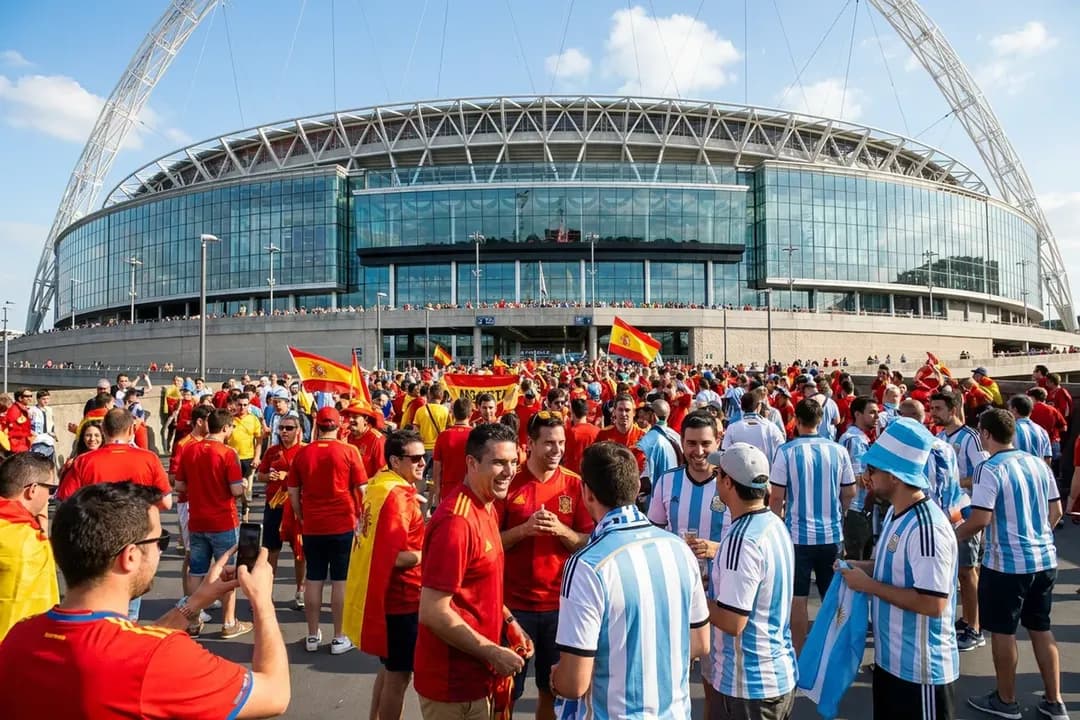
In the confirmed 2026 final example, Spain led Argentina 1-0 at the end of extra time after Ferran Torres scored in the 106th minute, so no shootout occurred. That single fact illustrates the rule cleanly: because the score was not level when extra time ended, kicks from the penalty mark were not needed. The final had reached the extra-time stage, but it did not meet the final condition for penalties. A winner had been established before the shootout procedure became eligible.
This example should not be read as meaning any extra-time goal automatically prevents penalties by itself. What matters is the score when extra time is finished. A team can score during extra time and still later be brought level before the end, in which case a shootout would still be possible. The decisive question is always the same at the final whistle of extra time: are the teams tied? If they are, penalties follow. If one side leads, the final ends there.
What Penalty Kicks Are, and What They Are Not
Kicks from the penalty mark are a post-match tie-breaker used to determine which team advances or wins when required by the competition format. In a World Cup final, they serve as the final decision method after regulation and extra time end level. They are organized separately from the flow of normal play, even though they use the penalty mark and the same goalmouth setting. Their purpose is not to add more match time, but to produce a winner after the playing phases have failed to separate the teams.
They should not be confused with in-game penalty kicks, which can be awarded during regulation or extra time for specific offenses. An in-game penalty can happen at almost any point if the referee awards it, and it counts like any other goal opportunity within the match. A shootout, by contrast, happens only after the match phases are complete and the score remains level. That is why a final can include an in-game penalty and still never reach a shootout, or reach a shootout without any in-game penalty being awarded.
A Simple Fan Checklist for the Final Whistle
Use a three-step checklist when watching the final. First, check the score at the end of regulation. If one team leads, the final is decided. If it is level, go to step two: extra time. At the end of extra time, check the score again. If one team leads, there are no penalty kicks. If the score is still level, then and only then does the final move to kicks from the penalty mark to determine the champion.
This checklist keeps the drama understandable without overcomplicating the rule. A World Cup final is designed to find a winner through regulation first, extra time second, and penalties only as the final tie-breaker. For fans planning a watch party, a late dinner, or a celebration near New York City, the practical takeaway is simple: a tied match after regulation may extend the night, but a shootout is possible only if extra time also ends tied. The scoreboard after extra time decides eligibility.
Tags: #WorldCup2026
Sources consulted: IFAB Laws of the Game · Associated Press final report · FIFA final hub
All trademarks are the property of their respective owners.
Ask Karpo First
Ask Karpo for a personalized World Cup final recap, post-match celebration plan, food stop, viewing guide, or New York City-area itinerary based on how the match ends.
Ask Karpo for more information.
Keep reading
- Haaland Has Seven Goals and Norway Runs Entirely Through Him
 World Cup Trophy Ceremony Timing Medals and Postmatch Celebrations
 Olise and France's Attack: The Semifinal Tactical Question