New York's work culture has spent decades glorifying speed. Lunch breaks have shrunk from the sacred hour that previous generations defended into desk-side scarfing sessions where workers scroll emails between bites. That rhythm makes sense in Midtown, where efficiency is the currency. But Queens operates on different logic. The borough's dining landscape—built by immigrant communities who own the majority of local businesses and speak over 160 languages—wasn't designed for tourists checking boxes. It was built for neighbors who return weekly, for multi-generational tables that linger, for meals that double as social infrastructure. Trying to hit three different cuisines in one evening might sound like maximizing your cultural exposure, but it actually minimizes your ability to notice what makes each place matter beyond the food on your plate.
Text Karpo to build a Queens dining plan that prioritizes depth over speed, with timing and transit logic that matches how locals actually use the borough.

The Industrial Logic That Doesn't Apply Here
The American lunch hour was once a real break where workers sat down, talked to each other, and actually tasted their food. That model collapsed under pressure from employers who saw meal breaks as interruptions to productivity. Today's workplace culture treats eating as a task to optimize rather than an experience to protect. The lunch paradox is real: workers acknowledge that breaks boost productivity and well-being, yet most skip them anyway. That tension between management control and worker autonomy has shaped how Americans think about meals for over a century, dating back to the industrial revolution when lunch breaks first became a negotiated right rather than a natural rhythm.
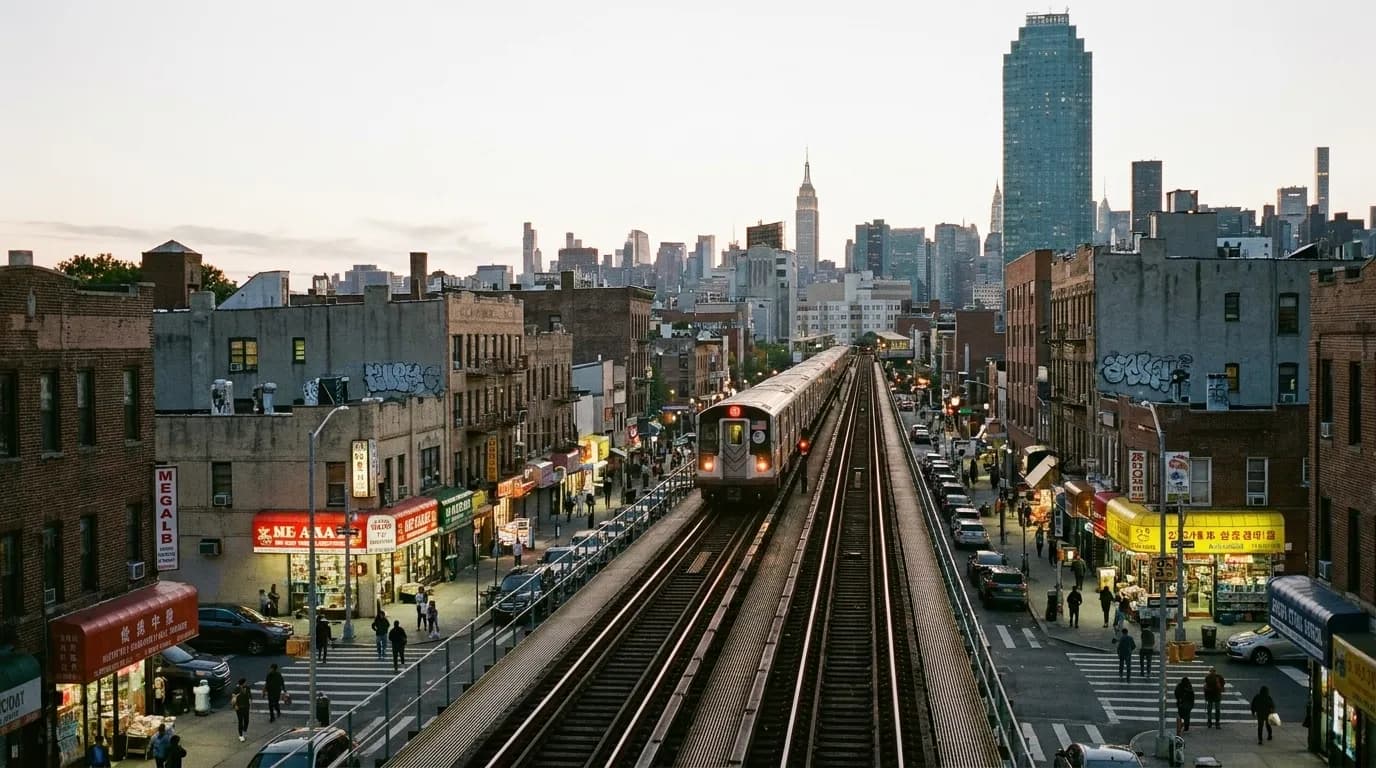
Queens didn't develop under that framework. The borough's restaurant economy grew from family-run operations where the owner's mother might be cooking in the back, where regular customers are greeted by name, where the menu assumes you'll ask questions. Feasting along the 7 line—the elevated subway that connects Flushing to Times Square—means entering dining rooms where half the customers were born outside the United States and where business ownership reflects the neighborhood's demographic reality rather than corporate consolidation. Applying Manhattan's efficiency model here misses the point. You're not optimizing a lunch break. You're entering a social space that operates on different assumptions about what a meal is supposed to accomplish.
What One Long Meal Actually Reveals
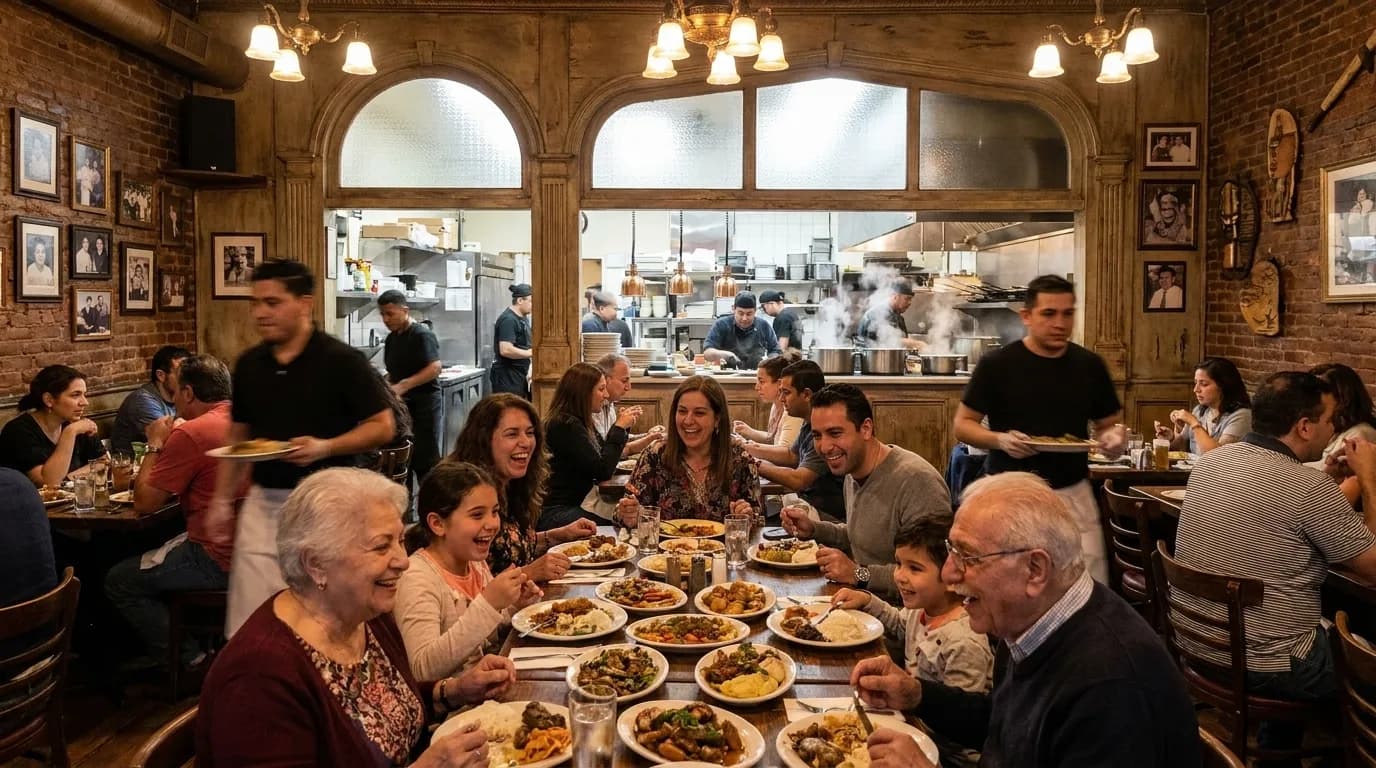
Sitting through a full meal in Queens gives you time to notice patterns that three quick stops will obscure. You see who else is eating there and when they arrive. You watch the kitchen's rhythm during a rush versus a lull. You overhear conversations in languages you may not speak but can still read for tone and context. You notice which dishes get ordered most often, which tables get the banchan or pickles without asking, which regulars bypass the menu entirely. These observations aren't tourism—they're the texture of neighborhood life that only becomes visible when you're not rushing to the next location.
The lost art of long dinners isn't about nostalgia. It's about creating space for the social connections and mindfulness that fast eating actively prevents. When you commit to one restaurant for two hours, you give the staff permission to pace the meal properly. You give yourself permission to order a second round of something you liked, to ask about a dish you saw at another table, to let the conversation drift beyond the food itself. In a borough where nearly half of residents own their homes—a rarity in New York City—restaurants function as living rooms for people whose actual living rooms are too small to host. You're not interrupting that dynamic when you stay for one long meal. You're briefly joining it.
The Three-Stop Problem
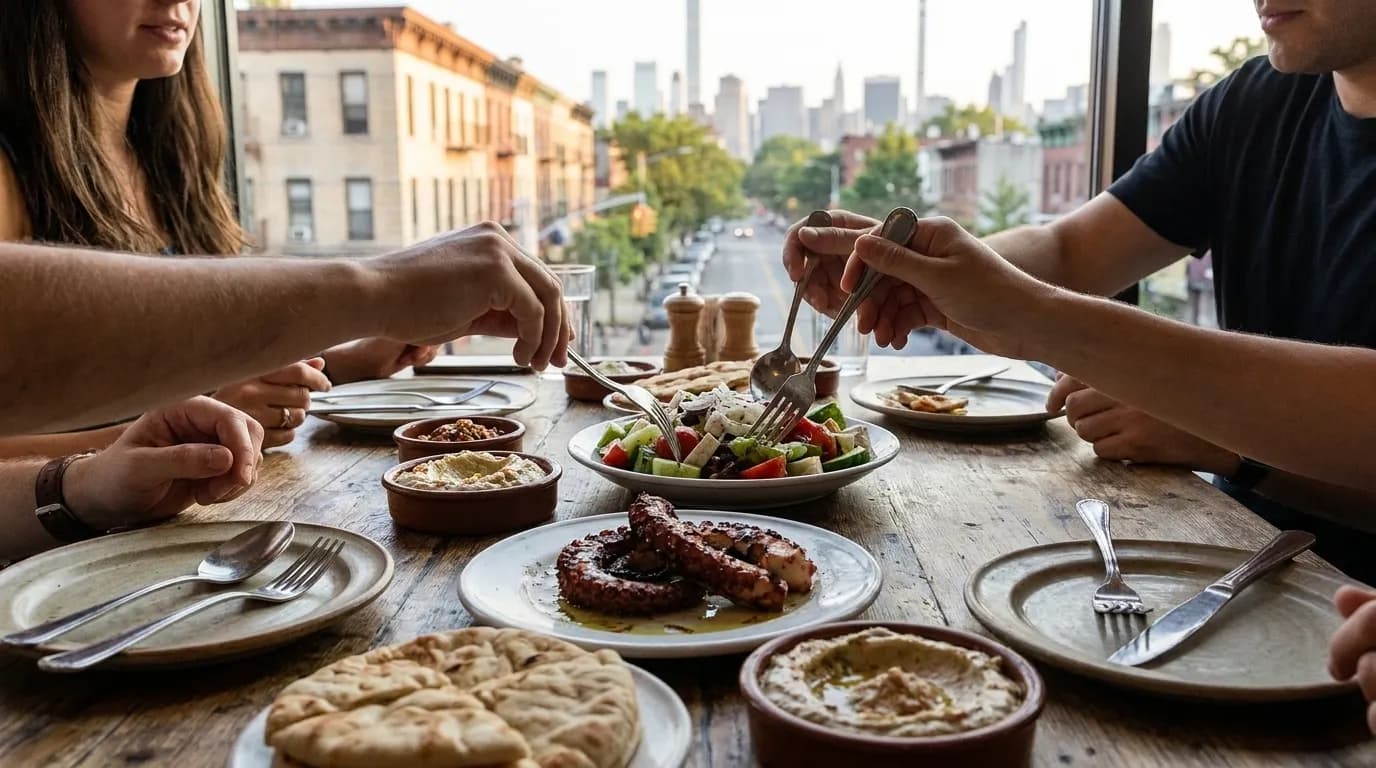
The impulse to hit multiple cuisines in one outing makes sense on paper. Queens offers more linguistic and culinary diversity than any other municipality on earth, so why not sample widely? But the logistics undermine the goal. Moving between neighborhoods means subway transfers, wait times, and the cognitive load of reorienting yourself to a new commercial strip every forty minutes. You arrive at each restaurant already thinking about the next one. You order quickly, eat quickly, and leave before the kitchen has shown you what it does best. The meal becomes a transaction rather than an experience.
There's also a practical problem with appetite management. Three stops means three appetizer-sized portions, which sounds reasonable until you realize you're never quite satisfied and never quite hungry. You're in a perpetual state of partial fullness that makes it hard to appreciate any single dish on its own terms. Meanwhile, the restaurants you're visiting were designed for full meals—the menu's internal logic, the way flavors build across courses, the assumption that you'll have rice or bread or noodles anchoring the experience. Ordering one item and leaving disrupts that logic for you and creates awkward table turnover pressure for the staff. You end up being the customer everyone tolerates but nobody enjoys serving.
How to Structure a Slow Queens Meal
Start by choosing a neighborhood rather than a cuisine. Flushing's Chinatown, Astoria's Greek and Middle Eastern corridor, Jackson Heights' South Asian and Latin American blocks—each area has enough density that you can make a game-time decision based on what looks busy when you arrive. Aim to sit down between 6:30 and 7:30 PM on a weeknight, when the dinner rush is building but tables are still available. Weekends require more flexibility; some family-run spots get slammed after religious services, while others stay quiet until 8 PM. Check subway service alerts before you leave, especially on the 7, E, F, M, N, and R lines that serve Queens' densest dining corridors.
Once you're seated, order in waves rather than all at once. Start with two or three dishes, see how they land, then add more based on what you're enjoying and how hungry you still are. This approach works better than the American habit of front-loading the entire meal into one order. It also signals to the kitchen that you're planning to stay, which often results in better pacing and occasionally in off-menu suggestions. Bring cash as a backup even though most places now take cards—some of the best spots still prefer cash for smaller checks, and ATM hunting disrupts the meal's flow. If you're dining solo, a seat at the counter or bar usually offers better sightlines into the kitchen and more natural opportunities for conversation with staff than a table for one.
Practical Notes
- Target 6:30–7:30 PM on weeknights for the best balance of energy and availability; weekend timing varies by neighborhood religious schedules
- Check MTA service alerts for the 7, E, F, M, N, and R lines before leaving—weekend construction can add 20+ minutes to your trip
- Bring cash as backup even if you plan to use a card; some smaller operations still prefer cash for checks under $30
- Order in two or three waves rather than all at once; this signals you're staying and often improves kitchen pacing
- Solo diners should request counter or bar seating when available—better sightlines and easier conversation with staff
- Plan for 90–120 minutes from arrival to departure; anything shorter defeats the purpose, anything longer requires a weeknight with flexible morning commitments
- If a place is empty at 7 PM on a Friday, that's usually a signal rather than an opportunity—trust the neighborhood's judgment
The case for slow eating in Queens isn't about rejecting efficiency everywhere. It's about recognizing that some experiences require time to reveal themselves, and that the borough's dining culture was built by people who understand that distinction. Convenience culture has convinced Americans that faster and easier always leads to better outcomes, but a single unhurried meal in Flushing or Jackson Heights will show you the limits of that logic. You'll eat better, spend roughly the same amount of money, and leave with a clearer sense of what makes the neighborhood tick than any three-stop sprint could provide. The question isn't whether you have time for a long meal. It's whether you're willing to structure your evening around one.
Tags: #queens #queensfood #slowfood #7train #flushing #astoria #jacksonheights #nycfood #longmeal #diningculture #localnyc #queensculture #newyorkeats #boroughlife
Sources consulted: Convenience Culture: Why Convenience Isn't Always Better · Queens - Feasting Along the 7 Line | Food and the Fabulous · When America Actually Stopped Working to Eat: The Lost Hour That Made ... · Where to Eat and Drink in Queens: A Local's Guide - Serious Eats · The Lost Art of Long Dinners: Why We Need to Reclaim Our Mealtimes - Medium · 'It breaks an employer's control': the tragic disappearance of the ...
All trademarks are the property of their respective owners.