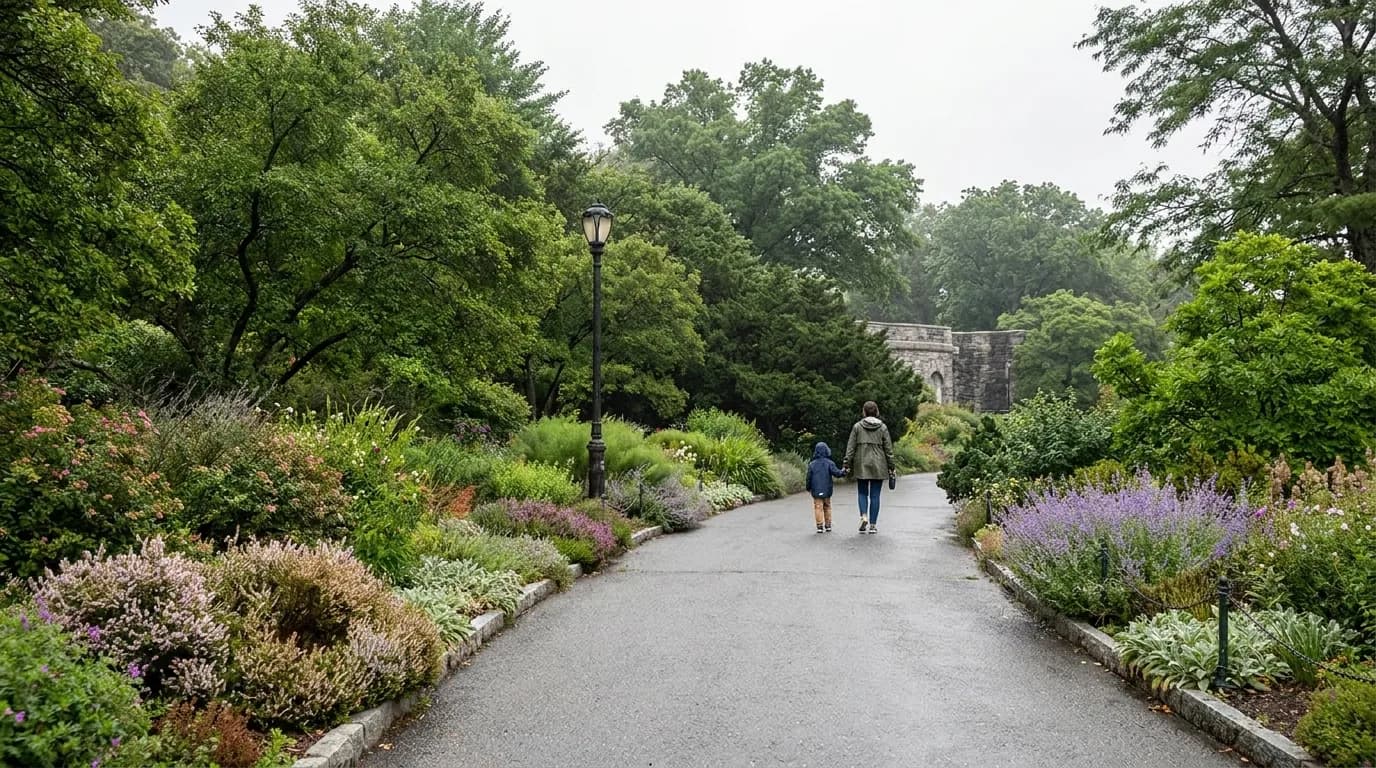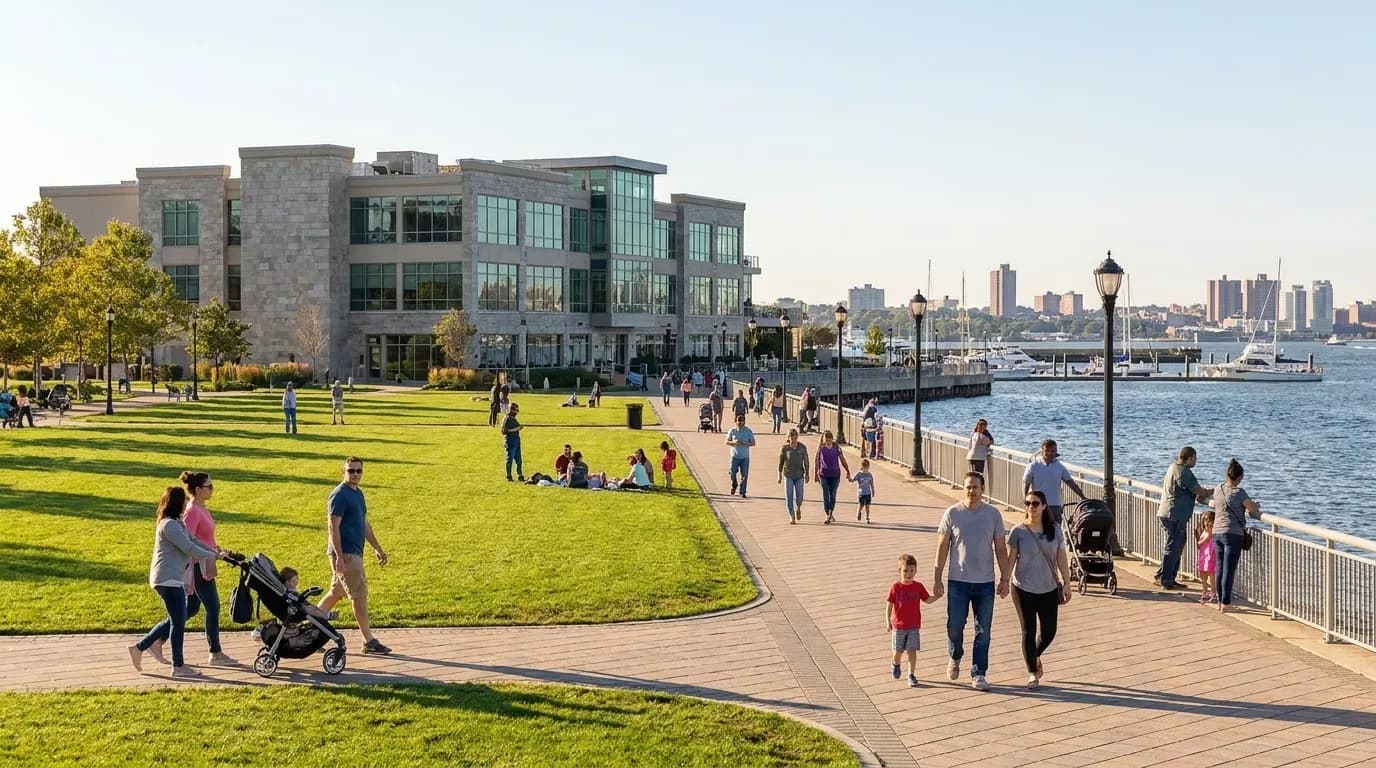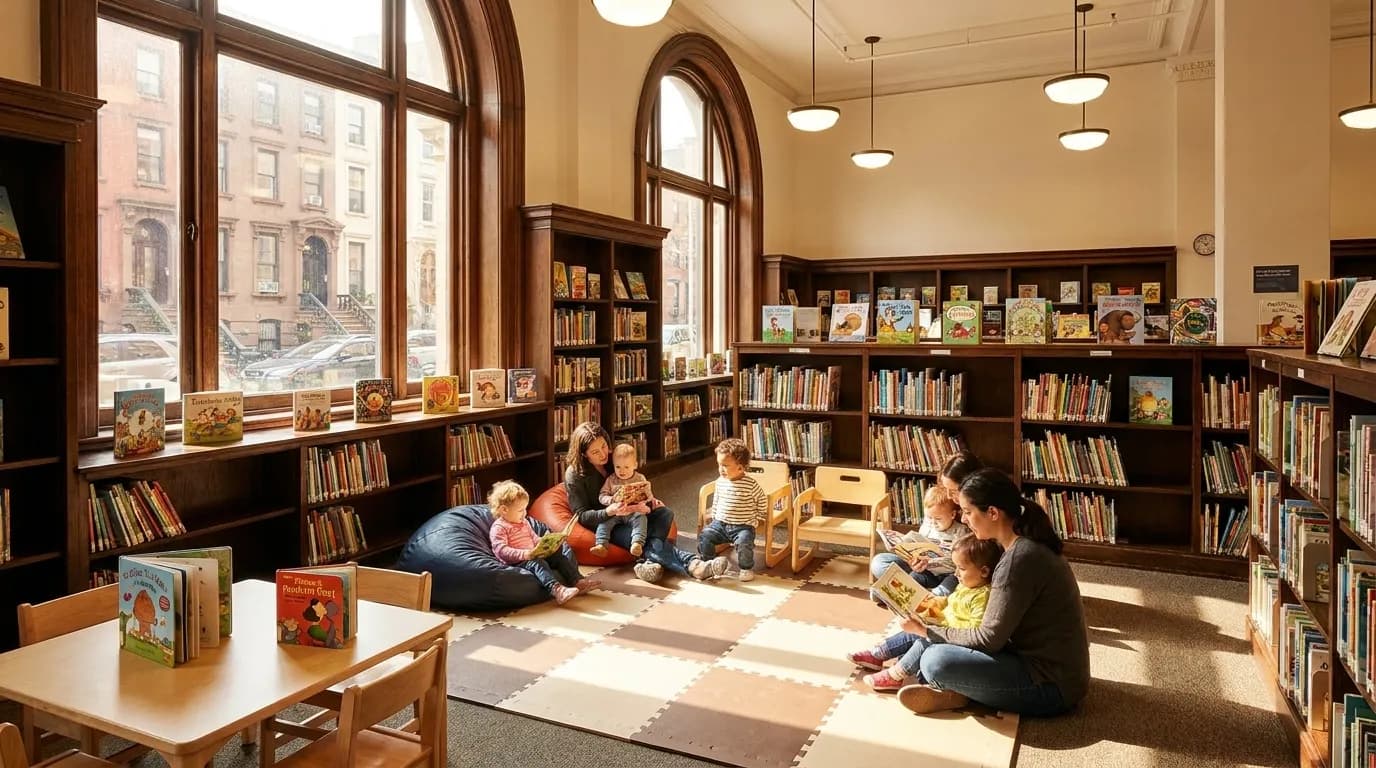
The shift is quiet but unmistakable: parents who once mapped multi-borough days around museum memberships and playground crawls are now building weekends around a single library branch and a nearby bakery. It's not about lowering expectations—it's about raising reliability. New York City's three public library systems now offer Sunday service at more than thirty branches, a funding increase announced in 2025 that turned the weekend into a seven-day access window. Pair that with no-application summer reading programs, free meals at participating branches through September, and the fact that a library card unlocks museum admission via Culture Pass, and the value proposition becomes hard to ignore. The format works because it bends: if a toddler melts down, you're ten minutes from home; if it rains, you're already indoors; if someone skips a nap, the bakery reward still delivers.
Text Karpo at (332) 334-2527 for a list of Sunday-open branches near your apartment, plus bakeries within a five-minute walk that handle strollers and short attention spans.

Why the Small Loop Works Better Than the Big Day
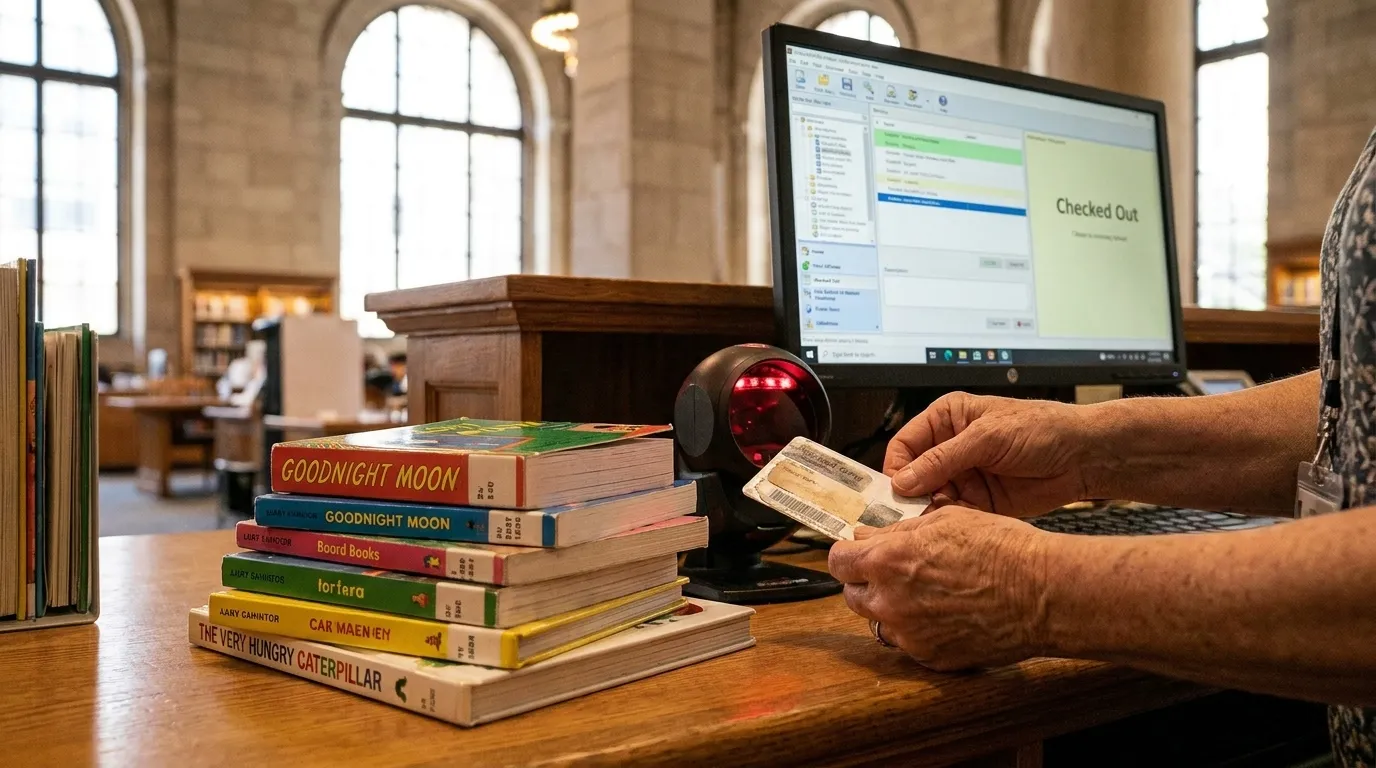
The appeal isn't novelty—it's predictability. A library visit takes forty-five minutes to an hour if you let kids browse the picture-book bins, grab a board book from the early-reader shelf, and spend ten minutes at a puzzle table. That leaves energy for a bakery stop, a fifteen-minute walk home, and an on-time nap. Compare that to a day at a children's museum, where entry queues, crowded exhibits, and the pressure to justify a timed ticket often mean you're negotiating meltdowns by 11 a.m. and abandoning plans by noon. The library loop eliminates those variables. You're not committed to staying; you're not racing a closing time; you're not spending thirty dollars before you've decided whether your kid is actually interested.
The expanded Sunday schedule makes this format viable for working parents who can't manage weekday story hours. As of mid-2025, branches offering seven-day service include locations in Jackson Heights, the Bronx, and across Brooklyn, with the City Council securing fifteen million dollars in additional operating support for fiscal year 2026. That funding translates to consistent weekend hours, which means you can build a routine rather than checking the calendar every week. The routine itself becomes the draw: your child knows the route, recognizes the librarian, anticipates the almond croissant. Repetition builds confidence, and confidence makes outings smoother.
What the Library Actually Offers Beyond Books
Every branch runs a coordinated Summer Reading program with no lottery and no application—just show up with your library card. The program, managed across the New York Public Library, Brooklyn Public Library, and Queens Public Library systems, includes free museum passes through Culture Pass and access to Summer Meals at participating branches from late June through early September. That means a Saturday morning at the library can include a snack, a new picture book, and a reserved pass to the Brooklyn Children's Museum or the Intrepid, all without advance planning. The meal program is open to all children eighteen and under, requires no identification, and asks no questions about immigration status, making it a practical fallback for families managing tight grocery budgets during school breaks.
Beyond summer, the library functions as a technology hub. Branches offer free computer access, printing, and Wi-Fi, which matters when you need to print a camp form or let an older sibling finish homework while a younger child plays in the early-learning area. Story hours, LEGO clubs, and craft sessions run year-round, though schedules vary by branch—check your local calendar rather than assuming weekend programming. The City Council has also pushed for expanded childcare integration, with Speaker Adrienne Adams outlining plans in early 2026 to treat libraries as multi-purpose civic centers. That vision hasn't fully materialized yet, but the direction is clear: libraries are being funded and designed as stable, repeatable resources rather than occasional destinations.
How to Pick Your Branch and Bakery Pair
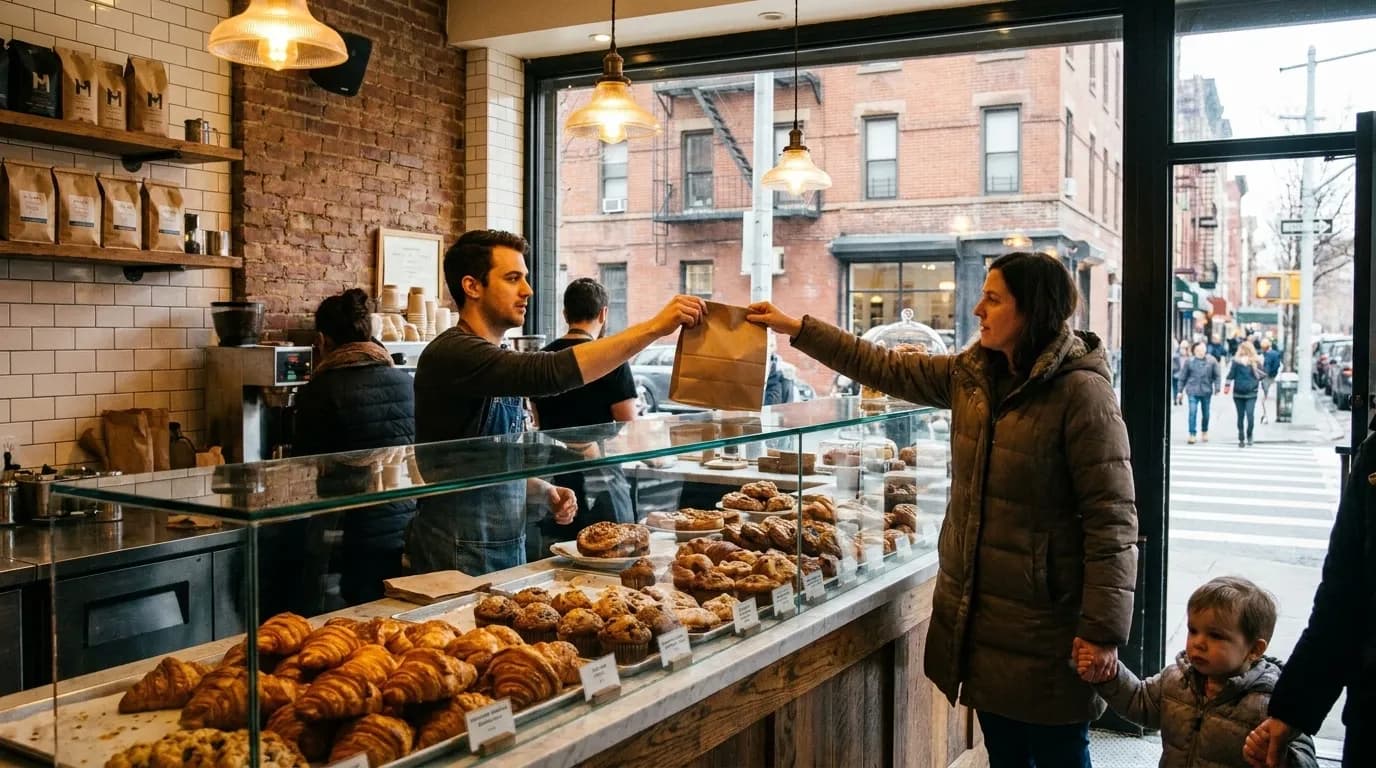
Start with Sunday availability. Not all branches offer seven-day service, so confirm hours on your system's website—NYPL, BPL, or QPL—before planning a weekend visit. Prioritize branches within a fifteen-minute walk or a single subway stop from your apartment; the goal is to make this loop so low-friction that you'll actually repeat it. Once you've identified your branch, map bakeries within a five-minute radius that can handle a stroller and won't flinch at a toddler dropping crumbs. Look for counter service rather than table service, since you'll want to grab a pastry and leave rather than negotiating a sit-down meal with a restless three-year-old.
Test the route on a weekday morning if possible. Walk it with your stroller to confirm sidewalk width, crosswalk timing, and whether the bakery door requires wrestling a double-wide frame through a narrow entrance. Check whether your branch has a dedicated early-learning area with foam mats and board books, or whether picture books are mixed into general stacks—some kids do better with a contained play zone, others prefer roaming. If your branch runs weekend story hours, note the schedule but don't make it the anchor of your visit; story hours are great when they align with your timing, but they're not worth forcing a schedule around. The flexibility to arrive at 10 a.m. or 11 a.m. and still have a successful visit is the entire point of this format.
When to Expand the Loop and When to Keep It Tight
The library-and-bakery plan works best when you resist the urge to add complexity. If your child is engaged and the weather cooperates, you can extend the outing with a fifteen-minute playground stop or a walk through a nearby park, but treat that as a bonus rather than a requirement. The loop's strength is its modularity: you can complete it in ninety minutes or stretch it to two and a half hours depending on mood, nap schedules, and whether someone woke up at 5:30 a.m. and is already fading by 10. On high-energy days, add the playground first and use the library as a cool-down. On low-energy days, skip the bakery and head straight home with a borrowed book and the win of having left the apartment.
Avoid the temptation to combine this format with other errands. The moment you add a Target run or a grocery stop, you've reintroduced the variables that make big itineraries exhausting. If you need to run errands, do them separately or on a different day. The library loop works because it's self-contained and has a clear endpoint. You're not managing competing priorities; you're not negotiating one more stop; you're not stretching a toddler's patience past its limit. That constraint is what makes the format repeatable week after week, which is the entire reason it's replacing the all-day attraction model for so many local families right now.
Practical Notes
- Confirm Sunday hours on your library system's website—NYPL, BPL, or QPL—since not all branches offer seven-day service yet.
- Bring your library card to access Culture Pass museum reservations and check out books; sign up online if you don't have one.
- Check your branch calendar for weekend story hours, but don't anchor your visit around them—flexibility is the format's main advantage.
- Map bakeries within five minutes of your branch that offer counter service and can handle strollers without awkward door negotiations.
- Plan the route as a loop: library first while energy is high, bakery as the reward, then a short walk home before nap time.
- Test the walk on a weekday morning to confirm sidewalk width, crosswalk timing, and whether your stroller fits through bakery doors.
- Keep the outing to ninety minutes unless your child is clearly engaged—resist adding errands or extra stops that reintroduce schedule pressure.
The library-and-bakery format isn't a compromise—it's a recalibration. It acknowledges that young kids thrive on repetition, that parents need plans that bend without breaking, and that a successful outing is one you'll actually repeat next weekend. As Sunday service expands and summer programs eliminate registration friction, the infrastructure is finally catching up to what local families have been asking for: reliable, low-cost, neighborhood-based options that don't require a full day's commitment or a backup plan when someone skips a nap. The big itineraries will still be there when your kids are older and can handle them. Right now, the small loop wins.
Tags: #nyclibraries #familynyc #nycparenting #toddlernyc #brooklynfamilies #queensfamilies #nycwithkids #librarylife #neighborhoodnyc #sundayinnyc #nyclocal #parentingtips
Sources consulted: NYC Council, Library Systems Celebrate Expansion of Sunday Library ... · New York Public Library + Bryant Park With Kids - Family Guide · NYC's Public Libraries to Expand Sunday Library Service to 11 ... · Free Summer at the NYC Library 2026: How the Tri-Library Summer Reading ... · New York City Leaders Reach Deal on $115.9 Billion Budget · NYC Kids Get Free Meals This Summer At Parks, Pools and Libraries
All trademarks are the property of their respective owners.