 Carroll Gardens Winter Greenmarket Picker for Holiday Bakers
Weekend Plans
Inwood Winter Greenmarket Picker for Hikers on Cold Mornings
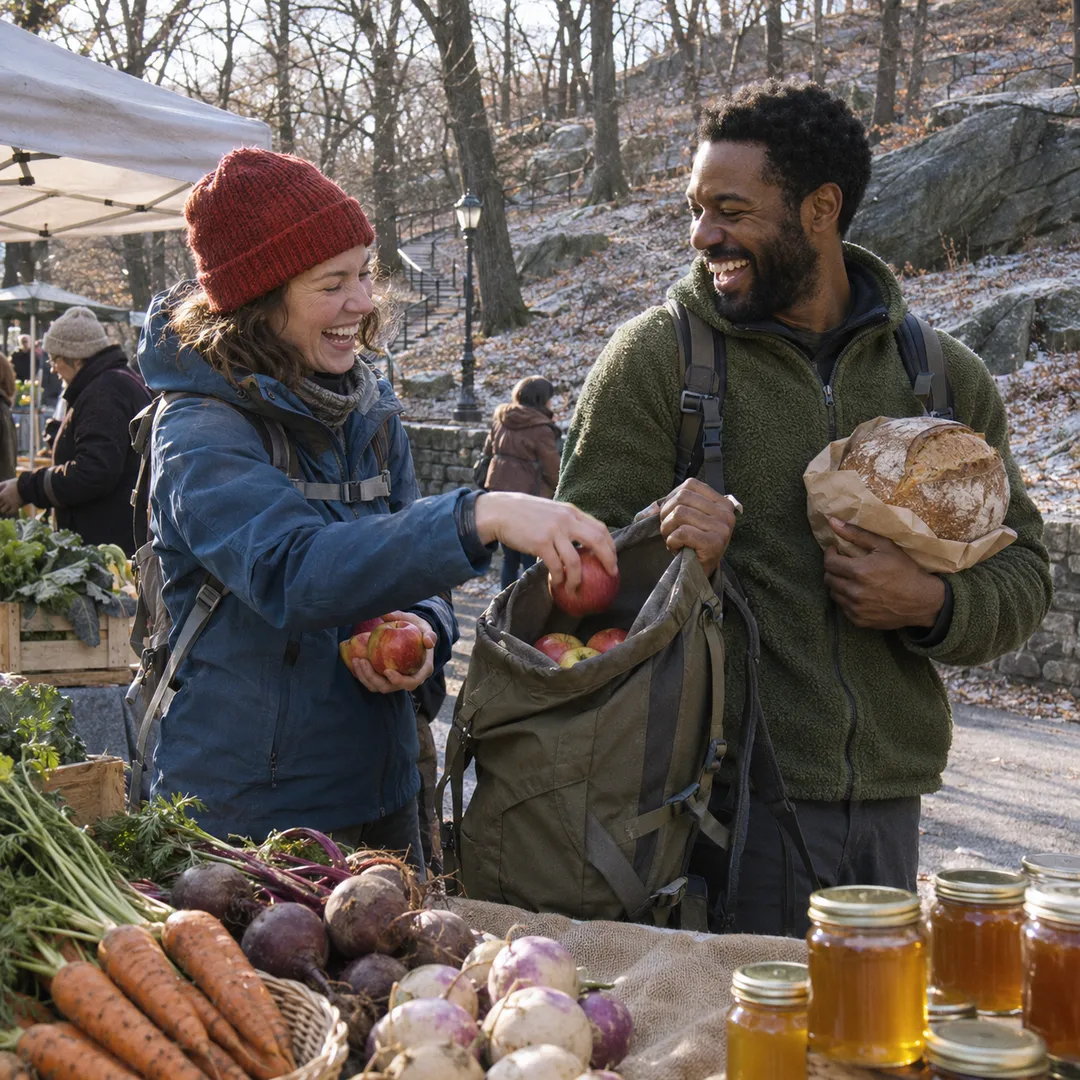
A winter greenmarket picker for Inwood: how two hiking friends pair a forest walk in Inwood Hill Park with a market stop for trail snacks, cider and dinner.
A winter greenmarket picker for hikers works backwards from the trail. You want food that fits in a daypack, a hot drink at the end of the walk and something warm to cook for dinner once your legs are tired. Inwood Greenmarket, sitting near the edge of Inwood Hill Park at the very top of Manhattan, is an ideal pairing for anyone who likes their market mornings to begin among trees and rock.
The Wild Corner at the Top of Manhattan
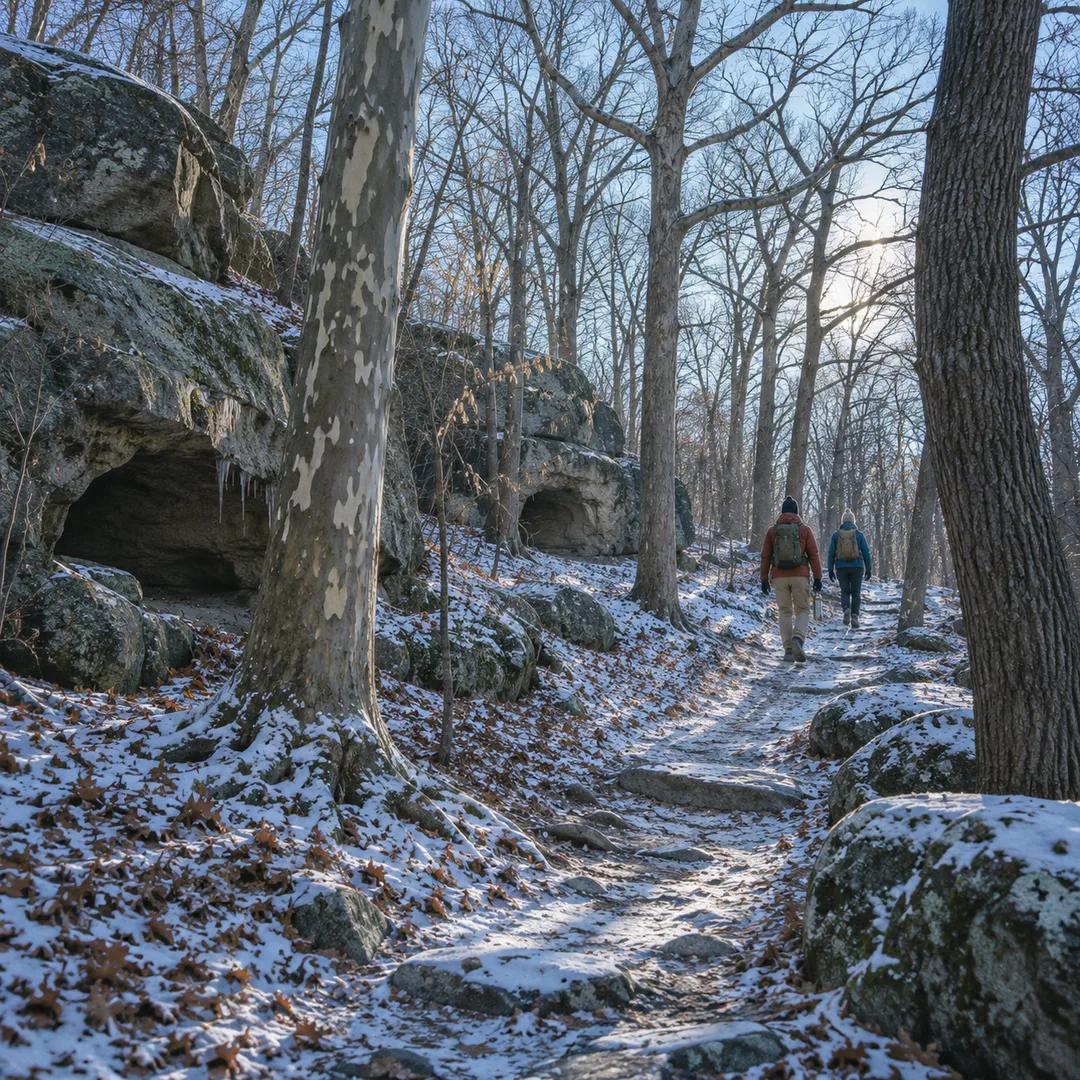
Inwood Hill Park holds what is often described as the last natural forest on the island. Its ridges of old rock, tall tulip trees and quiet salt marsh feel very far from Midtown, even though the subway gets you there in well under an hour. Lenape people lived and fished here long before the city existed, and shallow rock shelters on the slopes are linked to that history.
A boulder near the ballfields marks the spot where, according to local tradition, the Dutch traded with the Lenape for the island. Historians argue over the details, but the marker still makes people pause. In winter, with the leaves down, you can see the shape of the land more clearly and imagine the old shoreline before the streets. Bald eagles have even been spotted over the inlet in recent winters, so bring binoculars if you own a pair.
Hike First, Market Second
Most hikers find it easier to walk before shopping. Your pack is light, your hands are free and you arrive at the stalls hungry, which makes picking snacks more fun. Start from the park entrance, follow the main path up toward the ridge and choose a loop that brings you back down near the neighbourhood rather than out by the river.
On cold mornings, frost and fallen leaves can make the rocky paths slippery, so wear shoes with real tread. Trekking poles help on the steeper slopes, and a light pair of gloves keeps your hands useful when you steady yourself on the rocks. Keep the walk to an hour or so if you are new to the park, because the paths twist more than the map suggests and it is easy to lose track of time among the trees.
What Belongs in a Hiker's Market Bag
For the next trail, think of food that travels. Crisp apples, firm pears and dried fruit sit happily in a pack for days. Farm cheese, a dense loaf of bread and a small jar of honey turn into a simple summit lunch. Hard-boiled eggs from the egg farmer are another classic, and a bag of nuts rounds it out.
Ask growers which apples are sturdiest; some varieties bruise easily under a water bottle. Wrap soft items in a cloth or tea towel and keep them at the top of the pack. If you want something sweet, a fruit-filled pastry or cider doughnut is hard to beat after a cold climb, although few of them survive the walk home. Pack an empty cloth bag too, so the heavier dinner items can travel separately from your trail food.
Hot Cider and a Warm Bench
After a winter hike the first thing most people want is something hot. Cider is a market staple, and wrapping cold fingers around a cup while chatting to farmers feels like the right ending to the walk. If no hot drinks are available, a thermos from home filled with tea or soup does the job.
Find a bench at the edge of the park and look back at the ridge you just climbed. It is a calm moment that city life rarely offers. Many regulars treat this as their weekly reset: a walk among the trees, a cup of something warm and a chat with the same faces they see every week at the stalls.
Dinner Ingredients for Tired Legs
Hikers come home hungry, so plan dinner while you shop. Root vegetables and squash roast with almost no effort, leaving you free to stretch while the oven works. A simple soup of leeks, potatoes and greens, finished with grated cheese, is warming and needs little attention. Buy onions and garlic if your pantry is low.
If you cook meat, some markets have farms selling sausages or stewing cuts that suit a slow pot on a cold evening. Vegetarians can lean on dried beans, mushrooms and hearty greens. The goal is a meal that cooks itself while you shower and put your feet up after the climb. Leftovers in a flask then become lunch for the next hike, which neatly closes the loop.
Exploring Inwood After the Market
Inwood is a proudly Dominican neighbourhood, and its main avenues are full of bakeries, cafes and small restaurants where Spanish is the everyday language. A warm pastelito or a cafe con leche makes a good second breakfast before heading home. Merengue and bachata drift from shops even on cold weekend mornings.
For a dose of older history, walk past the Dyckman Farmhouse, a Dutch colonial home that survives among apartment buildings and gives a glimpse of rural Manhattan. Isham Park, next to the main park, offers gentler paths and views over the Harlem River for anyone whose legs have had enough of hills.
Making It a Winter Routine
Some friends turn this into a weekly or monthly ritual through the cold months. Each visit, they try a new trail in the park, buy one unfamiliar vegetable and cook something different that evening. By spring they know every path and the names of several farmers, and the winter feels much shorter.
Keep a small trail journal or a notes card with the route you walked, the weather and what you bought. Looking back at it later is a lovely reminder that winter in the city can be full of fresh air, good food and friendly conversation, not just grey days indoors.
Plan B and Finding Your Next Trail Market
In heavy snow or ice, skip the steep ridge trails and walk the flatter paths near the water, or simply visit the market and save the hike. Some winter weeks the market is smaller, so carry a few backup snacks from home and treat any farm finds as a bonus.
The Karpo APP can help you build the next outing. Ask it for winter greenmarkets near parks with good walking trails in upper Manhattan or the Bronx, compare a few and save them for future weekends. A forest walk followed by a market stop is one of the simplest ways to enjoy the city in winter.
Ask Karpo for more information.
Keep reading
- Carroll Gardens Winter Greenmarket Picker for Holiday Bakers
 Jackson Heights Winter Greenmarket Picker for a Family Day
 Tompkins Square Winter Greenmarket Picker for Cooking Solo