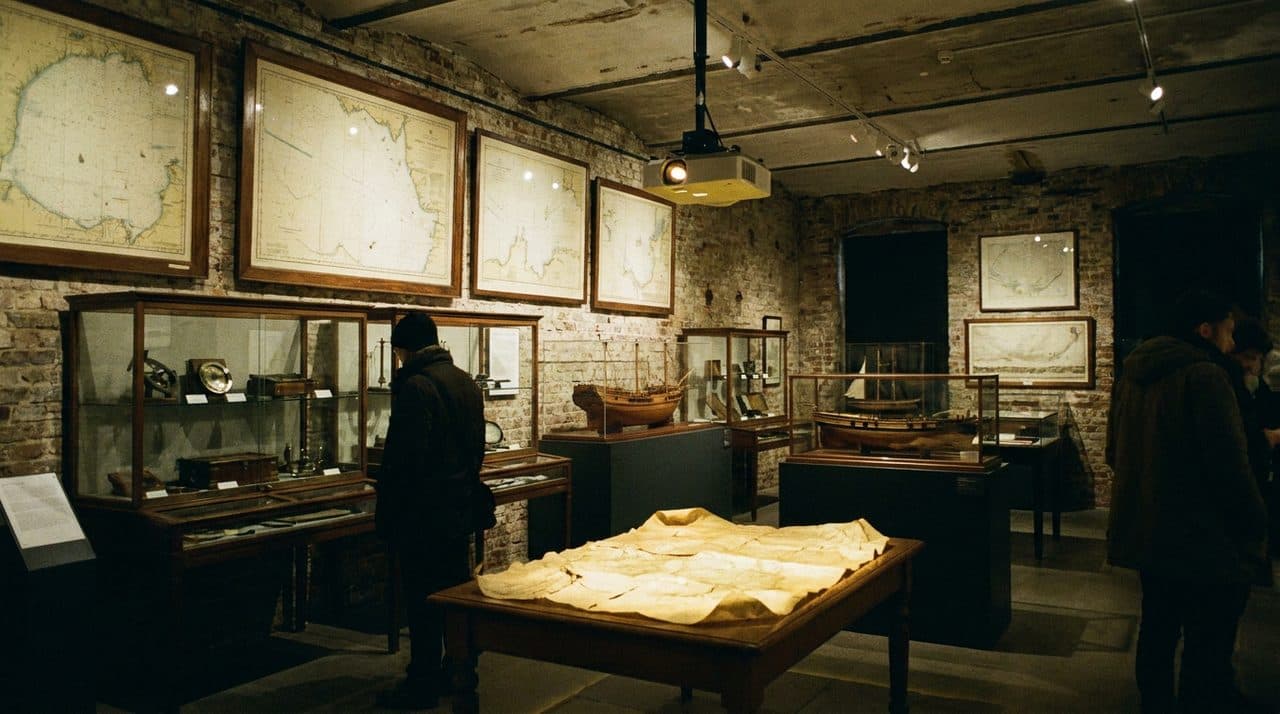
You walk into what looks like a dusty maritime archive and find twenty people shouting at a fifteenth-century Portuguese chart while a midfielder makes a run down the Adriatic coast. The Noble Maritime Collection in Red Hook has been doing this for years—projecting live soccer matches onto antique nautical maps, turning every game into a moving cartography lesson where forwards navigate trade routes and defenders hold positions along forgotten shipping lanes.
The Room Smells Like Old Paper and Spilled Beer
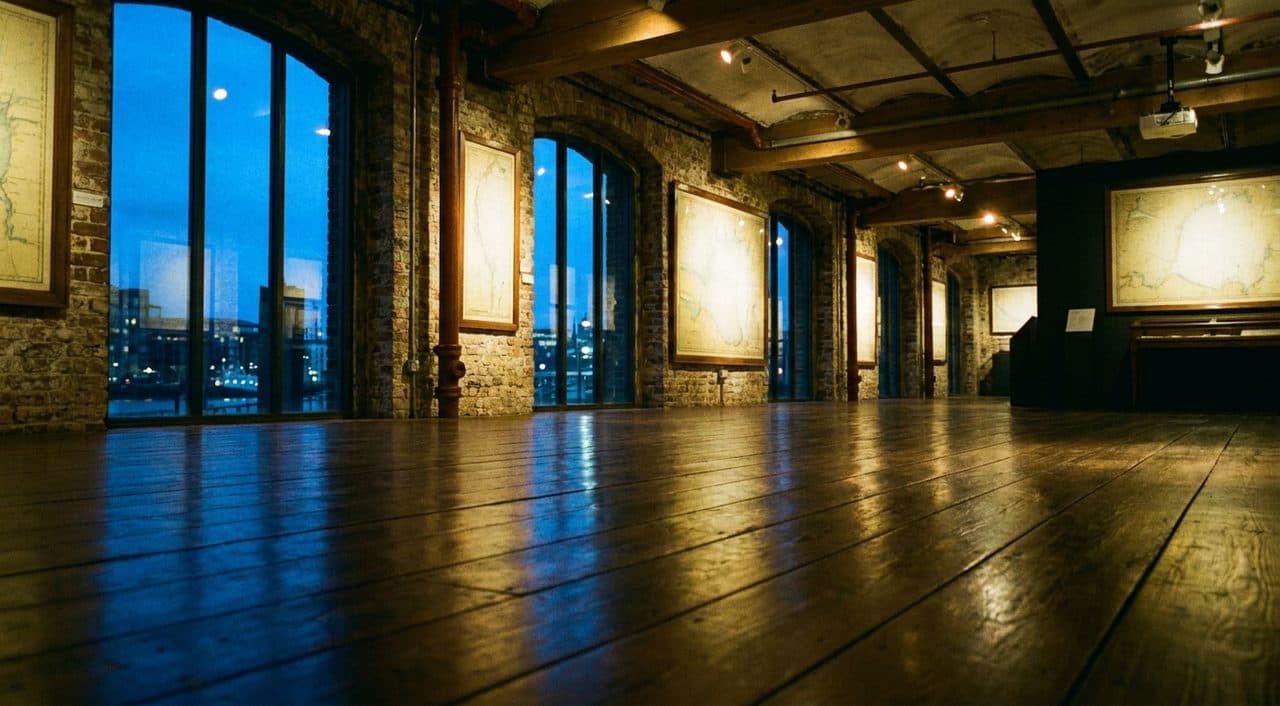
The screening room sits on the second floor of an old lighthouse keeper's building, all creaking floorboards and exposed brick that hasn't been painted since the waterfront still moved cargo. They've rigged a projector to throw the match onto whatever chart suits the teams—Balkan fixtures get overlaid on Venetian-era Adriatic maps, North African qualifiers play out across Ottoman naval surveys. The audio runs through a vintage ship's intercom system that crackles and pops during quiet moments. You hear the commentator's voice the way sailors once heard storm warnings, tinny and urgent through metal speakers mounted near the ceiling.
The chairs are mismatched folding numbers and a few church pews someone salvaged from a Brooklyn renovation. People bring their own cushions. The regulars—mostly dock workers on their day off and a rotating cast of maritime history nerds who treat this like church—stake out the same spots every time. Front left corner gets the best angle on both the map detail and the screen overlay. You learn this your second visit.
They Plot Possession Like Eighteenth-Century Fleet Movements
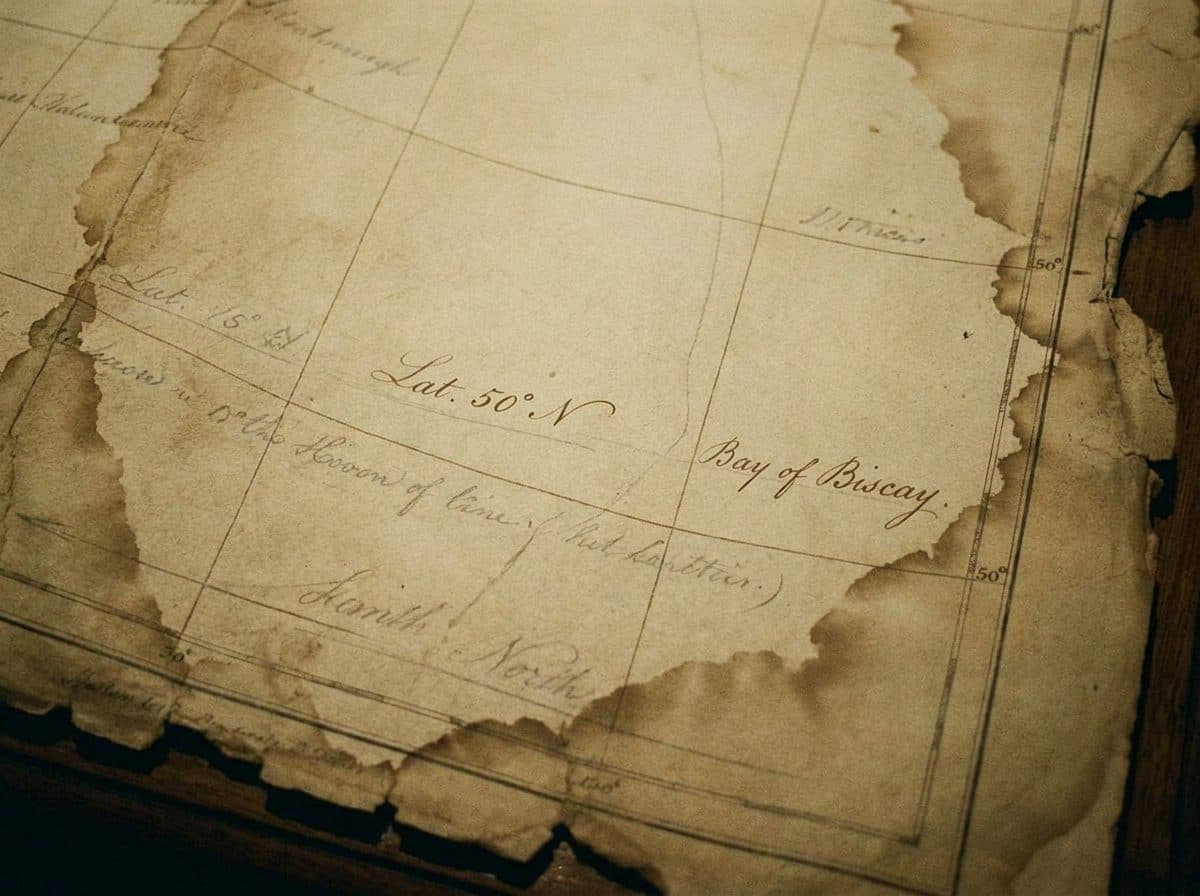
The curator running the projector—a guy who wears the same faded merchant marine jacket every match—adds real-time annotations during play. He's got a laser pointer and he traces player movement the way navigators once marked shipping routes, drawing temporary lines on the map projection that fade after a few seconds. When a team dominates possession, he'll mutter coordinates under his breath. "Holding position at forty-three degrees north, controlling the channel." It sounds absurd until you watch for twenty minutes and realize the spatial logic of naval strategy and defensive football isn't that different.
During halftime he pulls up the actual historical context of whichever map they're using. You learn about Venetian trading monopolies while people refill their drinks. He'll point out how the coastline has changed, where ports have silted up, which routes became obsolete when the Suez opened. Then the whistle blows and everyone shuts up and watches Croatia push up the right flank across what used to be the Dalmatian spice route.
The Crowd Knows More About Tides Than Offsides
Half the people here couldn't tell you what a false nine is but they can explain why sailors avoided the Bora winds in winter. The other half are hardcore supporters who've figured out this is the only place in New York where you can watch a second-tier Balkan qualifier without some sports bar switching to basketball at halftime. They coexist peacefully, united by the sheer weirdness of the setup.
You get maritime engineers sitting next to Croatian grandmothers who brought homemade sarma in tupperware. Someone always brings bread. The smell of caraway and cabbage mixes with the musty paper scent from the archives downstairs. During tense moments the room goes silent except for the intercom crackle and the sound of someone's grandmother praying in a language you don't speak but understand completely.
The Best Matches Happen When Geography Actually Matters
Slovenia versus Croatia works perfectly because you're watching them fight over territory they've actually fought over, the map showing borders that have shifted a dozen times in the past century. The projection makes it literal—players moving through contested waters, the ball crossing boundaries that exist on the chart but not in the modern game. It adds a layer of historical weight that feels accidental and profound at the same time.
They did a Tunisia-Libya match once on a sixteenth-century Mediterranean chart that showed the Barbary Coast before anyone called it that. The curator pointed out pirate havens during a water break. Someone's uncle argued about the exact location of a naval battle from fifteen-seventy-something. The match itself was forgettable but you remember the argument, the way people leaned forward to examine the map detail, fingers tracing coastlines while the game played on above their heads.
You Can't Book This, You Just Have To Know
There's no website, no social media presence, no advance tickets. The museum has public hours but the screenings happen in a semi-private capacity that exists in a legal grey area involving "educational programming" and "community access." You find out through word of mouth or by showing up at the museum on a match day and asking the person at the front desk if anything's happening upstairs. Sometimes they'll tell you. Sometimes they'll just point.
The door to the screening room stays unlocked during matches. You walk up, you walk in, you find a seat. There's a donation jar by the door that people ignore or stuff with twenties depending on their mood and the importance of the fixture. The curator never mentions it. The whole thing runs on the kind of informal social contract that shouldn't work in contemporary New York but somehow does here, protected by Red Hook's geographic isolation and the fact that most people still don't know this neighborhood exists.
The View After Is Worth The Schlep
When the match ends everyone files out onto the small balcony that overlooks the harbor. The Statue of Liberty sits small and distant to the southwest, container ships move slowly toward the Narrows, and the Manhattan skyline looks like something from a different city entirely. You're far enough from the subway that you remember New York used to be a port town first and everything else second.
People linger, talking about the match or the maps or neither. The Croatian grandmother packs up her tupperware. The maritime engineers debate some technical point about chart projection methods. The curator smokes a cigarette and watches the water. You can catch a bus back toward civilization or walk along the waterfront until you find a bar that doesn't project anything on anything, just serves drinks like a normal place. But you'll remember the way the midfielder's run traced the old Venetian route to Zadar, the way history and sport collapsed into the same flickering projection, the way the whole strange afternoon felt like a secret that exists specifically because nobody's trying to monetize it yet.
Practical Notes
The museum sits on the Red Hook waterfront, walkable from the bus stops along Van Brunt Street or a longer walk from the Carroll Gardens subway stops. The screenings happen sporadically, tied to match schedules that matter to whoever's organizing that month—expect Balkan fixtures, North African qualifiers, and the occasional lower-league European game. Arrive at least twenty minutes before kickoff if you want a decent seat. The room holds maybe thirty people comfortably, forty if everyone's friendly.
No food sold on site but nobody stops you from bringing your own. The donation jar accepts cash only. Bathrooms are downstairs in the main museum, which keeps standard institution hours most days. The building gets cold in winter—the heating system dates from when heating systems were optional—so layer up for late-season matches. The projector occasionally fails and they'll switch to a backup screen without the map overlay, which defeats the entire purpose but at least you still see the game.
Tags: #TheOddEdit #RedHook #Brooklyn #NewYorkCity #MaritimeHistory #SoccerCulture #HiddenGems #NauticalCharts #SportsAndHistory #WaterfrontNYC #BrooklynSecrets #CulturalHybrid #UndergroundNYC #NicheAttractions #UrbanDiscovery
Sources consulted: atlasobscura.com · timeout.com · nytimes.com
All trademarks are the property of their respective owners.