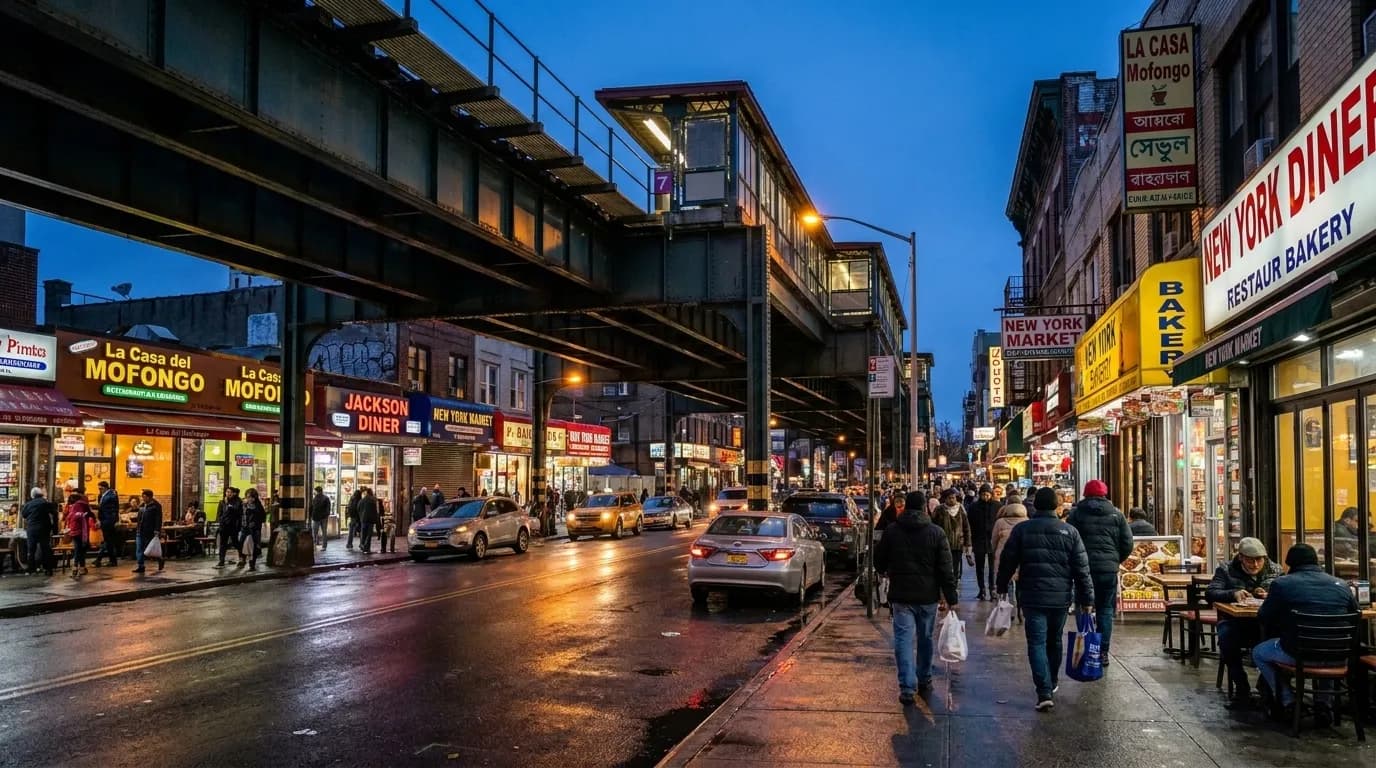
Planning dinner for three friends in Queens often means negotiating between the vegetarian who wants more than a side salad, the carnivore chasing a proper steak, and the adventurous eater hunting regional specialties you can't find in Manhattan. The borough's dining landscape rewards this exact scenario—its best group-friendly spots emerged from immigrant communities where multi-generational tables demand flexibility, not concept-driven tasting menus. Success hinges on choosing restaurants where the menu's breadth reflects genuine kitchen capability rather than hedge-your-bets mediocrity, and where the location doesn't penalize whoever's traveling farthest. The wrong pick leaves someone picking at appetizers while others feast, or burns forty minutes on a transfer that could've been avoided. The right table turns dietary constraints into discovery.
Text Karpo to start planning your next group dinner with recommendations that account for everyone's preferences and transit routes.

Why Menu Architecture Matters More Than Cuisine Type
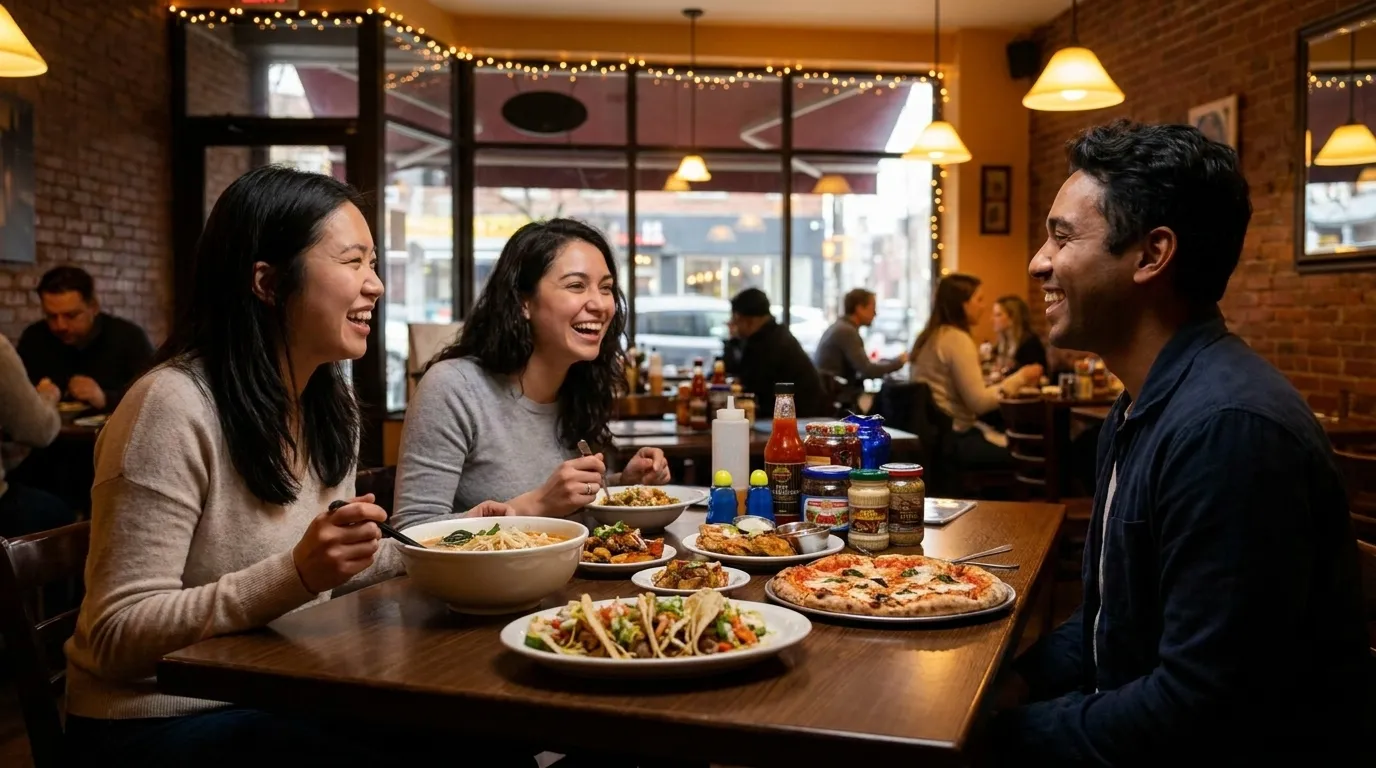
The restaurants that work best for mixed-preference groups aren't necessarily fusion spots or places advertising themselves as crowd-pleasers. According to recent Yelp and OpenTable data on group dining in Queens, the most successful tables share a structural trait: kitchens organized around technique rather than a single protein or regional canon. Indian-Chinese restaurants like Aanch demonstrate this principle—the kitchen maintains separate stations for tandoor work, wok cooking, and curry preparation, which means the vegetarian ordering gobi manchurian, the meat-eater choosing chili chicken, and the friend craving something saucy with goat curry all receive dishes executed with equal attention. The menu isn't trying to be everything; it's offering parallel tracks of expertise that happen to accommodate different appetites.
This architecture shows up across cuisines. Mediterranean spots where the kitchen handles both charcoal grills and a full meze program give you the friend ordering grilled branzino alongside someone building a meal from hummus, baba ganoush, and falafel. The key question when scanning menus online: does this restaurant have at least three distinct preparation methods visible in its offerings? If you see grilling, braising, and frying all represented with confidence, you've found a kitchen that can handle divergent orders without anyone's dish suffering as an afterthought. Avoid restaurants where vegetarian options cluster in a single menu corner labeled 'Sides' or where the kitchen clearly built everything around one hero ingredient.
Transit-Fair Meeting Points and Neighborhood Clusters
Geography determines whether your dinner plan survives first contact with the group chat. If one friend lives in Astoria, another in Forest Hills, and the third in Flushing, choosing a restaurant in any of those neighborhoods automatically adds thirty to forty-five minutes to someone's commute. The fairest strategy: identify the subway or LIRR station that minimizes total travel time across all three starting points, then search within a ten-minute walk of that hub. For groups split between western and central Queens, the Jackson Heights–Roosevelt Avenue station complex (E, F, M, R, 7 trains) offers the borough's densest concentration of group-friendly restaurants within that radius.
Forest Hills represents another natural convergence point, particularly when one member of your group is coming from Manhattan or Brooklyn—the E and F trains make it a straight shot from multiple directions, and the LIRR stop serves friends in Nassau County who'd otherwise face two transfers. The restaurant cluster along Austin Street and Queens Boulevard near the station includes spots with the menu breadth you need. Check real-time service alerts before committing to a location; weekend track work routinely suspends service on specific lines, and discovering your chosen meeting point requires a shuttle bus adds friction that kills momentum. Build your restaurant shortlist only after confirming everyone's realistic travel time, including the walk from the station.
Handling the Veto Power and Dietary Restrictions
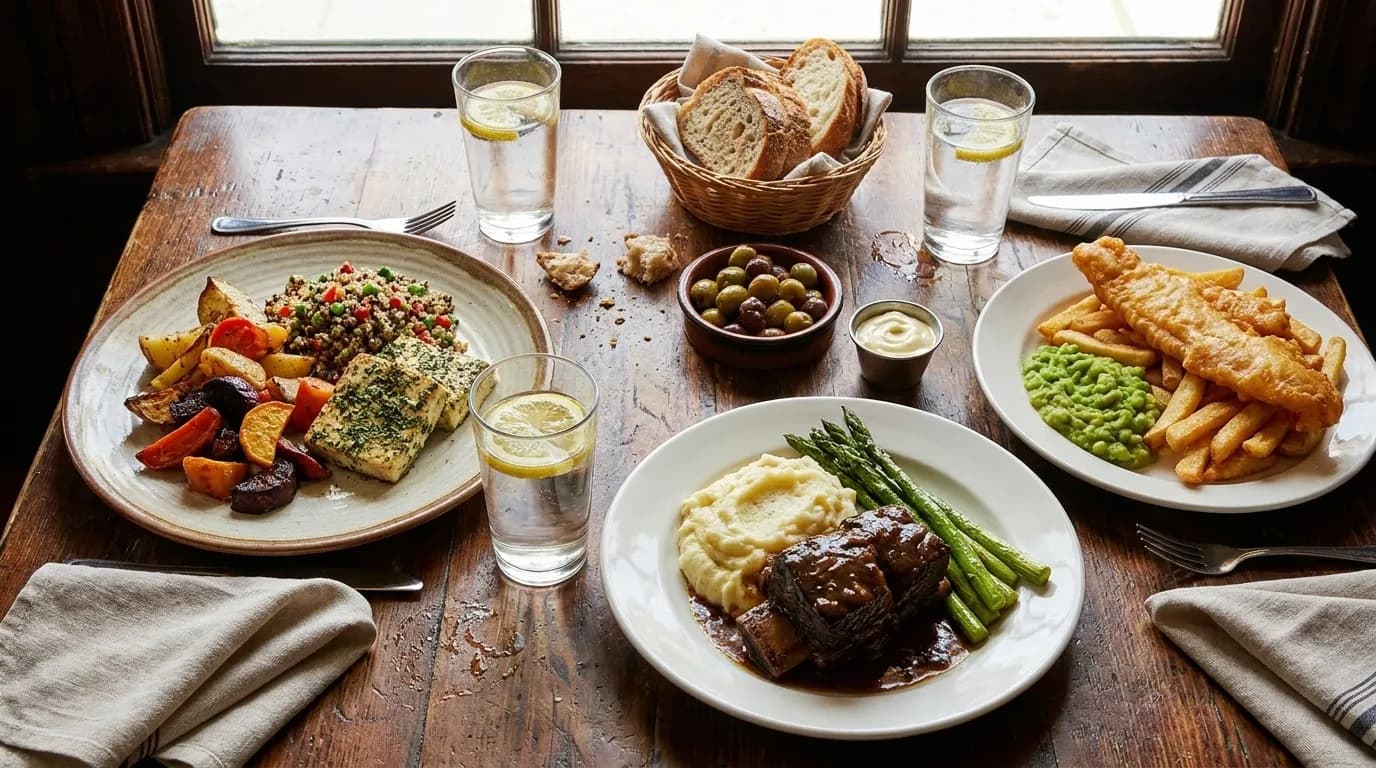
Every three-person dinner negotiation includes at least one hard veto—someone won't eat seafood, can't handle spice above a certain threshold, or maintains restrictions that eliminate entire cuisines. The mistake is trying to find a restaurant that makes everyone equally excited; the realistic goal is a spot where nobody feels stuck with a compromise meal they'll regret. This means ruling out restaurants where one category of diner will be limited to two or three menu items. A steakhouse with a robust vegetable and grain section works; a steakhouse that offers vegetarians a portobello cap and a Caesar salad does not.
When dietary restrictions go beyond preference into allergy or religious observance territory, call ahead even if the menu looks promising online. Kitchens that handle shellfish, tree nuts, or pork need to confirm they can prevent cross-contact, and that conversation belongs on the phone two days before your reservation, not whispered to your server while your friends wait. For groups navigating halal, kosher, or strict vegetarian requirements, Queens offers dedicated restaurants with full menus rather than isolated options—choosing one of those spots eliminates the anxiety of interrogating ingredients and lets everyone order freely. The person with restrictions shouldn't spend the meal managing risk while others enjoy themselves.
Timing, Table Logistics, and the Reservation Question
Three-person tables occupy an awkward size category in restaurant operations—too large for most two-tops, sometimes too small to justify a four-top during peak hours. This creates reservation friction at popular spots, especially Thursday through Saturday between seven and nine. Your options: book for an earlier seating around six or six-thirty when tables turn over more easily, or aim for Sunday through Wednesday when restaurants have more flexibility. If you're set on prime weekend hours, make the reservation two weeks out and confirm the party size explicitly—some systems default to two diners, and showing up with three people can mean a twenty-minute wait while the host rearranges sections.
For restaurants that don't take reservations, the group needs a point person willing to arrive fifteen minutes early and put their name down. This works better than having everyone converge simultaneously, which often means standing in a cramped entryway making small talk while hungry. The early arrival can also scout the menu, identify any eighty-sixed items, and relay that information so people aren't building their order around a dish that's already gone. If the restaurant operates on a waitlist app, have one person add the party and share the link—multiple submissions under different names flags you as a larger group and can actually slow your seating. Weather matters more than you'd think for this strategy; on rainy evenings, everyone shows up at once and waitlists double in length.
Practical Notes
- Check MTA service status within two hours of your dinner; weekend diversions frequently reroute trains and add fifteen-plus minutes to expected travel time.
- For restaurants near Roosevelt Avenue or Junction Boulevard, confirm the specific entrance or cross-street when sharing the address—these corridors stretch for blocks and confusion adds delay.
- If someone in your group has a hard dietary restriction, call the restaurant during off-peak hours (2–4 PM) when kitchen staff can give detailed answers about ingredients and preparation.
- Book reservations for 6:00 or 6:30 PM on weekends to avoid the peak-hour squeeze on three-person tables; most kitchens are fully staffed by then and service moves faster.
- Agree on a backup restaurant within five blocks of your first choice in case of unexpected closures, private events, or hour-plus wait times.
- Split the check strategy before you sit down—decide whether you're dividing evenly or paying individually, since some Queens restaurants still operate cash-only or have card minimums.
- For groups where one person is significantly later than the others, choose restaurants with good bar seating so early arrivals aren't stuck hovering near the host stand.
The three-friend dinner works when you stop searching for the restaurant that makes everyone equally thrilled and start looking for the spot where nobody ends up with a grudging fallback order. Queens delivers on that standard more consistently than any other borough because its dining culture grew from necessity—families and communities that needed to feed people with genuinely different requirements at the same table, not as a concept but as daily logistics. Your job is simply to identify which of those tables has the menu depth, location fairness, and operational competence to handle your specific group. Do that work up front, and the dinner conversation can focus on catching up rather than managing regrets about the restaurant choice.
Tags: #queensrestaurants #nycgroupdining #dinnerplanning #queensfood #nyceats #restaurantguide #foodienyc #queensny #groupdinner #nycdining #localfood #restauranttips #dinnerwithdriends #nycfoodie
Sources consulted: Top 10 Best Dinner for Group Near Queens, New York · 17 Best Restaurants in Queens, NY [2026 Updated] · The 50 best restaurants to have dinner in Queens - Wanderlog · The 13 best restaurants in Queens right now - Time Out · The Ultimate Queens Guide: Best Neighborhoods, Eats, Parks, and Transit ...
All trademarks are the property of their respective owners.


