The search spike happens every June. People want dinner plans that don't require reservations three weeks out, and they want neighborhoods where walking between spots feels like part of the night. Chinese food in New York City delivers both, especially in summer when you can move between a soup dumpling counter, a cold sesame noodle shop, and a mango shaved ice window without ever getting back on the train.
Text Karpo now for a live check on wait times at the restaurants below, plus a subway route that skips the transfer crush at Canal Street if you're coming from uptown or Brooklyn.

Why everyone searches for food near them in July
The volume around restaurant discovery right now reflects something practical: nobody wants to commit to a single room for two hours when it's eighty-five degrees and the AC is uneven. Chinese restaurants in Manhattan's Chinatown and Flushing let you eat in waves. You grab scallion pancakes at one address, sit down for salt-baked squid at another, then finish with grass jelly at a third. The food is the plan, and the neighborhood handles the logistics.
Summer also means later light and the willingness to walk farther after work. Bayard Street and Mott Street stay active until ten or eleven, and the side blocks between Canal and Worth have enough foot traffic that you're never guessing whether a place is actually open. That consistency matters when you're coordinating with friends who are coming from different boroughs and nobody wants to arrive at a shuttered storefront.
Chinatown absorbs the summer crowds better than you think
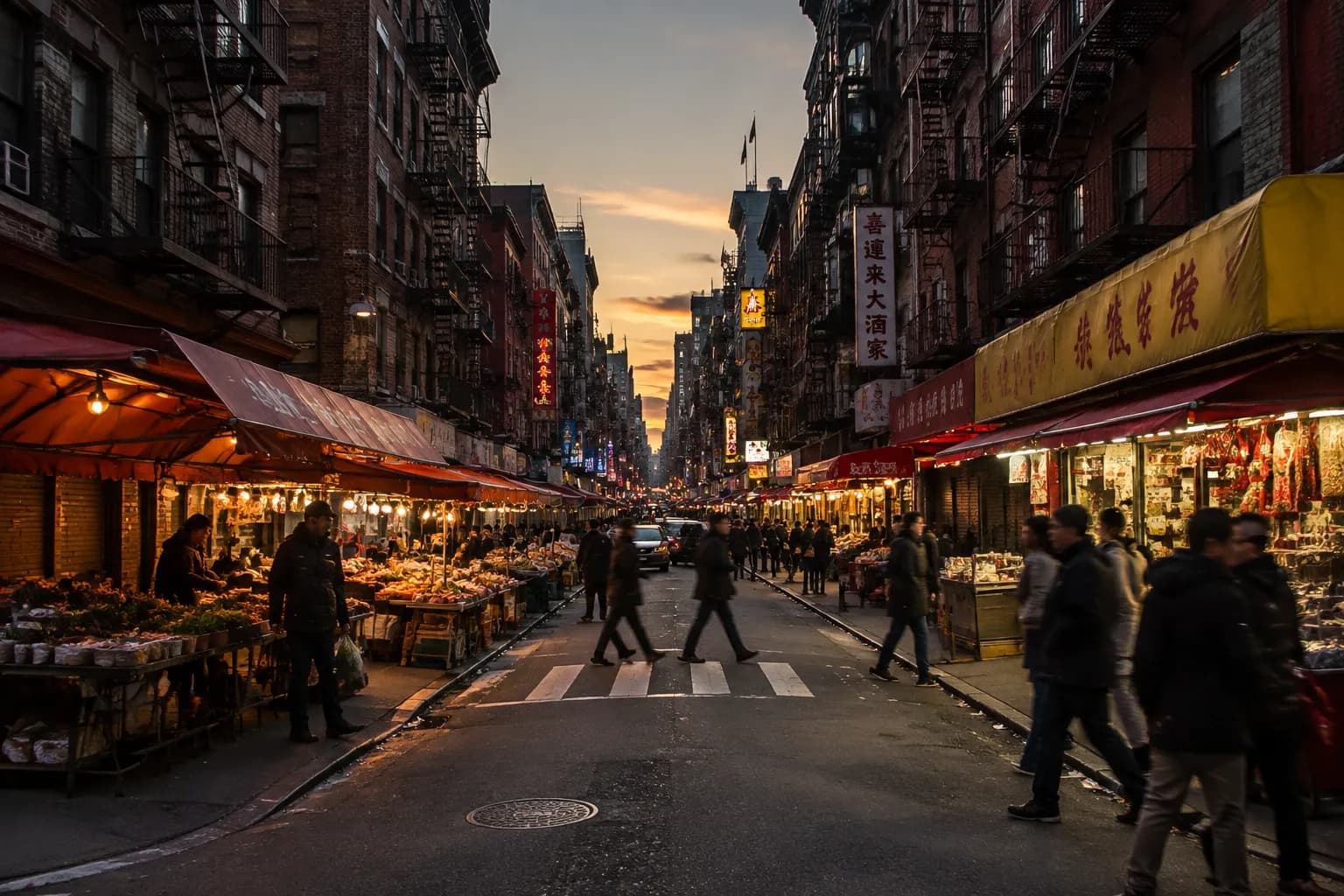
Chinatown sits below Canal Street, bordered roughly by Broadway to the west and the Manhattan Bridge approach to the east. It's dense, it's loud, and it's built for high turnover. Most of the food worth seeking out clusters along Mott, Bayard, Pell, and Doyers—streets that run short and intersect at odd angles, which means you're always a hundred feet from another option if your first choice has a line out the door.
The neighborhood's advantage in summer is that it never pretended to be calm. The sidewalks are narrow, the dining rooms are small, and nobody lingers over tea for an hour when there are eight people waiting. You get a table, you order fast, you eat, you leave. That rhythm keeps things moving even when the tourist buses unload near Columbus Park in the afternoon. If you arrive after seven-thirty on a weeknight, the initial dinner wave has cleared and you can usually walk into any of the Cantonese spots on Bayard without a wait.
The subway access is straightforward but requires attention to which train you take. The 6 at Canal and Lafayette puts you at the eastern edge, closest to the hand-pulled noodle shops and the Malaysian places on Division. The N, Q, R, W, and J at Canal and Centre drops you mid-neighborhood, a short walk to the dumpling counters and roast duck windows. The B and D at Grand Street land you slightly north, better if you're planning to start with soup and work your way south. Avoid the Canal Street station during evening rush if you're transferring—it's a long underground walk and the platforms get backed up.
Come at five-thirty or wait until eight-forty-five
Timing dictates everything in Chinatown. The restaurants that serve dim sum all day switch gears around five, and the dinner menu comes out with different pricing and a different kitchen rhythm. If you show up at six-fifteen on a Friday, you're competing with families, after-work groups, and everyone who read the same articles you did. The wait isn't unmanageable, but you'll spend twenty minutes on the sidewalk and the host will seat you at whatever table opens next, which might be the two-top by the bathroom.
The better move is to arrive before the rush or after it. Five-thirty gets you a table immediately and the kitchen is still sharp. Eight-forty-five means you're eating with the late-shift workers and the people who know the neighborhood well enough to time it right. The food is identical, the room is quieter, and you can actually hear the person across from you. Both windows work in summer because the light lasts longer and nobody feels rushed to get home before dark.
If you're planning to hit multiple spots in one night, start early and build in walking time. The blocks between Bayard and East Broadway take longer to navigate than a map suggests because the streets don't run straight and the crowds bunch up at intersections. Fifteen minutes between stops is realistic. Thirty minutes if you want to stop at a bakery or check out the produce stalls on Hester. Don't try to schedule four places in ninety minutes unless you're only ordering takeout and eating on benches in Columbus Park, which is a legitimate summer strategy but requires accepting that you'll be standing more than sitting.
Flushing runs on a different schedule and a longer subway ride
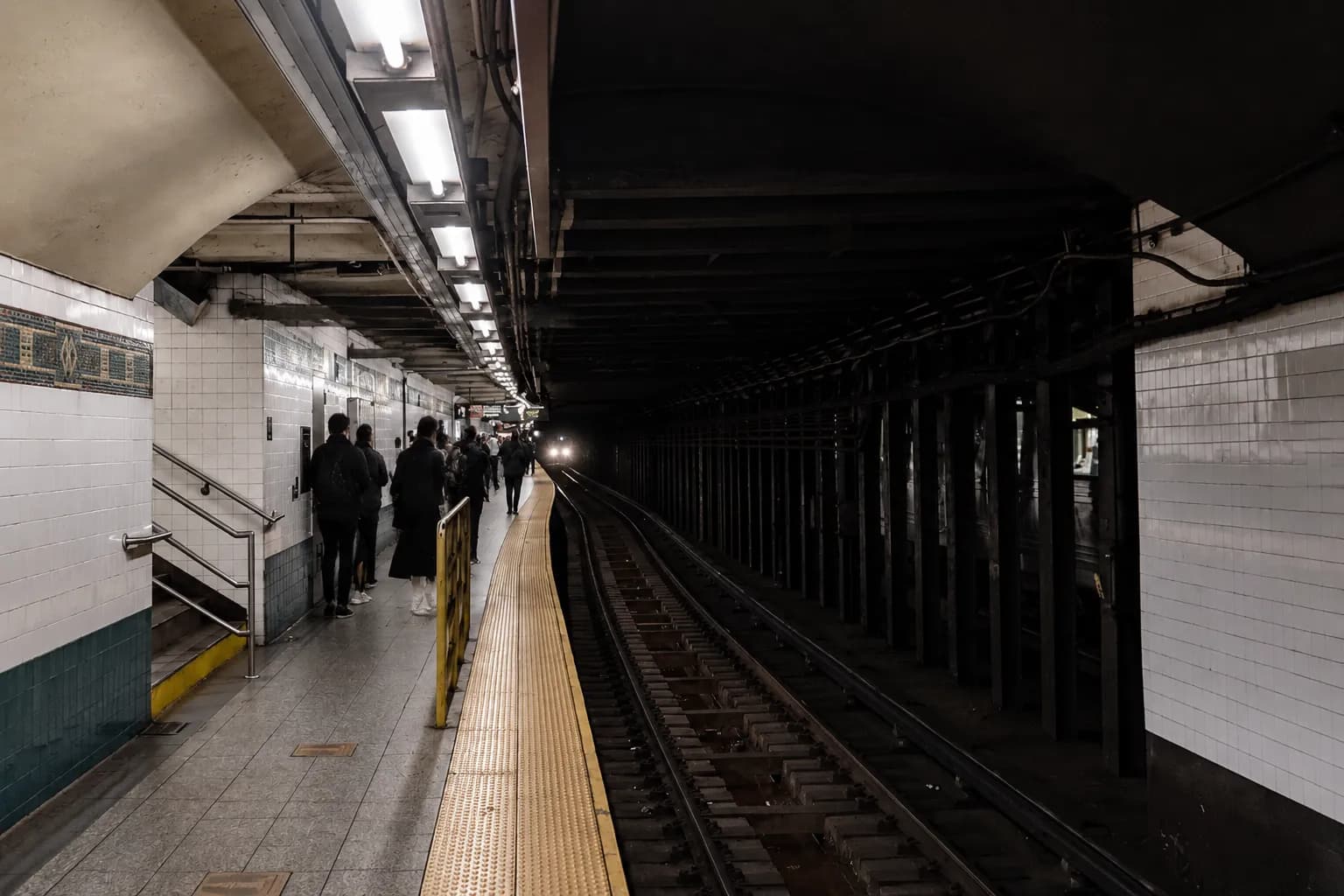
Flushing in Queens offers a quieter alternative if Chinatown feels too compressed. The food is as good, sometimes better, and the neighborhood spreads out enough that you're not shoulder-to-shoulder on every block. The 7 train from Manhattan takes forty minutes to Main Street, longer if there's weekend construction or a delay at Queensboro Plaza. That distance keeps the tourist volume lower and shifts the crowd toward people who live in Queens or know the food well enough to make the trip worth it.
Main Street and Roosevelt Avenue form the core, with side streets running north toward Sanford Avenue and south toward Franklin. The Sichuan spots, the Dongbei dumpling rooms, and the hand-pulled noodle counters are all within a three-block radius of the subway exit. The dining rooms are bigger than in Chinatown, which means you can get a table for four without waiting even on a Saturday night. The trade-off is that you're committed to Flushing for the evening—there's no easy way to bounce between neighborhoods once you're out there, and the last 7 train back to Manhattan leaves around one-thirty on weekends, earlier on weeknights.
The food in Flushing skews regional in a way that Chinatown doesn't always. You'll find Lanzhou beef noodles, Chongqing hot pot, and Taiwanese breakfast all day spots that serve sticky rice rolls and soy milk until mid-afternoon. If you want to eat food that reflects a specific province or city in China, Flushing gives you more precision. If you want the experience of moving between five different places in an hour, Chinatown is still the better fit. Both neighborhoods deliver on the food; the question is whether you want density or space.
Check what's open before you commit to a route
Not every restaurant in Chinatown posts reliable hours online, and summer brings irregular closures for vacation, equipment repairs, or private events. The bakeries and takeout counters are usually safe bets—they keep consistent schedules and rely on foot traffic—but sit-down spots can close unexpectedly on a Tuesday or Wednesday in July when the owners take a break. Calling ahead doesn't always work because not every place answers the phone during prep hours, and even if they do, the person who picks up might not speak English fluently enough to confirm what you're asking.
The better approach is to build flexibility into your plan. Pick three or four places within a few blocks of each other, rank them by priority, and accept that one might be closed when you arrive. The density of Chinatown means a backup is always thirty seconds away. If the Fujianese place on Eldridge is dark, the Cantonese spot on Division is a five-minute walk. If the soup dumpling counter on Bayard has a forty-minute wait, the hand-pulled noodle shop on Doyers has open seats at the bar.
Weather also plays a larger role than it does in other neighborhoods. Most of the dining rooms in Chinatown are small, and the air conditioning is inconsistent. On a ninety-degree day, the back corner of a second-floor restaurant can feel ten degrees hotter than the street. If you're sensitive to heat, aim for ground-floor spots with open windows or plan to eat later in the evening when the temperature drops. The outdoor seating that other neighborhoods added during the pandemic never really took hold here—the sidewalks are too narrow and the car traffic too constant—so you're eating indoors or taking your food to the park.
Columbus Park, between Bayard and Worth, has benches under trees and enough space to sit with takeout containers without feeling crowded. It's louder than you'd expect—there are usually groups playing cards, kids on the playground, and someone practicing tai chi by the basketball court—but it's a functional place to regroup between restaurants or eat something that doesn't require a table. The park bathrooms are hit or miss; if you need a restroom, use the one at a restaurant before you leave. Verify your subway route home before it gets late. The 6 train runs local after midnight, and the J train can have long gaps between trains on weekends. If you're coming from Brooklyn, confirm whether the Manhattan Bridge track is open or if you'll need to transfer at Canal.
Practical notes
- Arrive before 5:45 p.m. or after 8:45 p.m. to avoid peak dinner waits in Chinatown
- The 7 train to Flushing takes 40+ minutes; plan for a longer evening if you're going to Queens
- Columbus Park between Bayard and Worth has benches if you're eating takeout between stops
- Most Chinatown dining rooms are small and not all have strong AC on hot days
- Check late-night train schedules before you go—the J and 6 trains slow down after midnight
- Not every restaurant posts hours online; build a backup list of two or three nearby spots
Tags: #karpo #nycfood #chinatownnyc #chinesefood #flushingqueens #soupdupmlings #nycrestaurants #cantonese #sichuanfood #nycsubway #lowereastside #queensfood #dumplings #localnyc #nyceats
Sources consulted: MTA Subway Service · NYC Parks – Columbus Park
All trademarks are the property of their respective owners.
Ask Karpo first
Text Karpo to check which soup dumpling and noodle spots near Canal Street are open tonight, along with current wait times if it's a Friday or Saturday. Karpo will also give you a subway route that avoids the slowest transfers and confirms what time the last train leaves if you're heading back to Brooklyn or the Bronx after ten.