Los Angeles genuinely does have late-night food, which distinguishes it from most American cities, but the map is nothing like what people assume. It is not spread evenly, it is not near most of the bars, and the famous twenty-four-hour institutions are fewer than they were. Anyone hunting food open now in Los Angeles at two in the morning needs to know four areas, and the rest of the city is effectively closed.
The late map here is four neighbourhoods, not a whole city. Ask Karpo what is still serving near you tonight.
Koreatown is the answer and it is not close
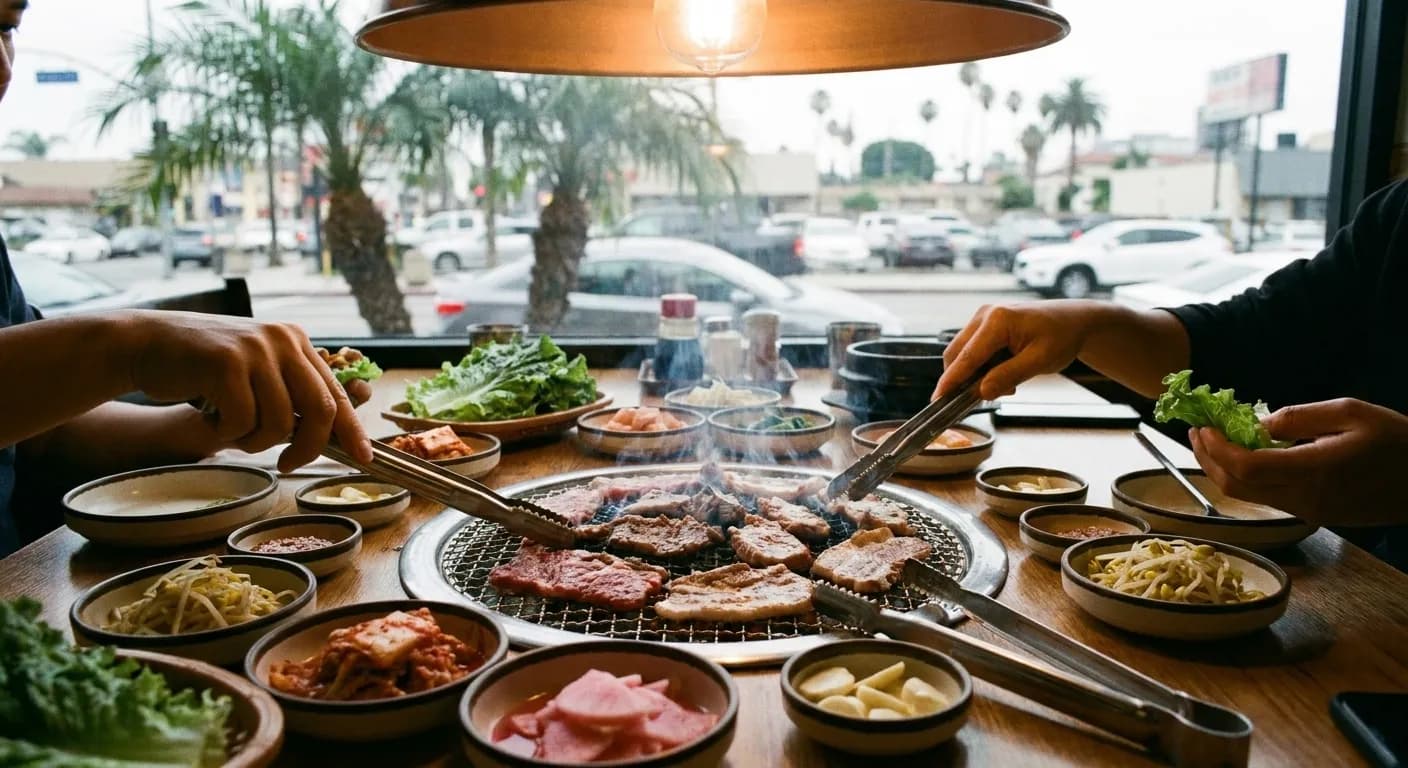
If there is one thing to know, this is it. Koreatown runs genuinely late — barbecue rooms, soondubu houses, fried chicken and beer, karaoke with kitchens attached — and a substantial number of places serve until three or four in the morning, seven days a week. It is not a handful of holdouts; it is the normal operating pattern of an entire dense neighbourhood.
It is also the only part of the city where the two-in-the-morning experience feels like a functioning night rather than a scavenger hunt. The density means you can walk between options, which anywhere else here would require driving, and the parking structures are open late for the same reason.
The eastside taco corridors
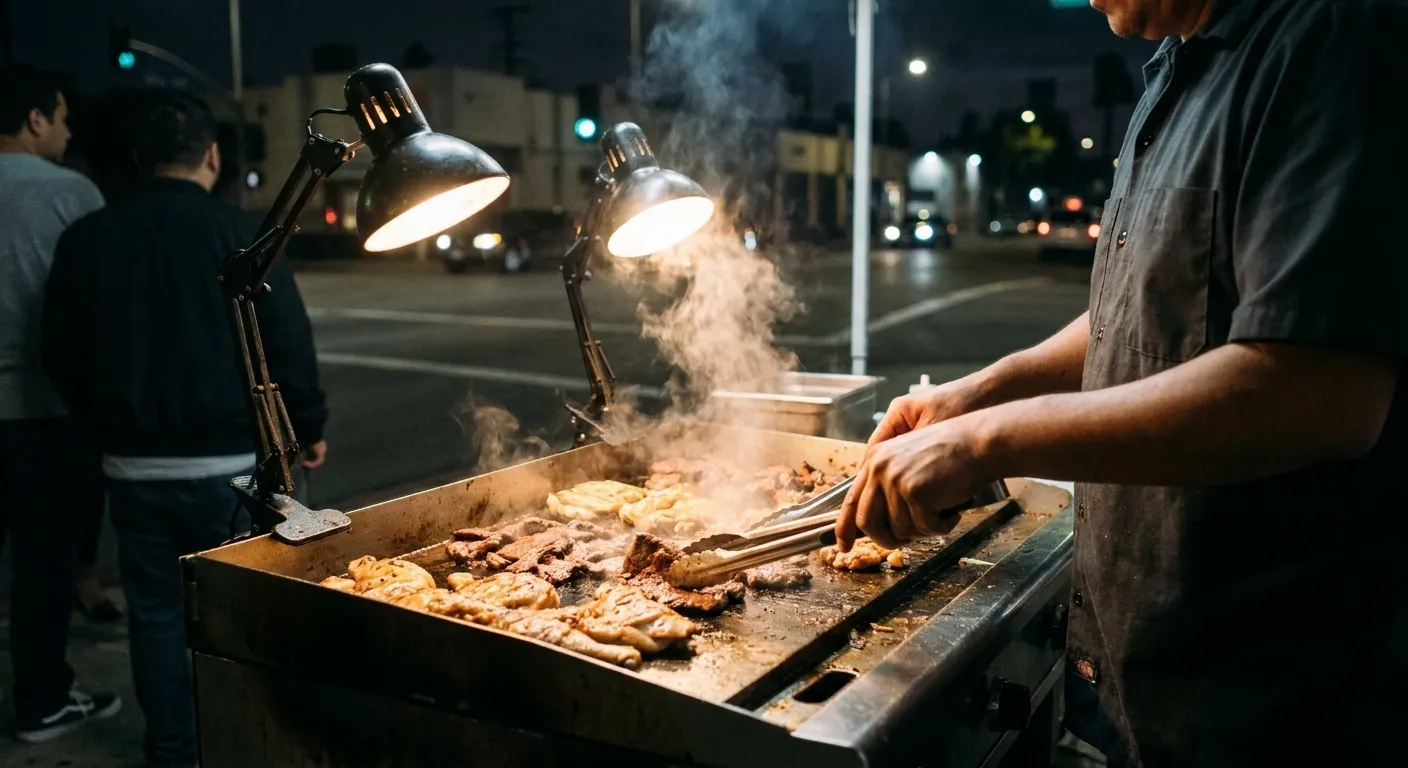
Boyle Heights, East LA and the stretches along Whittier and Cesar Chavez have trucks and stands that run past two, and they are the best late food in the city by quality if not by comfort. This is street food in the literal sense — a truck, a folding table, a queue of people who have just finished a shift — and it is excellent.
The same pattern repeats in the San Fernando Valley along a few commercial boulevards, and in South LA. The rule of thumb is that where there is a large working population on night shifts, there is late food; where there is not, everything shuts at ten regardless of how many bars are on the street.
The twenty-four-hour holdouts
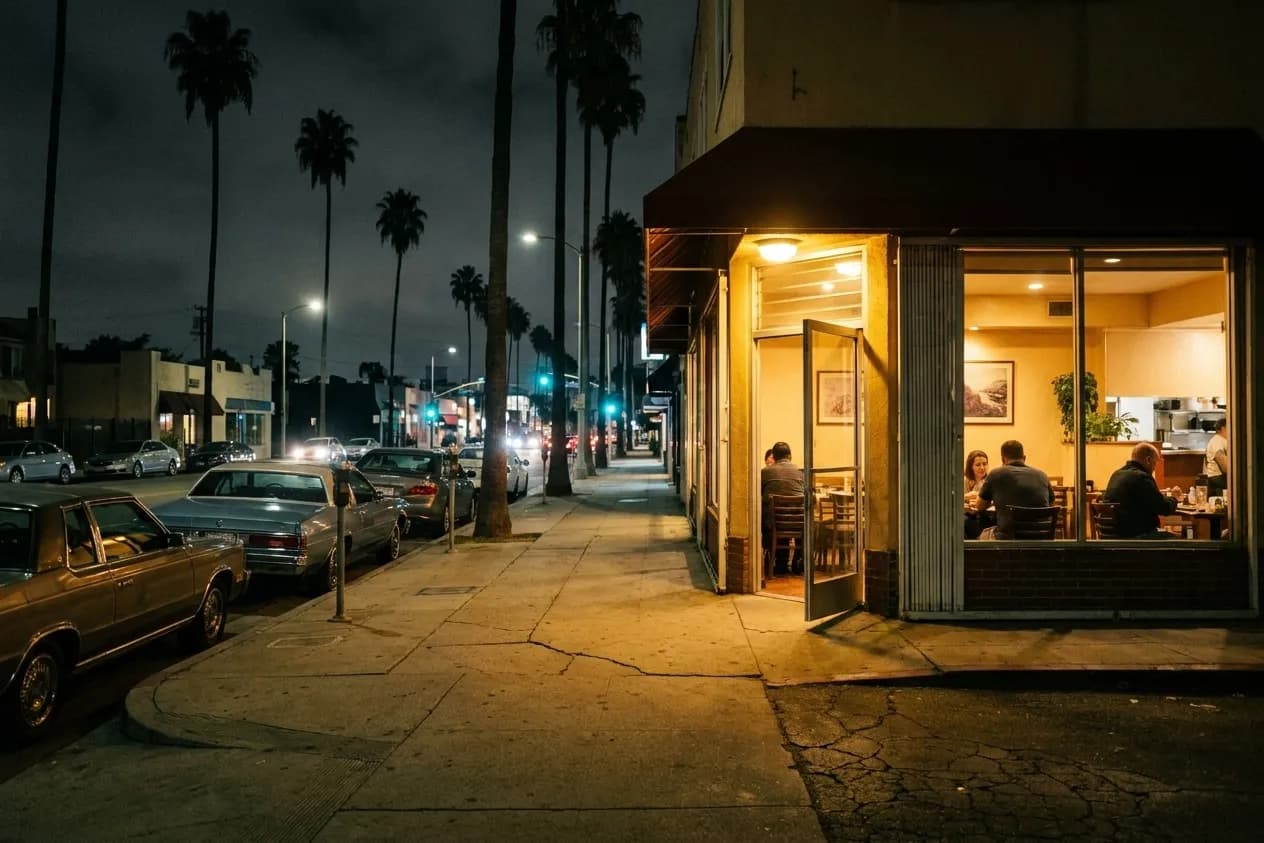
This category has thinned considerably and it is worth being honest about that rather than repeating a list from 2015. Several of the famous all-night diners have either closed, cut their hours, or reopened on a reduced schedule since 2020, and a number of guides have not caught up. Checking before driving is not optional now — it is the difference between dinner and a wasted forty minutes.
What remains tends to be the older institutions with a specific identity, a handful of chain locations that kept overnight service, and the diners attached to hospitals and transport hubs. They are useful rather than exciting, and their value is being reliably open rather than being good.
The mismatch between bars and food
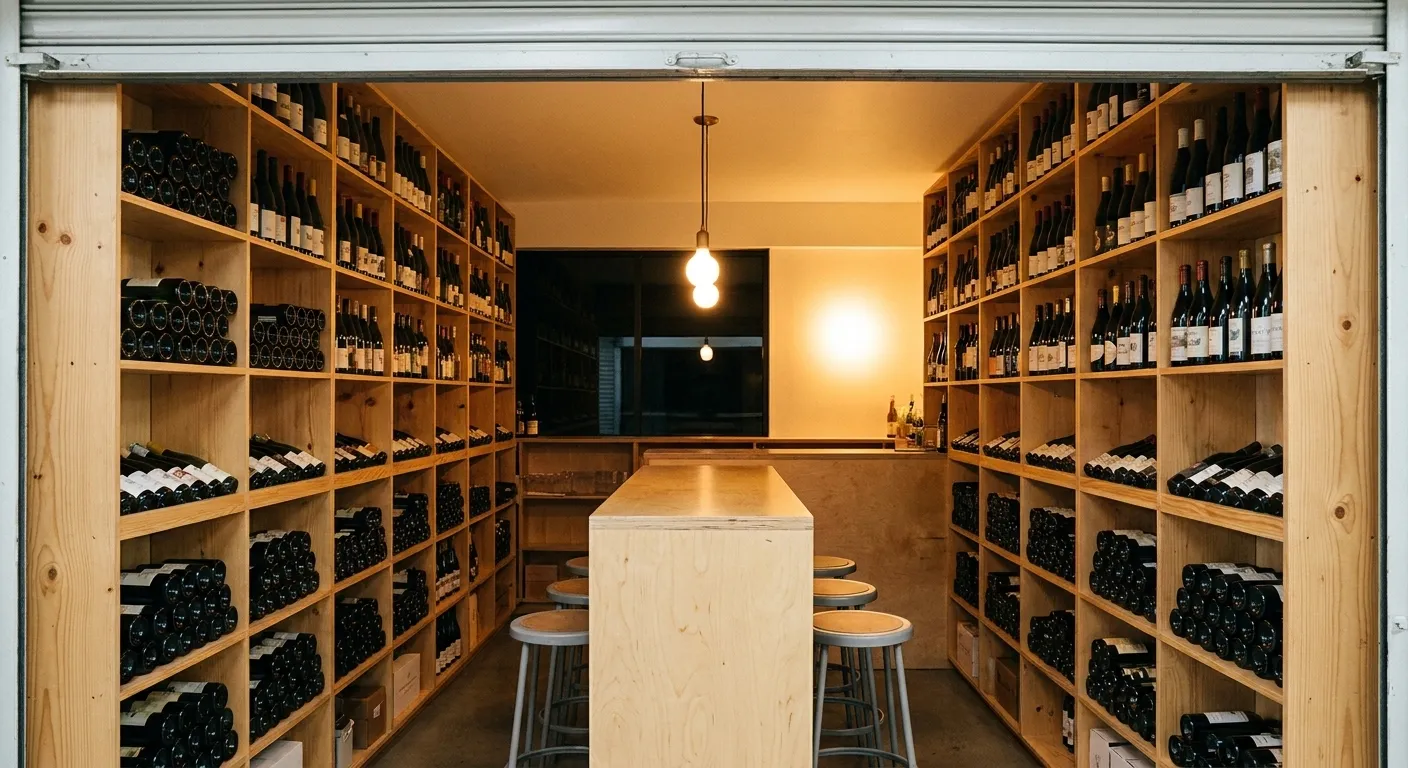
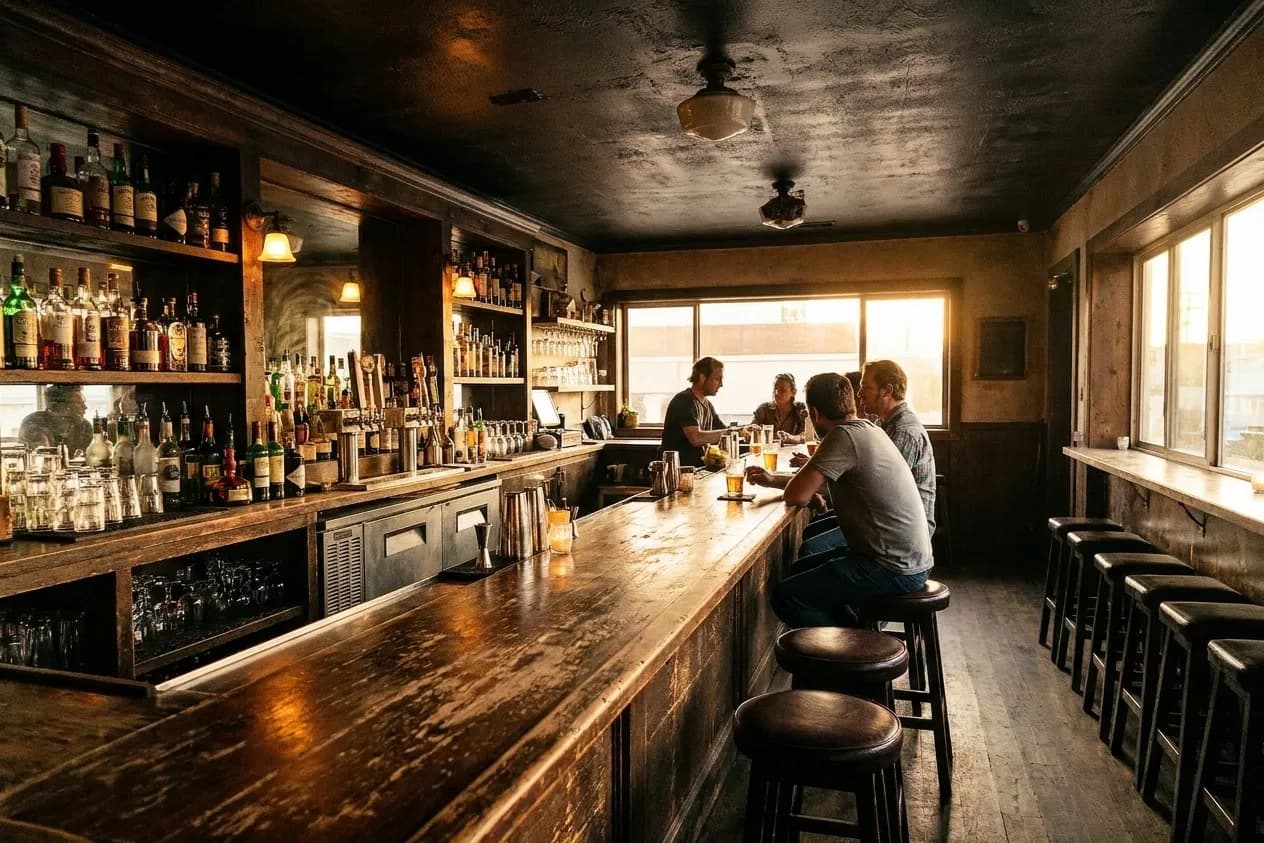
The structural oddity of this city is that the areas with the densest bar scenes — parts of the westside, Silver Lake, downtown's bar corridors, Hollywood — mostly do not have late food, while the areas with late food do not have many bars. Last call is at two and the kitchens near you closed at eleven, which means the after-drinks meal usually involves a drive.
This is the single most important planning consideration. If the night is going to end with food, the choice of where to drink should account for where you will eat, and the two best answers are to drink in Koreatown or to drink somewhere within fifteen minutes of it. Deciding this at one forty-five is how people end up at a petrol-station counter.
Getting home is the harder problem
Transit effectively stops for the night, which means the late meal is almost always attached to a car journey, and the calculation around drinking has to be made at the start of the evening rather than the end. A group that has planned a designated driver or budgeted for two ride-shares has a completely different night from one that has not.
The practical version: pick one neighbourhood, park once, walk between the bar and the food, and take a single ride home. That shape works well in Koreatown, reasonably in downtown, and poorly almost everywhere else, which is another argument for the same conclusion.
What to order at that hour
In Koreatown, the soups. Soondubu, haejangguk and the various restorative stews exist precisely for this hour and are considerably better suited to it than barbecue, which is a two-hour commitment and a lot of food. There is a reason the soup houses are the busiest rooms at three in the morning.
At the trucks, keep it simple — two or three tacos, salsa from the tray, a lime, and eat standing up. And if you find a truck with a queue at two thirty on a Wednesday, join it without further research. A queue at that hour on a weeknight is the most reliable quality signal available anywhere in this city.
What has changed and what has not
The late-night landscape here contracted sharply after 2020 and has only partly recovered. Staffing is the binding constraint rather than demand — kitchens that would happily serve until three cannot reliably find people to work until four, and several places that reopened did so with hours a full two hours shorter than before. Any list older than about eighteen months should be treated as a starting point rather than a source.
What has not changed is the underlying geography. Late food follows night-shift work and dense immigrant neighbourhoods, and those have not moved. Koreatown, the eastside corridors and the valley boulevards were the late map in 2015 and they are the late map now, which makes them the safe assumption even when a specific address has closed.
Tags: #LosAngeles #LateNightLA #Koreatown #FoodOpenNow #BoyleHeights #TacoTrucks #LAEats #AfterLastCall #LANightlife #SoondubuLA #SoCal #LateNightEats #LAFood
All trademarks are the property of their respective owners.
Ask Karpo first
Ask Karpo which kitchens near you in Los Angeles are still open right now, how late they serve, and how far the drive actually is.