 Where to Eat Near Penn Station That Isn't a Chain
US Open 2026
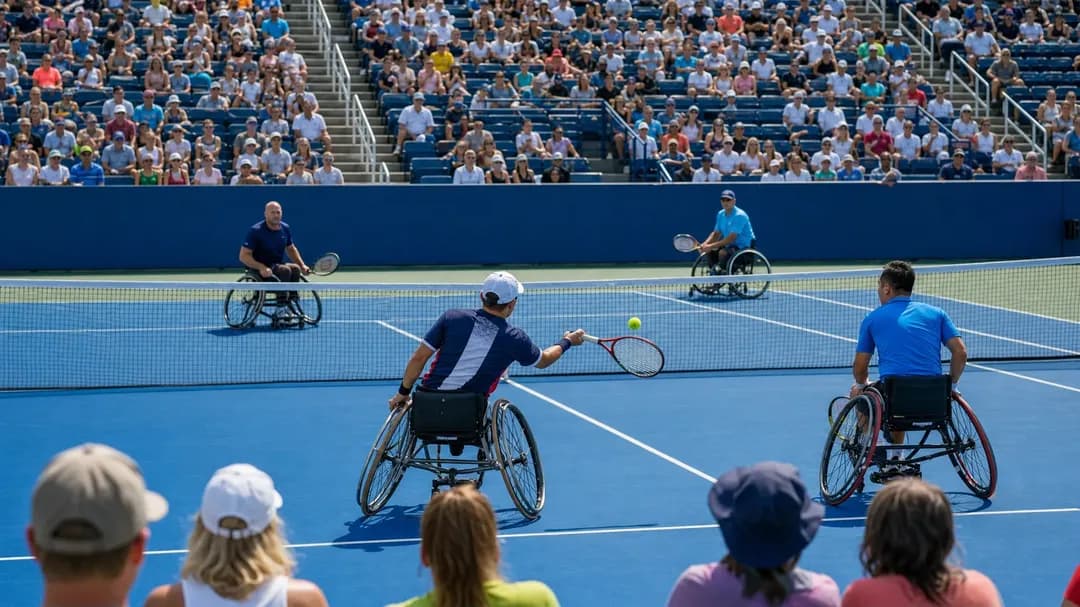
Wheelchair Tennis at the US Open: Events and Viewing Guide
Wheelchair tennis at the US Open offers compact rallies, sharp doubles patterns, and flexible viewing for fans using official schedules.
Wheelchair tennis at the US Open is one of the best ways for fans to see elite decision-making up close without treating a visit as only a search for the biggest stadium match. The event sits inside a crowded Grand Slam environment, so the smart approach is to understand it as a set of viewing opportunities rather than one fixed appointment. The US Open includes singles, doubles, and additional championship events alongside the main wheelchair singles draws, but specific 2026 entries, seeds, draws, court assignments, and match times should not be assumed before they are officially released. For visitors in New York, that uncertainty can be useful. Wheelchair matches can become high-value additions to a day plan because the tactical contrasts are clear, the rallies reveal angles quickly, and the atmosphere often rewards fans who are willing to move between courts.
Text Karpo Now: Tell us what matters most for Wheelchair Tennis at the US Open, and Karpo can turn current US Open updates into a practical plan before you go.
Why This Event Rewards Attention
The first reason to build time for wheelchair tennis is that it is immediately readable even for fans who do not follow the circuit every week. The court dimensions are familiar, the scoring structure looks like tennis, and the main rule difference, the allowance of a second bounce, changes the geometry rather than reducing the athletic demand. Players still have to serve, return, construct points, defend space, and finish under pressure. What changes is the relationship between the chair, the ball, and the next contact.
The second reason is pace. Wheelchair points can feel compact because recovery routes matter so much. A player who sends a deep crosscourt ball may not simply be aiming for a winner; they may be buying time to turn the chair, reset the shoulders, and protect the next angle. When a player attacks down the line, they often risk opening the opposite side of the court. That tradeoff is easy to spot live, and it makes even short rallies tactically satisfying.
How Wheelchair Points Develop
A useful way to watch is to separate the shot from the chair movement that follows it. In standing tennis, fans often focus on footwork after the ball is struck; in wheelchair tennis, the turn, push, and recovery path are just as revealing. Watch how a server lands the first ball and then chooses whether to hold central court position or shade toward a likely return angle. On return, notice whether the player blocks the ball deep, drives it crosscourt to begin a pattern, or changes height to make the next push awkward.
The two-bounce rule adds another layer. It does not mean players casually wait for the second bounce. At the elite level, taking the ball earlier can preserve court position and prevent the opponent from closing the point. Letting the second bounce arrive may be a defensive choice, a way to improve contact, or a necessity when the previous shot has stretched the chair wide. The best rallies often feature a constant negotiation between time and territory.

- Look for the first deep ball after serve or return; it often decides who controls the pattern.
- Watch the chair turn before the swing, because it shows whether the player is attacking or surviving.
- Notice height changes, especially sliced or dipping balls that make clean recovery harder.
- In pressure moments, track whether players choose safe depth or risk a sharper angle.
Singles Doubles And Championships
The confirmed planning point is broad but important: wheelchair tennis at the US Open is not only singles. The tournament includes doubles and additional championship events alongside singles, which gives fans more than one type of match to target once the official schedule is posted. Singles is the easiest entry point because the space management is clear. One player is responsible for every recovery decision, every angle covered, and every risk taken. If you want to study individual shot tolerance, serve patterns, or use of the second bounce under pressure, singles gives you the cleanest view.
Doubles offers a different appeal. The court becomes a puzzle of lanes, passing angles, and partner protection. One player may create pressure with depth while the partner looks to close space or cover the counter. Because chair positioning is less easily reversed than a simple sidestep, doubles teams have to communicate through patterns, court instincts, and preplanned responsibilities. A strong doubles exchange can look like a chess problem at high speed: the ball moves one way, the chairs rotate another, and the opening appears only if both partners have read the same pattern.
For 2026, fans should wait for the official US Open player information and draws before attaching names to any event. It is reasonable to plan around the categories and viewing styles, but not around unconfirmed participants. If a favorite player is eventually listed, use that as a reason to prioritize a session. If not, the event still stands on its own because the format variety gives casual fans multiple ways to understand the sport.
Following The Daily Schedule
The most important scheduling fact is that match schedules and court assignments are released closer to play. That is normal for a Grand Slam with many events, weather variables, match lengths, and court rotations. Do not build a New York day around a guessed start time or an assumed court. Instead, use the official US Open schedule, scores, and player pages as planning tools. The event schedule page is useful for broader tournament context, the scores page is useful once play is underway, and the player page is the place to confirm who is actually in the field when official information is available.

A flexible plan works better than a rigid one. Start by identifying the day you will be on site, then check official updates near that date and again before entering the grounds. If a wheelchair match is assigned to an accessible outer court, arrive early enough to choose a viewing angle that shows both the baseline and the recovery routes. If the assignment changes or an earlier match runs long, treat the delay as part of the normal tournament rhythm rather than a failure of planning.
- Check the official schedule close to your visit, not weeks ahead, for court assignments.
- Use the live scores page during the day to see whether earlier matches are extending.
- Confirm player participation through the official player page once fields are published.
- Keep a backup match nearby so a court change or delay does not waste your session.
For television or streaming viewers, the same principle applies. Look for the official order of play and available coverage rather than assuming every court will be shown in the same way. If a match appears in a live scoring window but not on your screen, follow point momentum through the score and return to available coverage when it opens. The key is to let official information lead your choices.
Practical Notes
For an on-site fan, the best plan is to leave room in the day. Wear comfortable shoes, bring sun protection, and expect to move if the official order of play points you toward a different court. Arrive before the listed match window when possible, because smaller courts can reward early seat selection, especially if you want to watch chair movement from the side rather than only the ball path from behind the baseline. Keep the official scores page open and refresh it between matches. If you are visiting with someone new to wheelchair tennis, explain the two-bounce rule before the first game, then let them watch recovery patterns for a few points. That small preparation makes the match easier to enjoy.
Tags: #USOpen2026 #Tennis #GrandSlam #NewYorkTennis #ArthurAsheStadium #FlushingMeadows #USOpenGuide #TennisFans #SportsTravel #HardCourt #NewYork #KarpoFinds
Sources consulted: usopen.org — Official reference · usopen.org — Official reference · usopen.org — Official reference
All trademarks are the property of their respective owners.
Ask Karpo first
Want to know what is confirmed, when to show up, and how to make wheelchair tennis at the us open work for your day? Ask Karpo for current US Open updates, a respectful fan plan, and a live route around Flushing Meadows.
Ask Karpo for more information.
Keep reading
- Where to Eat Near Penn Station That Isn't a Chain
 Andytown Coffee in the Outer Sunset: The Snowy Plover Explained
- Best Things to Do in Chicago: What the City Gives Away