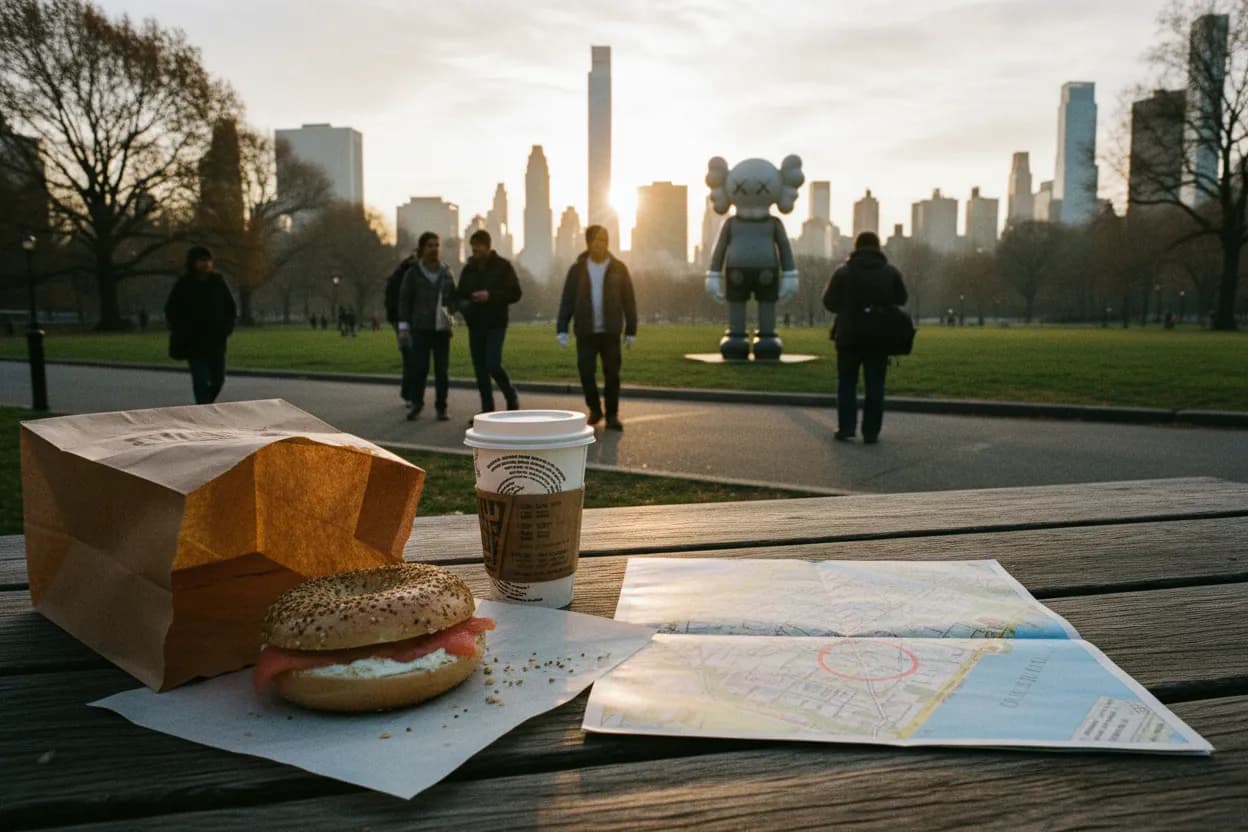
Downtown Brooklyn on a rainy evening presents a specific routing challenge: you want to hit creative workshops or maker spaces, but you also need to minimize time outside, keep transfers simple, and have a backup if one venue closes early or a class fills up. The neighborhood sits at the intersection of nine subway lines, which makes it well-connected but also means not every exit puts you under an awning. A smart rainy-night workshop route starts with one strong indoor anchor—a museum with evening hours, a multi-floor arts center, or a bookstore-café hybrid—and builds outward from there, keeping walking segments short and always checking whether the next stop is worth a wet three-block detour or better saved for another night. Rain doesn't cancel the trip; it just tightens the logic.
Text Karpo for a live downtown Brooklyn workshop route that checks tonight's hours, subway service alerts, and which creative spaces have walk-in availability before you leave.

Start with Transit-Adjacent Indoor Anchors
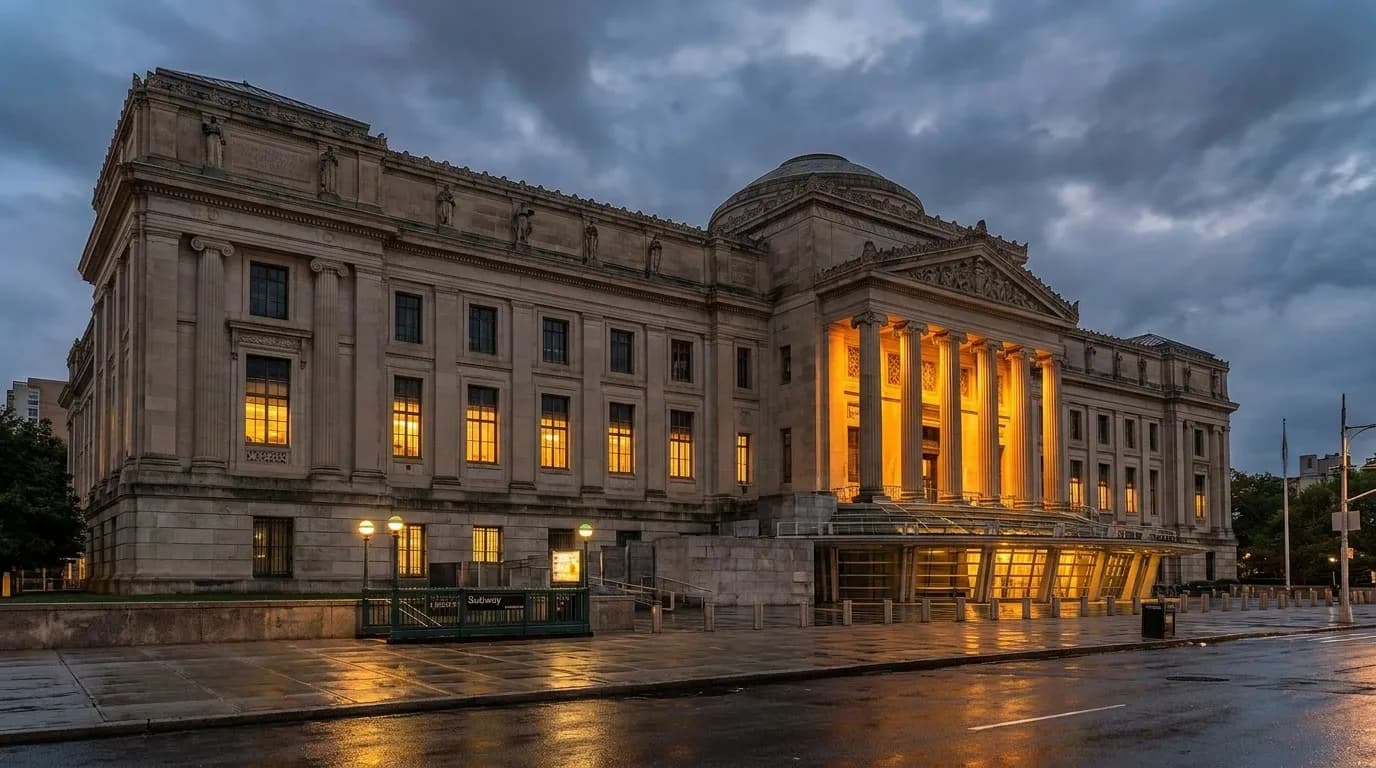
The best rainy-night routes in Downtown Brooklyn begin at a venue within one block of a major subway hub—Atlantic Terminal, DeKalb Avenue, or Jay Street–MetroTech. These stations offer covered exits, multiple train options, and direct connections to neighborhoods farther out if weather worsens. Brooklyn Museum, for example, sits near the 2/3 at Eastern Parkway–Brooklyn Museum and offers Thursday evening hours until 10 p.m., making it a reliable anchor even if your first workshop choice is full. If you're planning a route that includes poster design, printmaking, or visual-arts workshops, starting at a museum gives you a fallback activity and keeps you indoors for the first hour while you assess conditions outside.
Downtown Brooklyn's creative workshop scene clusters around Fulton Street, Boerum Hill, and the edges of Fort Greene, but not every venue is equally accessible in the rain. A workshop at a fourth-floor walk-up in Boerum Hill might be excellent on a dry night but frustrating when you're carrying materials and an umbrella. Prioritize ground-floor spaces, venues with vestibules, or buildings where you can wait inside a lobby rather than on the sidewalk. If a workshop listing doesn't specify the entrance type, that's a detail worth confirming before you commit to the route. Rain makes small logistical details—awnings, interior waiting areas, nearby subway entrances—much more important than they seem on a sunny afternoon.
Build a Two-Stop Route with One Backup
A realistic rainy-night workshop route in Downtown Brooklyn should include two confirmed stops and one flexible backup, all within a 10-minute walk or one subway stop of each other. Trying to string together four venues across Cobble Hill, DUMBO, and Prospect Heights in the rain creates too many failure points—missed trains, closed streets, soaked materials, or a class that started early. Instead, pick a primary workshop, identify a secondary activity within easy reach, and keep a third option (a café, bookstore, or late-night museum gallery) that requires no reservation and stays open past 9 p.m. This structure gives you a real plan without forcing you to stick to a rigid schedule when conditions change.
For example, a route anchored at Brooklyn Museum could pair a 7 p.m. printmaking workshop in Prospect Heights with a fallback visit to the museum's contemporary galleries if the workshop is full, then finish with a late coffee at a nearby café that doesn't mind wet floors and backpacks. The entire route stays within two subway stops, uses the 2/3 or B/Q lines, and never requires more than a five-minute outdoor walk. If rain intensifies, you can skip the café and head straight home from the museum. If it clears, you have the option to extend the route toward Fort Greene. The key is designing the route so that every decision point—stay or go, add a stop or cut one—makes sense in real time, not just on paper.
Check Evening Workshop Schedules and Walk-In Policies
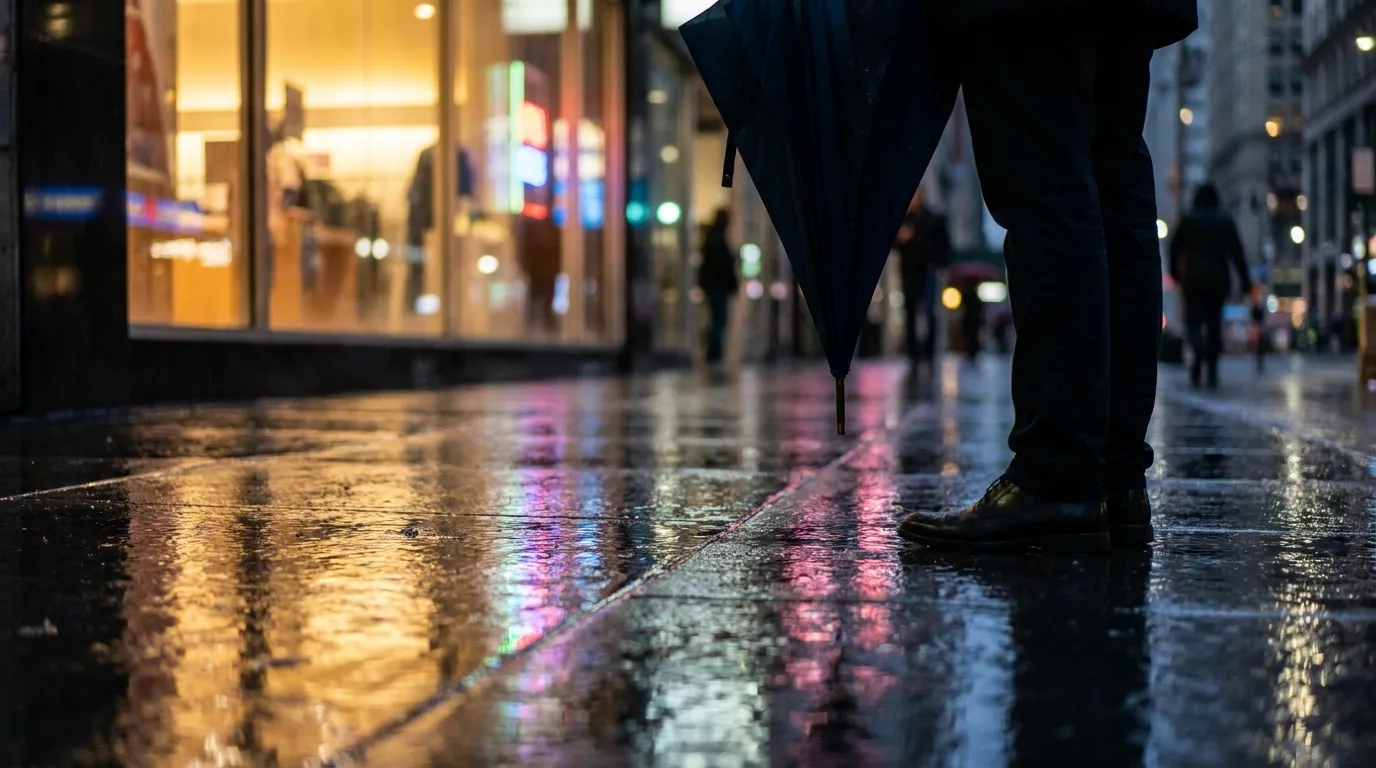
Most creative workshops in Downtown Brooklyn require advance registration, but a few venues offer walk-in sessions, open studio hours, or drop-in craft nights that work better for rainy-evening plans when you're not sure exactly when you'll arrive. Before you finalize a route, confirm whether each workshop has a strict start time, a grace period for latecomers, or a rolling-entry format that lets you join mid-session. Rain slows down subway service, adds crowding at stations, and makes every connection take longer than the app predicts. If a workshop starts at 7 p.m. sharp and you're leaving Manhattan at 6:15, that's a tight window even in good weather. On a rainy night, it's a gamble.
Some Brooklyn workshops also close early or cancel evening sessions when attendance drops below a minimum threshold, especially on weeknights in winter or during heavy rain. If you're building a route around a single workshop, have a phone number or email confirmation that shows the session is running as scheduled. If the venue's website lists evening hours but doesn't specify whether those hours apply to workshops or just open browsing, assume you need to call ahead. A rainy-night route works best when the first stop is guaranteed to be open and the second stop is flexible enough to absorb a 30-minute delay. That usually means pairing a registered workshop with a museum, gallery, or café that doesn't require a reservation and won't turn you away if you arrive late.
Plan Subway Exits and Covered Waiting Areas
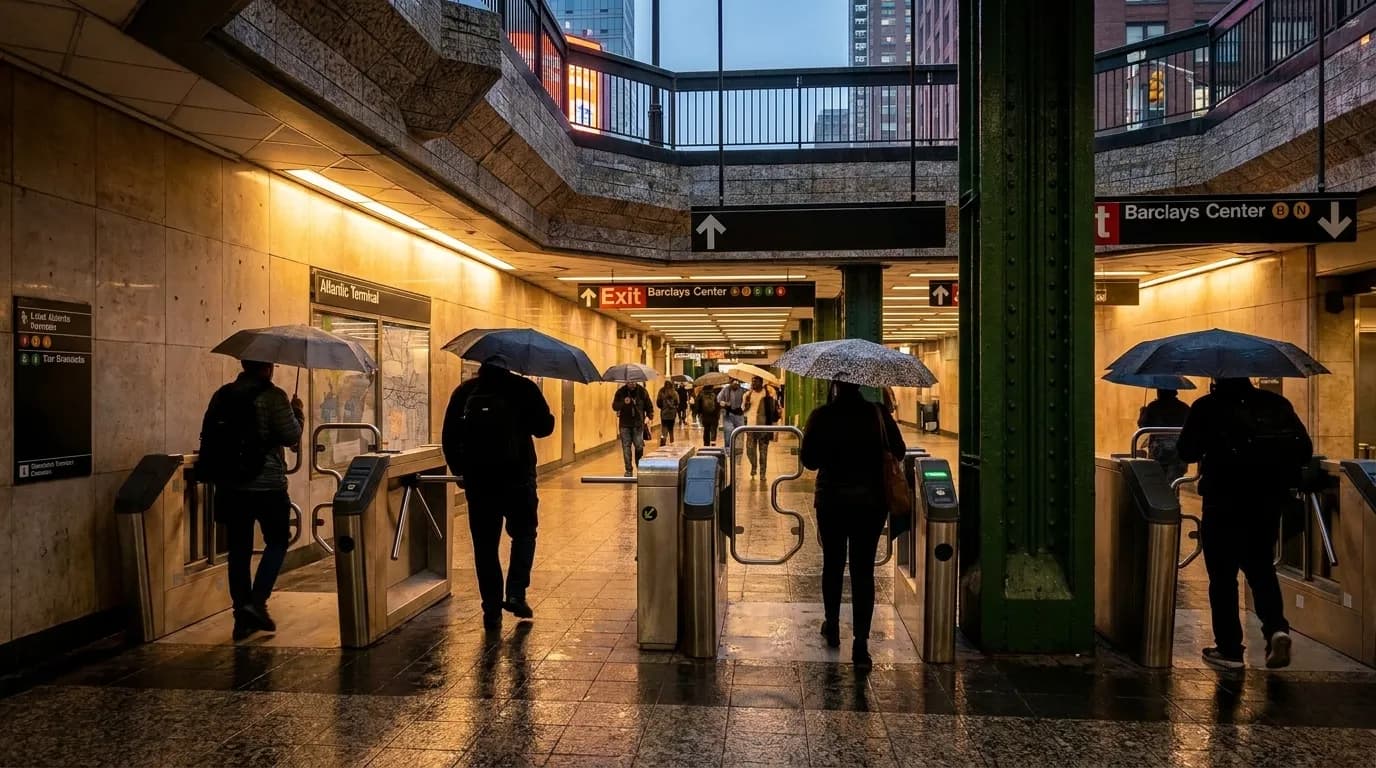
Downtown Brooklyn's subway stations have multiple exits, and not all of them are equally useful in the rain. At Atlantic Terminal, for example, the main exit puts you inside the Barclays Center complex with covered walkways toward Flatbush Avenue, while the Hanson Place exit leaves you on an open corner with no awning. At Jay Street–MetroTech, the exit toward Willoughby Street has a short covered arcade, but the Lawrence Street exit opens directly onto the sidewalk. If you're planning a rainy-night route, map out which exits keep you dry longest and which ones force you to navigate scaffolding, construction zones, or intersections with no shelter. A route that looks efficient on a subway map can fall apart if every transfer requires standing in the rain waiting for a walk signal.
Covered waiting areas matter just as much as subway exits. If you're meeting a friend or waiting for a workshop to open, you need a place to stand that isn't a subway platform or a wet sidewalk. Downtown Brooklyn has several options: the Atlantic Terminal mall, the lobby of the Brooklyn Public Library's central branch, the ground floor of City Point, and the covered plaza at MetroTech Center. These aren't tourist attractions, but they're practical anchors for a rainy-night route because they let you adjust timing without getting soaked. If your workshop doesn't start for another 20 minutes and it's pouring outside, you can wait in the library lobby, check your phone, and walk over when the rain eases. That flexibility is more valuable than cramming in an extra stop that leaves you standing outside in the wet.
Practical Notes
- Confirm evening workshop hours and walk-in policies by phone or email before you leave; many venues close early or cancel sessions in bad weather.
- Use Atlantic Terminal, DeKalb Avenue, or Jay Street–MetroTech as route anchors—they offer covered exits and multiple subway lines.
- Limit outdoor walking segments to five minutes or less; a two-stop route with one backup works better than a four-venue marathon in the rain.
- Carry workshop materials in a waterproof bag or backpack; many creative spaces don't have coat checks or storage for wet umbrellas.
- Check real-time subway service alerts before each leg of the route; rain often triggers delays on the B, Q, and R lines through Downtown Brooklyn.
- Identify at least one covered waiting area—library lobby, mall entrance, or indoor plaza—where you can adjust timing without standing outside.
- Keep a late-night café or bookstore as a final stop; it gives you a dry place to decompress and doesn't require a reservation if earlier plans change.
A rainy-night workshop route around Downtown Brooklyn works when you treat weather as a variable, not an obstacle. That means starting with transit-adjacent anchors, building in flexibility at every decision point, and knowing which subway exits keep you dry and which ones leave you standing in the rain. The neighborhood's density and subway access make it one of the best places in the city for evening creative plans, but only if you design the route with real conditions in mind—late trains, wet sidewalks, early closures, and the occasional need to bail on a third stop and just go home. Rain tightens the route, but it doesn't have to cancel the night.
Tags: #downtownbrooklyn #brooklynworkshops #rainynightnyc #nycworkshops #brooklynroute #creativeworkshops #indoorbrooklyn #transitplanning #rainydaynyc #brooklynmuseum #nycevenings #workshoproute #brooklyntransit #nycrain
Sources consulted: NYC Poster Workshop Route: Poster House, Brooklyn Museum, and a Better ... · 50+ Things to Do in Brooklyn When it Rains - Make More Adventures · Rainy Day NYC: What to Do When It Rains — Indoor Activities, Broadway ... · Indoor Activities NYC: Best Things to Do Inside on a Rainy Day, Cold ... · Trip planner | MTA · Getting to and Around Brooklyn: Subway, Ferry, Bike, and Walk Guide
All trademarks are the property of their respective owners.