New York City families navigating three-generation outings face a specific design problem: activities that engage a seven-year-old rarely suit a seventy-year-old's stamina, and the usual Midtown defaults—crowded plazas, long museum queues, overpriced cafés—amplify friction instead of reducing it. The challenge isn't finding things to do; it's sequencing a day that respects different mobility levels, attention spans, and bathroom schedules while still feeling like an adventure rather than a logistics exercise. Successful grandparent-and-kid days require explicit contingency planning: knowing which neighborhoods offer dense clusters of low-stakes stops, where to find seating that isn't a park bench, and how to pivot when energy flags earlier than expected. This isn't about sentimentality or photo opportunities—it's about building a route that actually works for everyone involved.
Text Karpo at (332) KARPO-NY for neighborhood-specific routing that accounts for real mobility constraints and backup options your family will actually use.

Why Midtown Fails Multigenerational Groups
Midtown's density works against families mixing ages. Sidewalk congestion between Bryant Park and Rockefeller Center forces single-file walking, splitting conversations and making it difficult for grandparents to keep visual contact with children. Attractions cluster vertically rather than horizontally—you're moving between floors and security checkpoints instead of strolling a walkable radius. Rest stops require either purchasing something or claiming contested public seating, and bathroom access often means navigating department store escalators or hotel lobbies that discourage lingering. The neighborhood's design assumes adult tourists moving quickly between ticketed experiences, not groups that need frequent recalibration.
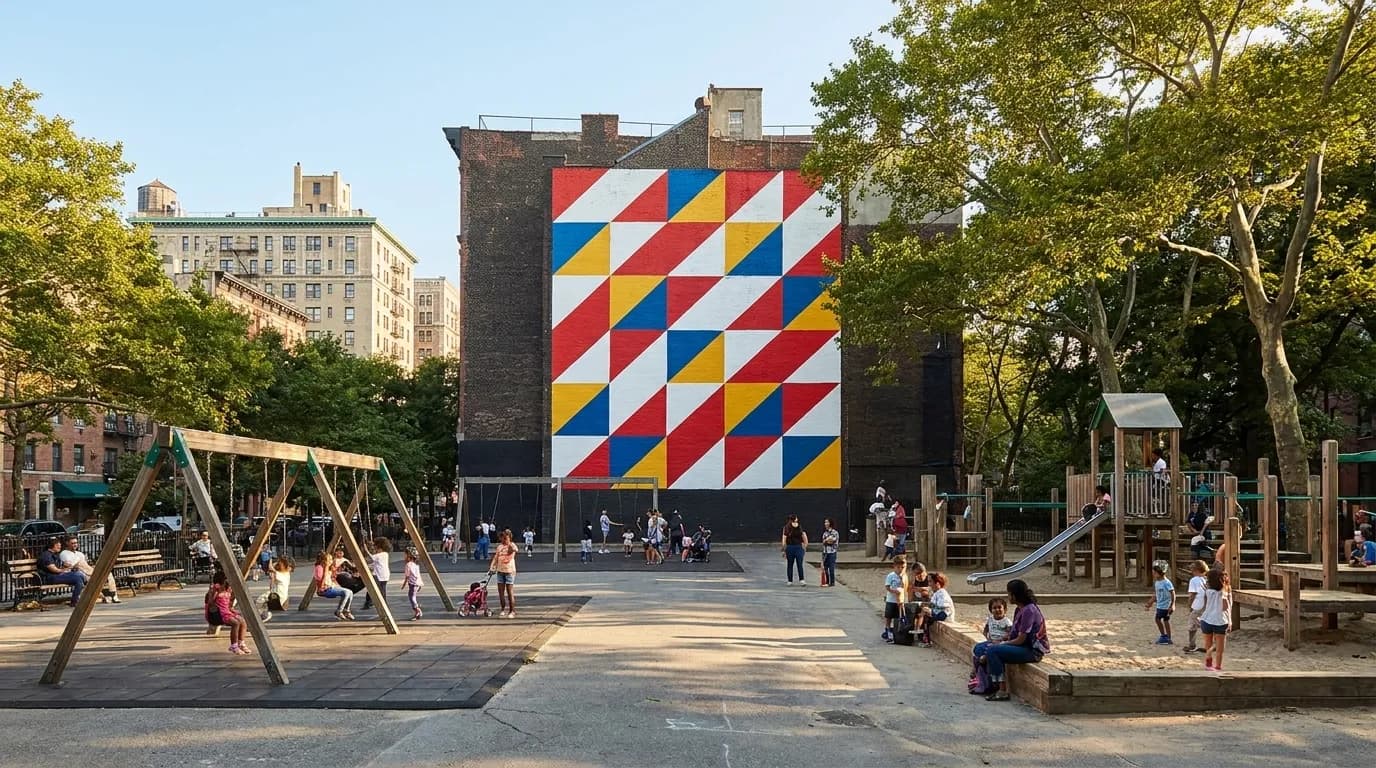
The alternative isn't to avoid Manhattan entirely, but to choose neighborhoods where activities sit within a three-block radius and street life provides natural entertainment between planned stops. Brooklyn Heights, Cobble Hill, and parts of the Upper West Side near Riverside Park offer this density without Midtown's friction. These areas let you design a day around a single subway trip rather than multiple transfers, and their commercial corridors include bakeries, bookstores, and small parks that function as pressure-release valves when someone needs a break. The goal is to spend energy on interaction rather than navigation.

Designing Routes Around Realistic Stamina
Multigenerational planning requires explicit stamina mapping. Most grandparents can handle two to three hours of active engagement before needing a substantial rest, and most children under ten need a physical outlet every ninety minutes. Your route should account for both rhythms simultaneously, which means identifying activities that allow one generation to rest while the other expends energy. Prospect Park's Long Meadow, for example, lets grandparents claim a bench with sightlines while kids run loops. The Brooklyn Botanic Garden's Cherry Esplanade offers similar dynamics—seating with supervision distance built in.
Avoid itineraries that require sustained walking between destinations. A common mistake is chaining together three museums across different neighborhoods, assuming that taxi rides provide adequate rest. They don't—transfers eat time, create new logistics problems, and prevent the kind of spontaneous detours that often become the day's highlight. Instead, pick a single anchor activity and build a two-block radius around it. If you're visiting the New York Transit Museum in Brooklyn Heights, your radius includes the Promenade for views, Montague Street for lunch options, and Brooklyn Bridge Park's Pier 6 playground. That cluster supports a four-hour outing without requiring anyone to get back in a car.

Choosing Activities That Allow Parallel Engagement
The best multigenerational activities don't demand synchronized attention. Interactive museums like the New York Hall of Science in Queens let kids engage with hands-on exhibits while grandparents observe from nearby seating—the architecture creates natural supervision zones. Similarly, the Staten Island Ferry provides a contained, time-limited experience where everyone can participate at their own intensity level. Kids focus on the boat's movement and views, grandparents can sit comfortably, and the twenty-five-minute duration prevents anyone from getting bored or overtired. The return trip offers a built-in reset before the next activity.
Avoid attractions that require everyone to move at the same pace through a linear experience. Guided tours, timed-entry exhibitions, and performances longer than ninety minutes create pressure points where someone's discomfort derails the group. Instead, look for environments with multiple engagement modes. The Brooklyn Children's Museum offers both active play areas and quieter gallery spaces, letting families self-sort by energy level. Green-Wood Cemetery provides stroller-friendly paths, historical markers for adults interested in reading, and open space for kids to explore without disturbing others. These venues accommodate different participation styles without making anyone feel like they're holding the group back.
Building in Contingencies and Exit Strategies
Every multigenerational outing needs a pre-planned exit strategy that doesn't feel like failure. Identify the halfway point in your route where you can cleanly split the day if someone's tired—a subway station, a taxi-friendly intersection, or a park entrance that leads to multiple transit options. Communicate this to the group at the start: "We're planning to be at the Brooklyn Museum around two, and if anyone needs to head home then, we're right by the 2 and 3 trains." This framing removes guilt from the decision to leave early and prevents the common scenario where one person's fatigue forces an abrupt, uncomfortable ending.
Weather contingencies matter more with grandparents and young kids, both of whom regulate temperature less efficiently than adults. Summer outings should cluster around air-conditioned spaces with outdoor segments limited to early morning or late afternoon. The American Museum of Natural History's layout lets you move between climate-controlled halls and the shaded paths of Theodore Roosevelt Park without committing to full sun exposure. Winter planning requires the opposite calculus—short outdoor segments between warm interiors, with backup indoor options if wind makes playgrounds unpleasant. Keep a mental list of nearby libraries, bookstores, and cafés that welcome lingering without purchase pressure. The Brooklyn Public Library's Central branch near Prospect Park and the Strand's rare book room both function as free, dignified rest stops when plans need adjustment.
Practical Notes
- Choose neighborhoods where three to four activities sit within a three-block radius to minimize transit friction and allow easy pivots.
- Plan bathroom stops explicitly—identify cafés, libraries, or park facilities along your route rather than assuming you'll find options when needed.
- Bring a small bag with backup supplies: water bottles, basic snacks, a light sweater, and any medications grandparents might need if the day runs longer than expected.
- Test your route's accessibility in advance if anyone uses a cane or has limited mobility—Google Street View helps identify curb cuts, stairs, and uneven pavement.
- Schedule the anchor activity for mid-morning rather than afternoon, giving you flexibility to extend or shorten the day based on real-time energy levels.
- Avoid Saturdays in popular family neighborhoods—Sunday mornings or weekday afternoons offer the same activities with significantly less crowding.
- Communicate the day's structure at the start, including planned rest stops and the identified exit point, so no one feels pressure to push through discomfort.
Successful grandparent-and-kid days in New York City aren't about maximizing attractions—they're about designing routes that respect everyone's constraints while still delivering the spontaneity and connection that make the outing worthwhile. That means choosing neighborhoods where density works in your favor, building explicit rest and exit points into your plan, and selecting activities that allow parallel rather than synchronized engagement. The goal isn't a perfect day; it's a sustainable one that ends with everyone wanting to do it again rather than needing a week to recover.
Tags: #nycfamilies #multigenerationalouting #grandparentsandkids #brooklynfamilies #nycwithkids #familyplanning #nycneighborhoods #accessiblenyc #familyactivities #localnyc #nycparenting #generationaltravel
Sources consulted: 15 Family Spots Where Both Kids and Grandparents Have Fun · Visiting the Grandkids? Find Family Activities in Any City | Grandkids ... · NYC Kids Neighborhood Guides | Mommy Poppins - Things to Do with Kids · Traveling with Kids on New York City Public Transit: A Parent's Guide · 55 Best Things to Do With Kids in NYC - Time Out
All trademarks are the property of their respective owners.