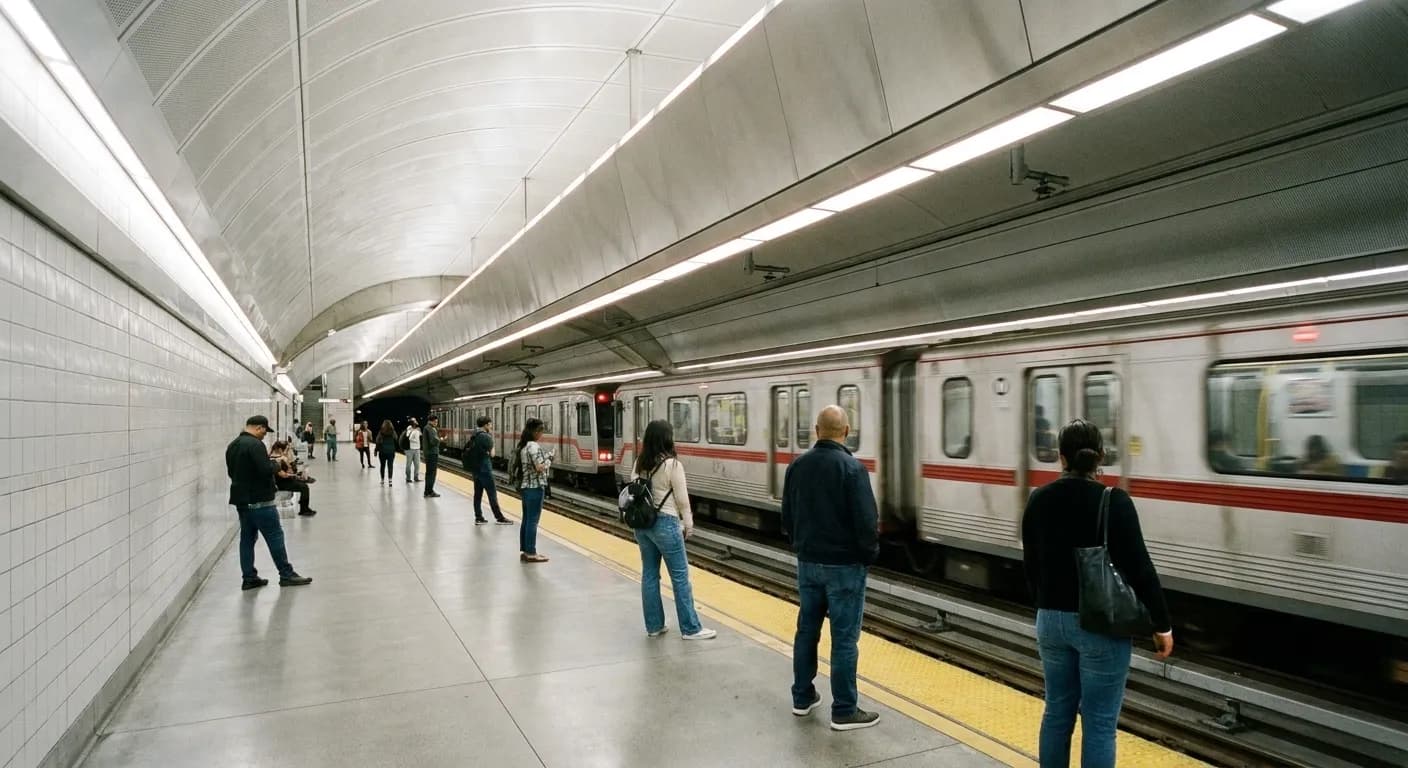
The standard advice about things to do in Los Angeles without a car has been the same for twenty years: do not try. That advice is now noticeably out of date. The Metro network has been extending steadily, and in May 2026 the D Line subway extension opened three new stations along Wilshire — La Brea, Fairfax and La Cienega — connecting downtown to the edge of Beverly Hills by rail for the first time, with a journey time of around twenty-one minutes. That single change makes a genuinely good car-free weekend possible in a way it was not previously.
Rail gets you to the neighbourhood; the last mile is where car-free days fall apart. Ask Karpo how to actually reach a specific place from where you are.
What the network actually is now
It helps to know the shape of it. The B and D lines are the subways running from downtown north to North Hollywood and west along Wilshire respectively. The E Line runs from downtown all the way to Santa Monica and the beach. The A Line runs south to Long Beach. The K Line covers Crenshaw and connects to the airport. Between them these cover a surprising amount of what a visitor or a car-free resident would actually want, and the Wilshire corridor extension has closed the largest single gap in the middle.
What the network still does not do is the Westside proper — Venice, most of Santa Monica beyond the E Line terminus, Malibu — or the canyons, or most of the San Gabriel Valley's food. Those remain genuinely hard without a car, and pretending otherwise is how people end up stranded.
A weekend that works on rail
Saturday morning is best spent downtown, because it is the densest walkable part of the city and every line converges there. Grand Central Market for breakfast, the Broad or the surrounding galleries, the Bradbury Building lobby, Union Station itself — which is one of the great American railway buildings and free to walk into — and Olvera Street. All of this is within about twenty-five minutes on foot end to end.
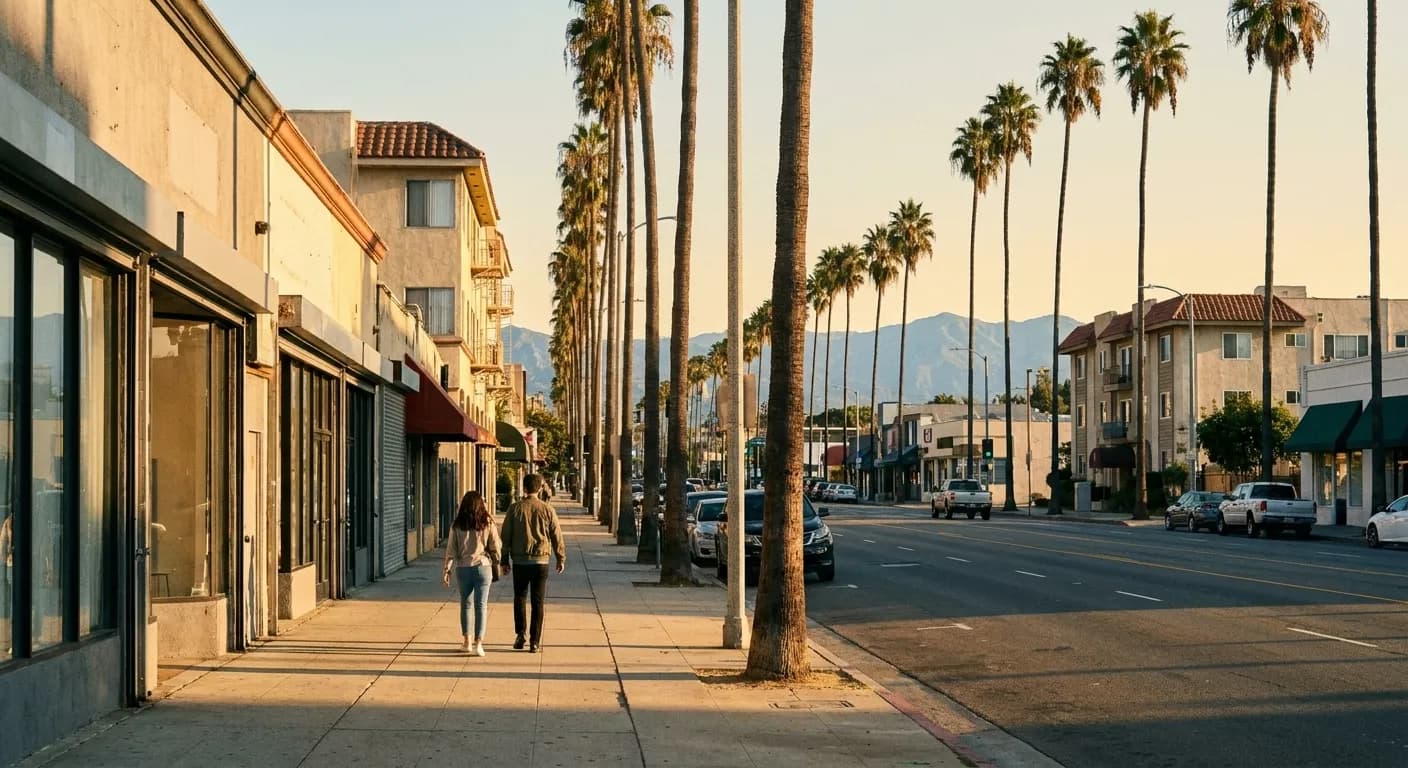
Saturday afternoon, take the D Line west. The new Wilshire stations put you within walking distance of the Miracle Mile museums, the Grove and Fairfax, and the whole La Brea corridor — an area that previously required either a car or a very long bus ride. Sunday belongs to the E Line and the beach: Santa Monica pier, the beach path, and a walk or short ride south toward Venice.
The last mile, which is the real constraint
The failure mode of car-free Los Angeles is not the trains, which are frequent enough. It is the gap between the station and the destination, which in a city built at this scale is routinely a mile of hot sidewalk with no shade. Plan for that explicitly. Bike share and scooters cover it well in the denser neighbourhoods. The DASH and Metro bus network fills in more than people expect and is cheap. And a single rideshare trip to close a difficult last mile is a perfectly reasonable part of a car-free day rather than an admission of defeat — the saving is in not renting a car for the weekend, not in religious purity about it.
Neighbourhoods that reward being on foot
Some parts of Los Angeles are genuinely walkable once you arrive, and those are the ones to build a car-free weekend around. Downtown, particularly the Historic Core and Little Tokyo. Koreatown, which is dense, on the subway, and open later than anywhere else in the city. Highland Park along York and Figueroa. Silver Lake and Echo Park, with the caveat that they are hilly. Santa Monica and Venice along the beach. Pasadena's Old Town. Each of these supports several hours on foot without a dull stretch, which is not something you can say about most of the city.
What the network cannot do, honestly
It is worth being clear about the gaps so you plan around them rather than into them. Venice is not on rail and the connection from the E Line terminus is a bus or a bike. Malibu is effectively unreachable without a car. The canyons and the mountain trailheads are car-only with a couple of exceptions. Most of the San Gabriel Valley's food — which is a genuine reason to visit Los Angeles — sits well beyond convenient rail, though the A Line reaches parts of the near eastside.
There is also a comfort gap that nobody mentions. Waiting on an open-air platform on the Wilshire corridor in August is genuinely unpleasant, and a lot of the walking between stations and destinations is on wide boulevards with no shade at all. A car-free Los Angeles weekend in July is a different proposition from the same weekend in March, and the sensible adjustment is to front-load the outdoor parts into the morning and put the museums and the indoor eating in the middle of the day.
Practical notes on the system
Get a TAP card or use contactless at the gates; fares are capped daily and weekly, so heavy use on a weekend costs less than you would expect. Trains run frequently through the day and thin out late, so check the last train if you are staying out — this is the single most common way a car-free evening goes wrong. Weekend engineering closures happen and are announced with less prominence than they should be. And allow more time than the app suggests for transfers, because the interchange stations are large.
The honest summary is that Los Angeles is now a city where a car-free weekend is a reasonable plan rather than a stunt, provided you choose the rail corridor first and the activities second. That is the inverse of how people usually plan a trip here, and it is the whole trick. Pick the line, then find out what is on it.
Tags: #LosAngeles #CarFreeLA #LAMetro #DLine #ThingsToDoLA #DTLA #SantaMonica #Koreatown #PublicTransit #WeekendLA #LAGuide #ExploreLA #NoCar #TransitLife #LAWeekend
All trademarks are the property of their respective owners.
Ask Karpo first
Ask Karpo how to get from where you are to where you want to go in Los Angeles without a car, how long it will actually take, and what is worth doing near the station at the other end.