 Mar Vista Winter Farmers Market Picker for Weekend Cyclists
Weekend Plans
Larchmont Winter Farmers Market Picker for Kimchi-Making Day
Making kimchi for winter? Larchmont's market has the napa cabbage, radish and alliums a family batch needs. Here's how to pick them and get them home intact.
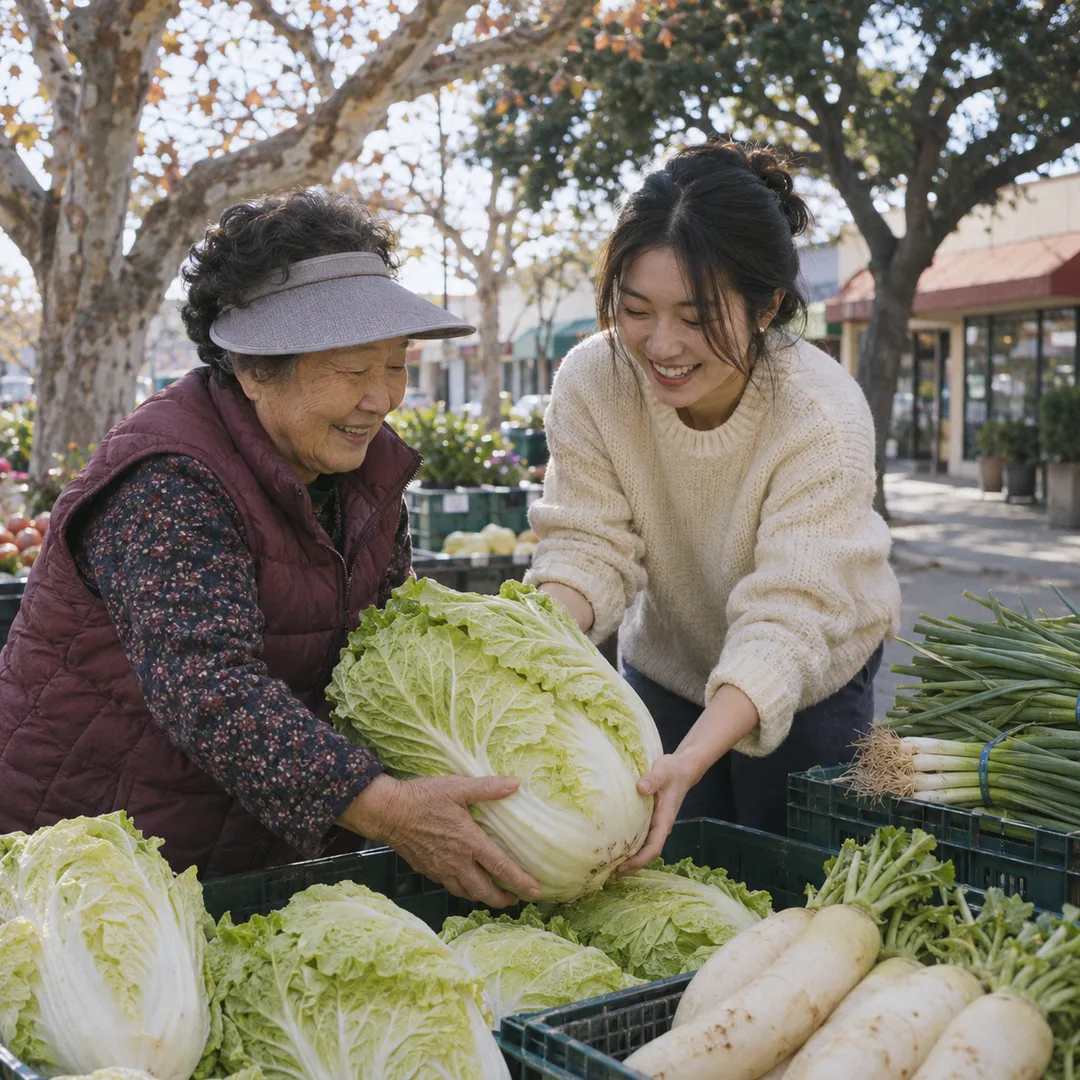
Larchmont Village Farmers' Market is a short drive from Koreatown, and every winter some families come here with one big task on their minds: kimjang, the season when Korean households make a large batch of kimchi to last for months. Heads of napa cabbage, thick Korean radishes and bunches of green onion all reach their sweetest point in the cool months. This winter farmers market picker follows a grandmother and granddaughter shopping for a full family batch.
Why Kimjang Brings Families to Larchmont
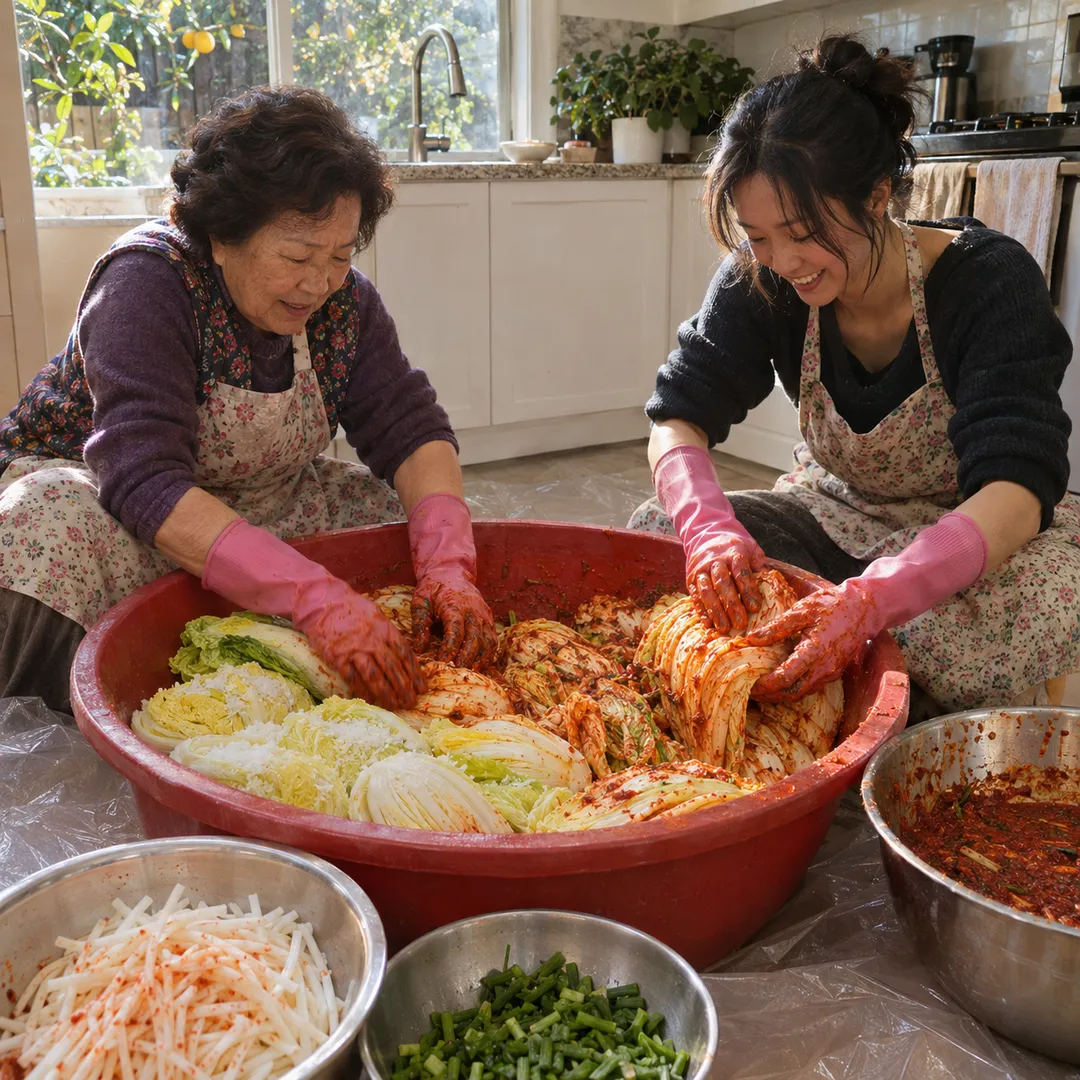
Kimjang is less a recipe than a family event. Relatives gather, someone handles the salting, someone else mixes the seasoning paste, and the youngest are given gloves and told to rub the leaves properly. For many Korean American families in Los Angeles, the tradition survives in a smaller form: one weekend, one big batch, enough jars for the fridge and some to give away. It all starts with the cabbage.
Larchmont's market is a pleasant place to begin because it is calm and walkable, tucked into a village street rather than a big parking lot. The growers who bring winter vegetables here know their napa and radish crops, and the scale of the market means you can talk to them directly. The granddaughter in this story comes to learn the eye her grandmother uses, the one that no written recipe captures.
How a Grandmother Chooses Napa Cabbage
Lift every head before you buy. A good napa cabbage for kimchi feels heavy for its size, with tightly packed leaves and a creamy, pale yellow centre when you peek at the base. The outer leaves can be a little rough, they will be removed anyway, but the core should be firm, with no soft or dark patches. Medium heads are easier to salt evenly than giant ones, and they fit more comfortably in the basins most families already own.
Grandmothers often press the thick white ribs with a thumb. Crisp, slightly springy ribs mean the cabbage will stay crunchy through months of fermenting, while limp ribs turn soft. Ask the grower when the cabbages were harvested. Winter heads that grew slowly in cool weather are sweeter and denser than summer ones, which is exactly why kimjang happens in this season. Buy one extra head, because one always disappoints after cutting.
Radish, Alliums and the Rest of the List
Next comes the radish. Korean mu is shorter and rounder than long daikon, with a pale green shoulder, and its firm, slightly sweet flesh holds up in kimchi. If a stall only has daikon, choose the heaviest, smoothest ones. Gather plenty of green onions, a bundle of garlic and a knob of ginger, and if a grower has Korean chives or mustard greens, add a bunch for extra bite.
Many families grate an Asian pear or an apple into the paste for gentle sweetness, and winter is a good time to find crisp ones. Carrots are optional, mostly for color. Do not try to buy everything here, though. Chili flakes, fish sauce and salted shrimp come from Korean grocers in Koreatown, a short drive away, and the grandmother in this story has a favourite shop she will not discuss changing.
Carrying a Kimjang Haul Home
A full kimjang haul is heavy and bulky. Six or eight heads of cabbage plus radishes can easily outweigh a toddler, so bring a folding cart or a sturdy wagon and park as close as the village allows. Ask the grower if they have a spare box, and let the granddaughter do the lifting. Put cabbages at the bottom, radishes beside them, and keep the herbs and onions on top.
Go straight home if salting is planned for the same day. Cabbages wait well for a day or two in a cool garage, but greens wilt quickly, and green onion should be crisp when it goes into the paste. If the family is spreading the work over a weekend, buy the cabbage and radish on the first visit and pick up fresh alliums later from a Koreatown market close to home.
Turning One Morning Into a Family Weekend
Kimjang runs smoothly when everyone has a job. Salting the cabbage takes hours, so start it the afternoon you shop, layering coarse salt between the leaves and turning the halves every so often. While that rests, younger relatives can julienne radish and chop onions, and the grandmother can mix the paste to her taste. Taste as you go, because the balance of salt, sweet and chili is personal.
Save one head of cabbage for a fresh, unfermented geotjeori to eat that night with boiled pork, a classic kimjang reward. Children love wrapping slices of pork in a salted leaf with a little paste. Fill the jars only three quarters full to leave room for fermentation, and label each one with the date. Giving jars to neighbours is part of the tradition, so make more than you think. A jar left on a neighbour's doorstep in January is a small, welcome way to share the season.
A Slow Walk Through Windsor Square
Before loading the car, take a short walk. Larchmont Boulevard has the feel of a small-town main street, with low shopfronts, cafés, dog walkers and neighbours who stop to chat on the corners. Turn off onto the side streets and you reach Windsor Square and Hancock Park, where old trees arch over wide lawns and grand houses in Tudor, Spanish and Colonial styles sit back from the road.
In winter, the streets are quiet and many homes put up modest holiday lights, which makes an evening return pleasant too. The grandmother may point out houses she remembers from decades of drives through the neighbourhood, and the granddaughter may simply want coffee. Both are fine. Keep the walk short if the cabbages are waiting in the car, because the real work is still ahead.
Planning Next Year's Batch With Karpo
After kimjang, write down what you bought, how many jars it made and what you would change. Next winter, those notes are worth more than any recipe card, and they help the next generation take over a little more of the job. Note which grower had the heaviest cabbages and which radishes stayed crisp the longest.
The Karpo APP can help when you need to compare farmers' markets and Korean grocers near home, or plan a route that pairs a market morning with a quick stop for chili flakes and salted shrimp. Save the places your family relies on, share the plan in the family group, and let kimjang become an easier tradition to keep.
Ask Karpo for more information.
Keep reading
- Mar Vista Winter Farmers Market Picker for Weekend Cyclists
 Downtown LA Winter Farmers Market Picker for Car-Free Hosts
 Silver Lake Winter Farmers Market Picker for Balcony Growers