The Metropolitan Museum of Art receives roughly six million visitors annually, which averages to something like sixteen thousand bodies per day during peak season. Yet there exists a reliable pocket of emptiness, a predictable ebb in the tide: Wednesday afternoons from two to four o'clock. School buses depart after lunch programs. Office workers haven't yet started their early exits. Tourist groups cluster toward mornings and weekends. What remains is the museum at its most generous—galleries that breathe, benches you can claim without negotiation, and the rare luxury of standing alone before a Vermeer or a Sargent without craning around selfie sticks. It's one of the city's best free things to do, assuming you treat 'free' as the suggested admission it technically is.
The Wednesday afternoon window
Mid-week museum visiting follows a rhythm as predictable as the tides in the East River. Mondays the Met is closed. Tuesdays still carry the backlog of weekend energy. Thursdays and Fridays tilt toward evening programs and after-work crowds. But Wednesday sits in the center of the week like a fulcrum, and the afternoon hours—particularly that two-to-four slot—offer the most reliable solitude. School groups funnel out by two, having completed their docent-led circuits. The lunch crowd in the cafeteria thins. The building seems to exhale.
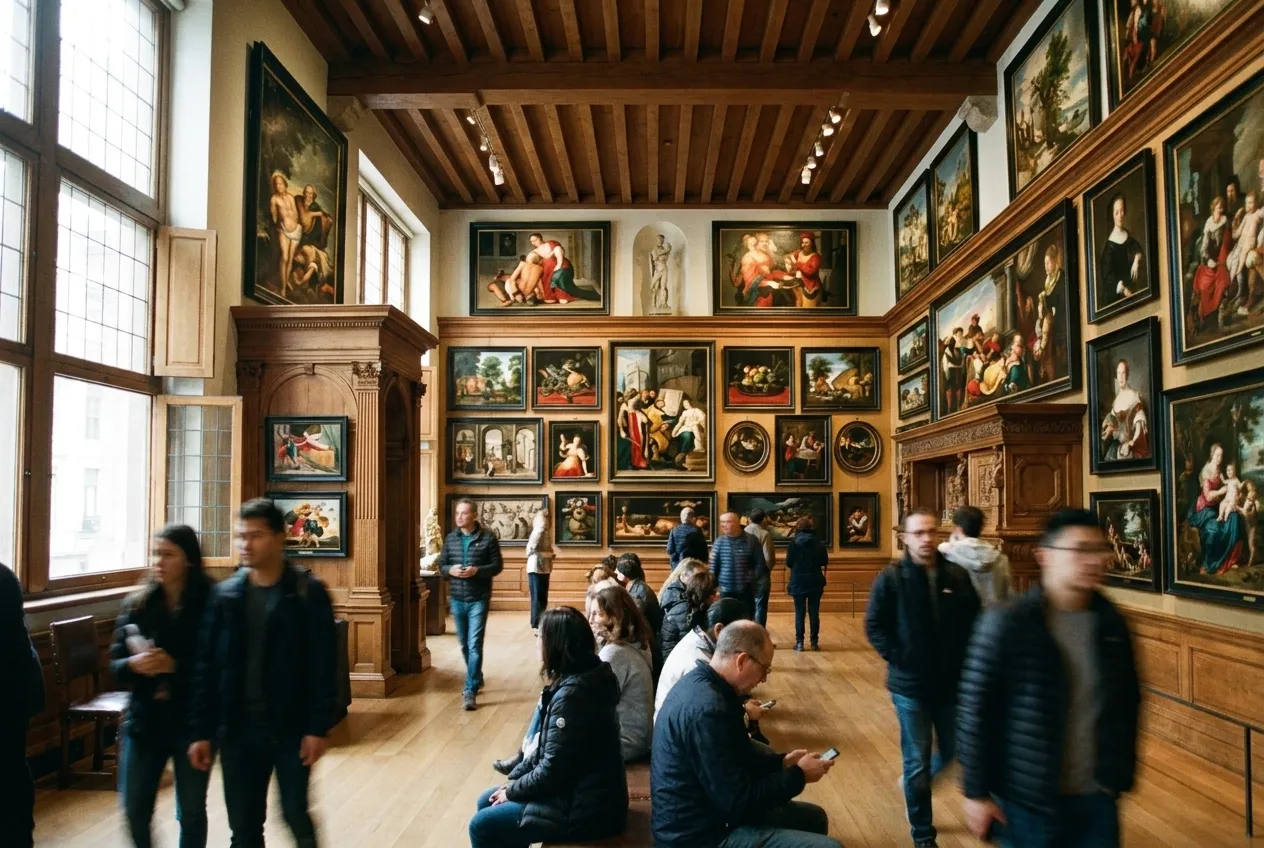
This isn't about avoiding people entirely. A dozen or so visitors might drift through the European paintings wing during this window. But the difference between a dozen and a hundred changes the entire experience. You can stand at conversational distance from a canvas without someone's shoulder in your peripheral vision. You can sit. You can think. The museum becomes less stadium, more study.
Western light in the American wing
The American wing's second-floor galleries receive direct western light between two-thirty and four p.m. during spring months, and the effect on the Hudson River School paintings borders on theatrical. The light arrives at an angle that illuminates the canvases without producing glare on the varnish—a narrow technical sweet spot. Thomas Cole's mountains seem to lift off the wall. Frederic Church's skies deepen. The galleries were designed with natural light in mind, but contemporary museum practice often keeps shades half-drawn to protect pigments from UV exposure. Late afternoon in spring, the balance tips toward illumination.
These rooms are also among the quietest in the building during the Wednesday window. The American wing doesn't draw the same reflexive crowds as the European paintings or the Egyptian temple. You can spend twenty minutes alone with a Winslow Homer seascape, watching the light shift across the painted waves as the real sun moves across Central Park outside.
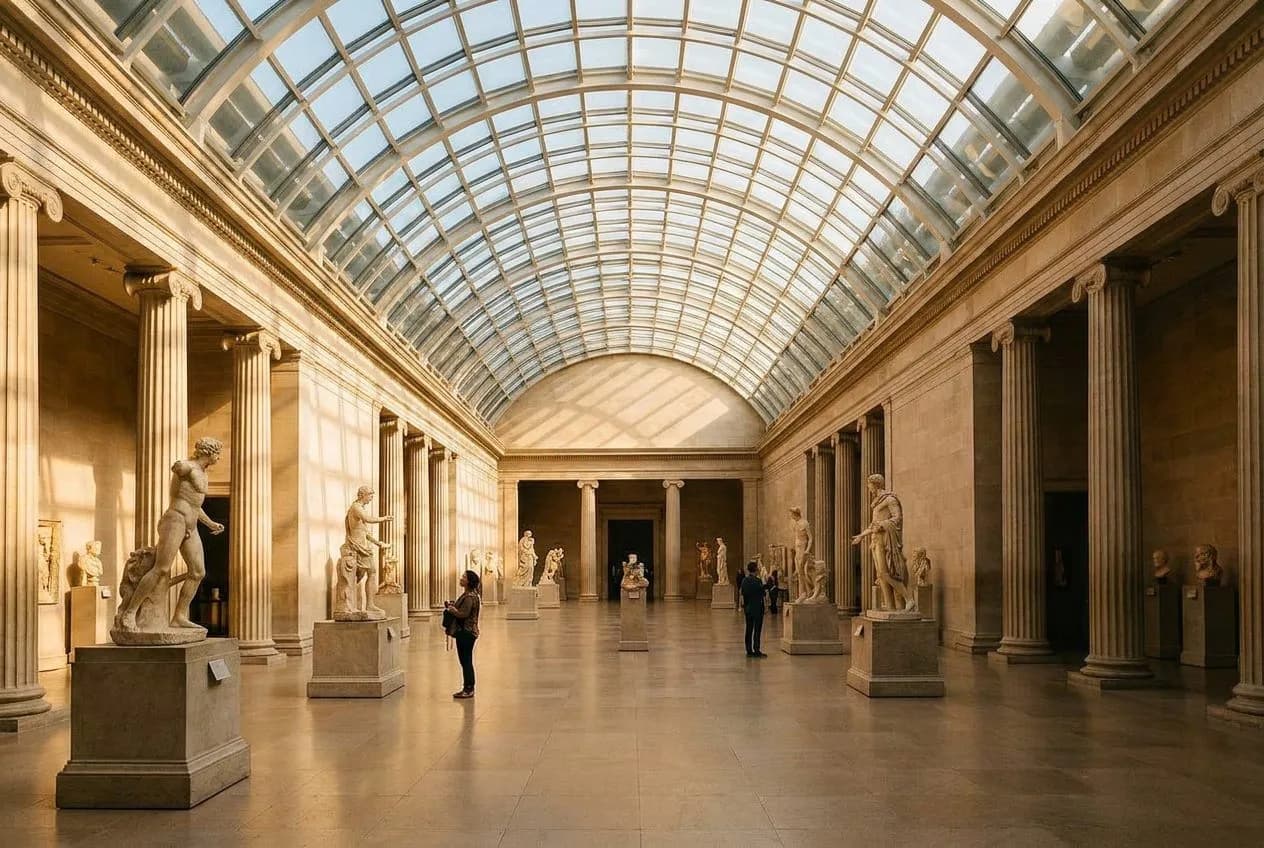
The Greek and Roman court under skylight
The Greek and Roman court functions as the building's architectural centerpiece, and its skylight produces the most dramatic natural light between two and three-thirty p.m. on clear days. The marble sculptures appear to glow from within during this window—not metaphorically, but as a plain optical fact. The skylight diffuses direct sun into soft overhead illumination that catches the texture of carved stone, highlighting the chisel marks and the slight translucency of high-grade marble. The space is nearly empty mid-week during these hours, which adds an acoustic dimension to the experience. Footsteps echo. Conversations drop to murmurs.
This is the room to visit when you want the Met to feel less like a public institution and more like a Roman villa that happens to be open to the public. The reflecting pool adds another layer; on still days, the sculptures double in the water. It's also cool in summer—the high ceiling and stone surfaces hold the chill from the museum's aggressive air conditioning.
Strategic benches in the European galleries
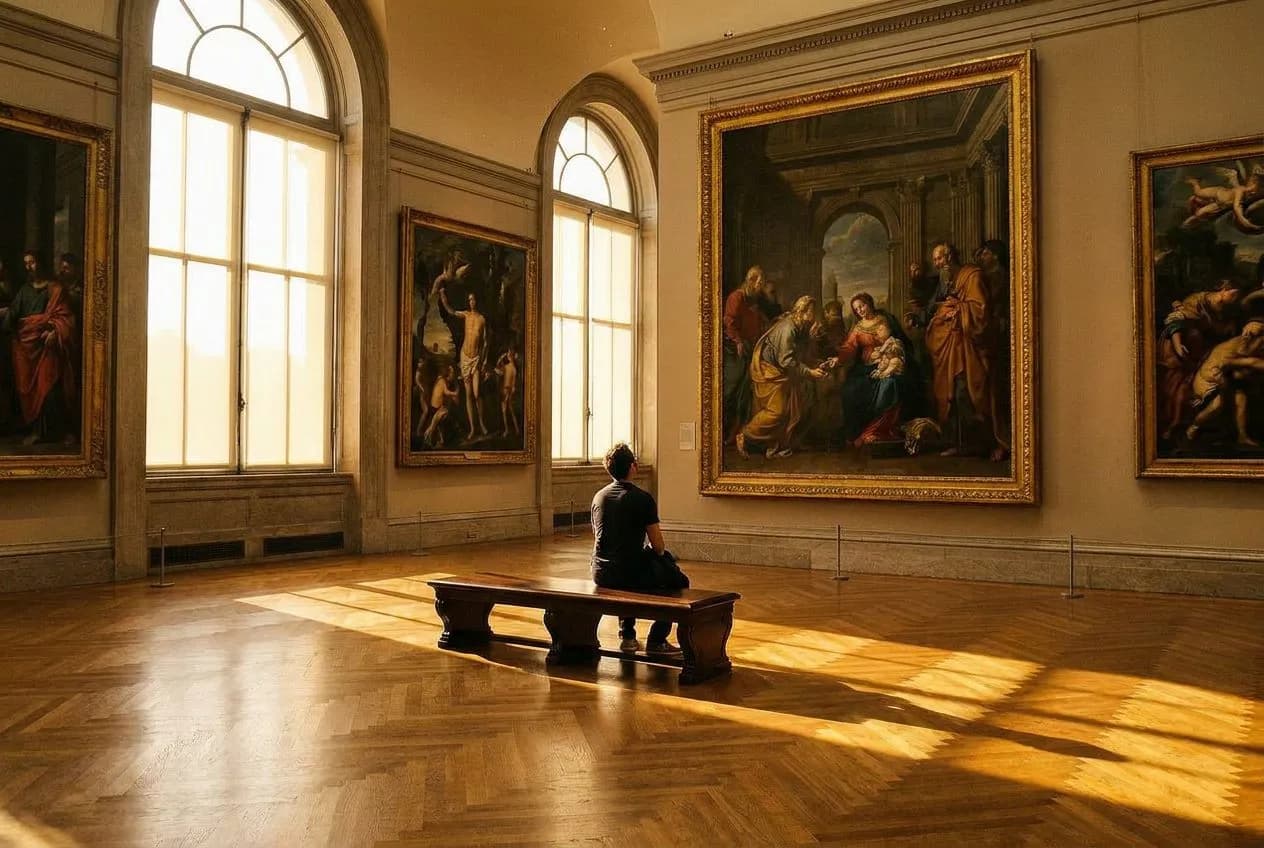
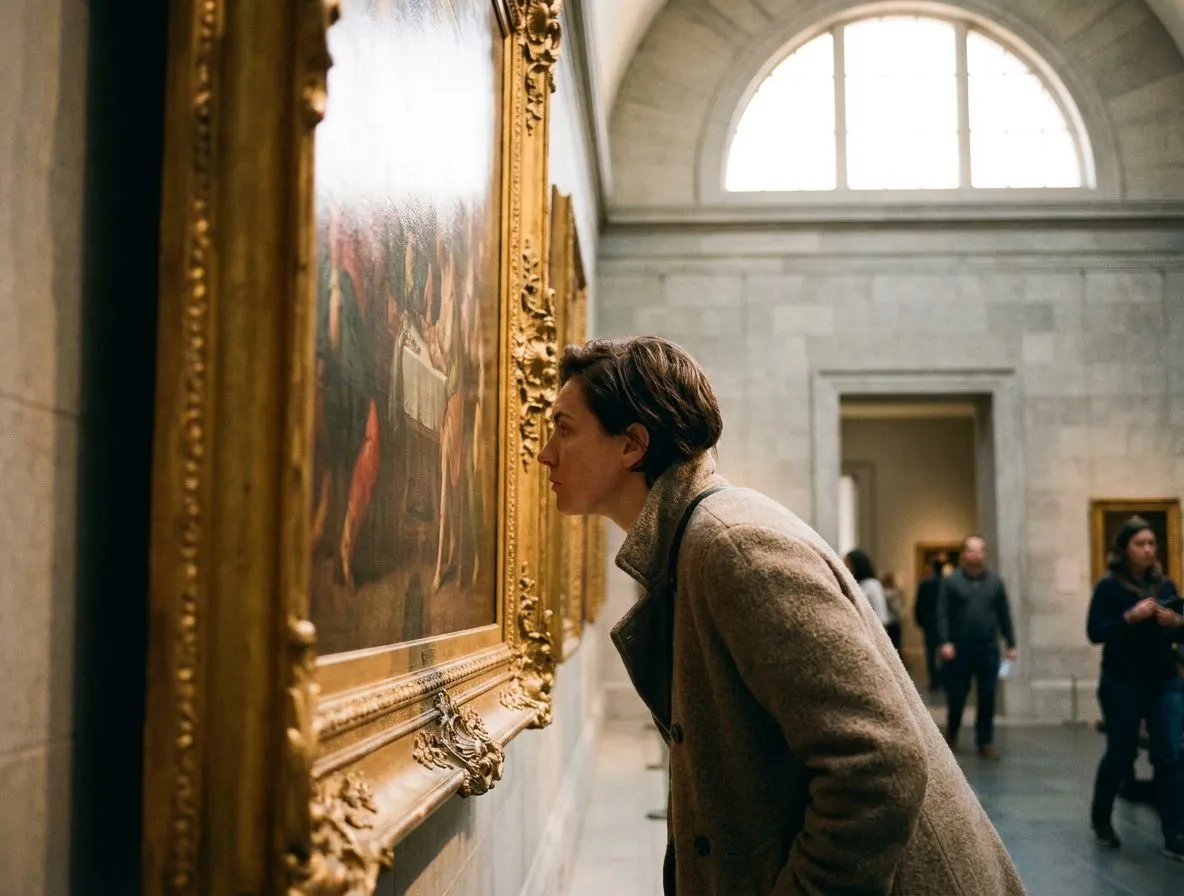
The nineteenth-century European painting wing contains the Met's deepest benches, and their placement is more strategic than it first appears. Certain benches face multiple doorways, offering sight lines into three or four rooms simultaneously. Locals who know the building claim these benches by two-thirty p.m. for extended viewing sessions, settling in with notebooks or simply sitting in sustained attention. The benches become observation posts. From a single seat, you can watch light move across a Monet, monitor the flow of visitors through adjacent galleries, and have a private audience with a Sargent portrait when the room empties for five or ten minutes at a stretch.
Around three p.m., the European paintings wing goes nearly silent. This is the deepest point of the afternoon lull, the moment when even the steady trickle of visitors seems to pause. You might find yourself alone in a room with a painting you've seen reproduced a thousand times, and the experience of seeing it in actual silence—no murmuring, no footsteps, no rustle of shopping bags—recalibrates your relationship to the work. The colors are different. The scale is different. The painting becomes a physical object again, not an image.
What to skip
Not every wing benefits equally from the Wednesday afternoon window. The Egyptian galleries remain moderately crowded throughout the day; the Temple of Dendur is a permanent pilgrimage site. The Arms and Armor collection attracts a steady flow of enthusiasts and school groups on independent visits. Focus your two hours on the wings where light and solitude compound: American paintings, Greek and Roman sculpture, nineteenth-century European work, and the smaller period rooms that flank the main galleries.
Experiencing the collection at human scale
The contemporary museum experience often feels engineered for volume—crowds managed like airport security lines, masterpieces viewed through a forest of raised phones. The Wednesday afternoon window offers something closer to the original intent of these institutions: sustained looking, quiet contemplation, the possibility of boredom that leads to deeper attention. You can return to the same painting three times in an hour, watching how your perception shifts. You can sit badly on a hard bench and let your mind wander until it circles back to the work in front of you.
This is the Met as private collection, or as close as a public institution can come. The galleries feel like rooms again, not corridors. The art becomes less about coverage—seeing everything, hitting the highlights—and more about encounter. Two hours of focused attention in empty galleries will teach you more than a full day of distracted wandering through crowds. Pack light, wear comfortable shoes, and leave your agenda flexible. The point is not to see more, but to see better.
Practical notes
The Metropolitan Museum of Art, 1000 Fifth Avenue at 82nd Street. Subway: 4, 5, 6 to 86th Street (short walk); Q to 86th Street (or bus/crosstown options) Limited street parking is available in the area; nearby garage options vary and should be checked directly. Admission is pay-what-you-wish only for New York State residents; other visitors pay the posted admission price. Wednesday hours are 10 a.m. to 5 p.m., but verify directly as seasonal schedules shift. The building is fully accessible; wheelchairs available at coat check. Bring water, a small notebook if you sketch or take notes, and layers—gallery temperatures vary widely. The coat check near the main entrance is free and will hold bags, freeing your hands and shoulders for unencumbered looking.
Tags: #MetMuseum #WednesdayAfternoon #QuietGalleries #MuseumHours #MetFifthAvenue #NYCMuseums #RightOnTime #CitySecrets #NaturalLight #AmericanWing #GreekAndRomanCourt #EuropeanPaintings #MuseumTips #NYCInsider #UpperEastSide
Sources consulted: Metropolitan Museum of Art - Wikipedia · The Met Official Website · Plan Your Visit - The Met · Museums in NYC - Time Out New York · Arts - The New York Times
All trademarks are the property of their respective owners.