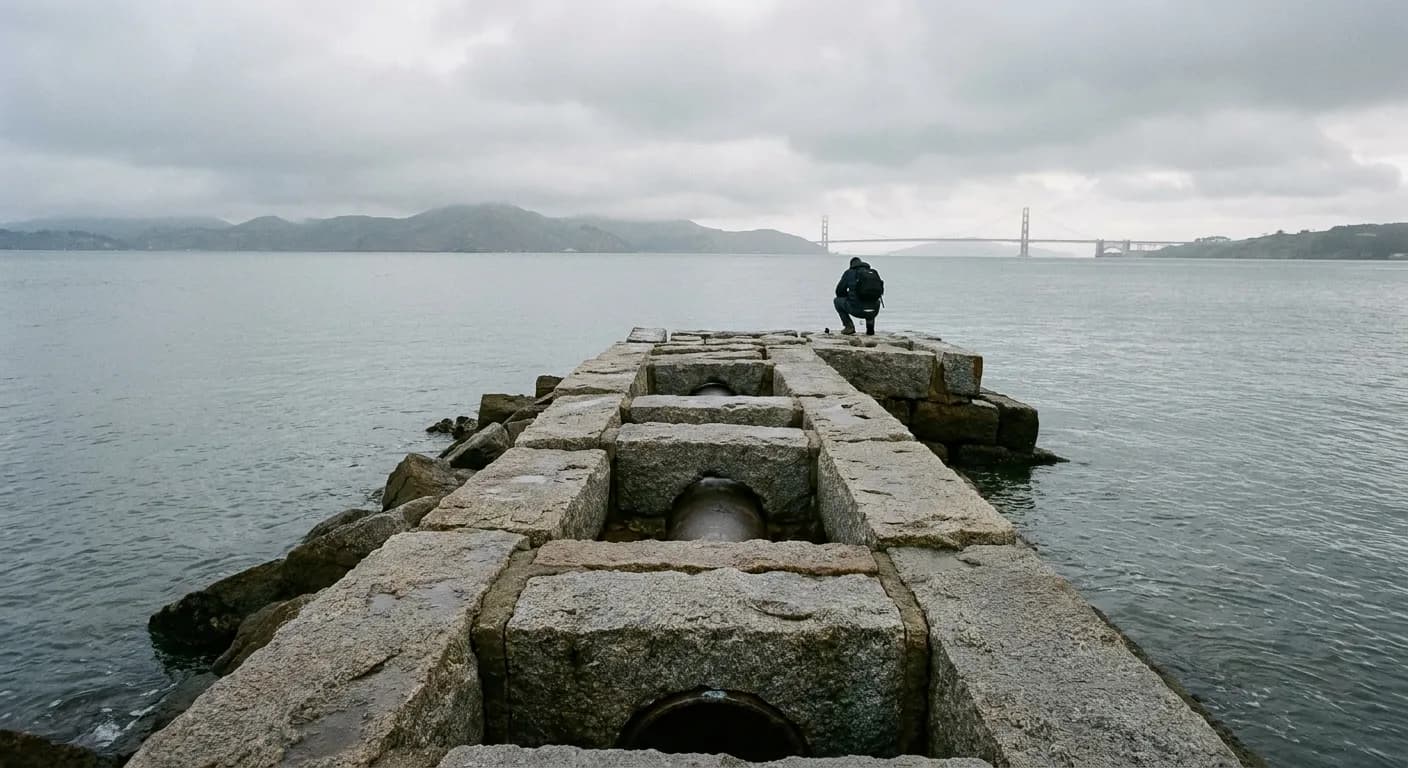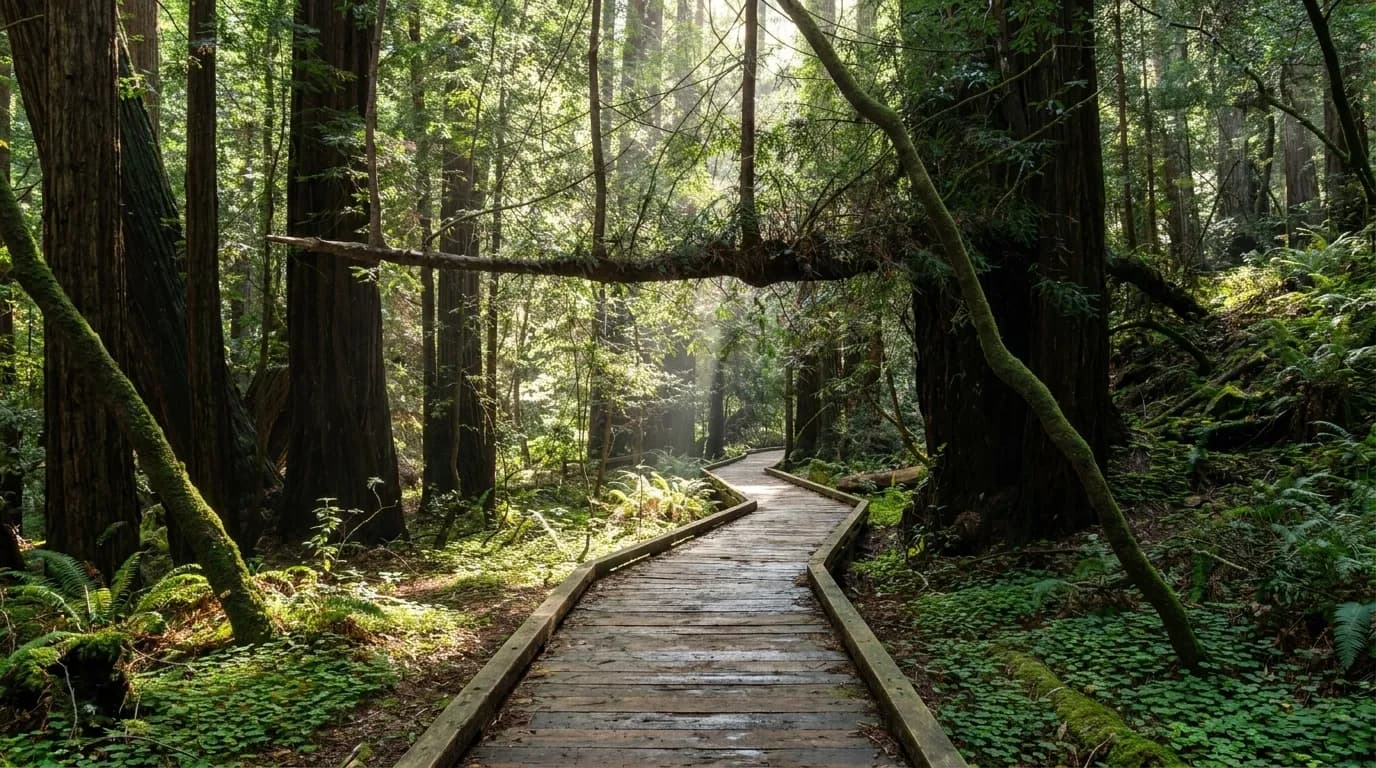
The received wisdom about nature near San Francisco is that you need a car. It is wrong, and the alternative is better than the driving version: a ferry across the bay, a short shuttle up into the hills, and you are standing under old-growth redwoods without having thought about parking once — which, at Muir Woods in particular, is the single largest source of misery for people who drive.
The two shuttle routes run on different calendars and one of them stops at the end of summer. Ask Karpo which service is operating on the day you want to go before you buy a ferry ticket.
The route, precisely
Take the Golden Gate Ferry from San Francisco across to Marin, then pick up the Marin Transit Muir Woods Shuttle, which drops at the Muir Woods visitor centre. The shuttle costs four dollars round trip, with children fifteen and under travelling free. It picks up at two Marin transit hubs — the Larkspur Landing Ferry Terminal and the Sausalito Ferry Terminal — both of which the ferry serves.
The economics are worth stating plainly, because people assume car-free means expensive. Four dollars is the shuttle for the entire round trip. The ferry is the real cost of the day, and it is also the part most people would happily pay for as an experience in its own right. Against parking at a trailhead that requires a reservation, plus fuel, plus the bridge, the car-free version is cheaper as well as calmer.
The calendar detail that catches people out
This is the part to get right. The two pick-up points do not run the same schedule. The Larkspur Landing service operates on weekends and holidays. The Sausalito service runs summer weekdays only — roughly June through August. They are complementary rather than duplicated, and a plan built on the wrong one is a plan with no shuttle at the end of it.
In practical terms that means the season you are in decides your route. Through the summer, a weekday trip goes via Sausalito and a weekend trip goes via Larkspur. Once the summer weekday service ends, the weekend Larkspur route is the one that continues — so an autumn or winter visit is a weekend or holiday proposition unless you are prepared to arrange something else. Check the current schedule rather than assuming, because this is exactly the kind of detail that changes year to year.
What to actually do once you are up there
Most people treat Muir Woods as the destination and the visitor centre as the end of the line, which sells the day short. The same drop-off point puts you at the edge of the Mount Tamalpais trail network, and Mount Tam gives you panoramic views across the Pacific, the bay and the Marin hills that the valley floor cannot. Redwoods below, ridge above, one shuttle ticket.
The contrast is the point. The valley floor is dim, damp, quiet and enclosed — the light comes down in shafts and the sound deadens completely. Half an hour of climbing puts you in open, dry, exposed terrain with the ocean on one side and the bay on the other. Doing both in a single afternoon is a far better day than either alone, and the transit-based version forces it, because you have time to fill between shuttles.
Where the water actually is
A word on waterfalls, because the search term promises more than the region delivers on any given day. Bay Area falls are seasonal in a way that people arriving from wetter places find surprising: they run hard in late winter and spring after rain, thin through early summer, and by late summer several of the best-known ones are a damp rock face. A photograph taken in March is not a forecast for September.
What is reliable year round is the water you can hear rather than photograph — the creeks running through the redwood valleys, which hold moisture long after the falls above them have stopped. If you are going in the dry half of the year, plan for a shaded creek walk under the canopy and treat any actual falling water as a bonus. If you specifically want the waterfall, go between February and May, ideally within a week of rain, and check conditions rather than a photo.
Getting the timing right
Work backwards from the last shuttle, not forwards from the first. A car-free day trip has a hard end that a driving one does not, and the failure mode is always the same: a walk that runs long and a return service that has gone. Establish the last departure before you set off, subtract half an hour of margin, and plan the walk inside what remains.
Go early for a second reason. The redwoods are at their best in the morning, when the light is coming in at an angle and the crowd has not arrived, and Marin's coastal fog tends to burn off through the middle of the day, so a morning valley walk and an afternoon ridge climb lines up neatly with how the weather usually behaves. Bring layers regardless: it is genuinely cold under the canopy even when the ridge above is warm.
Practical notes
Golden Gate Ferry from San Francisco, then the Marin Transit Muir Woods Shuttle at four dollars round trip, children fifteen and under free, dropping at the Muir Woods visitor centre. Larkspur Landing service runs weekends and holidays; Sausalito service runs summer weekdays only, roughly June to August. The visitor centre also opens onto the Mount Tamalpais network — do both. Confirm the last return before you start walking, and carry a layer for the canopy.
Tags: #SanFrancisco #MuirWoods #MountTamalpais #Marin #CarFree #DayTrip #Redwoods #BayArea #SFOutdoors #HikingSF #GoldenGateFerry #Sausalito #HiddenGems #NatureNearSF
All trademarks are the property of their respective owners.
Ask Karpo first
Want redwoods without a car? Ask Karpo which Muir Woods shuttle route is running on the day you want to go, what the ferry connection looks like, and when the last service back leaves.