The café counter stops serving cortados around the time most regulars start noticing the door. It sits flush against the back wall, unmarked, easy to miss if the timing's off. Beyond it, a staircase drops into a basement that operates on a completely different frequency than the sunlit room above. No signage announces what happens down there. The people who know simply wait for the right hour, when the barista nods and someone props the door open.
The Descent Changes Everything
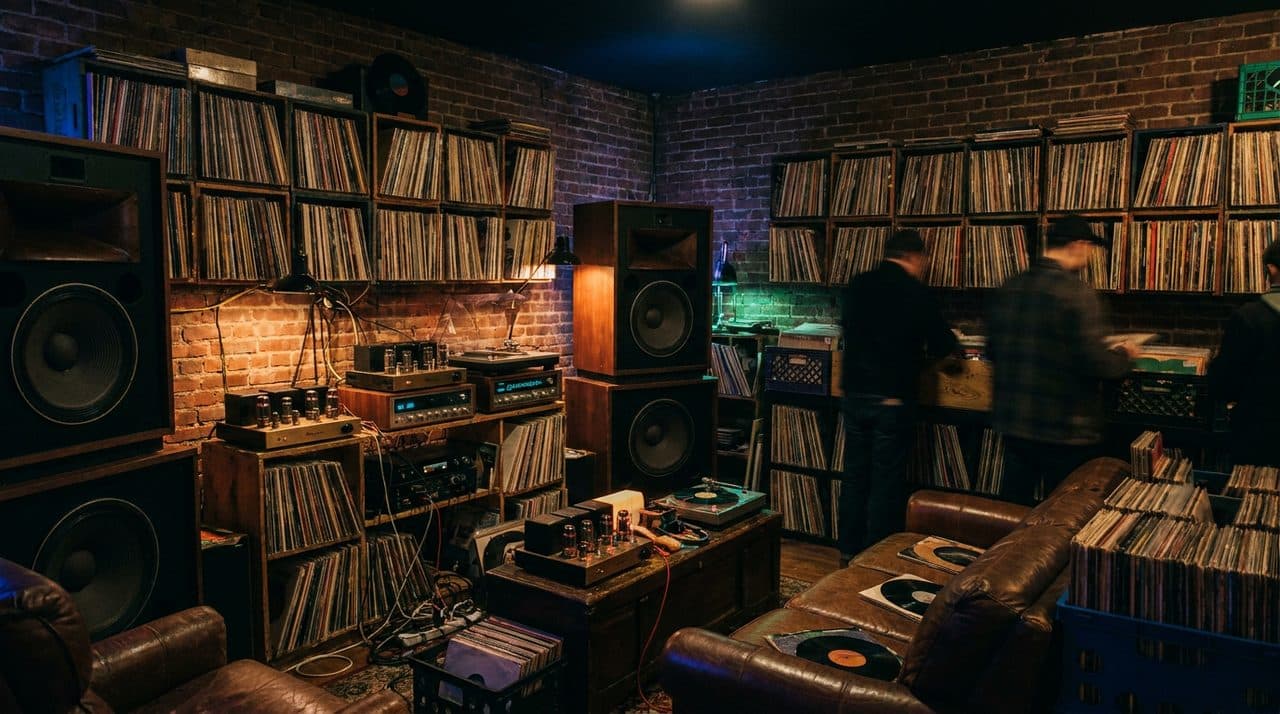
Twelve steps down and the temperature drops. The walls are exposed brick, painted matte black years ago and left to absorb sound. A single amber bulb hangs near the bottom of the stairs. The room itself is smaller than expected—maybe twenty feet across, with a low ceiling that makes tall visitors instinctively duck. Vintage speakers flank a turntable setup on a wooden console that looks salvaged from a 1970s hi-fi showroom. The floor is carpeted in dark industrial fabric, the kind that swallows footsteps. By the time anyone reaches the bottom, the café noise has vanished completely.
The Protocol Is Unspoken But Absolute
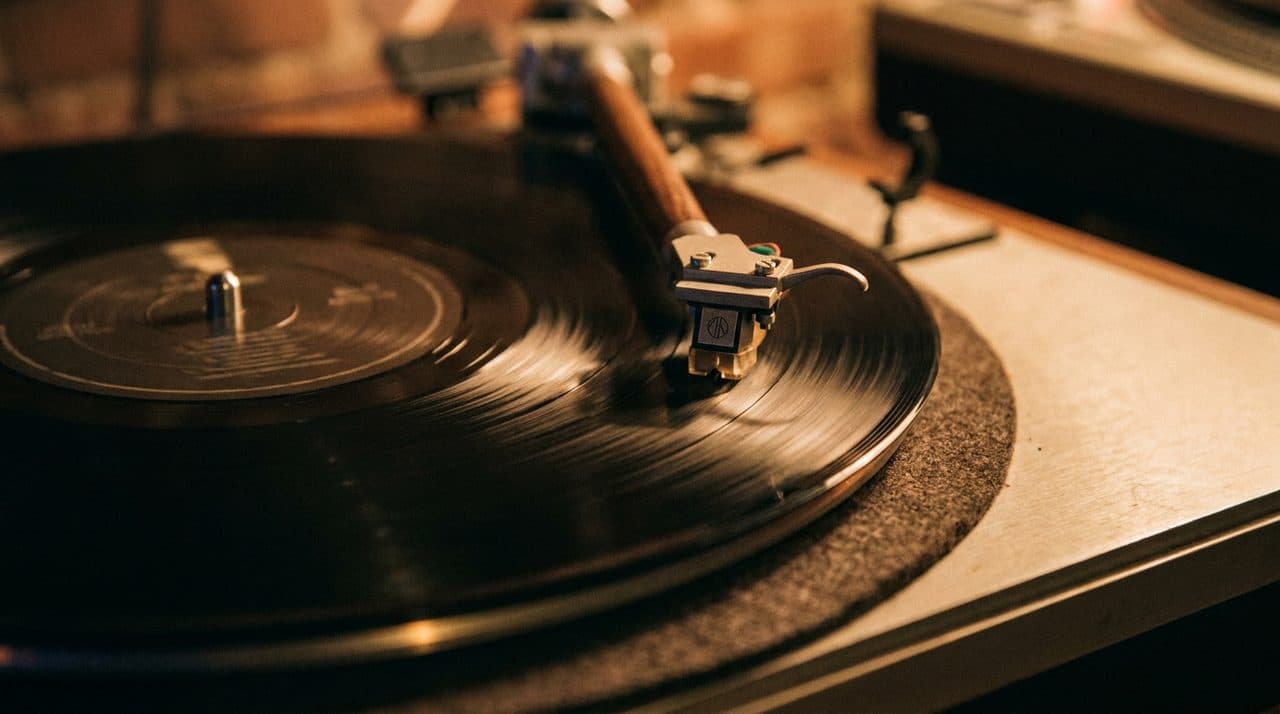
No phones. No talking above a whisper. The rules aren't posted anywhere, but the atmosphere enforces them within seconds. Whoever's spinning that session—a rotation that changes weekly—sits on a low stool near the console, headphones around their neck, flipping through milk crates of records. The crowd, usually between eight and fifteen people, arranges itself on mismatched chairs and floor cushions facing the speakers. Some close their eyes. Others stare at the ceiling or the slowly rotating vinyl. The DJ doesn't announce tracks or artists. The music simply fills the space, and everyone listens.
The Speakers Do Work Most Systems Can't
The sound system is the room's true architecture. The speakers are vintage Klipsch horns, refurbished and re-coned, paired with a tube amplifier that glows faintly in the dim light. The setup is calibrated for this exact space—the brick, the low ceiling, the carpet all working to shape the sound. Bass notes feel physical, settling into chests and ribs. High frequencies stay crisp without ever turning sharp. Records that sound fine on headphones reveal layers here that most people have never heard. A regular once described it as the difference between looking at a photograph and standing in the actual room.
The Selections Defy Easy Categories
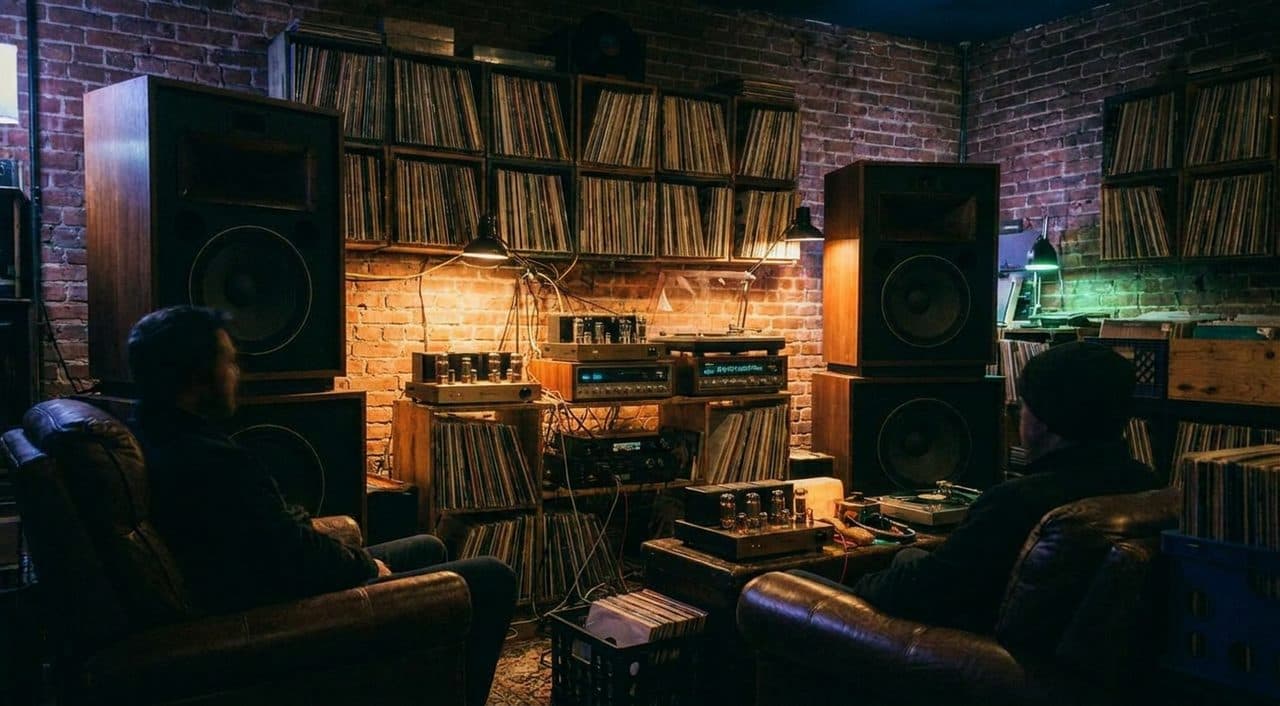
One week brings a four-hour set of Japanese ambient pressings from the eighties. Another session focuses entirely on Brazilian jazz from a single year. The DJs aren't there to please a crowd or build energy toward anything. They're presenting a thesis, a mood, a sonic argument that unfolds across two hours. The crates behind the console hold thousands of records, organized by systems only the core group understands. Some albums appear once and never again. Others become recurring anchors, showing up in different contexts as the weeks pass. The lack of explanation forces a different kind of attention.
The Crowd Knows What They're Trading
Cell phones stay in pockets or bags. Conversations happen only in the ten-minute breaks between sets, when someone climbs the stairs to grab water or step outside. The commitment is real—two hours of sitting still, no scrolling, no multitasking, just sound and the people sharing it. Some sessions draw the same faces every week. Others bring newcomers who heard about the room from a friend or stumbled into the café at the right moment. The mix shifts, but the understanding remains the same. Everyone down there chose to be there, chose to listen, chose to let the music be the only thing happening.
The Café Above Plays Its Part
The coffee operation upstairs isn't elaborate, but it's deliberate. A small menu, a handful of pastries, espresso drinks made quickly and well. The space holds maybe a dozen people comfortably, with a few tables near the front windows and a long wooden bar along one wall. The staff knows who's there for coffee and who's waiting for the door to open. During listening sessions, the café stays open but quieter, the energy shifting to accommodate what's happening below. Regulars time their arrivals to grab a drink before heading down. The two spaces coexist without competing.
Practical Notes
The listening room operates several evenings a week and occasional weekend afternoons, though the schedule shifts with DJ availability. No reservations, no cover charge, no drink minimum. The café itself opens mid-morning and closes by early evening. The nearest subway stop is a few blocks away on the F/G lines. Seating downstairs is limited and first-come basis. Sessions typically run two hours, sometimes longer if the crowd's locked in. The room stays cool year-round, so a light layer helps. Silence isn't enforced by staff—the space and the people in it do that work naturally. Those interested in spinning a session can leave contact information with the café, though the rotation moves slowly and selectively.
Tags: #VinylListening #CarrollGardens #HiddenBrooklyn #ListeningRoom #VinylCulture #BrooklynSecrets #AudiophileLife #UndergroundVenue #RecordCulture #NYCHiddenGems #AnalogSound #SecretSpaces #BrooklynMusic #TheOddEdit #KarposFinds
Sources consulted: atlasobscura.com · timeout.com · nytimes.com
All trademarks are the property of their respective owners.
Ask Karpo first
Want to know which nights the best vinyl collectors show up to spin?
Ask Karpo for the unposted DJ schedule and the café's back-door entry ritual before you head out.