A fast-rising search can make a distant legal story feel local, especially when social posts collapse biography, allegation, court status, and opinion into one swipe. For New Yorkers seeing the phrase davey hearn olympic canoeist case in feeds, the useful move is not to argue first; it is to verify what is known, what is alleged, and what remains unresolved. As of July 28, 2026, reputable coverage and athlete records identify David “Davey” Hearn as a three-time U.S. Olympic canoe slalom athlete, while recent reports say he pleaded not guilty to a D.C. property-damage charge. Use the city’s research infrastructure before repeating details.
Want a calmer read on sensitive breaking stories in New York? Text Karpo before you share, and we’ll help sort verified facts, source quality, and practical next steps.

NYPL Schwarzman Building: Separate Biography From Allegation
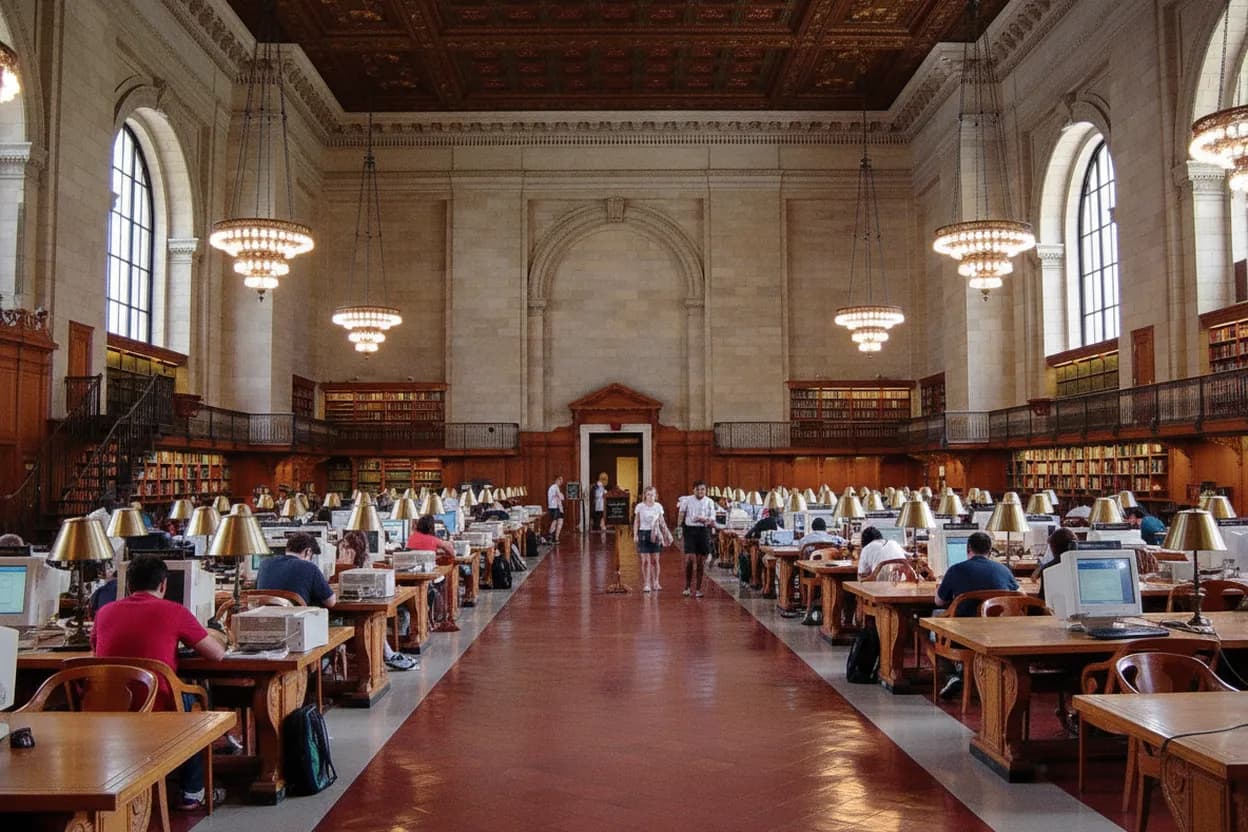
Start at the Stephen A. Schwarzman Building at Fifth Avenue and 42nd Street if you want a quiet, high-signal place to untangle the person from the claim. NYPL lists the building as a flagship research center with free public access to major collections, and its posted regular hours show weekday and weekend variation. The practical use here is simple: confirm Hearn’s athletic record through reliable athlete databases, then treat any criminal-case statement as a separate category requiring court or reputable news sourcing.
The tradeoff is pace. A research library is slower than a search results page, and some materials may require catalog requests or staff guidance. That delay is useful when a story is emotionally charged. Before leaving, check NYPL’s current hours, last-entry note, and accessibility entrances, because even a good verification plan fails if you arrive after access has effectively closed or cannot comfortably use the building.
NYPL Online Resources: Use Databases Before Social Threads
NYPL’s online resources page points users toward Articles Plus, A-Z databases, e-journals, research guides, and the Research Catalog. For this story, the best workflow is to search the name, the alleged event, and the court location separately. Do not rely on a single clipped screenshot. A trustworthy result should identify the publisher, date, author or wire service, and whether the article is reporting a filing, a plea, a quote from counsel, or background biography.
Failure modes are predictable: duplicate syndicated articles can look like independent confirmation, old sports profiles can be mistaken for current legal reporting, and opinion pieces can be shared as if they were court records. If you hit a paywall or database login, mark the item as unverified rather than filling gaps from summaries. For students or parents doing back-to-school media-literacy checks, this is a low-cost way to practice source comparison without treating a trending person as a classroom spectacle.
Brooklyn Public Library Central: Ask Staff for Source Triage
Brooklyn Public Library’s Central Library at 10 Grand Army Plaza is a practical backup when you want human help sorting sources. BPL’s current location page lists it as fully accessible and shows nearby subway and bus options, with the Information Commons offering computers and technology support. That matters if your phone feed is the problem: move the verification task to a bigger screen, open multiple sources, and compare claims line by line instead of reacting inside an app.
This stop fits solo readers, caregivers, teens, and anyone who wants a neutral place to slow down. The tradeoff is that branch hours, events, and renovations can shift, so confirm the specific Central Library page and BPL closings page before going. If a staff member cannot verify a claim, treat that as useful information. The answer may be that no current public source supports the version circulating in your group chat.
BPL Info Commons: Preserve Receipts Without Amplifying Rumors
The Shelby White and Leon Levy Information Commons at BPL Central is useful when verification requires careful note-taking. BPL describes public computers, laptop space, scanners, printing, meeting rooms, and multimedia tools there. For sensitive news, use those resources to capture citations, publication dates, and URLs for your own records. Avoid downloading or reposting images of private people, court spectators, or unverified documents unless a reputable outlet or official public database already provides them in context.
Accessibility and comfort are part of the decision. BPL says assistive listening devices are available for events upon request, and the Info Commons gives an email contact for accessibility questions. If the space is busy, switch to a simpler workflow: write down three source names, one confirmed fact from each, and one unresolved question. That is enough to stop a bad claim from becoming your repeated claim.
Queens Public Library eCard: Verify From Home When Weather or Time Gets in the Way
If July heat, rain, caregiving, or work makes a library trip unrealistic, Queens Public Library’s eCard path is a useful access route. Its application page states eligibility is tied to living, working, attending school, or owning property in New York State, while non-New York State residents are directed to a paid account option. QPL also describes access to online resources, research databases, e-journals, and digital media through library accounts.
Use that access to check whether the story appears in reputable news databases rather than only on social platforms. The pacing is flexible: one focused 20-minute session is better than hours of scrolling. The failure mode is assuming an eCard instantly solves every access problem; some resources can have platform limits, login friction, or availability changes. If a database is unavailable, document that and use another library system or a reputable public source instead.
NYC311: Confirm City Services, Not Out-of-City Court Claims
NYC311 is useful for city-service questions, but it is not the place to verify a D.C. court allegation. NYC’s official contact page says 311 handles non-emergency city government information and reports within the five boroughs, while emergencies go to 911. Use 311 if the viral post points you toward a claimed NYC service disruption, public-safety instruction, event rule, or agency action that supposedly affects your day in New York.
The distinction prevents a common mistake: treating any official phone number as a universal fact-checker. If the claim is about a federal site, a Washington, D.C. court appearance, or an athlete’s biography, 311 will not be the primary authority. If the claim says a NYC office, school, park, or transit service changed because of the story, verify that specific local claim through 311, the relevant agency page, or an official alert.
MTA Status Tools: Check the Trip Before the Verification Stop
A verification errand still depends on the trip. MTA’s app help page describes a Status tab for subway and bus service, planned service changes, and elevator or escalator outages. Before going to NYPL, BPL, or another branch, check your line, route, and accessibility path. A misinformation check should not become a stressful cross-borough sprint because you trusted an old directions screenshot or ignored a station elevator outage.
Make the final verification step before sharing: open the original article or official profile again, confirm the date, and state only what the source supports. For this topic, that means separating confirmed Olympic history from reported allegations and reported pleas. If the latest court status cannot be confirmed from a reputable current source at the moment you are posting, write that plainly or do not post.
Tags: #AskKarpo #BeforeYouGo #NYC #MediaLiteracy #NewsVerification #DaveyHearn #FactChecking #NYPL #BrooklynPublicLibrary #QueensPublicLibrary #NYC311 #MTA #BackToSchool #SourceCheck
Sources consulted: Source 1: nypl.org · Source 2: nypl.org · Source 3: bklynlibrary.org · Source 4: bklynlibrary.org · Source 5: queenslibrary.org · Source 6: nyc.gov
All trademarks are the property of their respective owners.
Ask Karpo first
Tell Karpo your date, group size, budget, and starting neighborhood. We’ll check current access, timing, transit, and the cleanest plan for before you head out.