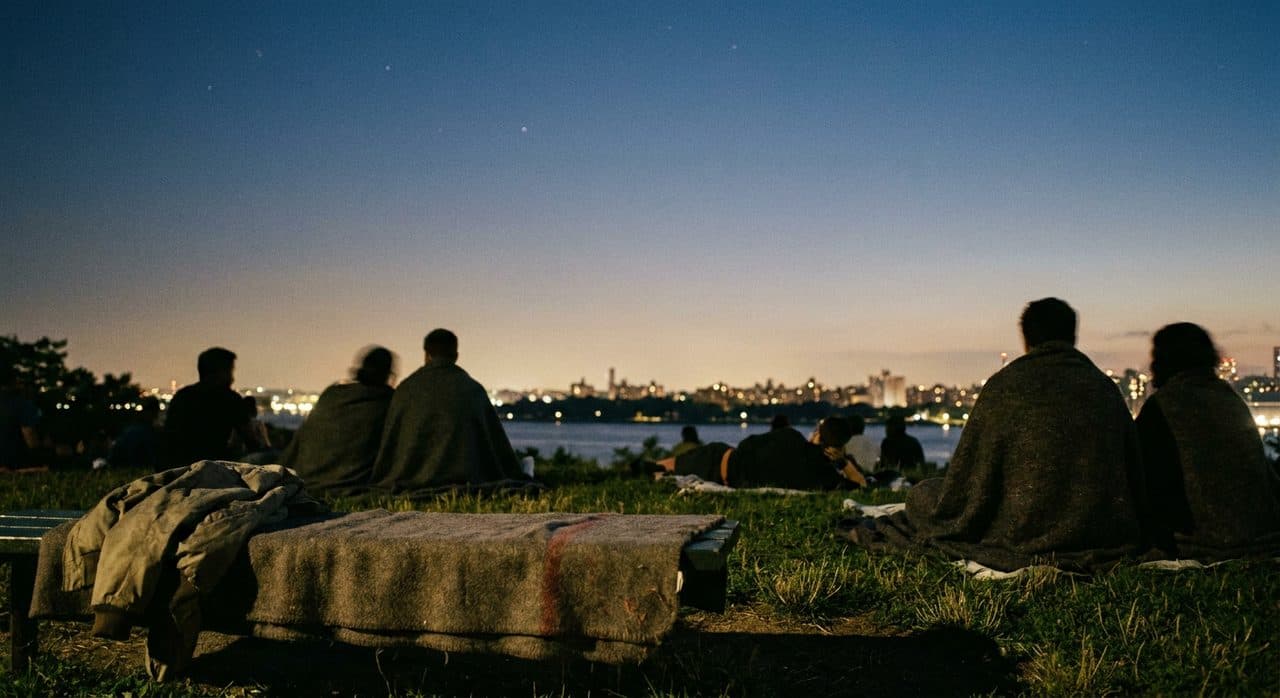
You wait until the streetlights click on along Prospect Avenue, then you start walking. Tonight Venus and Jupiter are visible together in the western sky just after sunset—if the clouds cooperate—and you're heading to a stretch of Brooklyn hill where the skyline drops away and the horizon opens up. This isn't an observatory visit or a telescope situation. It's a route with elevation, a thermos, and the kind of quiet that settles over residential blocks once commuters are home.
The Climb Starts Where the Bodega Knows Your Order
You begin at the base of Sunset Park's hill district, where Fourth Avenue flattens out and the numbered streets start their upward tilt. The bodega on the corner sells those hand-warmer packets near the register in winter, and the clerk will ask if you're headed up to the park. He knows. Everyone climbing at dusk is either running stairs or looking for sky. Grab a coffee or something warm—the walk takes about twenty minutes at a deliberate pace, and the temperature drops a full five degrees once you're above the roofline. The sidewalk here still smells faintly of fryer oil from the taco truck that parks until seven, and you pass dog walkers doing their last loop before Netflix takes over.
Where the Pavement Tilts and the Horizon Splits
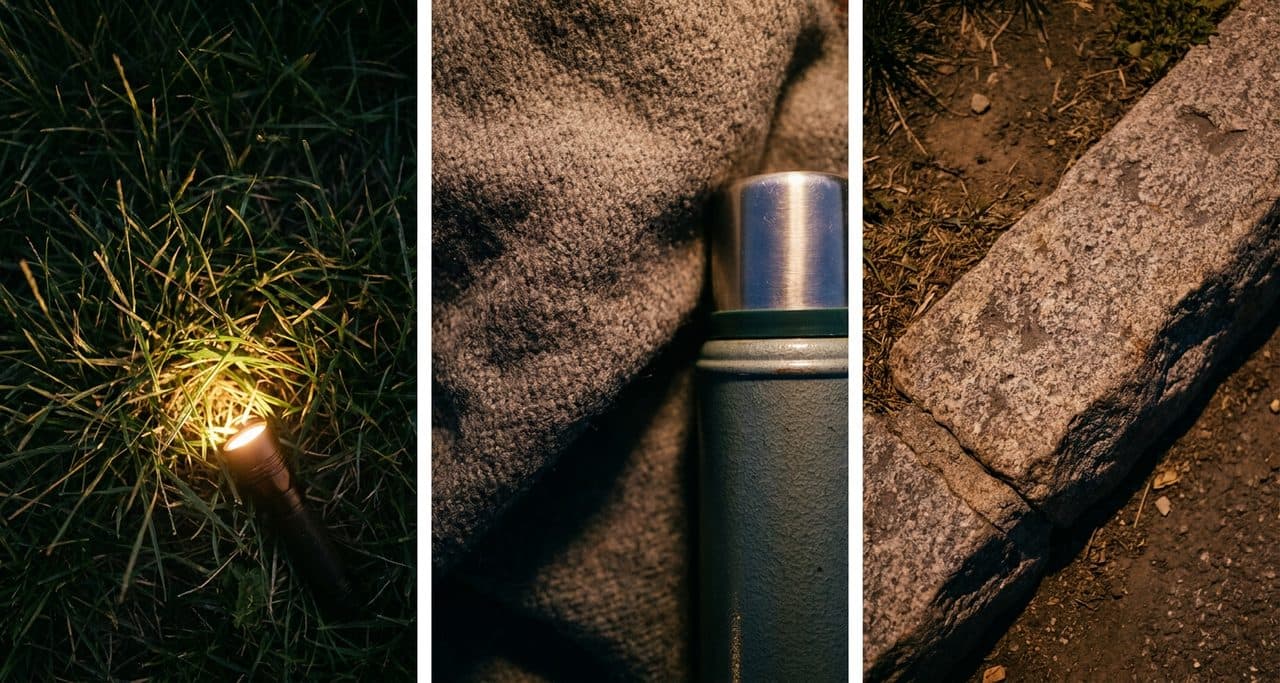
The streets between Sixth and Seventh Avenues pitch upward in a way that makes your calves remember they exist. Brownstone stoops give way to small front yards with chain-link, then to the kind of modest two-family homes where someone's always fixing a car under a tarp. You're not aiming for the main park entrance—that's crowded with after-work joggers and stroller convoys until well past dark. Instead, you're heading to the hill's eastern edge where the elevation does the work and the view unfolds without fanfare. The streetlights thin out. You start to hear your own footsteps. At the crest, the skyline appears suddenly, a clean cut of glass and steel backlit by the last wash of sunset. On clear nights, the sky above it transitions from violet to ink in about fifteen minutes.
The Bench That Faces West Without Trying
There's a low stone wall and a couple of benches near the edge of the park's eastern perimeter, just where the grass meets the service road. One bench faces the wrong way—toward the park's interior—but the other catches the full western sweep. You'll know it by the worn slats and the fact that someone's carved initials into the backrest that have since been painted over and carved again. Sit here around thirty minutes after official sunset and you're in the window. Venus appears first, bright and low, unmistakable even if you've never looked for it before. Jupiter follows, slightly higher and to the left, a steadier pinpoint. They don't move much over the course of an hour, but the sky around them does—deepening, clarifying, swallowing the last of the city's reflected light. Bring layers. The wind off the harbor funnels up here and doesn't quit.
What You're Actually Seeing and Why It Matters Less Than You Think
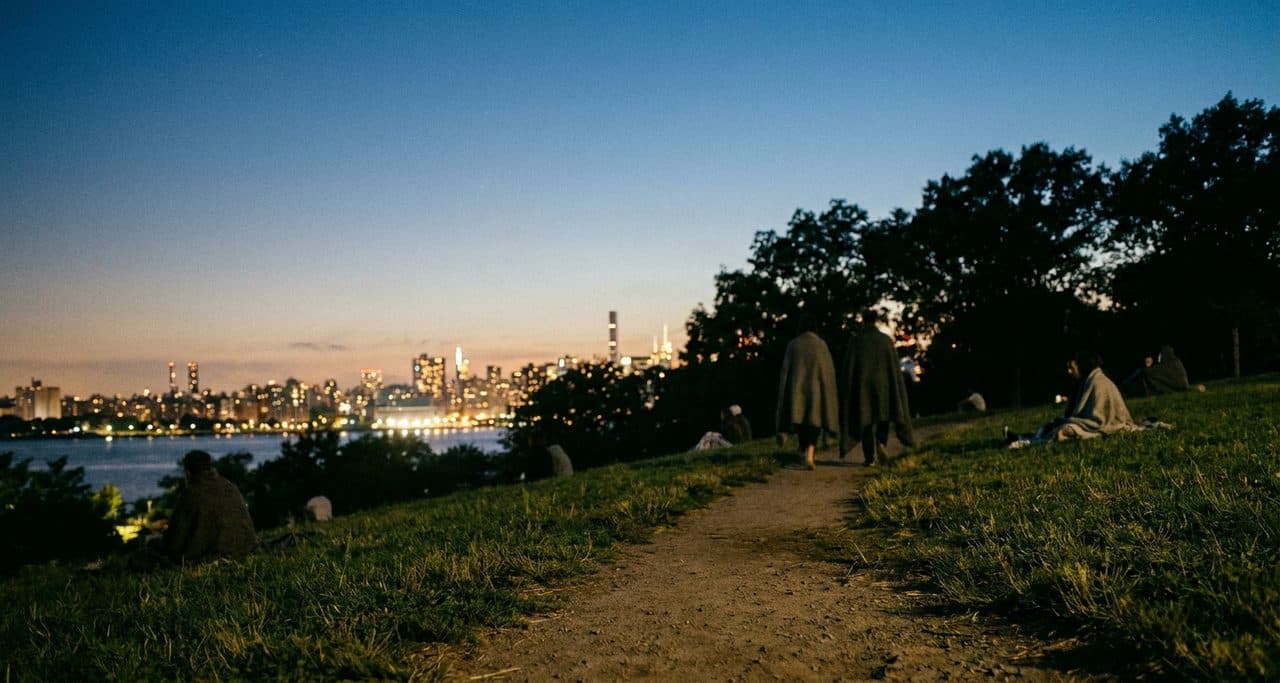
The two planets won't touch, won't merge, won't do anything dramatic. They'll just hang there, bright and separate, doing what they've been doing for millennia while you happened to look up. You don't need an app to identify them, though you'll probably open one anyway. The experience isn't about knowing which one is which—it's about the fact that you stopped, climbed a hill, and made space for something that wasn't on your calendar. A couple of regulars come up here for this sort of thing: an older man with binoculars who never talks, a woman who brings a folding chair and a thermos of something that smells like cinnamon. They nod. You nod back. No one explains what they're looking at. The shared silence is the point.
The Route Back Down Through the Warm Pockets
Descend through the residential blocks on the park's south side, where the row houses glow from within and you catch glimpses of family dinners through un-curtained windows. The air here holds heat differently—trapped between brick, rising from basement laundry vents, mixing with the smell of someone's late-night cooking. You pass a corner store that stays open until eleven, its fluorescent spill lighting up the sidewalk in a way that feels almost generous after the dark of the hilltop. The walk back is faster, gravity-assisted, and your mind is still half in the sky. You're not thinking about work or email or what you're doing this weekend. You're thinking about two bright dots and the fact that you saw them from a hill in Brooklyn on a Tuesday night for no reason except that you wanted to.
When the Sky Doesn't Cooperate and the Walk Still Counts
Some nights the clouds don't break. The forecast promised clear and you get a low gray ceiling that swallows everything above the streetlights. You make the climb anyway because the route itself has become the thing—the tilt of the streets, the shift in air temperature, the quiet that isn't available at ground level. You sit on the bench facing west and see nothing but the haze of the city's light pollution reflected back at you. It's disappointing for about five minutes, then it stops mattering. You're still outside. You still climbed. The couple with the thermos is still there, unbothered, talking softly in a language you don't recognize. The man with binoculars packed up early, but someone else has taken his spot, hood up, staring at the same blank sky. You all walked up a hill in Brooklyn at night to look at something that might not be there, and somehow that's enough.
Practical Notes
The hill district of Sunset Park runs roughly from 40th to 45th Streets, with the best western views along the park's eastern edge near Sixth and Seventh Avenues. Sunset times shift with the season—check current data and plan to arrive about twenty minutes after. The walk from the base to the viewpoint takes fifteen to twenty-five minutes depending on your pace and which entry point you choose. No admission, no gates, no formal hours. Dress warmer than you think you need to. The benches are first-come and unspoken etiquette leans toward quiet. Public transit access via the N, R, or D trains, then a walk uphill. If clouds are forecast, consider it a walk with a sky-watching bonus rather than the reverse.
Tags: #VenusAndJupiter #BrooklynHills #SunsetPark #NightSkyNYC #AstronomyWalk #TheLongWayHome #BrooklynViews #CityStargazing #PlanetWatching #OutdoorNYC #BrooklynNights #UrbanHiking #WesternHorizon #QuietBrooklyn #EveningWalks
Sources consulted: timeout.com · atlasobscura.com · nycgo.com
All trademarks are the property of their respective owners.


