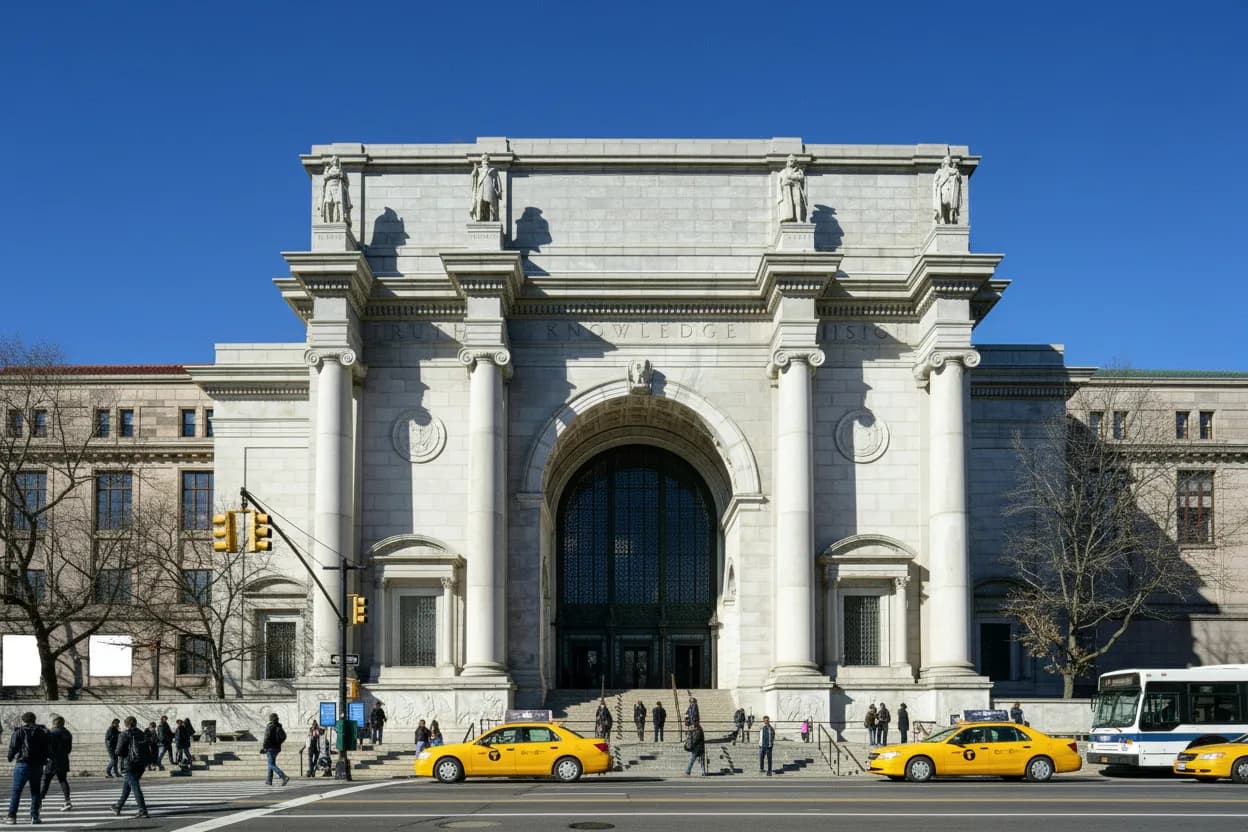
New York City’s most useful version of inspiration is rarely abstract. On a crisp, solo daytime outing, it can look like choosing one neighborhood, one serious institution, and one calm reset instead of trying to conquer the whole city. The Upper West Side around the American Museum of Natural History works because it rewards attention: science halls, Central Park edges, readable streets, and transit choices that can be adjusted before you leave. If simone biles is the search spark, use the idea of excellence practically here: set a clear route, protect your energy, verify changing details, and leave with something specific learned rather than a crowded itinerary half-finished.
Want the sharper version before you head uptown? Text Karpo for a click-ready Upper West Side plan with museum timing, transit checks, and backup stops matched to today’s NYC conditions.
American Museum of Natural History at 200 Central Park West
Start with the American Museum of Natural History because it gives this route its strongest purpose. The museum lists daily hours of 10 am to 5:30 pm and anchors the west side of Central Park between 77th and 81st Streets. For a solo visitor, the best pacing is deliberate: pick two or three halls, then stop. The failure mode is treating the building like a checklist and leaving tired before the neighborhood has room to breathe.
Tickets and exhibitions are the detail to verify before committing. AMNH lists New York State resident pay-what-you-wish admission for general admission with ID, while standard pricing applies to visitors from outside New York State; ticketed exhibitions add separate timed choices. Because prices, closures, and included exhibitions can change, use the museum’s ticket page before leaving. If the exact exhibit you want is unavailable, make the permanent halls the main event rather than forcing a weaker substitute.
Gilder Center Entrance on Columbus Avenue at 79th Street
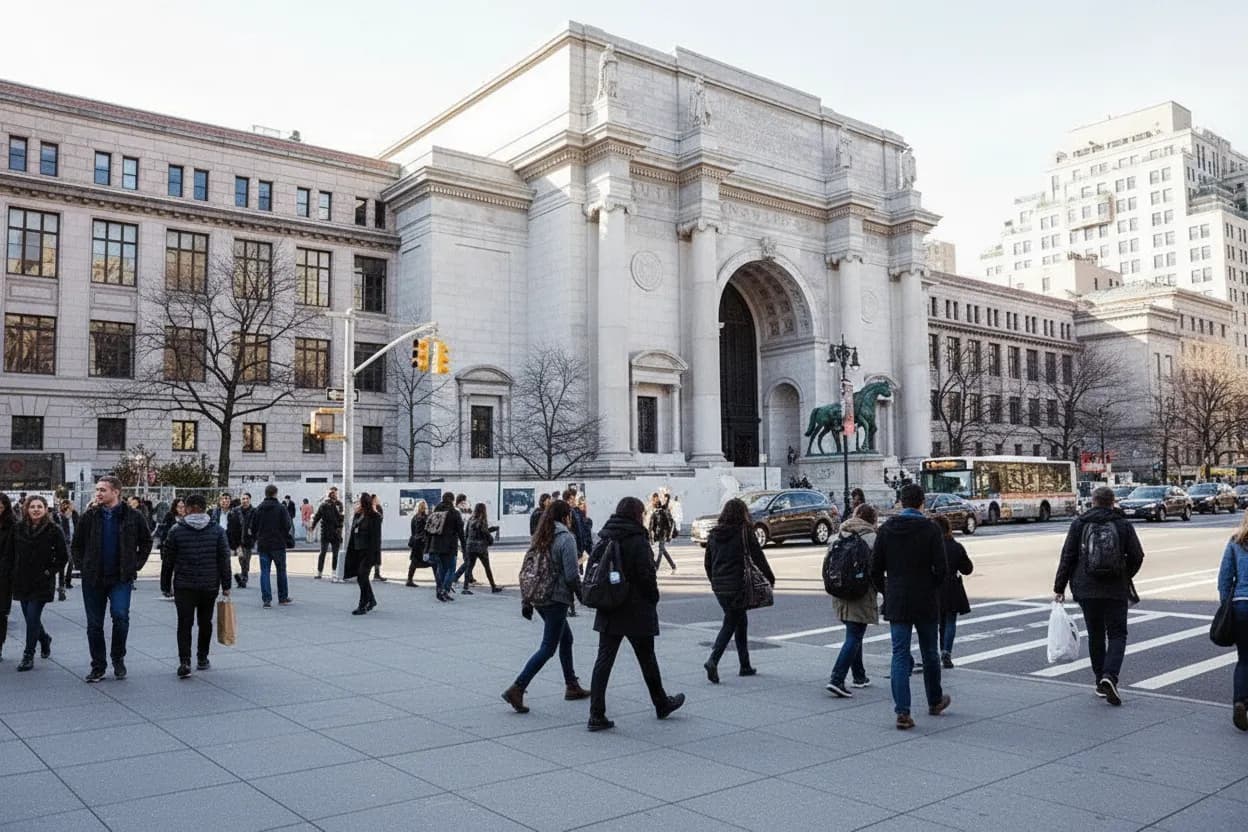
The Gilder Center entrance at 415 Columbus Avenue is the practical move when step-free access matters or when Central Park West looks crowded. AMNH identifies it as an ADA-compliant entrance with automatic doors, while the Rose Center entrance on West 81st Street is also step-free. This makes the route workable for visitors using mobility devices, strollers, or lower-energy pacing. The tradeoff is simple: Columbus Avenue may feel less iconic, but it can make the day smoother.
Accessibility planning should happen before transit planning, not after. AMNH says the 81st Street-Museum of Natural History B/C station is stairs-only, and the museum points visitors needing accessible subway access toward the 72nd Street 1/2/3 station with a northbound M7 connection on Amsterdam Avenue. Buses including M79-SBS, M7, M10, M11, and BxM2 serve the area. Check elevator status and arrivals in the MTA app before you choose the route.
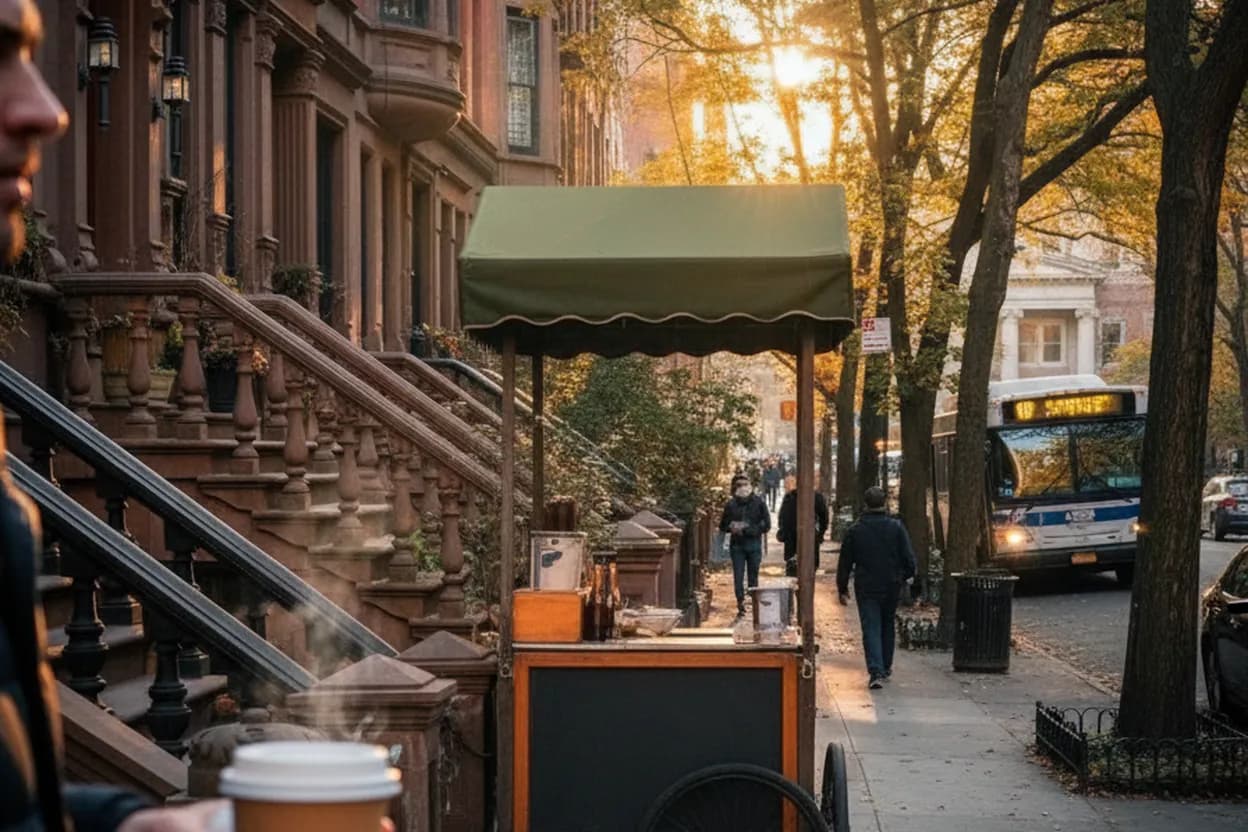
81st Street B/C Station or M79-SBS Bus Choice
For many New Yorkers, the easiest non-accessible subway approach is the B on weekdays or the C to 81st Street, then a short walk into the museum zone. AMNH also notes the 1 train stops two blocks west at Broadway and West 79th Street. The daytime advantage is flexibility: if the B is not running when you need it, the C or 1 can still keep the plan intact without crossing half the borough.
The M79-SBS is the better choice when the goal is low-friction crosstown movement rather than speed at any cost. It travels east and west on West 79th Street and stops near the museum area. On a crisp autumn day, a bus approach also preserves energy for the museum and park walk. The failure mode is assuming live transit conditions from memory. Before stepping out, verify subway service, bus arrivals, and elevator alerts through MTA tools.
Naturalists' Gate at West 77th Street
After the museum, cross toward Naturalists’ Gate at West 77th Street and Central Park West if you want the route to stay thematic. The Central Park Conservancy places Naturalists’ Walk directly across from AMNH and ties the landscape to the Alexander von Humboldt statue. This is a quieter pivot from indoor concentration to outdoor reflection, especially useful for a solo visitor who wants a short reset without turning the outing into a long hike.
This stop works best as a 20-minute decompression, not a second major attraction. Central Park paths can be uneven, crowded, or temporarily affected by maintenance, weather, or events, so choose the visible, well-traveled approach that matches your mobility and daylight comfort. If the park edge feels too busy, use Columbus Avenue instead and keep walking south for cafes or north for a quieter block. The practical win is having a backup before you need it.
Great Lawn Between 79th and 85th Streets
The Great Lawn gives the guide a wider view of excellence: discipline can include knowing when to stop. The Conservancy identifies it as mid-park between 79th and 85th Streets, with the main oval lawn used for recreation, scenery, and major events. It has no restrooms listed on the location page, which matters for pacing. Treat it as a look-and-reset point after AMNH, not as a place to solve every comfort need.
There are two important tradeoffs here. First, the Great Lawn can close seasonally or for field protection, events, or weather recovery, so verify alerts before centering the day on it. Second, organized games require permits, so this is not a place to improvise structured group activity. For a solo daytime visitor, the better use is walking the perimeter, sitting briefly if conditions allow, then leaving before fatigue turns a clean route into a forced march.
Stavros Niarchos Foundation Library as Midtown Backup
If the Upper West Side plan breaks because of sold-out exhibition times, weather, or transit disruption, the Stavros Niarchos Foundation Library is a credible intellectual backup rather than a random detour. NYPL lists SNFL at 455 Fifth Avenue, fully accessible, with broad public services, books, Wi-Fi, computers, classes, and programs. It changes the neighborhood, but not the purpose: you still get a learning-centered NYC day with structure and indoor seating.
Use SNFL when you want quiet utility more than museum scale. NYPL hours vary by day and center, and the page notes that specific spaces such as the rooftop terrace can close due to weather. It also states that e-bikes, e-scooters, and electronic transportation devices are not permitted inside NYPL locations, except mobility aids. That makes verification important if you are carrying gear. Check today’s location page before rerouting from the Upper West Side.
Tap Official Pages Before Leaving Home
The final action is not glamorous, but it is what keeps this guide production-ready for New York City: verify the live details on the official pages. Check AMNH hours, ticket availability, temporary hall closures, entrance guidance, and accessibility notes. Check Central Park alerts if your plan depends on the Great Lawn or specific paths. Check MTA service and elevator status, especially if you are avoiding stairs or connecting from another borough.
A good version of this outing has an exit strategy. If AMNH is too crowded, keep the park edge short and switch to a cafe or SNFL. If transit is delayed, choose the bus or the 1 train instead of waiting indefinitely for the B/C. If weather turns, skip lawn time. The standard is not doing everything; it is making one clear NYC neighborhood decision, confirming it, and leaving enough energy to enjoy it.
Tags: #NYC #NewYorkCity #UpperWestSide #AMNH #CentralPark #MuseumDay #NeighborhoodGuide #SoloNYC #AccessibleTravel #NYCTransit #CultureGuide #AskKarpo #BeforeYouGo #CityGuide
Sources consulted: Source 1: amnh.org · Source 2: amnh.org · Source 3: amnh.org · Source 4: centralparknyc.org · Source 5: centralparknyc.org · Source 6: nypl.org
All trademarks are the property of their respective owners.
Ask Karpo first
Tell Karpo your date, group size, budget, and starting point. We’ll check current access, timing, transit, and the cleanest New York City plan for Upper West Side (Museum of Natural History area) before you head out.


