In the 73rd minute of the semifinal between Brazil and France at MetLife Stadium, Kylian Mbappé thought he had scored the winner. The ball nestled into the net, 80,000 fans erupted, and the striker began his celebration sprint. Then came the dreaded pause—that modern football moment where joy hangs in digital limbo. Within 18 seconds, the semi-automated offside system delivered its verdict: offside by 3.2 centimeters. No goal. France would eventually lose in penalties, and the most advanced refereeing technology in World Cup history had once again become the story itself.
The Evolution from Human Error to Digital Precision
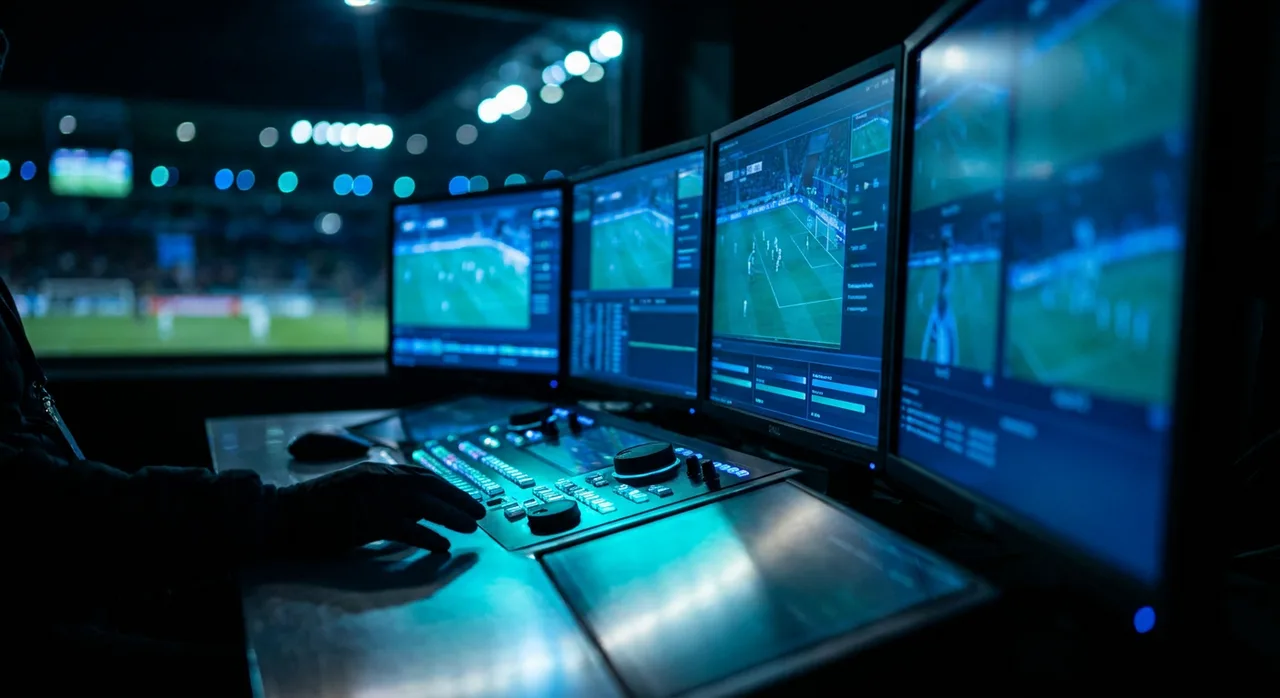
The 2026 World Cup marked a technological watershed for football officiating. Building on the semi-automated offside technology introduced at Qatar 2022, FIFA deployed an enhanced system using 24 high-speed cameras and AI algorithms capable of tracking 29 body points on each player 50 times per second. The margin for error, previously measured in subjective human judgment, had been reduced to mere millimeters.
VAR, now in its second World Cup cycle, operated with improved efficiency. The average review time dropped from 90 seconds in Qatar to just 45 seconds across the three host nations. Video Assistant Referees worked from centralized hubs in New York, Mexico City, and Toronto, monitoring multiple matches simultaneously through fiber-optic connections that transmitted 4K footage with virtually zero latency.
The numbers told the story of technology's growing influence: 127 VAR interventions across 104 matches, with 89 decisions overturned. The semi-automated offside system flagged 312 potential infractions, with referees accepting its recommendation in 97.4% of cases.

When Machines Overrule the Beautiful Game
The controversy wasn't just about accuracy—it was about philosophy. In the quarterfinal between Argentina and Germany at Soldier Field, Lionel Messi's 35th-minute goal was disallowed when the system detected that his shoulder was 2.1 centimeters ahead of the last defender. The decision was technically correct but raised fundamental questions about the spirit of the offside law.
"We're measuring infractions that would have been impossible to detect with the naked eye even five years ago," said former Premier League referee Mark Halsey. "The technology is perfect, but football was never meant to be perfect."
The most dramatic moment came during England's round-of-16 clash with Spain at Azteca Stadium. Harry Kane's 89th-minute equalizer was ruled out for offside, despite appearing clearly onside to television viewers. The semi-automated system revealed that Kane's trailing foot was indeed 7.8 centimeters beyond the defensive line—a call no human official could have made in real-time.
The Three-Second Rule That Changed Everything
Perhaps no innovation proved more divisive than FIFA's implementation of the "precision window"—a three-second buffer during which the AI system could detect and flag potential offsides retroactively. This meant goals could be disallowed for infractions that occurred several seconds before the ball crossed the line, fundamentally altering how players celebrated scoring.
The policy created surreal scenes throughout the tournament. Goals were scored, celebrated, and even restart kicks taken before the technology intervened. In Canada's surprising run to the round of 16, striker Jonathan David had two goals overturned by retroactive offside calls, including one where the infraction occurred four seconds before he received the final pass.
Players adapted by adopting a new celebration protocol: initial restraint followed by cautious optimism, then full celebration only after the referee's final signal. "It's like playing football in slow motion sometimes," said Netherlands midfielder Frenkie de Jong. "You score, but you're always waiting for the machine to tell you if you should be happy."

The Human Element in a Digital Game
Despite the technological advancement, human judgment remained crucial in VAR decisions involving subjective calls. Penalty decisions, handball infractions, and serious foul play still required referee interpretation, leading to fascinating contrasts between digital precision and human subjectivity.
The tournament's most contentious VAR decision came during the final itself. With the score tied 1-1 in extra time, a potential handball in the penalty area underwent a four-minute VAR review. The technology could precisely track ball trajectory and hand position, but determining "deliberate" handball remained a human decision. The penalty was awarded, converted, and ultimately decided the championship.
Referee Stephanie Frappart, who worked the final, defended the technology's role: "VAR and semi-automated offside give us tools for precision, but football is still a human sport. The technology serves the game, not the other way around."
The Unintended Consequences of Perfection
The pursuit of perfect officiating created unexpected tactical shifts. Teams began deploying "technology specialists"—analysts who studied opponents' offside patterns and VAR tendencies. Some coaches adjusted their attacking strategies to account for the system's precision, coaching forwards to stay deeper to avoid microscopic infractions.
The psychological impact was equally significant. Players reported increased anxiety during goal-scoring opportunities, knowing that celebrations could be rendered meaningless seconds later. The spontaneous joy that defines football's greatest moments faced an existential challenge from digital oversight.
Television broadcasts adapted by incorporating real-time offside graphics and probability meters, turning technical decisions into entertainment. Fans in stadiums, however, often remained confused during lengthy reviews, unable to see the detailed analysis available to viewers at home.
Practical Notes
For viewers trying to understand the new technology, focus on the visual cues broadcasters provide during VAR reviews. The semi-automated offside system generates 3D animations showing player positions at the moment of ball contact—these are more accurate than traditional freeze-frame images. When watching matches, pay attention to players' body language after scoring; experienced players now wait for the referee's definitive signal before fully celebrating. The technology has also made attacking timing more crucial than ever, so watch how forwards position themselves relative to defensive lines with almost scientific precision. Understanding these nuances will enhance your appreciation of how technology has subtly but fundamentally changed the world's most popular sport.
Tags: #WorldCup2026 #FIFA2026 #VAR #SemiAutomatedOffside #FootballTechnology #Soccer #Refereeing #FIFATech #WorldCupControversy #DigitalFootball #AIinSports #FootballInnovation #VAR2026 #TechInSports #ModernFootball
Sources consulted: fifa.com · espn.com
All trademarks are the property of their respective owners.
Ask Karpo first
Want to keep following the World Cup 2026 story as it unfolds? Ask Karpo for a personalized bracket, live score alerts, and a match schedule tailored to your teams and your city.