
The Historic Collapse
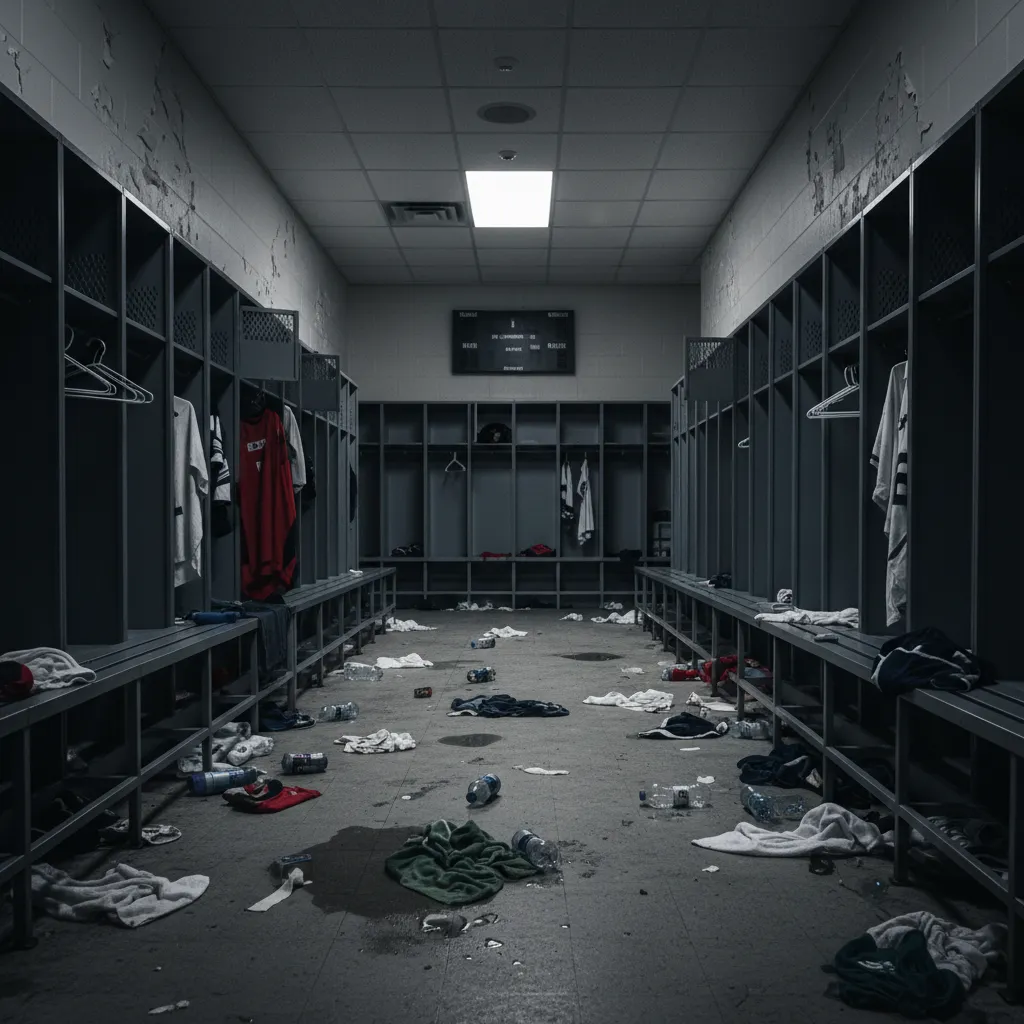
When Mexico's elimination was confirmed on July 4 — a 2-0 loss to Morocco in the Round of 32 — it completed an unprecedented trifecta of failure. For the first time in World Cup history, all host nations had been eliminated before the quarterfinal stage. The United States fell 4-1 to Belgium in the Round of 16. Canada lost 3-0 to Morocco in the Round of 16. Mexico did not survive the Round of 32. The combined record of the three co-hosts in their elimination matches was: played 3, lost 3, goals scored 1, goals conceded 9. The question is not whether the hosts underperformed — that is beyond dispute — but why.
Wondering what went wrong for the hosts? Ask Karpo who to root for and where to watch next.
The United States: Tactical Exposure
The United States' 4-1 loss to Belgium was the product of a fundamental tactical mismatch. Gregg Berhalter's 4-3-3 system, which had been effective against Uruguay and Japan in the group stage and Round of 32, was brutally exposed by Domenico Tedesco's 3-4-2-1. The specific problem was the space behind the US fullbacks. Berhalter's system required Sergino Dest and Antonee Robinson to push high in attack, creating one-on-one situations in behind when Belgium transitioned. Belgium exploited this space ruthlessly — three of their four goals originated from attacks down the channels vacated by the US fullbacks. Berhalter's refusal to adjust his formation after falling 2-0 behind — maintaining the high line and attacking fullbacks — was the most criticized tactical decision of the tournament.
Canada: Outclassed by Superior Quality
Canada's 3-0 loss to Morocco was less about tactical failure and more about a gap in individual quality. Jesse Marsch's 4-2-3-1 was sound in principle: a compact defensive block designed to absorb Morocco's possession and break through Alphonso Davies' speed on the counter. The problem was execution. Morocco's pressing was too intense for Canada's center-backs, who completed only 64% of their passes under pressure — the worst completion rate of any team in the Round of 16. Jonathan David, Canada's most dangerous attacker, touched the ball just 23 times in 90 minutes — the fewest touches by a starting striker in any knockout match at the tournament. The quality gap between a squad drawn from Ligue 1, the Bundesliga, and the Premier League (Morocco) and one drawn largely from MLS and the Championship (Canada) was evident in every phase of play.
Mexico: The Identity Crisis
Mexico's elimination in the Round of 32 — the earliest exit in their World Cup history since 1978 — was the product of a deeper problem: an identity crisis that has plagued Mexican football for a decade. Coach Jaime Lozano attempted to play a possession-based 4-3-3 that was fundamentally unsuited to his squad's strengths. Mexico's traditional weapons — speed on the counter, set-piece threat, intensity in the tackle — were abandoned in favor of a style that required technical precision the squad did not possess. Against Morocco, Mexico completed 58% of their passes and created just three shots on target. The 2-0 scoreline flattered them. Former Mexico coach Javier Aguirre described the performance as "a team playing someone else's football."

The Home Advantage That Wasn't
Conventional wisdom holds that host nations benefit from home advantage — familiar conditions, supportive crowds, favorable draws. The 2026 World Cup has challenged this assumption. The three co-hosts were split across a continent, meaning that "home" was a relative concept. The United States played their knockout match at MetLife Stadium in New Jersey, but their group stage matches were in Houston and Kansas City — a travel distance that exceeded many visiting teams'. Canada's group stage matches were played in American cities, not in Canada. Mexico played one match in Mexico City and the rest in the United States. The fragmented hosting arrangement diluted the traditional home advantage and created logistical challenges that visiting teams with centralized base camps did not face.
The Pressure Factor
Sports psychologists consulted by FIFA's player welfare department have identified the psychological burden of hosting as a significant factor in the co-hosts' collective failure. Players from all three teams reported feeling that the weight of public expectation — amplified by Trump's interventions, by media saturation, and by the commercial stakes — created performance anxiety that affected their decision-making on the pitch. The United States' Weston McKennie admitted in a post-match interview that "the noise was different — you could feel the entire country watching, and it made everything harder." The irony is brutal: the very enthusiasm that was supposed to propel the hosts forward may have been the weight that dragged them down.
Tags: USA, Canada, Mexico, co-hosts, eliminated, World Cup 2026, tactical failure, Round of 16, Berhalter, Marsch, Lozano
Sources consulted: ESPN · CBS Sports · FIFA · Yahoo Sports
All trademarks, team names, league names, and player likenesses mentioned in this article are the property of their respective owners and are used here for informational and editorial purposes only.
Ask Karpo First
Want to understand what went wrong for the World Cup hosts or explore how co-hosting affects tournament performance? Ask Karpo for each host nation's complete match analysis, the history of host nation performances at World Cups, and what comes next for American, Canadian, and Mexican football.