 Where to Eat Near Penn Station That Isn't a Chain
US Open 2026
US Open With Teens: Independence Without Losing Everyone
Give teens room to explore the US Open while keeping the family coordinated through clear boundaries, reliable meetups, and practical phone habits.
The hardest question with teens at the US Open is not whether they can handle a day of tennis; it is how much independence improves the day without turning every change of court, snack run, or merchandise stop into a family search. Older kids may want to follow a match that does not interest everyone else, compare food options, browse on their own, or simply sit away from parents for a while. That can be healthy and fun if the plan is clear before anyone splits up. Think of the visit as a shared base camp rather than a single-file outing: everyone knows the rules, the meeting places, the phone plan, and the point at which flexibility stops.
Text Karpo for a current, low-friction plan for us open with teens: independence without losing everyone—including timing, route checks, and practical options that fit your day.
Start With A Split Plan
Advice: decide before arrival which parts of the day are together time and which parts are roaming time. Families often wait until a teen is impatient, a parent is distracted, and a match is about to start. That is when vague instructions fail. A better approach is to name two or three windows: entering together, exploring separately, and regrouping before the next family priority.
For “US Open With Teens: Independence Without Losing Everyone,” the useful 2026 calendar anchor is August 23 through September 13, with singles main-draw play beginning August 30. That means families may be considering very different kinds of visits, from earlier grounds-focused days to later sessions with more reserved-seat emphasis. Use the official schedule close to your visit to shape the freedom you offer. A day built around moving between courts can support more teen choice than a tightly timed session where returning late affects everyone’s seats and rhythm.
- Set one family priority match or activity, then let each teen suggest one independent priority.
- Use time windows instead of constant texting, such as roaming until a specific meetup time.
- Make the default rule clear: if plans change, message first and wait for confirmation.
- Give younger teens smaller zones; give older teens wider zones only if they have shown they can follow the plan.
Pick Meeting Points Carefully
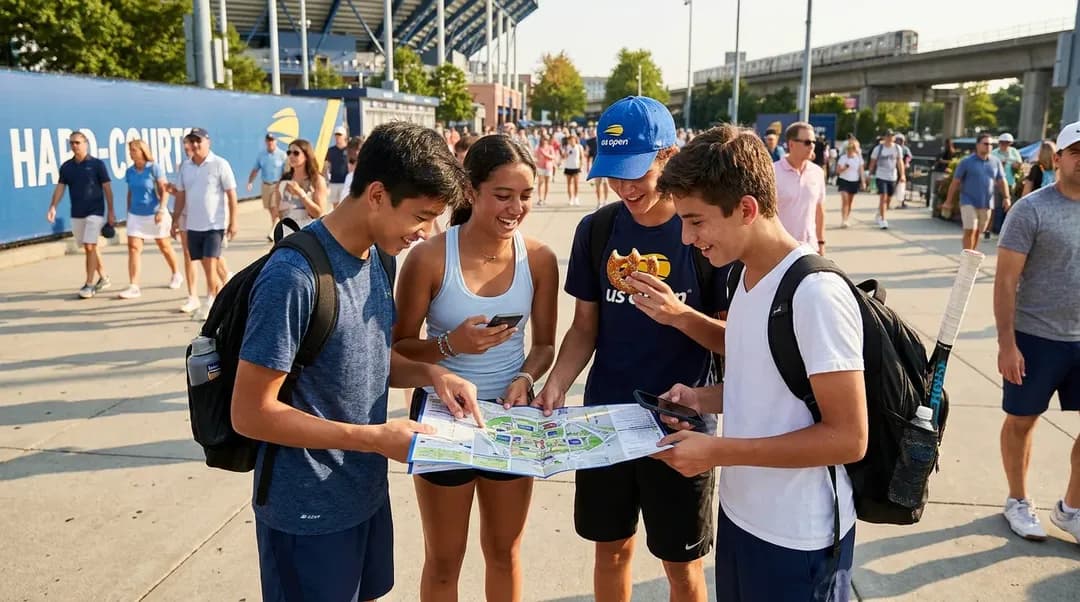
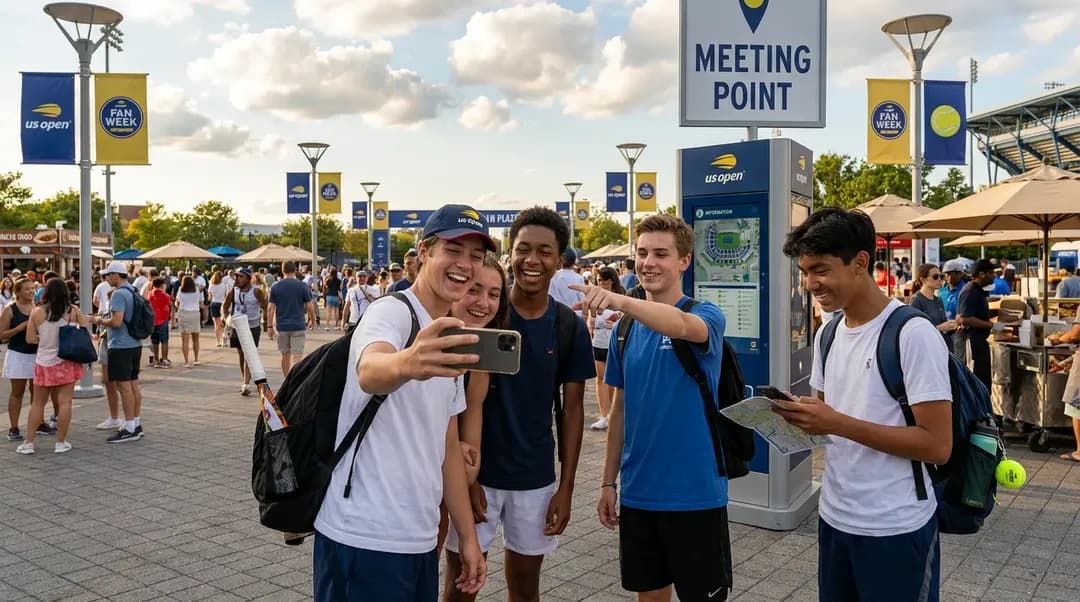
A useful meeting point is not just a famous place. It is a place a tired teen can identify, reach, and describe without guessing. Avoid instructions such as “near the big court” or “by the food area,” because crowds can make those labels almost meaningless. Instead, choose visible, specific landmarks after you are inside, then confirm them by standing there together once. If the group splits before everyone has physically seen the spot, you have not really chosen a meeting point.
Advice: create a primary meeting point and a backup meeting point. The primary point should be convenient for ordinary regrouping. The backup should be for confusion, dead batteries, or a crowd pattern that makes the first location hard to use. Parents can take a quick photo of each spot and share it in the family chat. That image is often more useful than a long description, especially when teens are navigating through noise, signs, and moving lines.
Time matters as much as location. “Meet after the match” sounds simple, but tennis endings are unpredictable. Use clock times for logistics and match moments for enthusiasm. If everyone wants to see the end of a close set, adjust by message. But if someone has gone quiet, the clock time should control. That prevents one person’s great tennis moment from becoming another person’s anxious wait.
Make Phones Boringly Reliable
The phone plan should be boring because boring is dependable. Before leaving your hotel, apartment, or home base, charge every device fully and agree on which app the family will use for messages. Do not assume everyone will notice a standard text, a group chat ping, and a location alert equally well. Teens may silence notifications, parents may miss messages while watching a point, and batteries can drop quickly during a long day of photos, maps, ticket access, and coordination.
Advice: reduce phone coordination to a few rules everyone can remember. The goal is not surveillance; it is smooth regrouping. If your family uses location sharing, discuss it openly as a same-day convenience rather than a secret tracking tool. Teens usually respond better when the purpose is practical: finding each other quickly, avoiding repeated calls, and keeping independence possible.
- Create one event-only family chat and keep all logistics there.
- Use short check-ins: current location, next move, and expected meetup time.
- Turn on important notifications before entering, then test one message.
- If you bring a power bank, make sure it fits your bag plan and current venue rules.
Also agree on what happens if messages do not go through. A simple rule might be: wait ten minutes at the primary meeting point, move to the backup point, then ask venue staff for help if needed. Families rarely use the fallback, but having one lowers stress. It also gives teens a script, which helps when they are embarrassed, rushed, or worried they made a mistake.
Give Teens Real Boundaries
Independence works best when it is real enough to feel respectful and bounded enough to be safe. Parents should avoid micromanaging every court change, but teens should not be guessing what is acceptable. Name the boundaries directly: where they may go, whether they may leave a designated area, whether they can buy food on their own, and what spending limit applies if they have a card or mobile wallet.
Advice: tie freedom to responsibility. If a teen checks in on time, answers messages, and returns when expected, the next roaming window can be wider. If they ignore the plan, the next window narrows. This keeps the conversation practical instead of emotional. It also recognizes that a major sporting event can be a good place for older kids to practice public-space judgment while adults are still nearby.
Siblings may need different rules. A seventeen-year-old who navigates transit alone at home is not the same as a thirteen-year-old who has never handled a crowded venue independently. Avoid presenting fairness as identical freedom. Fairness can mean each child gets a version of independence that matches age, maturity, and comfort. Pairing siblings can help, but only if the older teen is willing; forced babysitting can spoil the day for both.
Practical Notes
Before travel, check the official US Open event schedule, A-Z information, and prohibited items pages, because schedules, gate times, venue rules, player fields, transit conditions, inventory, and local business hours can change. Before acting on “US Open With Teens: Independence Without Losing Everyone,” recheck the official security page; its current limit is one searchable bag per guest, no larger than 12 by 12 by 16 inches. Advice: put tickets, transit details, payment methods, and emergency contacts on every teen’s phone, not only on a parent’s device. Take screenshots in case service is slow. After entering, choose meeting points together and write them in the family chat. If your family has reserved seats, decide whether teens may leave only during play breaks or during longer gaps. The clearer the plan, the more freedom they can enjoy without making the day harder for everyone else.
Tags: #USOpen2026 #Tennis #NewYork #Queens #FlushingMeadows #USOpenGuide #TennisFans #SportsTravel #NYCEvents #HardCourt #KarpoFinds #Karpo
Sources consulted: usopen.org — Official reference · usopen.org — Official reference · usopen.org — Official reference
All trademarks are the property of their respective owners.
Ask Karpo first
Want to know what is confirmed, when to show up, and what is actually open to the public? Ask Karpo for the latest US Open updates and a practical New York plan for us open with teens: independence without losing everyone.
Ask Karpo for more information.
Keep reading
- Where to Eat Near Penn Station That Isn't a Chain
 Andytown Coffee in the Outer Sunset: The Snowy Plover Explained
- Best Things to Do in Chicago: What the City Gives Away