 Where to Eat Near Penn Station That Isn't a Chain
US Open 2026
US Open Subway Etiquette for Crowded Match Nights
A calm subway plan can keep a crowded US Open match night from turning into a stressful ride after the final point.
The hardest post-match transit choice at the US Open is not simply whether to take the subway; it is when to join the crowd, where to stand, and how calmly you can move with thousands of other fans leaving Queens at the same time. For “US Open Subway Etiquette for Crowded Match Nights,” the useful 2026 calendar anchor is August 23 through September 13, with singles main-draw play beginning August 30. A good subway plan starts before the final point. Know whether your group is rushing out, waiting for the first wave to pass, or meeting someone outside the seating bowl. Keep your phone, payment method, ticket, and small bag organized before everyone stands. The goal is not to outsmart the crowd; it is to avoid becoming the person who stops suddenly in a walkway, blocks a stairway, or debates directions at the train doors.
Text Karpo for a current, low-friction plan for us open subway etiquette for crowded match nights—including timing, route checks, and practical options that fit your day.
Choose Your Exit Rhythm
After a night session, many fans rise together and move toward the exits as one large stream. That can work if you are seated near an aisle, traveling light, and already know your route. It is less comfortable if you need a restroom, have children with you, are waiting for friends, or still need to check directions. Advice: decide before the last changeover whether you are leaving immediately, pausing briefly, or waiting on purpose for the first surge to thin.
Leaving right away works best for organized groups. Put loose items away before the final game, confirm that everyone has what they need, and agree that the group will not stop in the main walking lane. If you want one last photo, step fully to the side. If someone needs to tie a shoe, answer a text, or reopen a map, move out of the flow first. The courtesy rule is simple: if you are not moving, do not stand where everyone else is trying to move.
Waiting can be the better choice for families, older relatives, or anyone who dislikes shoulder-to-shoulder movement. A short pause will not guarantee an empty platform, but it can change the walk from a compressed push into a steadier exit. The tradeoff is late-night timing, especially if your trip involves a transfer or a second ride after the subway. Advice: make the wait-or-go decision based on the whole trip, not just the first train.
Mind The Platform Flow
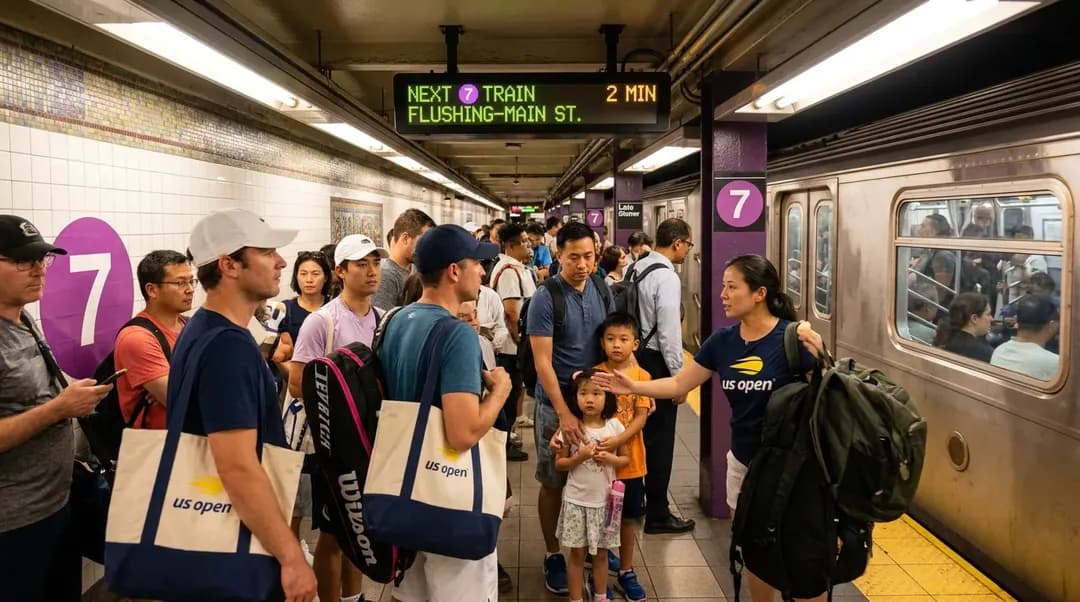
Official US Open transportation information directs fans to transit options serving the tournament area, including the subway via Mets-Willets Point. On crowded nights, the subway experience begins before a train arrives. Stairs, ramps, fare gates, and platform entrances become pressure points when a large crowd reaches them at once. Keep walking until you reach open space, avoid stopping at the top or bottom of stairs, and let people clear before trying to reposition your group.
Platform awareness is practical safety and basic courtesy. A person checking a map in the middle of a moving stream can slow dozens of people. A group spread across a stairway can block riders trying to pass. A backpack worn wide can bump faces, drinks, or shoulders. You do not need expert New York knowledge to do better; you only need to notice how your movement affects the people around you.
- Move down the platform instead of clustering near the first stairway.
- Stand behind platform edge markings and keep children close without blocking others.
- Let riders exit the train before boarding, even when the car looks crowded.
- Hold bulky bags low or close to your body when space is tight.
- If your group gets separated, choose a meeting point away from stairs and doors.
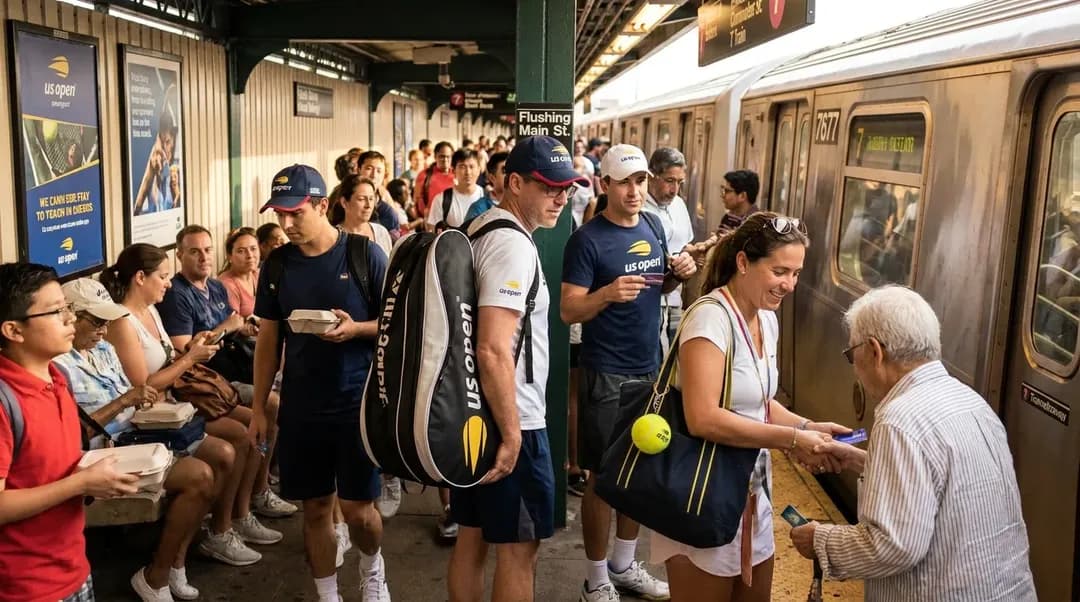
The first open patch of platform is not always the best place to wait. If staff directions and conditions allow, walk farther along instead of joining the densest cluster. Trains fill unevenly because many riders stop near the most obvious entrance. Spreading out helps boarding move faster and reduces the frantic push that starts when everyone aims for the same car.
Board Like A Local
Subway etiquette in New York is mostly about momentum. When the train arrives, stand to the side of the doors. Do not plant yourself directly in front of the opening. Let riders step off, then board if there is room. Once inside, keep moving toward the center of the car instead of stopping in the doorway. The doorway is not a resting place when a platform full of people is trying to board behind you.
If the car is clearly full, forcing your way in may save one train but make the ride worse for everyone. Advice: let the most crowded car go if you are not under a hard deadline, especially if your group cannot separate easily. A calmer boarding choice can be worth more than a small theoretical time saving.
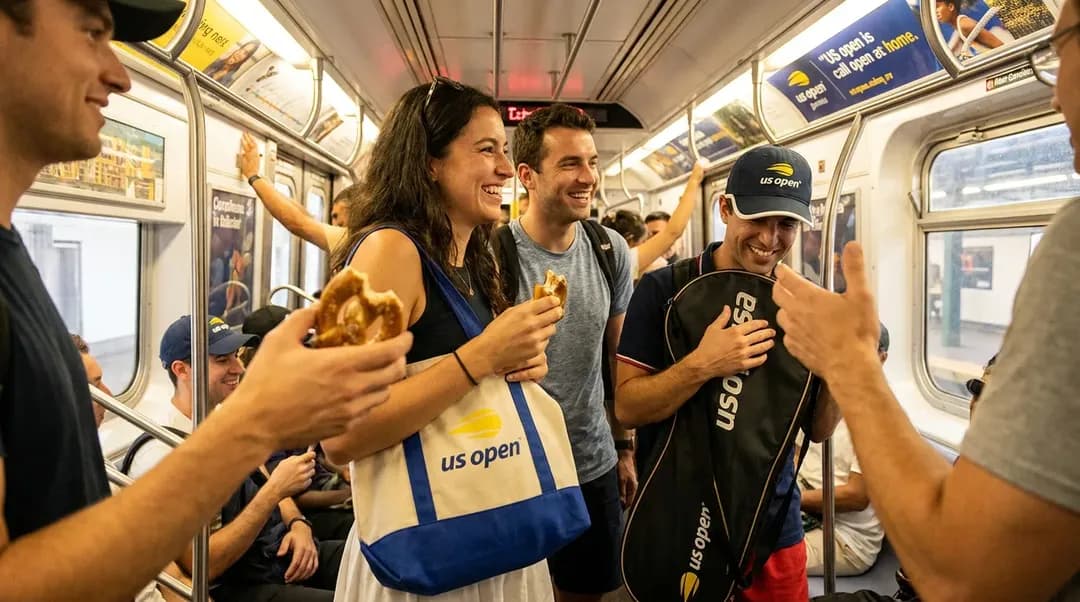
Inside the car, remember that the train is not only carrying tennis fans. It may also carry workers, residents, commuters, and people who did not choose to be part of the tournament crowd. Use headphones, keep phone audio off, lower your voice, and avoid leaning your full body against a pole when others need a handhold. If you are carrying souvenirs or a small bag, keep them close rather than placing them on a seat.
Groups should decide in advance whether they are willing to split across adjacent doors or cars. If not, say so before boarding begins. The worst time to debate is while standing in a doorway. If the group splits accidentally, do not hold the doors. Ride to a preselected station, or communicate once everyone is safely aboard and clear of the doors.
Build A Late-Night Backup
A strong match-night plan includes a primary route and a backup. Official tournament transportation information lists subway and rail options, and those can be useful for visitors who want to avoid post-event traffic. Still, transit conditions can change, and late-night service may feel different from an afternoon trip. Advice: before entering the grounds, save your return route, identify your transfer station, and know which direction you need to travel from Mets-Willets Point.
This matters most for visitors staying outside Manhattan or making more than one connection. A route that looks simple earlier in the day may feel more complicated after a long match, a crowded platform, and a tired group. If you are connecting to another subway line, commuter rail, rideshare, taxi, or hotel shuttle, think through the weak link. The first train is only one part of getting back.
- Charge your phone before the session and carry a small power bank if you rely on mobile tickets or maps.
- Set a group rule for what to do if one person misses a train.
- Keep your payment method ready before reaching fare gates.
- Choose a final transfer point where you would feel comfortable waiting.
- Screenshot essential directions in case service is weak in a crowd.
Late-night planning is not pessimism; it lets you enjoy the tennis longer. If a match stretches deep, you do not want to spend the final games wondering how to get back. If the match ends quickly, the same plan helps you move confidently while others are still opening maps.
Practical Notes
Before travel, recheck the official US Open transportation, event schedule, and gate-opening pages because schedules and access details can change. Also recheck the official security page; it currently states one bag per guest, subject to search, with maximum dimensions of 12 by 12 by 16 inches. Advice: pack lightly for the subway ride home, keep valuables zipped, and avoid bringing items that make you wider or slower in a crowd. If you are meeting someone after the match, name a specific low-traffic landmark rather than saying “by the station.” For families, assign each child an adult partner before leaving the seating area. For visitors, confirm the best late-night route to your lodging before the match begins, so the ride home is part of the plan rather than an afterthought.
Tags: #USOpen2026 #Tennis #NewYork #Queens #FlushingMeadows #USOpenGuide #TennisFans #SportsTravel #NYCEvents #HardCourt #KarpoFinds #Karpo
Sources consulted: usopen.org — Official reference · usopen.org — Official reference · usopen.org — Official reference
All trademarks are the property of their respective owners.
Ask Karpo first
Want to know what is confirmed, when to show up, and what is actually open to the public? Ask Karpo for the latest US Open updates and a practical New York plan for us open subway etiquette for crowded match nights.
Ask Karpo for more information.
Keep reading
- Where to Eat Near Penn Station That Isn't a Chain
 Andytown Coffee in the Outer Sunset: The Snowy Plover Explained
- Best Things to Do in Chicago: What the City Gives Away