 Where to Eat Near Penn Station That Isn't a Chain
US Open 2026
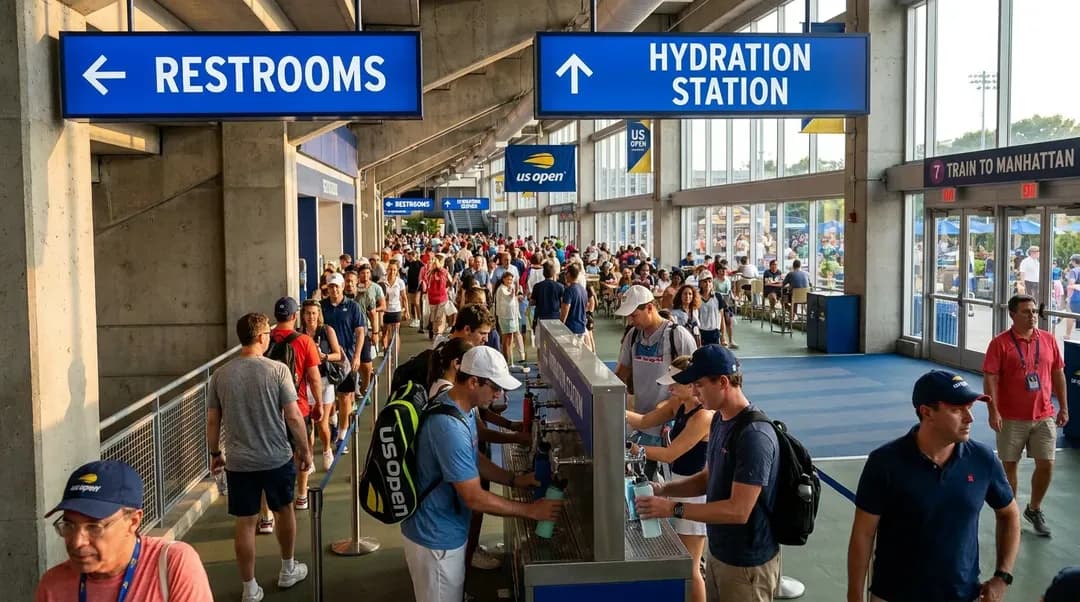
US Open Restroom and Refill Station Strategy
A restroom and refill plan can help you time breaks around match rhythm, crowd movement, and comfort needs during busy US Open sessions.
The tactical question at the US Open is not whether you will need a restroom or water break; it is when to take one without letting a simple errand become the most stressful part of the session. Tennis creates natural pauses, but thousands of spectators notice many of the same pauses at once. Arrivals, set endings, between-match movement, and evening-session transitions can all push people toward the same concourses, restrooms, and refill points. A better plan is to treat comfort like part of your match strategy. Know your closest exit, notice where the crowd is starting to move, and act before discomfort becomes urgent. That approach helps you miss less play, avoid the densest lines, and stay focused on the matches you most want to see.
Text Karpo for a current, low-friction plan for us open restroom and refill station strategy—including timing, route checks, and practical options that fit your day.
Use Match Rhythm
A routine changeover can look tempting, but it is often too short for a relaxed restroom trip unless you are already near an aisle, know the route, and accept that you may miss the next game. A set break gives more time, but it also draws more people. The end of a match can create the largest surge because entire sections stand, gather belongings, check phones, and move at once.
Advice: watch the scoreboard before the crowd does. If a set is moving one way and your comfort level is slipping, leaving during a quieter changeover before the set ends may be calmer than waiting for the official break. If a set is tight late, assume many fans will stay seated until the last point and then rush out together. That is when nearby facilities can feel busiest, even when lines are moving efficiently.
For families or groups, avoid making every break a full-group operation. One adult taking a child during a calmer moment may be easier than moving everyone later. If friends split up, choose a fixed meeting point before anyone leaves, such as a specific section entrance or landmark. Do not rely only on quick texts in a moving crowd, where noise, service, and attention can all work against you.
Read Crowd Pressure
The most useful cue is not only the line you can see; it is the direction people are beginning to flow. When many spectators stand while play is still active, a wave is forming. When aisles, ushers’ positions, and concourse paths all become busy at the same moment, the most obvious nearby facilities may take the first hit. A slightly longer walk can be worthwhile if it moves you away from the densest traffic.
Advice: separate urgency from convenience. If you urgently need a restroom, use the closest reasonable option and accept that you may miss play. If you are only topping off water or taking a comfort break, step away from the busiest stream before choosing a line. The shortest physical distance is not always the fastest decision during a crowded session.
- Before settling in, identify your section exit and one backup direction.
- Watch whether a line is moving steadily or spreading sideways into a walkway.
- Avoid starting a non-urgent break right after a dramatic set-ending point.
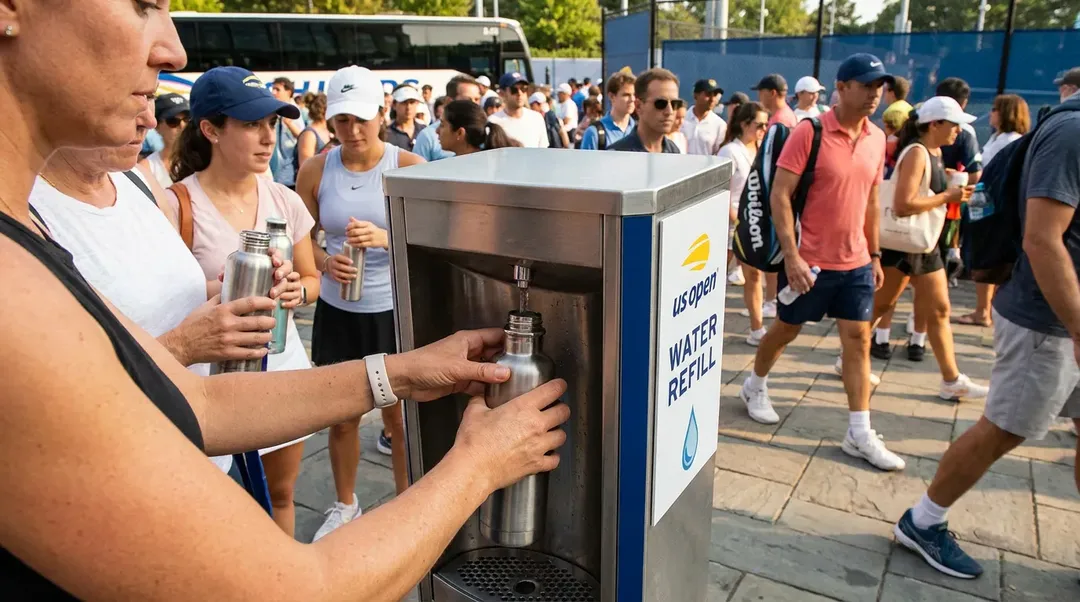
- Refill before your bottle is empty, so the next line feels optional rather than urgent.
A longer line is not always a bad line. Fans who already know what they need may move quickly. A smaller crowd near a confusing pinch point may move slowly. Look for steady forward motion and avoid standing in the middle of a walkway while a group debates what to do next. If you need to reassess, step out of traffic first.
Pack For Comfort
Before acting on “US Open Restroom and Refill Station Strategy,” recheck the official security page; its current limit is one searchable bag per guest, no larger than 12 by 12 by 16 inches. That limit matters for restroom and refill planning because overpacking slows you down. A bulky bag can make rows harder to navigate, stalls less convenient, and refill stops clumsier. The goal is not to bring every possible comfort item; it is to carry what reduces repeated trips without creating a new problem.
Advice: organize the bag by urgency. Keep your water container, tissues, hand sanitizer, sunscreen, and personal essentials in predictable places. Put items you may need during a match where you can reach them without digging. Put less urgent items deeper. When a break window opens, you should be able to stand and move without a long search under the seat.
Clothing choices also affect line stress. Comfortable shoes help if the better restroom or refill option is not the closest one. Light layers can make it easier to handle sun, shade, indoor air, or an evening temperature shift without turning comfort into another errand. If you are attending with children, older relatives, or anyone who moves more slowly, build the break plan around that person’s pace rather than the most tennis-focused fan’s patience.

Coordinate Refills And Restrooms
Water and restroom planning are connected. If you drink only after you already feel uncomfortable, you may create a more urgent stop later. If you avoid drinking because you fear restroom lines, you may spend the session distracted and uncomfortable. A steadier approach works better: sip consistently, refill when a station looks manageable, and pair that with planned restroom breaks instead of waiting until both needs become urgent at once.
Advice: combine tasks when the timing is right, but do not force every break to accomplish everything. A clean gap between matches can be useful for restroom, refill, sunscreen, and a short reset. During an active match, a quick restroom-only trip may be smarter than turning it into a longer loop. The more tasks you attach to one break, the more likely you are to miss a key stretch.
- On arrival, locate restrooms and refill points before you settle into match-watching mode.
- During long sessions, top off water when lines look calm, not only when the bottle is empty.
- If a group splits up, choose one simple meeting place instead of several moving targets.
- Use matches you care about less for maintenance, preserving attention for your priority courts.
Pay attention to your own interest level, too. If you are deeply invested in a match, make small comfort decisions early, before the score tightens and every point feels unmissable. If you are watching casually, use that flexibility. A low-drama stretch on a secondary priority may be the right time to handle a refill, while a match you planned the day around deserves fewer interruptions.
Practical Notes
For “US Open Restroom and Refill Station Strategy,” the useful 2026 calendar anchor is August 23 through September 13, with singles main-draw play beginning August 30. Crowd patterns can still vary by day, session, court, weather, and match length, so treat any plan as flexible rather than fixed. Advice: before travel, recheck the official event schedule, A-to-Z information, and prohibited-items page, including the current bag rule, because venue details can change. Once on site, make your first restroom and refill check before sitting for a long match. If comfort becomes urgent, choose the practical break over perfect viewing; missing a few points is better than letting avoidable stress take over the session.
Tags: #USOpen2026 #Tennis #NewYork #Queens #FlushingMeadows #USOpenGuide #TennisFans #SportsTravel #NYCEvents #HardCourt #KarpoFinds #Karpo
Sources consulted: usopen.org — Official reference · usopen.org — Official reference · usopen.org — Official reference
All trademarks are the property of their respective owners.
Ask Karpo first
Want to know what is confirmed, when to show up, and what is actually open to the public? Ask Karpo for the latest US Open updates and a practical New York plan for us open restroom and refill station strategy.
Ask Karpo for more information.
Keep reading
- Where to Eat Near Penn Station That Isn't a Chain
 Andytown Coffee in the Outer Sunset: The Snowy Plover Explained
- Best Things to Do in Chicago: What the City Gives Away