 Where to Eat Near Penn Station That Isn't a Chain
US Open 2026
US Open Lockers, Storage, and Light Packing Plans
This practical guide helps fans plan luggage storage, pack a smaller stadium bag, and avoid arriving at the US Open gates with items they cannot comfortably carry inside.
The hardest bag decision for a US Open day is usually made before tennis enters the picture. Many fans are not leaving from home with only a phone, sunglasses, and a hat; they are landing at an airport, checking out of a hotel, coming from an office, or squeezing a session into a larger New York itinerary. That is where packing gets complicated. A bag that worked for a flight, a workday, or an overnight stay may be too large, too heavy, or too cluttered for hours of walking, sitting, security screening, and moving between courts. The better approach is to separate travel luggage from a true stadium kit before the final trip to Queens. For “US Open Lockers, Storage, and Light Packing Plans,” the useful 2026 calendar anchor is August 23 through September 13, with singles main-draw play beginning August 30.
Text Karpo for a current, low-friction plan for us open lockers, storage, and light packing plans—including timing, route checks, and practical options that fit your day.
Arriving With Extra Bags
The official security page currently states that each guest may bring one bag, subject to search, with maximum dimensions of 12 by 12 by 16 inches. That standard should be treated as a limit for a packed bag, not an invitation to bring the largest possible travel item. A carry-on roller, garment bag, bulky tote, or overfilled commuter backpack can create a problem even when the contents are ordinary. The issue is not only whether an item is allowed; it is whether the whole setup works for entry and for the rest of the day.
Advice: decide where every non-stadium item will go before leaving the airport, hotel, office, or apartment. The gate area is a poor place to sort luggage, move valuables, or discover that a bag is too large. A rushed repack can separate you from tickets, ID, medication, payment cards, or a charger at exactly the wrong moment. Aim for one compact bag that can be opened easily for inspection and carried comfortably after a long session.
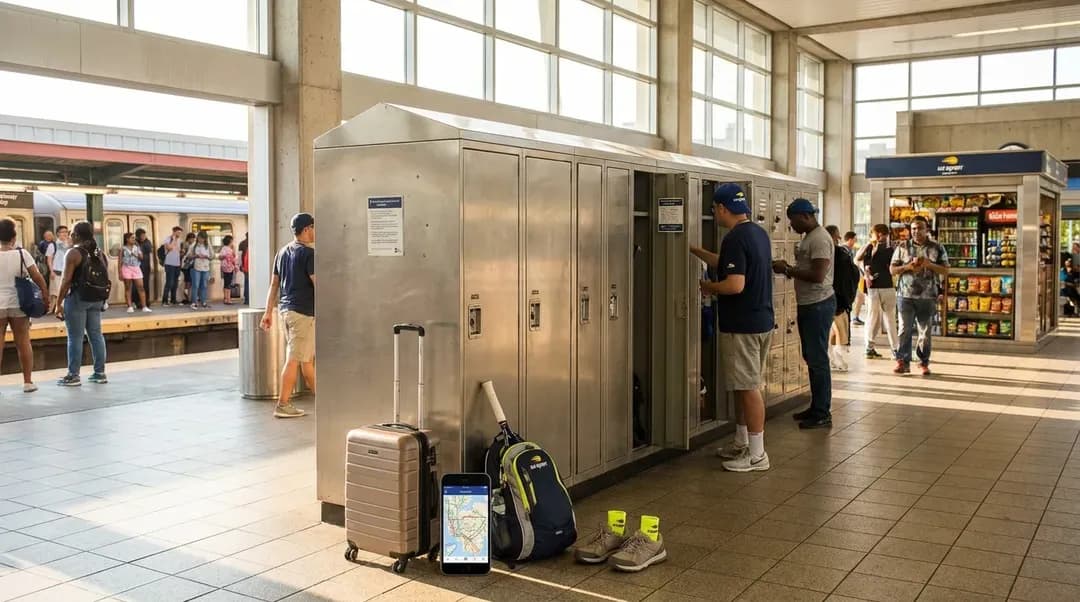
Storage is a logistics choice, not a venue feature to assume. Depending on your itinerary, you might consider a hotel bell desk, an office, a friend’s home, a transportation hub, or a commercial luggage-storage service. Each option depends on access, hours, staffing, payment method, reservation rules, and available space. The closer the option is to the event route, the more important it is to account for other fans trying to solve the same problem.
Airport and Office Plans
Same-day airport arrivals need a two-step system: luggage first, match kit second. Pack tennis essentials near the top of your suitcase or inside a removable pouch before you fly. After landing, move only the items you need at the US Open into the stadium bag, then send the rest of the luggage to its planned storage point. This prevents the familiar travel-day mistake of carrying everything toward the venue while hoping a convenient solution appears.
Office arrivals have a different risk. Work bags often collect laptops, documents, chargers, lunch containers, spare shoes, umbrellas, and water bottles. Even if the bag fits the size limit, it may be heavier than you want for a sporting event. Advice: prepare a smaller evening kit before the workday starts. Keep work-only items somewhere secure, and bring only what you want to manage while watching tennis.
Hotel-transfer days require the most planning. Checkout may come well before your session, while check-in at the next place may not yet be available. If you are changing hotels, confirm the luggage path before setting your tennis route. A plan that looks efficient on a map can feel much less efficient with a suitcase, subway stairs, crowded sidewalks, or wet summer weather.
- If you land early, separate tennis essentials before starting the final trip to Queens.
- If you work first, leave laptop-heavy gear behind when you can do so securely.
- If you change hotels, compare storage, delivery, and a detour before matchday.
- If your timing is tight, choose the route with the fewest moving parts.
Build a Stadium Kit
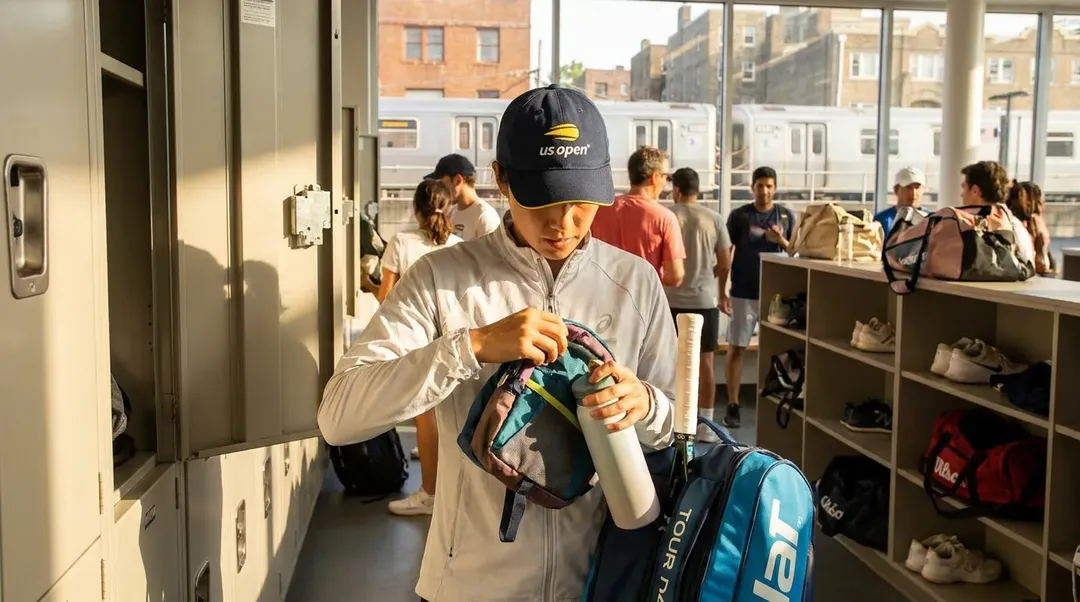
A good stadium kit begins with the bag itself. Choose something easy to open, comfortable on your shoulder or back, and not packed to the edge. Soft-sided bags are often easier to manage than rigid ones, but overpacking any bag can slow inspection and make the day less comfortable. Small pouches can help if they organize sunscreen, lip balm, or a battery pack; too many hidden compartments can have the opposite effect.
Advice: pack for likely discomforts rather than every possible inconvenience. A tennis day can mean sun, shade, wind, sitting still, standing in lines, and walking farther than expected. You do not need a travel wardrobe inside the grounds. You need a small set of items that protects comfort without turning the bag into a suitcase.
- Phone, ticket access, ID, payment card, and a small backup battery.
- Sunglasses, hat, sunscreen, and personal medication needed during the day.
- A light layer if you expect to stay into the evening or sit in shaded areas.
- Small hygiene items such as tissues, hand sanitizer, or lip balm.
- Open space for a removed hat, layer, program, or small purchase.
That last point matters. Many fans pack neatly at home and then have nowhere to put anything once the day begins. A bag that is full at entry becomes chaotic after a few hours. Leaving room is not wasted space; it is what keeps the kit usable.
Matchday Storage Tradeoffs
Packing light means accepting tradeoffs. You may not have every charger, snack, garment, or work tool within reach. In exchange, you gain mobility, which is valuable at a tennis event where plans can shift between courts, food breaks, shade breaks, and meeting points. The lighter the setup, the easier it is to respond to the day instead of managing belongings.
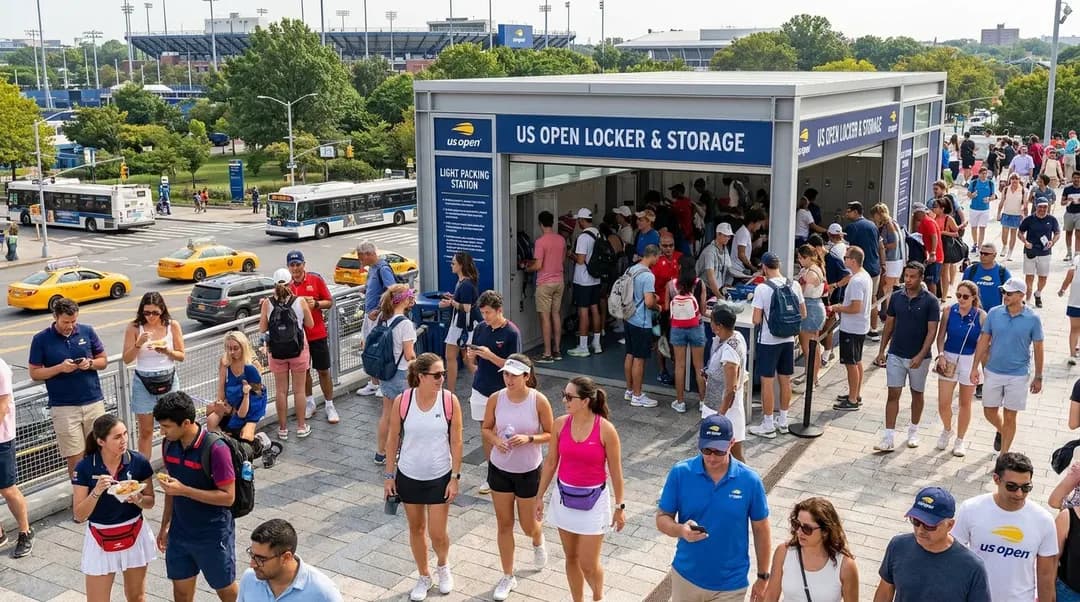
For visitors, the hidden cost of storage is often time. A luggage errand can add walking, transfers, waiting, and uncertainty. If you must store a suitcase, choose the location based on where you are going after tennis, not only where you are coming from before it. Storage near a hotel may make sense if you return there later. Storage near a transit route may make sense if you leave the city afterward.
Groups should avoid solving the problem by creating one overloaded shared bag. If one person carries everyone’s extras, that person becomes the group’s storage system for the day. A better approach is to divide small responsibilities while keeping critical items with the person who needs them. Identification, payment, medication, and phone access should not be buried in someone else’s bag.
The same logic applies to souvenirs and layers. If you plan to buy something, leave capacity for it or decide who will carry it. If your day begins hot but may end cooler, choose a layer that compresses easily. Every item should earn its place by solving a likely matchday problem.
Practical Notes
Because “US Open Lockers, Storage, and Light Packing Plans” depends on live operations, verify the specific schedules, gates, transit conditions, local hours, inventory, and venue rules that affect this plan. Measure your packed bag against the current size limit, including bulging pockets and exterior shapes. If you plan to store luggage, confirm the location, access rules, hours, payment method, reservation requirements, and availability directly with that provider. Keep tickets, ID, medication, phone, and payment in the stadium bag, not in stored luggage. For airport, office, or hotel-transfer days, complete the luggage-to-stadium-bag switch before the final leg to the venue.
Tags: #USOpen2026 #Tennis #NewYork #Queens #FlushingMeadows #USOpenGuide #TennisFans #SportsTravel #NYCEvents #HardCourt #KarpoFinds #Karpo
Sources consulted: usopen.org — Official reference · usopen.org — Official reference · usopen.org — Official reference
All trademarks are the property of their respective owners.
Ask Karpo first
Want to know what is confirmed, when to show up, and what is actually open to the public? Ask Karpo for the latest US Open updates and a practical New York plan for us open lockers, storage, and light packing plans.
Ask Karpo for more information.
Keep reading
- Where to Eat Near Penn Station That Isn't a Chain
 Andytown Coffee in the Outer Sunset: The Snowy Plover Explained
- Best Things to Do in Chicago: What the City Gives Away