 Where to Eat Near Penn Station That Isn't a Chain
US Open 2026

US Open Grounds Pass Explained: Value, Access, and Limits
A US Open grounds pass can be a strong value when you plan around ticket rules, court size, variable shade, and first-come seating expectations.
A US Open grounds pass is best understood as a flexibility ticket, not a promise of one specific match, player, seat, or comfort level. For many tennis fans visiting New York, that flexibility is the appeal: instead of building the day around one assigned stadium chair, you can move through the USTA Billie Jean King National Tennis Center, sample different courts, and adjust as the schedule develops. The tradeoff is that access depends on the ticket product, the session, venue capacity, and the official order of play. Before buying or planning the day, compare the official ticket types, study the grounds map, and read the event schedule for the date you are considering. The value of a grounds pass comes from using it actively, with realistic expectations about availability, timing, walking, sightlines, and comfort.
Updated August 2026: US Open policies, grounds access, ticket rules, weather procedures, and daily schedules can change. Use the linked US Open official sources as the final reference before packing, booking, or choosing seats.
Text Karpo Now: Tell us what matters most for US Open Grounds Pass Explained Value, and Karpo can turn current US Open updates into a practical plan before you go.
What A Grounds Pass Means
In practical terms, a grounds pass is designed for access around the tournament campus rather than a reserved seat in the largest show court. The official ticket types page is the controlling reference because access rules can vary by product and session. A normal buyer should think of it this way: a grounds pass can open the door to a broad tennis day, but it does not function like an assigned stadium ticket. If a court or seating area is full, you may need to wait, choose another match, or change your plan.
That uncertainty is not a flaw if you enjoy discovery. Some tournament days may offer many overlapping matches across the site, depending on the official schedule and order of play. Other days may have fewer options, which can make the same pass feel different. The key is to judge value by the amount and variety of tennis you can realistically see, not by the hope of seeing one particular star. A grounds pass works best when your plan has priorities, backups, and room for surprise.
- Use the official ticket types page to confirm what your product includes for that date and session.
- Use the event schedule to understand the general shape of the day before the specific order of play is set.
- Use the grounds map to identify courts, entrances, services, restrooms, and walking distances.
- Keep expectations flexible because seating, shade, and match timing are all variable.
How Stadium Tickets Differ
The simplest comparison is between a grounds pass and a reserved stadium ticket. A reserved ticket is built around a specific stadium product and session, while a grounds pass is built around broader campus movement. The difference matters most when you care about sightlines, shade, seat security, and your tolerance for moving. A reserved seat gives you a base for that session. A grounds pass asks you to manage the day more like a festival: you choose courts, monitor openings, and adapt.
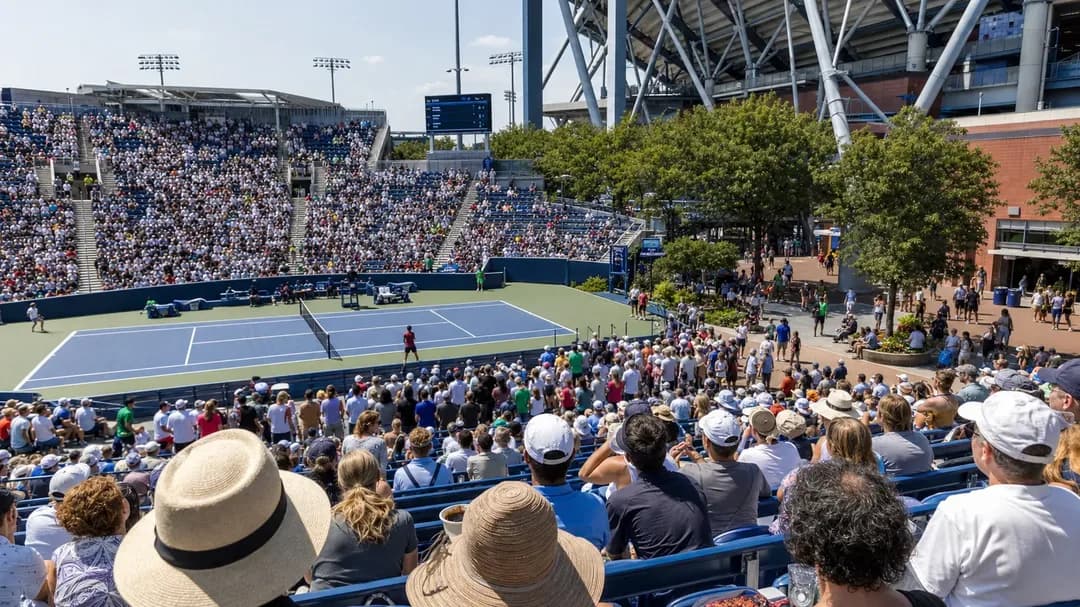
Stadium scale is part of the decision. Larger venues can create a big-event atmosphere, but a distant view is different from the intimacy of a smaller court. Outer courts may bring you closer to the speed, sound, and footwork of professional tennis, though seating can be limited and demand can change quickly. Neither experience is automatically better. If your main goal is to sit in a marquee stadium, choose the ticket type that supports that goal. If your goal is to see a lot of tennis up close when possible, the grounds approach can be attractive.
Session planning also matters. Ticket access varies by product and session, so do not assume that a daytime plan and an evening plan work the same way. The official event schedule shows the tournament structure, but it should not be treated as a guarantee of individual player assignments before the order of play is released. Weather, match length, and court changes can affect the rhythm of the day. A smart buyer separates confirmed access from hoped-for matchups.

Reading The Grounds Map
The grounds map is more than a wayfinding tool. It helps you build a realistic tennis route. Before arriving, identify the main stadiums, outer courts, practice areas if shown, food areas, restrooms, shops, and guest service points. Then look at how courts cluster. If two matches interest you at the same time, the map helps you decide whether switching is realistic or whether you are better off committing to one court and saving energy.
Sightlines are another reason to study the layout. Smaller courts can deliver excellent proximity, but preferred views may be taken early, and not every seat has the same angle or shade. A seat near a baseline, corner, or sideline can change how you read spin, court positioning, and serve speed. If you are visiting from out of town, remember that a tennis day can involve standing, walking, stairs, sun, and weather changes. Comfort planning can decide whether the pass feels like a bargain or a grind.
- Pick a first court before arrival, then choose two nearby backup courts.
- Avoid building a plan that requires constant long walks across the grounds.
- Check where shaded or covered areas may exist, but do not count on shade being available.
- Plan meal and restroom breaks around natural match changes when possible.
Timing Your Session
Timing is where many grounds-pass days are won or lost. Tennis does not run like a theater schedule. A straight-sets match can finish quickly, while a long match can delay everything behind it. That makes exact queue times and exact court arrival assumptions unsafe. Instead of chasing precision, build margin. If a match is a priority, arrive at that court earlier than your casual instinct suggests, and have an acceptable alternative if capacity is tight.
The official event schedule is useful for understanding the shape of the tournament: which sessions exist, how the event progresses, and which days may be structured differently. It does not guarantee that a specific player will appear on a specific court until official daily assignments are made. For a grounds pass, higher-volume tennis days can provide more ways to recover from a missed seat. If one court is full, another match may be starting nearby. On lighter days, the same miss can matter more because there are fewer alternatives.
For New York visitors, also think beyond the first ball and last ball. Transportation, entry procedures, heat, rain, food lines, and evening plans can all affect how ambitious your itinerary should be. If you want a relaxed tourist day, choose fewer must-see targets. If you are a serious fan, treat the day like a scouting mission: arrive prepared, move efficiently, and accept that the best memory may come from a match you did not expect to watch.
Practical Notes
Bring a phone battery plan, sun protection, comfortable shoes, and a schedule mindset that can change without ruining the day. Before leaving for Queens, recheck your ticket type, session, and the official schedule. On site, start with the match you care about most, then pivot to nearby courts instead of crossing the grounds repeatedly. Do not promise your group a specific player unless the official order of play supports it.
A grounds pass is most satisfying when you treat it as a way to explore the tournament rather than as a shortcut to guaranteed premium access. If shade, seat choice, or low walking effort is essential, a reserved stadium product may suit you better. If variety, proximity, and movement sound fun, a grounds pass can be one of the most engaging ways to experience the US Open, provided you let the day stay flexible.
Tags: #USOpen2026 #Tennis #GrandSlam #NewYorkTennis #ArthurAsheStadium #FlushingMeadows #USOpenGuide #TennisFans #SportsTravel #HardCourt #NewYork #KarpoFinds
Sources consulted: usopen.org — Official reference · usopen.org — Official reference · usopen.org — Official reference
All trademarks are the property of their respective owners.
Ask Karpo first
Want to know what is confirmed, when to show up, and how to make us open grounds pass explained value work for your day? Ask Karpo for current US Open updates, a respectful fan plan, and a live route around Flushing Meadows.
Ask Karpo for more information.
Keep reading
- Where to Eat Near Penn Station That Isn't a Chain
 Andytown Coffee in the Outer Sunset: The Snowy Plover Explained
- Best Things to Do in Chicago: What the City Gives Away