 Where to Eat Near Penn Station That Isn't a Chain
US Open 2026

US Open Family Guide: Tickets, Food, and Kid-Friendly Sessions
Plan a smoother US Open day with kids by choosing the right session, checking current venue rules, mapping food options, and building in shade, rest, and realistic exits.
A good family day at the US Open starts before you buy tickets, because the tournament is not one single experience. It is a large, active tennis campus at the USTA Billie Jean King National Tennis Center in Queens, with stadium show courts, outer courts, food areas, shops, security screening, crowds, weather, and a schedule that can shift with match length. For parents, grandparents, and visitors bringing children, the best plan is not simply to see the biggest name. It is choosing a session that matches your child’s attention span, your heat tolerance, your budget, and your group’s willingness to walk. The official US Open visit pages, grounds map, and event schedule should be your final check before travel, because policies, vendors, operating details, and available services can change.
Text Karpo Now: Tell us what matters most for US Open Family Guide Tickets Food, and Karpo can turn current US Open updates into a practical plan before you go.
Choose Your Session
The first decision is whether your family wants a stadium-centered day or a grounds-centered day. Reserved stadium tickets give you an assigned base for at least part of the visit, which can be valuable with younger children because everyone knows where to return after snacks, bathroom breaks, or a walk. Grounds access can feel more exploratory, especially when many outer-court matches are taking place, but it also requires more standing, moving, and improvising. The official event schedule is the place to confirm what types of sessions are offered on your date and which courts or events are included.
Day sessions can be easier for families who want a predictable arrival, a fuller sense of the grounds, and more chances to sample different courts. The tradeoff is sun, heat, and the need to pace the day. Evening sessions can feel more dramatic and may be cooler, but they may also run late. If your child is new to live tennis, ask whether two or three high-quality hours are better than trying to use every minute of a ticket.
- For first-time young fans, prioritize flexibility over chasing one possible player appearance.
- For older kids who follow tennis, let them help choose between stadium atmosphere and outer-court wandering.
- For multi-generational groups, pick a ticket that gives less mobile relatives a reliable seat and meeting point.
- For visitors with only one New York day, build in extra travel time rather than planning a tight second activity.
Tickets And Seating
Families should read ticket descriptions carefully, because access can vary by session, stadium, and ticket type. A seat in Arthur Ashe Stadium, Louis Armstrong Stadium, or another ticketed area is not the same thing as unlimited access to every reserved seat on the grounds. Conversely, part of the fun of the US Open is that a ticket may allow movement through approved public areas and views from different vantage points, depending on the date and access rules. Treat the official ticket details and schedule as the confirmed source, not a resale summary or social media tip.
When choosing seats, think like a parent rather than a television producer. A perfect camera angle may matter less than shade, aisle access, proximity to concessions, and whether your group can leave without disturbing a full row. Tennis etiquette also matters: spectators are generally expected to move in and out of seating areas only at appropriate breaks in play, as directed by ushers. Explain this to kids ahead of time. It turns a potential frustration into part of the sport’s rhythm: play, pause, move, settle, watch again.

Do not promise children a specific player unless the official order of play supports the plan, and even then avoid guarantees. Tennis schedules depend on previous match lengths, weather, withdrawals, and operational decisions. A better promise is an experience: seeing world-class tennis, hearing the sound of the ball live, trying different foods, and exploring the grounds. That way the day can still succeed even if the match you expected changes.
Food And Breaks
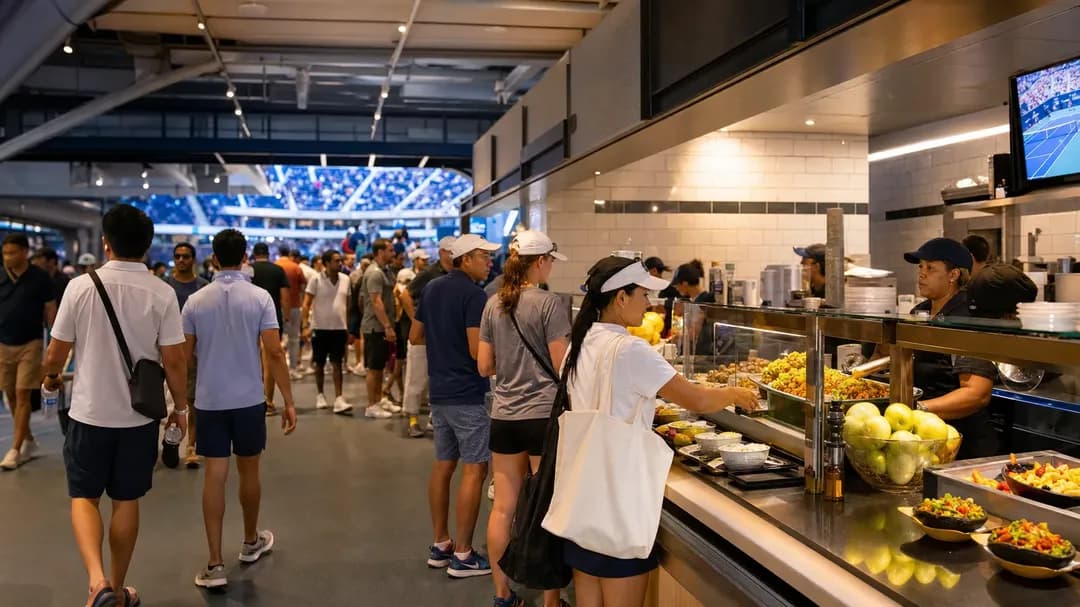
The US Open is known for having a broad food-and-beverage program, but families should check current official visitor information before counting on a particular vendor, menu, dietary option, or payment detail. Onsite offerings can change, and popular locations may develop lines at obvious meal times. If you have a child who becomes difficult when hungry, do not wait until everyone is tired and overheated. Eat earlier than the crowd, split up strategically if adults are available, and choose a meeting point before anyone joins a line.
Breaks are not wasted time at a tennis tournament. They are how families last. A child may enjoy twenty minutes on an outer court more after a drink and shade than ninety minutes in a famous stadium while uncomfortable. Use the official grounds map to identify restrooms, food areas, shops, and guest-service locations if listed, plus the walking route between your seat and the places your family will actually need. Screenshots can help if cell service slows, but verify the latest map close to your visit.
- Plan one real meal window and one snack window instead of reacting to every complaint.
- Set a simple family rule for souvenir shopping, such as looking first and buying later.
- Carry only what current US Open security rules allow, and check the official bag policy before packing.
- Choose a visible meeting spot in case older children and adults separate briefly.
Getting Around
For New York visitors, the US Open is in Flushing Meadows-Corona Park in Queens, which can feel different from a Midtown hotel map. Public transportation is often the simplest way to think about the trip, but families should confirm current transit conditions, station information, and tournament travel guidance before leaving. If you plan to use a car service or taxi, expect traffic patterns and pickup locations to require patience. Do not assume you can be dropped exactly where you want at the busiest moments.
Once inside, walking is part of the event. The grounds map is more than a nice reference; it is your operating plan. Before the first match, identify your main court, the nearest restrooms, the nearest food cluster, and a quieter place to regroup if the crowd becomes too much. Families with strollers, wheelchairs, medical needs, or sensory concerns should review official accessibility and guest information before travel rather than relying on memory from a past year. Services, entrances, and procedures may be updated.
Weather is the other mobility issue. A sunny afternoon can make short distances feel longer, while rain can change the rhythm of the entire day. Pack according to the current permitted-items policy, not a generic sports-event checklist. If the forecast looks difficult, decide in advance what would make the day a success: one full match, a stadium session, a grounds walk, or simply introducing a child to a Grand Slam atmosphere without forcing a marathon.
Practical Notes
The night before, check the official US Open visit page, grounds map, and event schedule. Reconfirm bag rules, entry guidance, transportation plans, and any accessibility information your group needs. Save mobile tickets in the required format if applicable, and make sure each adult knows the plan if phones lose service or batteries run low. Dress for sun, walking, and changing conditions, but do not pack items unless they are currently allowed. Arrive with one priority match, one backup court, and one planned food break. Tell children that tennis days move in chapters: security, exploring, watching, eating, resting, and maybe watching again. If energy drops, leave on a good note. A shorter, happy US Open visit is better than a longer day everyone remembers for the wrong reasons.
Tags: #USOpen2026 #Tennis #GrandSlam #NewYorkTennis #ArthurAsheStadium #FlushingMeadows #USOpenGuide #TennisFans #SportsTravel #HardCourt #NewYork #KarpoFinds
Sources consulted: usopen.org — Official reference · usopen.org — Official reference · usopen.org — Official reference
All trademarks are the property of their respective owners.
Ask Karpo first
Want to know what is confirmed, when to show up, and how to make us open family guide tickets food work for your day? Ask Karpo for current US Open updates, a respectful fan plan, and a live route around Flushing Meadows.
Ask Karpo for more information.
Keep reading
- Where to Eat Near Penn Station That Isn't a Chain
 Andytown Coffee in the Outer Sunset: The Snowy Plover Explained
- Best Things to Do in Chicago: What the City Gives Away