 Where to Eat Near Penn Station That Isn't a Chain
US Open 2026
US Open Corporate Outings That Still Feel Fun
A successful US Open company outing balances networking, tennis, transportation, and guest comfort instead of treating the day as just a ticketed work event.
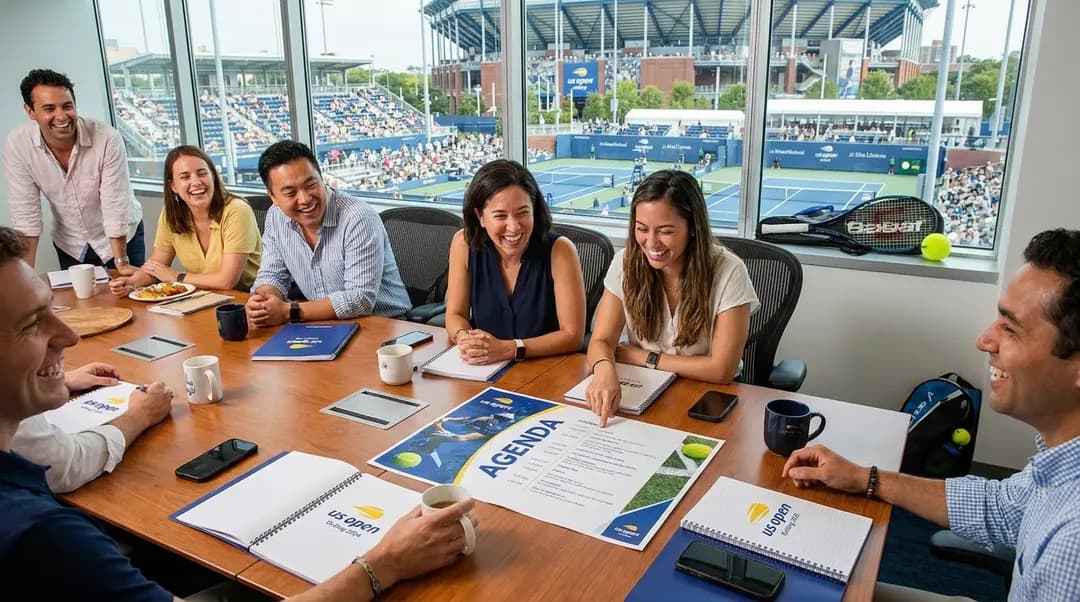
The first decision for a US Open corporate outing is not where everyone will sit; it is what kind of work event the group is actually hosting. A client-development afternoon needs a different rhythm from a team-recognition night, and a mixed group of tennis regulars, casual fans, executives, interns, and out-of-town guests will not enjoy the same agenda if it is built around only one priority. Treat the day as a hosted experience rather than a block of time on a calendar: give guests a clear arrival plan, a low-pressure welcome moment, intentional time to watch tennis, and enough flexibility for people to talk without feeling trapped in a sales meeting with a scoreboard nearby.
Text Karpo for a current, low-friction plan for us open corporate outings that still feel fun—including timing, route checks, and practical options that fit your day.
Networking Without Missing Tennis
A tennis outing works best when networking has a shape. If the host simply says, “Let’s meet at the Open,” confident guests may find each other while everyone else drifts. Advice: create a short beginning, such as a 20-minute gathering point after entry, then release people toward tennis instead of trying to keep a full group together all day. Use that opening for introductions, seating explanations, accessibility reminders, and a quick explanation of how guests can rejoin the group later.
The sport itself gives hosts natural conversation starters. Instead of forcing business talk during every changeover, encourage guests to talk about what they are seeing: serving patterns, crowd reactions, momentum swings, or how different courts feel. This helps people who are new to tennis participate without pretending to know every player. For client outings, pair each business contact with a host who can explain the day’s flow and make introductions, but do not script every exchange. The setting works because it makes networking feel less formal.
- Use a short welcome window, then let guests choose tennis, conversation, or both.
- Create two or three optional regrouping times instead of one rigid schedule.
- Give hosts simple guest notes, such as first-time visitor, client prospect, or team honoree.
- Build quiet pauses into the day so guests are not expected to network continuously.
Match Time Versus Social Time
For “US Open Corporate Outings That Still Feel Fun,” the useful 2026 calendar anchor is August 23 through September 13, with singles main-draw play beginning August 30. Different parts of the tournament can feel different in pace and demand, and the best choice depends on who is attending. Serious tennis fans may want to maximize court time, while a broader office group may value manageable arrival, time to explore, and enough energy left for a post-event conversation.
Advice: do not build the entire outing around seeing one specific player. Player fields, schedules, court assignments, and match lengths can change, and tennis does not run like a timed stage show. Design around what the host can control: when guests arrive, where they meet, how they receive updates, and what the group does if a hoped-for match is delayed, moved, or less compelling than expected. A good host frames the US Open as a campus of options, not a single appointment.

If your group has assigned seats for a session, make sure guests understand the etiquette of moving in and out. Some fans prefer to settle in for long stretches, while others want to sample the grounds. Explain whether the group is expected to sit together, whether small subgroups may split off, and how people should communicate if they need to leave early. Clear permission prevents the awkward feeling that someone is being rude by choosing a different pace.
Transportation That Reduces Friction
Transportation is where many corporate outings feel either polished or chaotic. New York visitors may underestimate how much time a group needs to move, gather, pass through entry procedures, and orient itself once inside. Local employees may assume everyone understands transit shorthand. Advice: give guests two or three arrival options in plain language and appoint a transportation lead who is not also responsible for hosting the most important client. That person should monitor group messages, help late arrivals, and know when to stop waiting so punctual guests are not held back.
For workplace groups, the key question is not only how to get there, but how much togetherness is useful. A coordinated ride can help executives, clients, or out-of-town guests arrive calmly, yet it can create a bottleneck if one person is late. Public transit may be efficient for some guests and confusing for others. Rideshare plans can work for small groups but may scatter the party at busy moments. The most inclusive solution is often a primary recommended route plus backup instructions, written so a first-time visitor can follow them without calling a colleague from the sidewalk.
- Send the meeting point in writing, with a nearby visual landmark if available.
- Name one person for arrival questions and one person for on-site hosting.
- Set a clear entry cutoff so punctual guests are not penalized.
- Plan the return trip before the event, especially for guests unfamiliar with Queens.
Inclusive Hosting For Every Guest
An inclusive corporate outing starts before the invitation goes out. Ask what information guests need to participate comfortably, then provide it without making anyone request special treatment in public. That may include walking expectations, seating context, restroom and break planning, weather preparation, dietary considerations, sensory needs, or whether guests may bring a partner, colleague, or aide if company policy allows it. The host does not need to solve every preference, but the event should be clear enough that people can decide how to take part.

Tennis also creates different attention styles. Some guests will want silence during points and deep focus on the match. Others will treat the day as a social occasion. Set expectations with kindness: conversations should be mindful around active play, and serious fans should understand that a corporate outing is not the same as attending alone. If you have a mixed group, consider identifying a watching-focused area for people who want to stay court-centered and a regrouping area for people who need to talk more freely.
Hosts should avoid making alcohol, late nights, or constant client access the center of the outing. A strong event gives people graceful exits: a point when formal obligations are over, a way to leave without apologizing, and an option to enjoy the grounds without hovering near senior leadership. For employees, this matters because a company-sponsored sports day is still connected to work. For clients, it communicates professionalism. The goal is not to remove spontaneity; it is to make room for it without letting the loudest personalities define the day.
Practical Notes
Close to travel, check the official US Open schedule, Fan Week information, plan-your-visit guidance, venue rules, gate information, transit conditions, ticket inventory, and any local business details you intend to use. Published details can change. Before acting on “US Open Corporate Outings That Still Feel Fun,” recheck the official security page; its current limit is one searchable bag per guest, no larger than 12 by 12 by 16 inches. Send one final note with meeting time, entry plan, host phone number, weather advice, mobility considerations, and return-trip guidance. For mixed workplace groups, include a reminder that watching tennis, networking, and taking breaks are all acceptable ways to participate.
Tags: #USOpen2026 #Tennis #NewYork #Queens #FlushingMeadows #USOpenGuide #TennisFans #SportsTravel #NYCEvents #HardCourt #KarpoFinds #Karpo
Sources consulted: usopen.org — Official reference · usopen.org — Official reference · usopen.org — Official reference
All trademarks are the property of their respective owners.
Ask Karpo first
Want to know what is confirmed, when to show up, and what is actually open to the public? Ask Karpo for the latest US Open updates and a practical New York plan for us open corporate outings that still feel fun.
Ask Karpo for more information.
Keep reading
- Where to Eat Near Penn Station That Isn't a Chain
 Andytown Coffee in the Outer Sunset: The Snowy Plover Explained
- Best Things to Do in Chicago: What the City Gives Away