 Where to Eat Near Penn Station That Isn't a Chain
US Open 2026
US Open and Queens Museum Pairing Guide
Pair Queens Museum time with US Open tennis for a slower Flushing Meadows day shaped by art, park history, and flexible matchgoing.
The best US Open day does not have to begin with a rush to the gates. For visitors who want more than sports, the smarter first question is how Flushing Meadows should feel before the tennis takes over. A culture-first itinerary uses the Queens Museum as the opening chapter, then lets the walk through the park lead naturally toward the tournament atmosphere. The result is still a tennis day, but not only a tennis day: it becomes a Queens day, with art, civic history, open space, crowds, and matchgoing all working together. For “US Open and Queens Museum Pairing Guide,” the useful 2026 calendar anchor is August 23 through September 13, with singles main-draw play beginning August 30.
Text Karpo for a current, low-friction plan for us open and queens museum pairing guide—including timing, route checks, and practical options that fit your day.
Start With The Museum
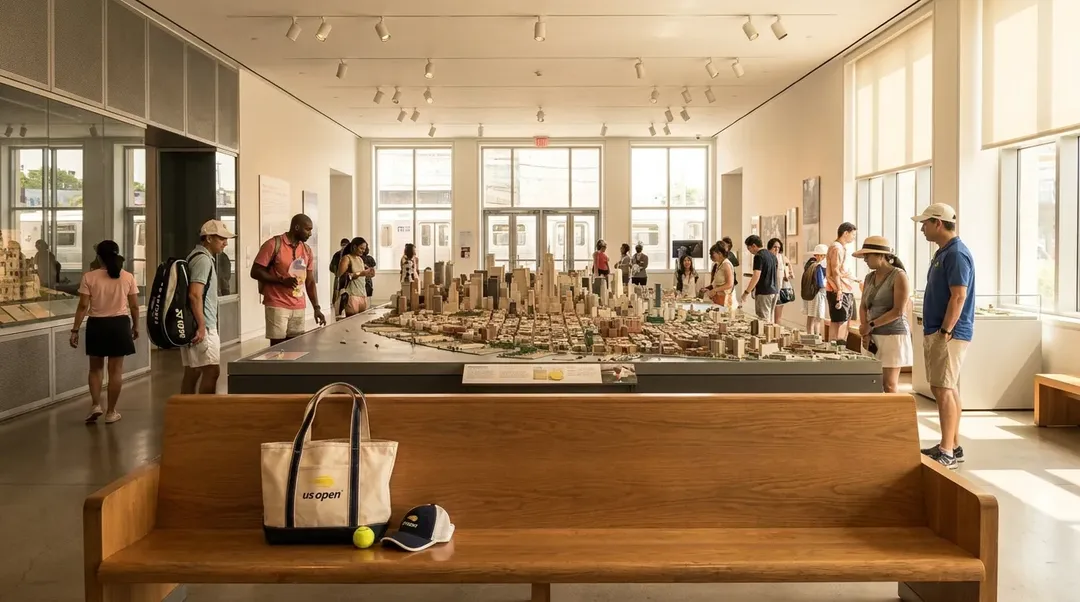
Beginning at the Queens Museum changes the pace immediately. Instead of arriving in Flushing Meadows with only ticket scanning, court choices, and concessions in mind, you start by looking closely. The museum’s connection to the park’s civic and world’s fair history makes it a fitting prelude to a tournament that brings international attention to the same landscape. This is advice, not a rule, but it is especially useful for travelers who want the day to feel rooted in New York rather than interchangeable with any major sporting event.
A museum-first plan also gives mixed-interest groups a fairer balance. The serious tennis fan still gets the energy of the grounds later, while the culture-focused traveler gets a meaningful destination before the noise rises. It can make the outing feel less like one person’s hobby and more like a shared itinerary. The key is to treat the museum as its own experience, not as filler while waiting for a match window.
Keep the visit focused rather than exhaustive. Choose a manageable amount of time, leave room to absorb what you see, and resist turning the museum into another checklist. The point is to enter the tennis portion with a sharper sense of where you are: not just near a stadium, but inside a park whose scale, symbols, and public ambitions have shaped how visitors encounter Queens.
Let The Park Connect Them
The route between the Queens Museum and the tennis grounds should feel like part of the itinerary, not dead space between attractions. Flushing Meadows Corona Park is visually distinctive, with broad lawns, large civic structures, sports venues, and traces of exposition planning sitting beside everyday neighborhood use. That mix is exactly why the pairing works. The park makes the US Open feel less like a sealed entertainment complex and more like one chapter in a larger public landscape.
Build in an unhurried transition. Even when a route looks simple on a map, the lived version can include heat, photos, restrooms, crowds, wayfinding, security lines, and the different walking speeds of a group. A culture-first day should not be planned to the minute. It should leave enough space for the museum mood to fade gradually into the tournament mood: quiet looking, outdoor movement, gathering crowds, then the full sound of tennis.
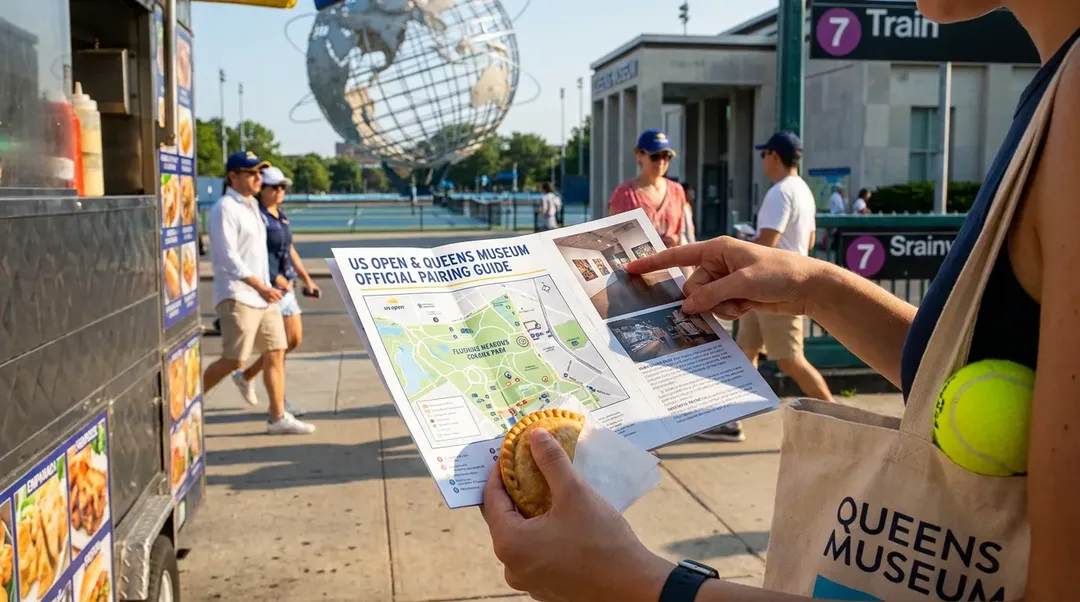
This interval is also where the day becomes memorable. A family can compare what they noticed in the museum with what they notice in the park. A first-time visitor can take photos that show more than the most obvious tennis backdrops. A casual fan can use the walk to understand why the setting matters. By the time you reach the tennis site, the event has a frame around it.
Choose Your Tennis Window
A Queens Museum pairing works best when the tennis plan is based on temperament, not on assumptions about particular players. Published schedules, gate times, player fields, and operations can change, and no visitor should build the day around guaranteed participation or a hoped-for appearance. Instead, decide what kind of tennis experience belongs after the museum: a lighter taste of the grounds, a longer session for committed fans, or a flexible block that lets the group respond to energy and conditions.
- For a lighter culture-first day, let the museum set the tone and treat tennis as the vivid second act.
- For a fan-heavy day, keep the museum visit concise so more energy remains for courts and atmosphere.
- For mixed-interest groups, agree on one museum priority and one tennis priority before the day begins.
- For repeat US Open visitors, use the museum pairing to make this trip feel different from a familiar gate-to-seat routine.
Fan Week can appeal to travelers who like the broader festival feeling around the tournament, while main-draw days bring a different level of competitive focus once singles play begins. Either can work with the museum. The choice is less about chasing the theoretically perfect schedule and more about matching the day to your stamina, curiosity, and tolerance for crowds. A shorter, well-paced visit may leave a better memory than an overstuffed one.
Keep Queens In Focus
The strongest reason to pair the US Open with the Queens Museum is that it keeps Queens at the center of the story. Many visitors experience New York through Manhattan landmarks, then treat major events in other boroughs as isolated excursions. This itinerary does the opposite. It stays in one borough and uses two very different institutions to show how New York culture often works: layered, public, multilingual, and shaped by movement through shared space.
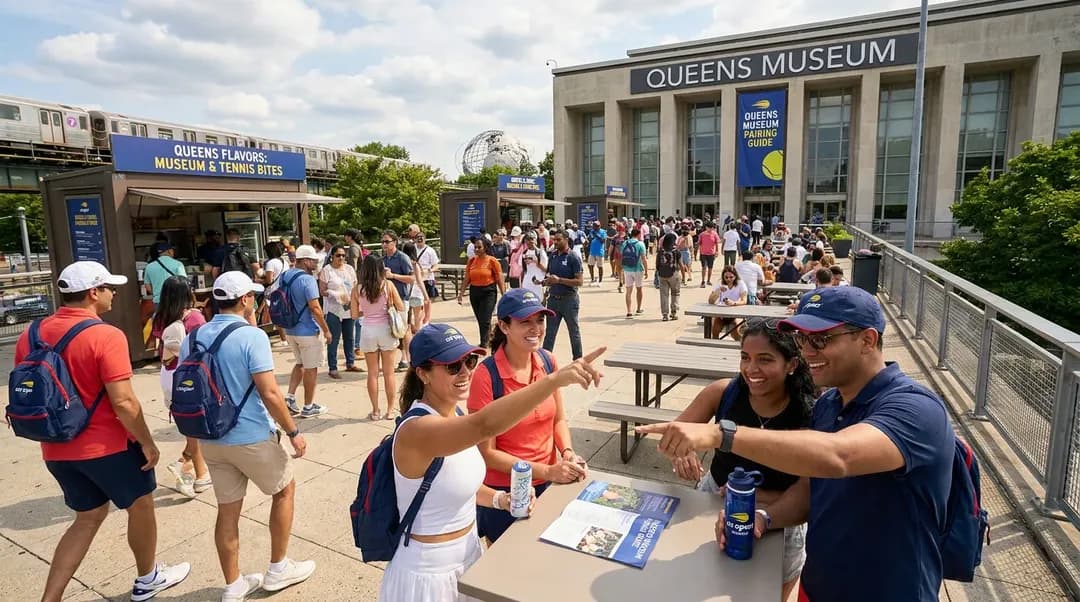
That framing changes the way the tennis feels. The US Open’s energy is famously loud, stylish, impatient, and international, but those qualities do not arrive from nowhere. They fit the city around the event. After time in the museum and park, the lines, accents, family groups, flags, outfits, and quick negotiations over where to go next can read as part of the same civic performance. The tournament becomes not only a competition, but a temporary city inside a city.
For groups, give each person a role rather than forcing everyone to value the day in the same way. One person can guide the museum focus, another can track tennis preferences, and another can watch the group’s pace. That simple division keeps the outing collaborative. It also protects the itinerary from depending on a perfect match result. A favorite player may not appear when expected, a match may end quickly, or plans may shift, but the day still has art, architecture, park movement, and a clear sense of place.
- Carry one idea from the museum into the tennis grounds, such as how public space or national identity appears in both places.
- Take a few photos during the park transition, not only at the most recognizable tennis locations.
- Use a simple energy check: if the group is fading, shorten the next optional segment.
- Choose bags and souvenirs with the full museum-to-tennis route in mind.
Practical Notes
Confirm current US Open details close to travel through the official event schedule, Fan Week information, and Plan Your Visit page, because schedules, gate times, venue rules, inventory, and operating details can change. Check the Queens Museum’s own visitor information separately before tying the day to a specific arrival time. Pack lightly for the full route: the official US Open security page currently states one bag per guest, subject to search, with maximum dimensions of 12 by 12 by 16 inches, and travelers should recheck that rule before leaving. Allow extra time between the museum, the park walk, and tennis entry, especially with children, mobility needs, or first-time visitors. Build the day around the pairing itself, not a promised player sighting, exact price, business hour, or guaranteed availability.
Tags: #USOpen2026 #Tennis #NewYork #Queens #FlushingMeadows #USOpenGuide #TennisFans #SportsTravel #NYCEvents #HardCourt #KarpoFinds #Karpo
Sources consulted: usopen.org — Official reference · usopen.org — Official reference · usopen.org — Official reference
All trademarks are the property of their respective owners.
Ask Karpo first
Want to know what is confirmed, when to show up, and what is actually open to the public? Ask Karpo for the latest US Open updates and a practical New York plan for us open and queens museum pairing guide.
Ask Karpo for more information.
Keep reading
- Where to Eat Near Penn Station That Isn't a Chain
 Andytown Coffee in the Outer Sunset: The Snowy Plover Explained
- Best Things to Do in Chicago: What the City Gives Away