 Where to Eat Near Penn Station That Isn't a Chain
US Open 2026
US Open Accessibility Guide for Wheelchairs and Companion Seating
This guide helps wheelchair users and companions plan a smoother US Open visit with seating, routing, comfort, and policy checks in mind.
A successful US Open visit for a wheelchair user starts before anyone reaches the USTA Billie Jean King National Tennis Center. The tournament is large, popular, weather-exposed in places, and spread across a campus where the best choice is not always the shortest route on a map. Your planning job is to reduce uncertainty: confirm the latest official visitor rules, choose tickets that match mobility needs, study the current grounds map, and build a day that allows time for security, crowds, restrooms, food, shade, and match changes. This guide focuses on practical decisions for wheelchair users and companions, not on guaranteeing a perfect path through a busy Grand Slam. Official US Open visitor information, the grounds map, and the event schedule should be checked close to travel because policies, services, vendors, and operating details can change.
Text Karpo Now: Tell us what matters most for US Open Accessibility Guide for Wheelchairs, and Karpo can turn current US Open updates into a practical plan before you go.
Start With Official Checks
Before buying, transferring, or accepting tickets, review the current US Open visitor information and the official grounds map. Treat those pages as the most reliable reference for entry procedures, venue layout, guest-service locations, transportation guidance, and tournament updates. Do not rely on an old screenshot, a resale listing description, or a social post from another fan. Accessibility details are operational, and operational details can change.
Next, compare your planned visit date with the official event schedule. A day session, evening session, qualifying visit, or late-round visit can feel very different. Crowd flow, court demand, and the amount of time spent waiting may vary by session and tournament phase. The schedule will not predict every issue, but it helps you decide how early to arrive, how much rest time to budget, and whether a lower-intensity plan would be wiser.
- Confirm the current bag, entry, camera, and prohibited-item rules before leaving.
- Review the official grounds map for accessible routes, services, and key destinations.
- Check the event schedule again near your visit date for session structure and timing.
- Keep digital tickets, contact details, and important accessibility notes easy to reach.
Tickets And Companion Seating
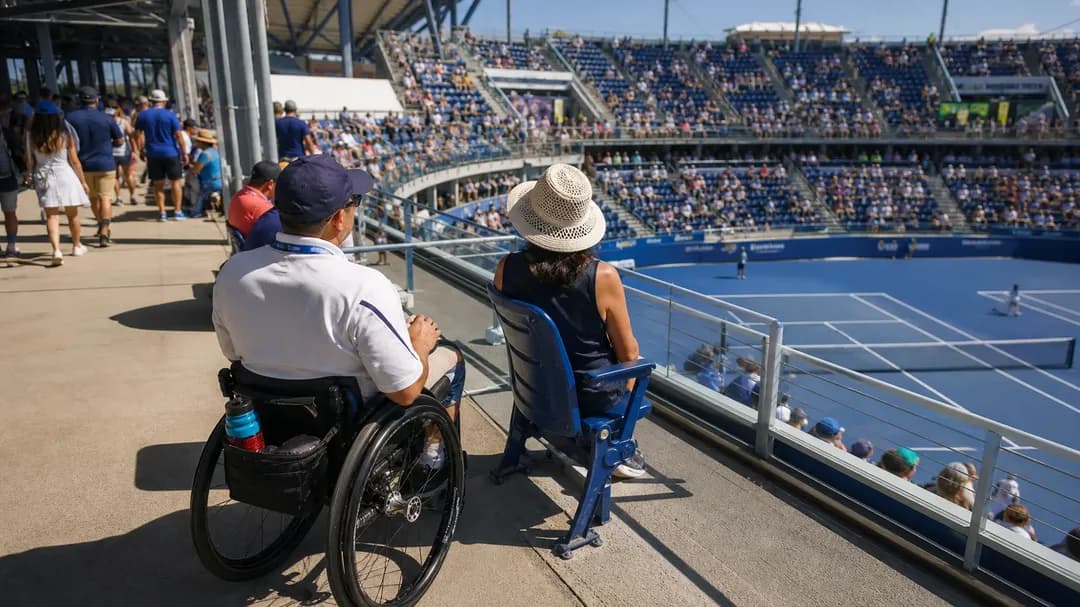
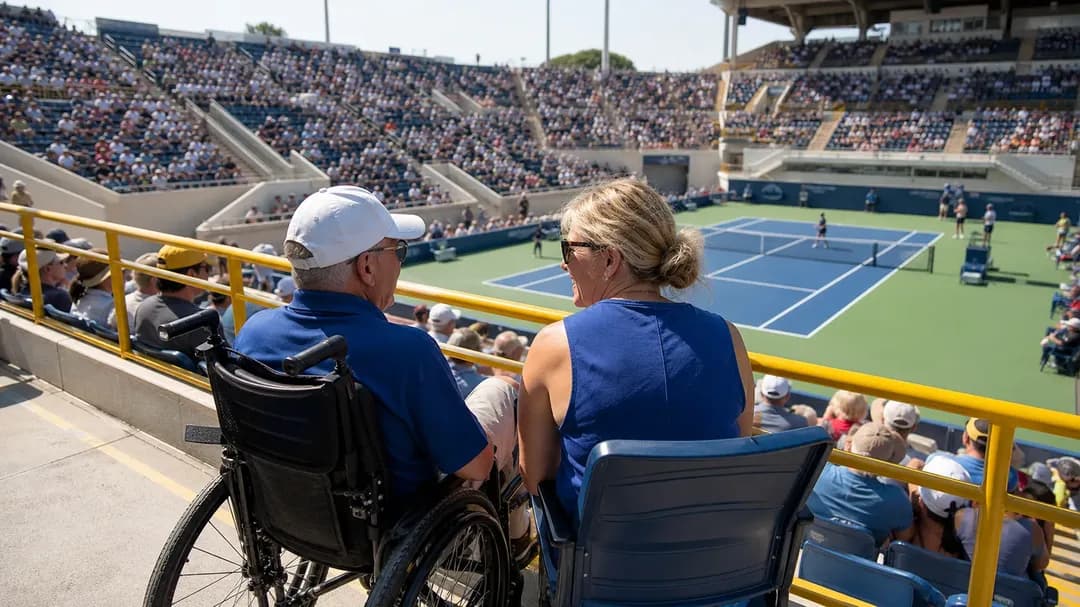
Wheelchair and companion seating should be treated as a ticketing decision, not a last-minute seating preference. When selecting seats, look specifically for accessible seating inventory and confirm how companion seats are handled for that section and session. Do not assume that a standard aisle seat will solve the problem. Aisle proximity can help some guests, but it is not the same as a wheelchair location designed for viewing, circulation, and safe access.
If you are buying through an official ticket channel, read the seat details carefully and use available customer-service options if anything is unclear. If you are buying through a resale source, be more cautious. Listings may not describe accessibility accurately, and transferring the wrong type of seat can create a stressful entry or seating issue. The practical question is simple: will the wheelchair user and companion be able to sit together in the intended location for the session without depending on an improvised fix?
Companion seating also affects how the day works. A companion may need to help with navigation, food lines, restroom timing, or communication with staff. If the companion seat is separated from the wheelchair location, the visit may become harder than expected. For high-demand sessions, do not wait until arrival to ask whether accessible seating can be changed. Availability should never be assumed.
Moving Around The Grounds
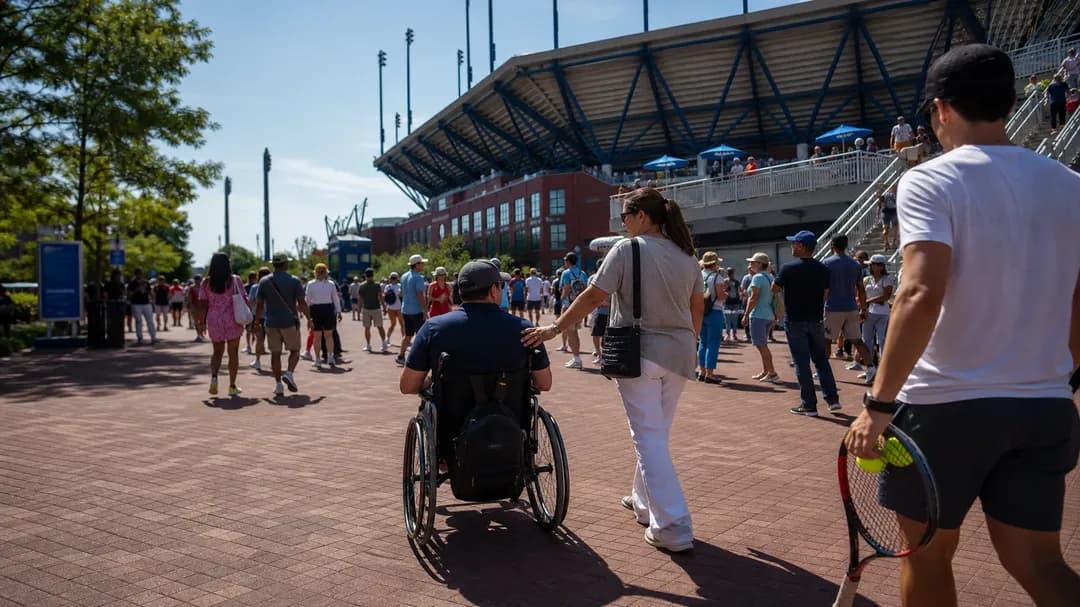
The US Open is not a single-stadium experience for many fans. A visit may include a main stadium ticket, outer courts, practice viewing, shopping, food, and long pauses between matches. Use the official grounds map to identify the most important destinations before arrival: your entry point, your court, restrooms, guest services, any listed assistance locations, food areas, and exits. Then build a route that minimizes unnecessary backtracking.
Crowd behavior matters as much as distance. After a popular match ends, walkways and concession areas can become slower and more compressed. For wheelchair users, that may mean less visibility, more stop-and-go movement, and more time needed to reach the next court. One useful tactic is to move during play if you are comfortable missing part of a match, rather than joining the largest wave at a changeover or finish. Another is to choose fewer objectives and enjoy them fully.
Plan the trip to and from the venue as carefully as the venue itself. Public transit, rideshare, walking routes, and parking decisions each have tradeoffs, and official tournament guidance should be checked before travel. If you need step-free routing, extra transfer time, or curbside help, verify those details with the relevant transportation provider rather than assuming the easiest route on a general map will work.
- Pick one primary court goal and one backup goal before entering.
- Identify restrooms and guest services near your seats, not just near the gate.
- Avoid tight transfer windows between distant courts during peak crowd movement.
- Plan an exit strategy for both an early departure and a late finish.
Comfort And Matchday Choices
Comfort planning is accessibility planning. The US Open can involve heat, sun, rain, noise, and long sitting periods. Check the official visitor rules before packing because permitted items and size limits can change, and do not invent your own interpretation at the gate. Within the current rules, think about hydration, sun protection, medication timing, cushions or positioning needs, phone battery, and whether a companion may need to leave the seat for food or supplies.
Food and beverage planning should be realistic. The tournament offers onsite options, but vendors, menus, and availability can change. If dietary needs are important, review current visitor information and prepare a policy-compliant backup if allowed. Lines may be easier at off-peak times, and a companion can reduce stress by scouting options before everyone moves. If the wheelchair user must remain near a specific restroom or seating area, prioritize nearby choices over chasing a specific item across the grounds.
Weather can change the whole day. A passing shower, extreme heat, or a long match can alter the schedule and your energy level. Some courts and areas may offer different levels of exposure, so use the grounds map and make decisions based on comfort, not just match quality. The best tennis plan is sometimes the one that preserves enough energy to enjoy the session you most want to see.
Visitors should also have a communication plan. Decide where to meet if separated, how to contact guest services if needed, and what the companion should do if the wheelchair user needs a quieter or less crowded space. Save official US Open pages on your phone, but expect mobile service and battery life to be imperfect during a major event.
Practical Notes
A smart matchday plan has three versions: ideal, crowded, and tired. In the ideal version, you see the matches and grounds areas you planned. In the crowded version, you reduce movement, use the nearest services, and skip low-priority stops. In the tired version, you protect the main session, take longer breaks, and leave before the exit rush if needed. The day before travel, recheck the official visitor information, grounds map, and event schedule. Charge devices, confirm tickets, review transportation, and agree on a meeting point. On arrival, ask staff for current directions rather than guessing. Once inside, pace the day like a long match: conserve energy early so the final set of your visit is still enjoyable.
Tags: #USOpen2026 #Tennis #GrandSlam #NewYorkTennis #ArthurAsheStadium #FlushingMeadows #USOpenGuide #TennisFans #SportsTravel #HardCourt #NewYork #KarpoFinds
Sources consulted: usopen.org — Official reference · usopen.org — Official reference · usopen.org — Official reference
All trademarks are the property of their respective owners.
Ask Karpo first
Want to know what is confirmed, when to show up, and how to make us open accessibility guide for wheelchairs work for your day? Ask Karpo for current US Open updates, a respectful fan plan, and a live route around Flushing Meadows.
Ask Karpo for more information.
Keep reading
- Where to Eat Near Penn Station That Isn't a Chain
 Andytown Coffee in the Outer Sunset: The Snowy Plover Explained
- Best Things to Do in Chicago: What the City Gives Away