 Salad Near Me in the West Village: Westville's Market-Table Vegetables
Back To School
u.s. department of homeland security: A NYC Learning and Research Route
A back-to-school NYC research route for checking public claims, choosing library stops, and keeping transit and access decisions flexible.
A phrase can trend before a person has time to understand what it means. This week, u.s. department of homeland security can be useful for New York families, students, and educators only if it becomes a research question rather than a rumor. The official extracts provided here do not establish a local event, appearance, school notice, agency partnership, or NYC-specific Homeland Security program. The smarter back-to-school move is to build a short NYC research route around public library resources, careful reading, and access checks. Start with the New York Public Library system, use its listed research and learning tools, compare what you find before forming an opinion, and choose stops that match the assignment. The goal is not to chase urgency. It is to leave with clearer questions, better sources, and a backup plan when a page, schedule, or travel detail cannot be confirmed from the extracts.
Want a tighter version of this route before you go? Text Karpo to check library stop order, access notes, nearby reset options, and what to verify for this NYC plan.
Turn curiosity into a research question
Treat u.s. department of homeland security as the hook, not the conclusion. For a student, that might mean asking: What does a federal department do? Which claims come from official sources? Which details are national, and which, if any, can be connected to New York City through reliable evidence? For a parent or teacher, the question may be even more practical: What should I verify before sharing a headline in a class chat or assigning it as a current-events prompt?
Write the question down before opening tabs. A useful NYC research errand can stay simple: one library stop for background, one comparison step for source quality, one study stop for notes, and one low-cost reset if the day allows. That structure keeps the day from becoming a scroll session. It also keeps the phrase from doing more work than it can honestly do. Based on the extracts provided, a trending federal topic does not automatically create a local appointment, public program, school requirement, or official visit.
For back-to-school planning, the useful distinction is between attention and evidence. Attention tells you what people are asking about. Evidence tells you what can be relied on. This route is built around that difference, using only the public resources and access signals shown in the official extracts.
Start with a reliable public resource
Begin with the New York Public Library as the anchor, because its official site points readers toward research, learning resources, events, exhibitions, online catalog access, library cards, accessible resources, multilingual resources, and help through Ask NYPL. Those categories matter for a student who needs context without paying for a private database or trusting a clipped social post.
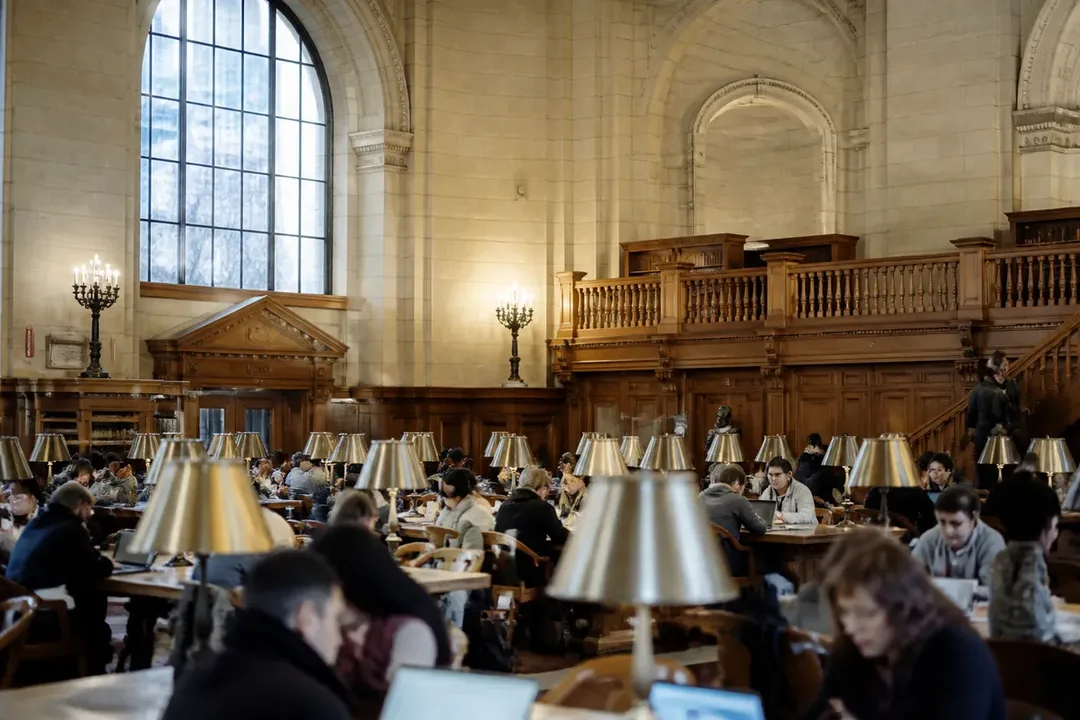
If the assignment is broad, the Stephen A. Schwarzman Building on Fifth Avenue and 42nd Street is the clearest landmark starting point supported by the extract. NYPL describes it as the flagship building of The New York Public Library and one of the world’s great libraries. The same extract says the Polonsky Exhibition is a free permanent exhibition at that landmark building and that it highlights NYPL’s research collections. That makes it a practical first stop to consider for students thinking about how institutions preserve public information, not just how headlines move.
Keep the access plan humble. Check the library’s own current guidance before leaving. The extract lists NYPL Service Updates and Plan Your Visit, which are exactly the kind of official pages to consult before turning a school-day research errand into a commute. The extract supports the existence of those resources, but it does not provide full visitor rules, branch hours, or same-day service status.
Compare primary reporting before opinions
After the first library check, separate source types. Official pages can tell you what an institution says it offers. News reporting, when available from reliable outlets, may help establish what happened and when. Opinion can be useful later, but it should not be the first place a student lands when trying to understand a federal agency topic. If the research question involves u.s. department of homeland security, ask which statements are directly attributable and which are interpretation.
The official extracts here also show a useful lesson: not every public source is reachable at the moment you need it. The NYC Department of Records page and the MTA page both returned access-denied messages in the provided extracts. Do not turn that into a theory. Treat it as a verification problem. If a route depends on city records or transit information, the extracts do not support citing schedules, fares, travel times, service frequency, elevator status, or records access rules. Check current official information from your own device before relying on those details.
For a student note sheet, use three columns: claim, source, and what still needs checking. A claim about an event needs a date and organizer. A claim about transit needs current service information. A claim about a school, library, or public agency needs a direct source, not a repost. This is slow in the best way, because it prevents a research route from becoming a list of assumptions.
Choose a study stop that fits the task
The best NYC stop depends on the assignment. If the student needs a broad research environment and a civic-information frame, the Fifth Avenue and 42nd Street flagship area is one supported option to consider. If the task is more about discussion, writing, youth learning, or events, scan NYPL’s official categories before choosing a branch. The extract lists kids and teens programs, author talks and conversations, exhibitions, book discussion groups, and events and classes for all ages.
For a writing angle, Mulberry Street Library appears in the official extract with “Big Summer Book Club: Place as Personality Writing Workshop” listed for Monday, August 10 at 5:30 PM. That is a precise detail from the extract, but it should still be verified on NYPL’s current event page before relying on it, because schedules can change and the extract alone does not provide registration terms, capacity, or attendance rules.
For a discussion-heavy route, Jefferson Market Library appears with “The LGBTQ+ Philosophy Forum” listed for Saturday, August 8 at 2:30 PM. That is not a Homeland Security event, and it should not be described as one. It is simply an example of how a branch calendar can help a student practice careful conversation around public ideas. If the topic is sensitive, choose a setting where the task is reading, listening, and note-taking, not arguing from half-checked claims.
Add one low-cost reset nearby
A research route works better when it includes a reset that does not become the whole day. NYPL’s official extract points to Culture Pass, described there as free access to NYC museums with a library card. Treat that as a planning option, not a guaranteed same-day entry. The extract does not provide reservation rules, available institutions, pass quantities, eligibility limits, or timing, so verify the specific offer before building the afternoon around it.
The Polonsky Exhibition is another supported reset candidate because the extract describes it as a free permanent exhibition at the landmark Stephen A. Schwarzman Building on Fifth Avenue and 42nd Street. For a student working on public institutions, archives, government, or media literacy, it keeps the day connected to evidence and collections while giving the brain a break from screens. The key is pacing: research first, exhibition second, notes before leaving.
If the chosen study stop is a neighborhood branch instead of the flagship, keep the reset simple and supported by what NYPL says it offers: browse the online catalog, look for learning resources, check multilingual or accessible resources, or use Ask NYPL for help. Do not overpack the route. Back-to-school errands are easier to repeat when they are short enough to finish.
Verify hours and access before leaving
Before walking out the door, run a five-minute verification check. Confirm the branch or building hours, event status, visitor instructions, and whether the resource you need is online, in the building, or staff-assisted. NYPL’s official site points to Plan Your Visit, service updates, the online catalog, Start Your Research, Get a Library Card Today, Accessible Resources, multilingual resources, and Ask NYPL. Those are practical checkpoints, not decoration.
Transit deserves the same caution. The official MTA extract available here shows an access-denied page, so this article cannot responsibly cite routes, service frequency, fares, elevator status, travel times, or real-time disruptions. Use current official transit information before departure and build a backup decision into the plan: if the first trip option cannot be confirmed, go to the closest workable NYPL branch or move the research step online until travel is clearer.
The final check is language. Do not tell a classmate that u.s. department of homeland security is connected to a NYC library event unless an official source says so. The extracts here do not show that connection. Do say that a national topic made you choose a careful research route through public resources. That difference is the whole point. It keeps the work honest, and it gives students a repeatable method for the next headline.
Tags: #AskKarpo #BeforeYouGo #NYC #BackToSchool #NYPL #StudentResearch #MediaLiteracy #PublicLibraries #NYCParents #StudyRoute #LibraryCard #CurrentEvents #ResearchSkills #CityPlanning
Sources consulted: nypl.org · nyc.gov · new.mta.info
All trademarks are the property of their respective owners.
Ask Karpo first
Ask Karpo first when a headline starts shaping your day. For this NYC route, Karpo can help check which NYPL stop fits the assignment, what access details need confirmation, where to add a low-cost reset, and what claims still need primary-source support before you share them.
Ask Karpo for more information.
Keep reading
- Salad Near Me in the West Village: Westville's Market-Table Vegetables
 Lunch Near Me in the Flatiron: S&P Runs a Classic Luncheonette Counter
 Coffee Near Me in the East Village: Abraço Is Standing-Room Only