The Formation Switch That Changed Everything
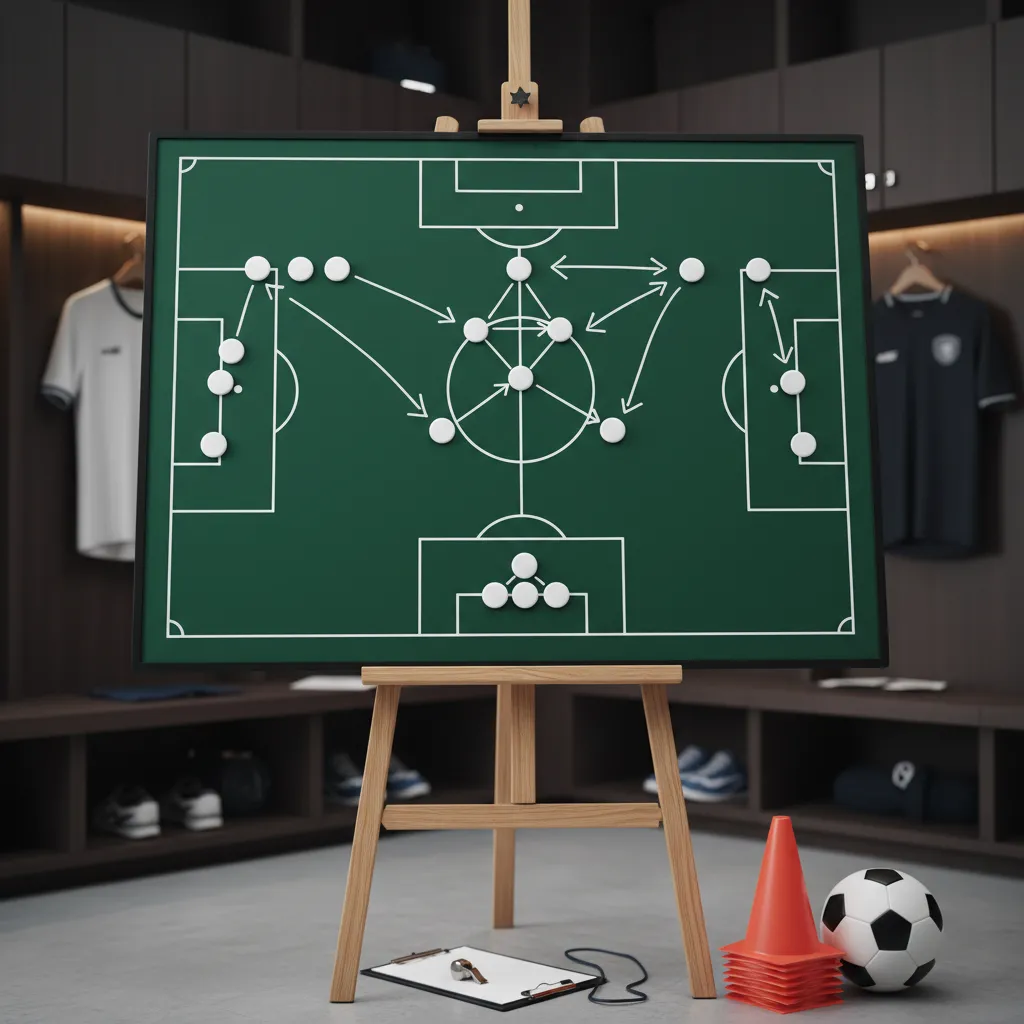
When Jarell Quansah received his red card in the 22nd minute, Thomas Tuchel had approximately 30 seconds to make the most important tactical decision of his England career. The German coach, standing in the Azteca technical area with 87,000 hostile fans screaming for Mexican blood, chose to abandon his 3-4-2-1 formation and switch to a 5-3-1 — a decision that would later be described by Pep Guardiola as "the best real-time tactical adjustment I have ever seen at a World Cup." The switch sacrificed Phil Foden's creativity for Marc Guehi's defensive solidity, pushed Bukayo Saka into a wing-back role, and dropped Jude Bellingham 20 meters deeper to protect the midfield. Within five minutes, the new shape was functioning as if England had practiced it for weeks.
Impressed by Tuchel's tactical masterclass? Text Karpo for formation breakdowns, key stats, and England's path to the final.
The Counter-Attack Blueprint
Tuchel's 5-3-1 was not simply a defensive formation — it was a carefully constructed counter-attacking trap. England conceded possession willingly (finishing with just 32 percent), but their defensive block was positioned precisely 35 meters from their own goal, creating a no-man's land between their back five and Mexico's advancing midfield. When Mexico committed players forward, Saka and Bellingham were released into the vacated space with devastating speed. Kane's second goal, in the 54th minute, was the purest expression of the strategy: Pickford's long throw found Bellingham, who drove 60 meters before squaring to Kane for a tap-in. The entire sequence took 8.3 seconds — the fastest goal transition at the 2026 World Cup.
Altitude Management: The Sports Science Edge
England's preparation for the Mexico City altitude gave Tuchel a hidden advantage. The squad spent three days training at the US Olympic Training Center in Colorado Springs (altitude: 1,839 meters) before flying to Mexico City, allowing partial acclimatization without the full fatigue effects of extended high-altitude exposure. Tuchel's sports science team also implemented a hydration protocol that included intravenous fluid replenishment at halftime — a practice that is legal under FIFA regulations but rarely used by European national teams. The result was visible in the second half: while Mexico's pressing intensity dropped by 28 percent between the 60th and 90th minutes, England's remained stable.
Bellingham's Deep-Lying Masterclass
Jude Bellingham's performance in the deeper midfield role was the tactical revelation of the match. Normally deployed as an attacking midfielder or second striker, Bellingham was asked by Tuchel to play as the deepest of England's three midfielders — a role that required defensive discipline, positional awareness, and the ability to switch from defense to attack in a single action. Bellingham delivered all three. His 11 ball recoveries were the most by any England midfielder at a World Cup match since 2002. His passing accuracy of 94 percent from deep positions was higher than any of England's natural central midfielders had achieved at the tournament. And his ability to carry the ball forward at speed transformed defensive recoveries into attacking opportunities.

Saka's Wing-Back Transformation
Converting Bukayo Saka from a right winger to a right wing-back was perhaps Tuchel's most inspired selection decision. Saka's defensive work rate — 14 sprints over 30 km/h, the most of any player on the pitch — allowed England to maintain their back five without sacrificing attacking threat on the right side. His 92nd-minute winner, cutting inside from the wing-back position and curling a shot past Ochoa, was scored from the exact position Tuchel had placed him in after the red card — proof that the tactical adjustment was not merely defensive but designed to create specific attacking opportunities.
Mexico's Inability to Solve Tuchel's Puzzle
Mexico coach Jaime Lozano made three tactical adjustments during the match, and none solved the problem Tuchel had set. His first change — introducing an extra striker in the 55th minute — created more shots on goal but also left more space for England's counter-attacks. His second — switching to a 3-5-2 in the 70th minute — briefly equalized the midfield numbers but was exploited by Saka's movement into the half-space. His third — introducing two fresh wingers in the 80th minute — produced Mexico's two late goals but also destabilized the defensive structure that had kept England to minimal chances. Each adjustment addressed one problem while creating another.
The Ramsey Comparison
The comparison to Alf Ramsey's 1966 management is not hyperbole. Ramsey's England won the World Cup through tactical innovation — the "wingless wonders" formation that sacrificed traditional width for midfield control. Tuchel's 5-3-1 at Azteca represents a similar willingness to abandon orthodoxy in pursuit of a result. Both coaches prioritized function over aesthetics, organization over individual brilliance, and adaptability over rigidity. The key difference is cultural: Ramsey was an Englishman managing England, while Tuchel is a German managing England — a fact that has complicated the narrative in certain sections of the English media but has been enthusiastically embraced by the players themselves.
Tags: Tuchel, England tactics, World Cup 2026, Mexico City, Estadio Azteca, 5-3-1 formation, Bellingham, Saka, counter-attack, altitude, 10 men
Sources consulted: Sky Sports · The Guardian · ESPN · BBC Sport
All trademarks, team names, league names, and player likenesses mentioned in this article are the property of their respective owners and are used here for informational and editorial purposes only.
Ask Karpo First
Fascinated by Tuchel's tactical genius? Ask Karpo for a detailed formation breakdown of England's 5-3-1 shape, heat maps from the Mexico match, and how Tuchel's system compares to previous England managers' World Cup tactics.