The Red Card That Started It All
June 30, 2026. The United States beat Bosnia and Herzegovina 2-0 in their Round of 32 match at Lumen Field in Seattle. In the 73rd minute, Folarin Balogun stepped on the ankle of Bosnia's Tarik Muharemovic while challenging for a loose ball. The referee reviewed the incident on the pitchside monitor and showed Balogun a straight red card. Under FIFA's disciplinary code, a red card in the knockout rounds carries an automatic one-match suspension. Balogun would miss the Round of 16 match against Belgium. For a nation desperate for a deep home World Cup run, losing its starting striker was a devastating blow.
Keeping up with the drama? Ask Karpo for the latest on the World Cup's biggest storylines.
The Phone Call
Within 12 hours of the red card, President Trump confirmed to reporters aboard Air Force One that he had spoken with FIFA president Gianni Infantino. "I called Gianni. I told him I watched the replay. It wasn't a foul. I asked him to take another look," Trump said. The president described the conversation as "very friendly" and insisted he was merely requesting a review, not demanding a specific outcome. The call lasted approximately 15 minutes, according to White House sources. By the time Air Force One landed, FIFA had announced it would convene an emergency disciplinary hearing.
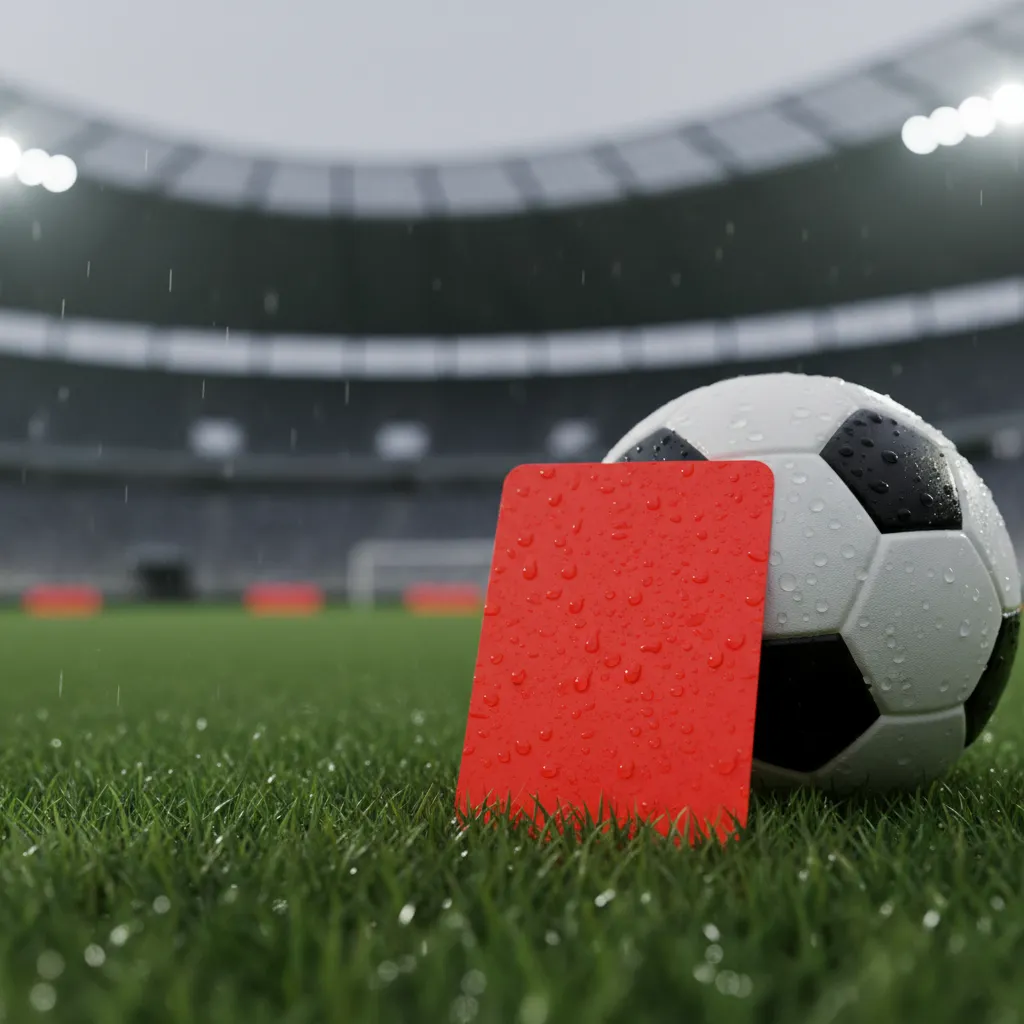
FIFA's Article 27 Decision
FIFA's disciplinary committee met for four hours on July 1, 2026. Using Article 27 of its disciplinary code — which states that "the judicial body may decide to fully or partially suspend the implementation of a disciplinary measure" — the committee voted to overturn Balogun's automatic suspension. The vote was 3-2, with the two dissenting members later leaking their objections to European media. FIFA's public statement cited "mitigating circumstances and the proportionality of the sanction relative to the offense." No mention was made of the president's phone call. The footballing world erupted.
UEFA's Unprecedented Response
UEFA's statement, released within two hours of FIFA's decision, was the most aggressive public criticism of FIFA by a confederation in modern football history. "FIFA has crossed a red line," the statement read. "By apparently changing rules mid-tournament, without consultation, under the influence of an often-chaotic politician, FIFA has put the integrity of the game at stake." The Belgian Football Association filed a formal protest and requested that FIFA reverse its decision. The protest was denied within 24 hours. UEFA president Aleksander Ceferin privately told associates he was considering whether European nations should boycott the remainder of the tournament, though this threat never materialized.

The International Backlash
The reaction extended far beyond European football. CONMEBOL, the South American confederation, issued a statement expressing "concern about external influence on sporting decisions." The African Football Confederation called for FIFA to publish the full reasoning behind its Article 27 invocation. British newspaper The Guardian published an editorial titled "Trump's World Cup: When Politics Hijacked Football." ESPN's broadcast team was instructed to provide context about the controversy before every subsequent USMNT match. FIFA's own internal polling, leaked to the New York Times, showed that 71% of surveyed national associations disapproved of the decision.
The Ironic Aftermath
The cruelest irony of the controversy was the match itself. Balogun, cleared to play, was largely invisible during Belgium's 4-1 demolition of the United States. He managed just 23 touches in 85 minutes, completed 11 of 18 passes, and registered zero shots from open play before scoring a meaningless consolation penalty. The controversy that had consumed 72 hours of global media attention, strained diplomatic relations between FIFA and UEFA, and raised fundamental questions about the independence of sporting governance produced no competitive benefit for the team it was designed to help. Belgium's Trump Dance celebration ensured that the humiliation was complete.
What Precedent Has Been Set
The Balogun affair will be studied by sports governance experts for decades. If a head of state can call a FIFA president and influence a disciplinary decision, what prevents future interventions? What happens when a World Cup is hosted in a country whose government has even less regard for institutional independence than the United States? FIFA's silence on these questions has been deafening. The 2026 World Cup was supposed to be a celebration of football's expansion into North America. Instead, it has become a case study in the dangers of hosting the world's biggest sporting event in a country where the most powerful person believes that rules are negotiable.
Tags: Trump, FIFA, Balogun, red card, World Cup 2026, controversy, Infantino, UEFA, Article 27, political interference
Sources consulted: Al Jazeera · Sky Sports · CNBC · Axios
All trademarks, team names, league names, and player likenesses mentioned in this article are the property of their respective owners and are used here for informational and editorial purposes only.
Ask Karpo First
Want to understand the FIFA disciplinary process or track the ongoing fallout from the Balogun affair? Ask Karpo for a plain-English explainer of Article 27, the complete UEFA response timeline, and how this controversy compares to past World Cup scandals.