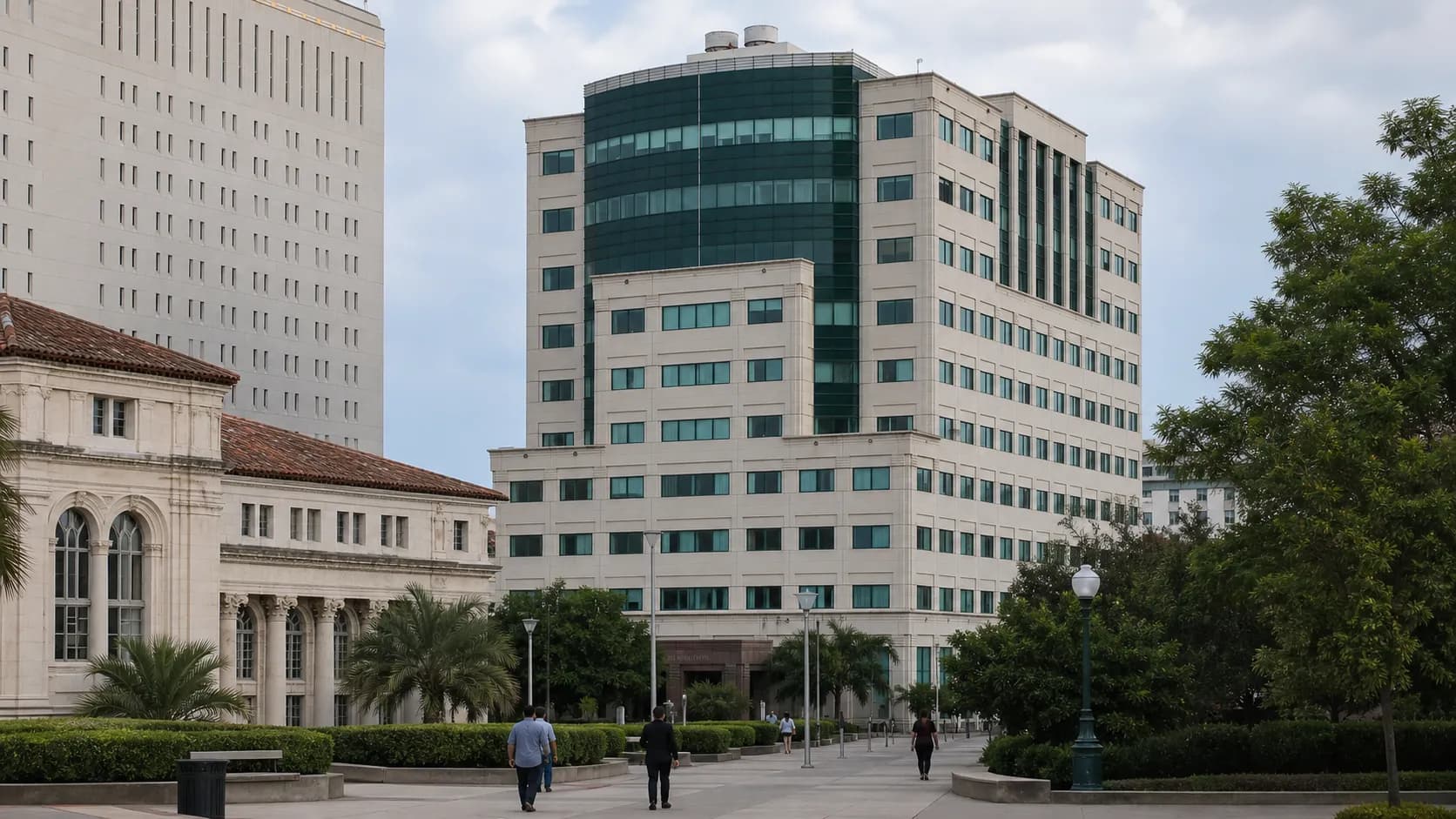
The phrase trump bbc financial records lawsuit is trending because a discovery dispute in a Florida federal defamation case has moved from media-law circles into the broader news cycle. As of July 22, 2026, the core point for NYC readers is narrower than the headlines may sound: the latest reported ruling concerns access to financial records sought by the BBC, not a final decision on whether the broadcaster defamed President Donald Trump. The underlying case, filed in the Southern District of Florida in December 2025, alleges that a BBC Panorama documentary deceptively edited Trump’s January 6, 2021 speech and caused reputational and financial harm. The BBC denies liability and has asked the court to dismiss the case.
Text Karpo if you want a plain-English alert when the court posts the next major order in the Trump-BBC case. Ask Karpo to track NYC media-law developments tied to defamation, discovery, and newsroom corrections.
What the Florida case is actually about
Trump’s complaint, filed December 15, 2025, names the British Broadcasting Corporation and BBC Studios entities and seeks damages over the Panorama program “Trump: A Second Chance?” The complaint alleges that the program edited portions of his January 6, 2021 speech in a way that falsely made him appear to call directly for violent action at the Capitol. Those are allegations, not judicial findings. The case is captioned Trump v. British Broadcasting Corporation et al., No. 1:25-cv-25894, in the U.S. District Court for the Southern District of Florida.
The BBC’s March 16, 2026 motion to dismiss frames the dispute very differently. Its filing says the documentary was produced in London, aired for a U.K. audience, and was not broadcast in the United States, including Florida. The BBC also argues the complaint fails to plead personal jurisdiction, actionable defamation, actual malice, or plausible damages. None of those defenses has become a final merits ruling simply because discovery is moving forward.

Why financial records entered the story
In defamation cases, plaintiffs who seek money damages often must support the claimed injury with evidence. Trump’s complaint and pre-suit demand letter repeatedly refer to reputational and financial harm. That matters because the BBC has sought discovery to test whether the challenged broadcast caused measurable business or brand-value losses. Public docket entries show a discovery dispute involving a subpoena to the Donald J. Trump Revocable Trust, the entity associated with holding Trump business interests and assets.
Current reports on July 22 say U.S. Magistrate Judge Enjoliqué A. Lett granted the BBC’s effort to obtain financial records from the trust. Treat that as a discovery ruling unless and until an appeal, stay, narrowing order, or later written order changes the scope. A discovery order can require document production while leaving all major questions—defamation, jurisdiction, damages, and defenses—unresolved.
Allegation, apology, retraction, ruling: keep them separate
Four different legal concepts are easy to blur here. Trump alleges the editing was false and defamatory. The BBC has publicly apologized for the way the clip was edited and has said the program would not air again in that form, while disputing that there is a valid basis for a defamation claim. The BBC’s apology is not the same thing as a court judgment. Likewise, a court allowing discovery is not the same thing as a finding that the BBC acted with actual malice.
For U.S. public-figure defamation claims, actual malice is a demanding standard: the plaintiff generally must prove the defendant published a false statement with knowledge of falsity or reckless disregard for truth. The BBC says the complaint does not plausibly meet that standard. Trump says the edit was intentional, malicious, and materially misleading. Those competing positions are what litigation is for; the record today does not convert either side’s filing into fact.

Why New Yorkers should pay attention
This is a Florida case involving a British broadcaster, but the practical lesson lands in New York’s media market. NYC is home to major newsrooms, production companies, documentary editors, streaming distributors, publicists, and media-law firms. The dispute is a reminder that editing choices in factual programming can become evidence, and that damages claims can make private financial materials relevant even when the publication itself is the headline.
New York also has its own Trump-related record in litigation over statements of financial condition. In People v. Trump, the New York appellate record discusses the Donald J. Trump Revocable Trust and financial statements tied to Trump Organization entities. That New York case is separate from the BBC lawsuit, but it helps explain why NYC readers may recognize the trust as a recurring legal and financial entity rather than a new character in the Florida dispute.
What the docket shows so far
The public docket shows the complaint was filed in December 2025, the BBC waived service later that month, and the BBC moved to dismiss on March 16, 2026. Docket entries also show discovery fights in May and June over the trust subpoena, requests for production, interrogatories, and requests for admission. On June 10, Magistrate Judge Lett set discovery hearings for June 30 in Miami and ordered the clerk to unrestrict a joint motion involving the trust subpoena.
The docket also reflects procedural friction. A June 8 paperless order from U.S. District Judge Roy K. Altman noted that Trump’s response to the BBC’s motion to dismiss had not been filed by the deadline and asked for an explanation. That does not decide the case, but it shows why readers should check the docket rather than rely only on viral summaries. Civil litigation often advances through scheduling, discovery, sealing, and briefing orders before any merits ruling appears.
The role of the Donald J. Trump Revocable Trust
The trust matters because the lawsuit’s damages theory has included alleged injury to Trump’s brand, properties, businesses, and future financial prospects. Federal ethics disclosures and other public records identify substantial holdings associated with the Donald J. Trump Revocable Trust. Public disclosure forms are not the same as full discovery, but they show why a litigant defending against a large damages demand would seek records that test causation and loss.
That does not mean every trust record automatically becomes public. Courts can limit scope, allow confidentiality protections, seal sensitive filings, or require targeted production. The BBC’s position is that the records are relevant to the damages Trump put at issue. Trump’s side has described the demands as overbroad or a fishing expedition, according to prior reports and filings. The latest reported order appears to side with production at least in part, but scope and confidentiality still matter.
What has not been decided
No final public ruling cited here establishes that Trump was defamed, that the BBC is liable, or that Trump suffered financial loss. No final ruling cited here establishes the opposite either. The BBC’s motion to dismiss asks the court to end the case for lack of jurisdiction and failure to state a claim. If the court grants that motion, discovery disputes may become less important. If the case survives, document fights could become central to damages and defenses.
There is also no verified public basis to say the records will immediately become public in full. Discovery materials are often exchanged between parties without appearing on a public docket. If a document is filed in support of a motion, a court may decide whether it remains sealed, redacted, or public. For NYC media readers, the clean takeaway is procedural: broad damages allegations can create broad discovery risk.
Practical notes
Practical notes for NYC readers: read this as a media-law and public-records story, not as legal advice. If you work in journalism, documentary production, podcasting, streaming, or PR, the useful lesson is to preserve edit notes, transcripts, source video, rights records, and correction correspondence when a dispute begins. If you are following the case, use exact dates: complaint filed December 15, 2025; BBC motion to dismiss filed March 16, 2026; discovery-hearing entries appeared in June 2026; the latest reported financial-record ruling surfaced July 22, 2026. Watch for a written order, any appeal or stay, and a ruling on the motion to dismiss before drawing conclusions about liability.
Tags: #TrumpBBC #MediaLaw #DefamationLaw #NYCMedia #FirstAmendment #CourtWatch #Discovery #BBC #Trump #LegalExplainer #Journalism #PublicRecords #NYCNews #HiddenGemsOddFinds
Sources consulted: Trump complaint and demand exhibits, S.D. Fla. case filing · BBC defendants’ March 16, 2026 motion to dismiss · Public docket summary for Trump v. British Broadcasting Corporation et al. · Civil Rights Litigation Clearinghouse case page and docket summary · Office of Government Ethics 2026 annual financial disclosure for Donald J. Trump · New York Courts decision page for People v. Trump · Current report on July 22 discovery ruling
All trademarks are the property of their respective owners.
Ask Karpo first
Ask Karpo can help New Yorkers separate filings from findings in fast-moving legal stories: what was alleged, what was admitted, what a judge ordered, and what still has to be proven.