The search term trump bbc discovery order pause is about a live federal defamation fight, but in New York City it can become a useful back-to-school route instead of just another political headline. The case itself is in Florida, where a federal judge temporarily paused financial-record discovery while considering changes to the complaint. Foley Square offers the NYC lesson: how discovery disputes appear in public records, how federal and state courthouses handle access, and why practical rules shape what students can actually observe. For journalism, pre-law, and media studies students, the best visit is calm, document-led, and built around verified access, not courthouse spectacle.
Want a route that avoids dead ends? Text Karpo for the Foley Square order of stops, subway choice, and record-check steps tied to this NYC court cluster.

40 Foley Square as the federal-court starting point
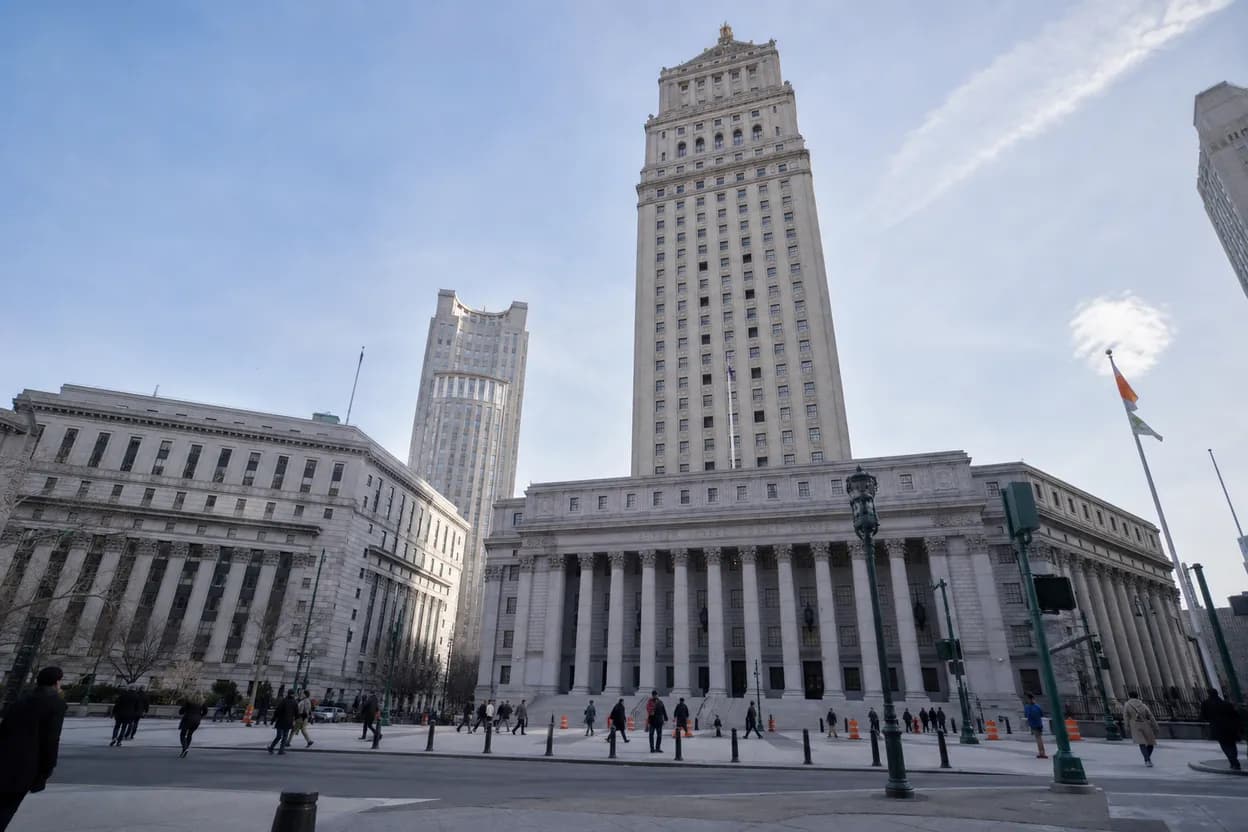
Begin outside the Thurgood Marshall United States Courthouse at 40 Foley Square, not because the BBC case is there, but because the building makes federal procedure tangible. The Southern District of New York lists courthouse and clerk’s office hours as 8:30 a.m. to 5:00 p.m., with security screening required. Treat this stop as orientation: where federal filings, judges, clerks, and courtroom access rules become a real civic system rather than vocabulary in a syllabus.
The tradeoff is that a courthouse visit may teach less through drama than through limits. Cell phones, tape recorders, and cameras are prohibited inside the federal courthouse, according to the court’s public page, so plan notes for after you exit. If the lobby is busy or screening looks slow, do not force the stop. Walk the square, mark the building, and shift the learning task to the docket and public-access systems.
500 Pearl Street and the Worth Street security choice
The Daniel Patrick Moynihan United States Courthouse at 500 Pearl Street is the second federal anchor, and its own directions point visitors toward the Worth Street entrance for security purposes. That detail matters on a hot or rainy late-summer weekday because a wrong entrance can turn a short civic walk into a sweaty loop. The courthouse and clerk’s office hours are also listed as 8:30 a.m. to 5:00 p.m., with extra time advised for screening.
Use 500 Pearl Street to separate public access from entitlement. A student can study the court, read signs, check calendars where available, and understand the function of a federal courthouse without wandering or recording. If you are paired with a classmate, agree on one question before entering: where would a discovery order, stay, or amended complaint appear? The answer is usually in the docket, not in a hallway conversation.
Brooklyn Bridge-City Hall station for a low-friction arrival
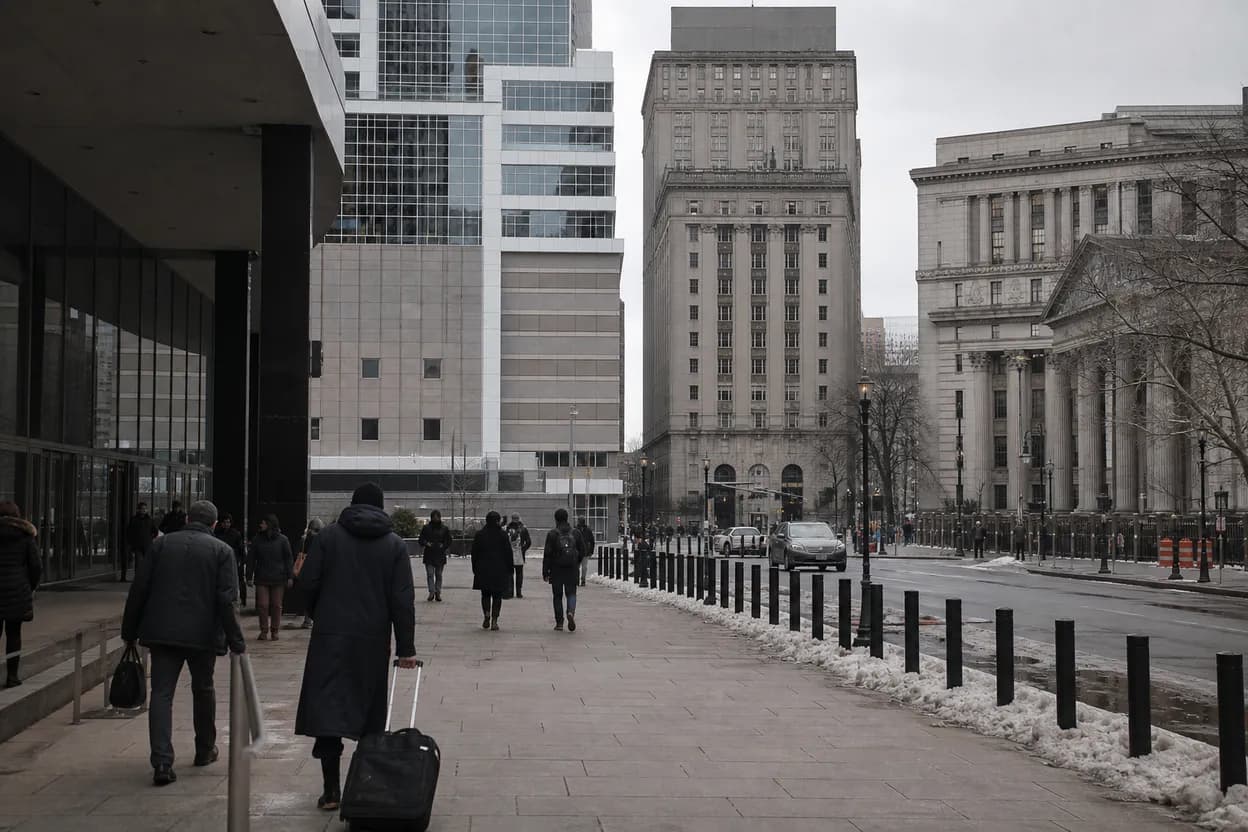
For most students, the cleanest subway arrival is the 4, 5, or 6 to Brooklyn Bridge-City Hall, which both federal and state court directions identify as a Foley Square approach. It keeps the walk short and readable, useful when the weather is humid or rain is threatening. Exit into the civic-center grid, then orient by Centre Street, Pearl Street, and Worth Street before deciding whether to start with the federal buildings or 60 Centre Street.
The practical backup is Chambers Street on the 1, 2, or 3, followed by a walk east toward Centre Street. That route can be better from the West Side, but it adds exposure in bad weather and may feel less direct for a first-time visitor. Check MTA service before leaving campus or home. If delays stack up, make the trip a records exercise from a library or dorm instead of arriving too late for help-center hours.
60 Centre Street Help Center, Room 119A
The New York County Supreme Court Help Center at 60 Centre Street, Room 119A, turns the route from sightseeing into utility. The court lists weekday hours from 9:00 a.m. to 4:30 p.m., closed from 1:00 p.m. to 2:15 p.m. It serves unrepresented litigants with procedural information, forms, handouts, wifi, and referrals. For students, the value is seeing how public-facing court support differs from courtroom watching or media coverage.
Do not treat the Help Center as a place to get commentary on the Trump-BBC dispute or any federal case. Its published scope includes New York Supreme Civil matters, name change, divorce, foreclosure, domestic violence, and related procedural help, and papers cannot be filed by email. The best student question is structural: what kind of issue belongs here, what belongs with a clerk, and what belongs in an attorney-client conversation.
60 Centre Street records and the County Clerk reality check
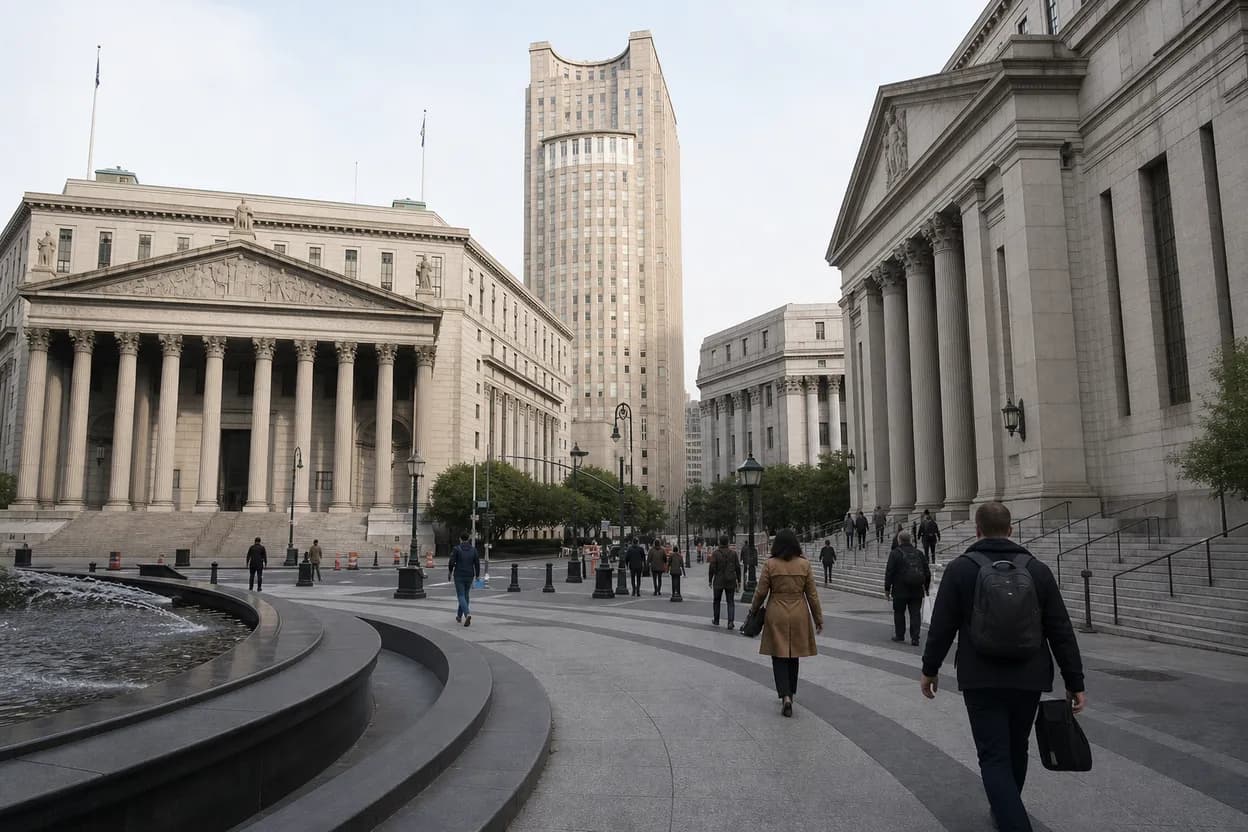
New York County Supreme Court’s facilities page says 60 Centre Street is the principal Civil Branch facility and houses the County Clerk, with the most recent hard-copy case files maintained there. It also notes that many new cases are e-filed. That split is the useful lesson: public records are not one universal drawer. Case age, court system, filing method, and record type can determine whether the next step is a room, database, clerk’s office, or another address.
The failure mode is assuming a legal search term gives you the record location. The BBC discovery dispute belongs to a federal docket outside New York, while Foley Square teaches the mechanics you can transfer: identify the court, confirm the case number, check whether papers are public, and then ask where that record lives. If an older hard-copy state file is involved, the court notes some are maintained at 31 Chambers Street, not necessarily at 60 Centre.
PACER and McVCIS before crossing lower Manhattan
PACER is the federal records tool to check before making the walk, especially when a discovery order, stay, or amended complaint may change quickly. PACER’s public guidance says McVCIS gives free phone access to limited real-time case information, while PACER is needed for all publicly available case information. That distinction is exactly the media-literacy point: a headline can be current in the morning and procedurally incomplete by lunch.
Use the record check as your go-or-stay decision. If you cannot confirm the case number, the order date, or whether the disputed filing is public, make verification the assignment rather than pretending certainty. Search reputable coverage for context, then use court records for posture. For this trend, current reporting says the financial-discovery order was temporarily paused while the judge considers complaint changes; verify again before building class notes around it.
Pearl Street ADA entrance and the final same-day check
Accessibility planning belongs at the start of the route. New York Courts lists elevators on public floors at 60 Centre Street, assistive listening systems in all courtrooms, no public parking on-site or adjacent to the facility, and an ADA entrance on Pearl Street with a street-level accessible elevator. It also asks visitors who need accommodations to request them at least a few days before coming to court. That makes transit and timing part of the learning plan.
Before leaving, do one final verification action: check the relevant court pages, PACER or McVCIS, MTA service status, and the Help Center hours for the exact weekday you plan to go. If any piece is uncertain, downgrade the outing to an exterior route plus records session. That is not a failed trip. For a student studying discovery and public access, knowing when not to enter a courthouse is part of the lesson.
Tags: #AskKarpo #BeforeYouGo #NYC #FoleySquare #CourthouseRoute #BackToSchool #PACER #Discovery #PublicRecords #LegalLiteracy #LowerManhattan #CourtAccess #PreLaw #MediaStudies
Sources consulted: Source 1: theguardian.com · Source 2: nysd.uscourts.gov · Source 3: nysd.uscourts.gov · Source 4: nycourts.gov · Source 5: nycourts.gov · Source 6: pacer.uscourts.gov
All trademarks are the property of their respective owners.
Ask Karpo first
Tell Karpo your date, group size, budget, and starting point. We’ll check current access, timing, transit, and the cleanest New York City plan for Foley Square courthouse cluster: Thurgood Marshall U.S. Courthouse, Daniel Patrick Moynihan U.S. Courthouse, New York County Courthouse, and New York County Supreme Court Help Center before you head out.