 Where to Eat Near Penn Station That Isn't a Chain
US Open 2026
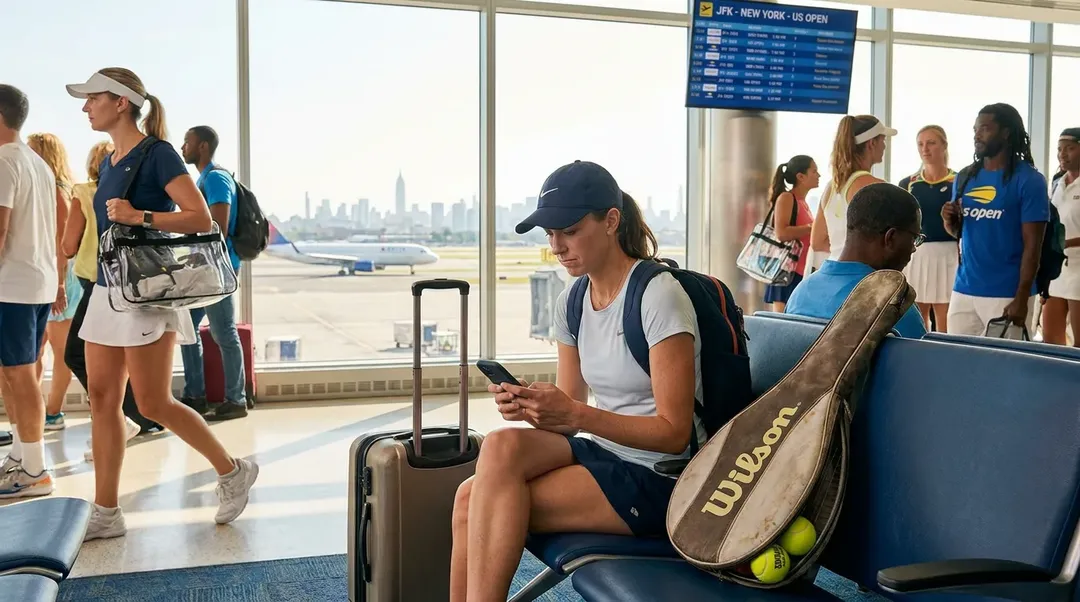
Travel Warning Checks Before Your US Open Flight
Before flying to New York for the US Open, give yourself practical buffers for airport delays, gate timing, transit choices, and mobile alerts.
The travel risk for an out-of-town US Open fan is rarely one single delay. It is the way small delays stack up between your home airport and your seat in Queens. A late aircraft, a slow baggage claim, a crowded pickup area, a hotel detour, a missed train connection, or a longer security line can each seem manageable alone. Together, they can turn a comfortable match-day plan into a sprint. The better approach is to treat your flight as only the first step in a longer chain. Your plan should protect the time between landing in New York and entering the USTA Billie Jean King National Tennis Center, not just the time printed on your airline itinerary.
Text Karpo for a current, low-friction plan for travel warning checks before your us open flight—including timing, route checks, and practical options that fit your day.
Build the Flight Buffer
Advice: if you are flying in for a specific session, do not build the day around a best-case landing time. A scheduled arrival can slip because of weather, crew timing, departure queues, gate congestion, or baggage delays. Even if the flight lands close to schedule, the next steps still take time: leaving the aircraft, finding transportation, reaching a hotel or going directly to the grounds, passing security, and walking to the right court or stadium entrance.
The size of the buffer should match the importance of the ticket. If the session is the centerpiece of your trip, consider arriving the day before rather than the same day. If same-day travel is unavoidable, give yourself enough room for a meaningful delay, not just a few lost minutes. Fans traveling with children, checked bags, mobility needs, or first-time New York visitors should add more time because every extra step creates another possible pause.
For “Travel Warning Checks Before Your US Open Flight,” the useful 2026 calendar anchor is August 23 through September 13, with singles main-draw play beginning August 30. Use that date range to match flights to your ticketed day carefully, especially if your trip includes qualifying-week plans, opening-week sessions, or a quick weekend visit. Advice: put separate calendar entries for landing, leaving the airport, arriving at the grounds, and being ready for tennis. If those times look uncomfortably close together on the screen, they will feel even tighter in real life.
Use Alerts Before Boarding
Airport stress often comes from learning bad news too late. Set alerts before you leave home, not while standing in a terminal line. The goal is not to predict every disruption. It is to receive enough notice to change course while you still have options. A delay notice before you depart for the airport is more useful than the same notice after your group has already checked bags or entered a long security line.
- Use airline app alerts for gate changes, boarding updates, aircraft changes, and rebooking options.
- Check airport alerts for terminal conditions, roadway notices, parking issues, or other operational updates.
- Keep transit and map alerts ready for the trip from the airport or hotel to the tournament site.
- Create a shared itinerary with your ticket account, hotel address, flight details, and backup route.
Advice: keep push notifications on and leave email or text alerts active as a backup. If your group splits responsibilities, make the division clear. One person can monitor the airline while another watches local transportation, but everyone should know who is responsible for each update. Also protect your phone battery. Your device may hold boarding passes, hotel details, mobile tickets, maps, and messages from the rest of your group, so a compact charger can matter as much as anything in your carry-on.
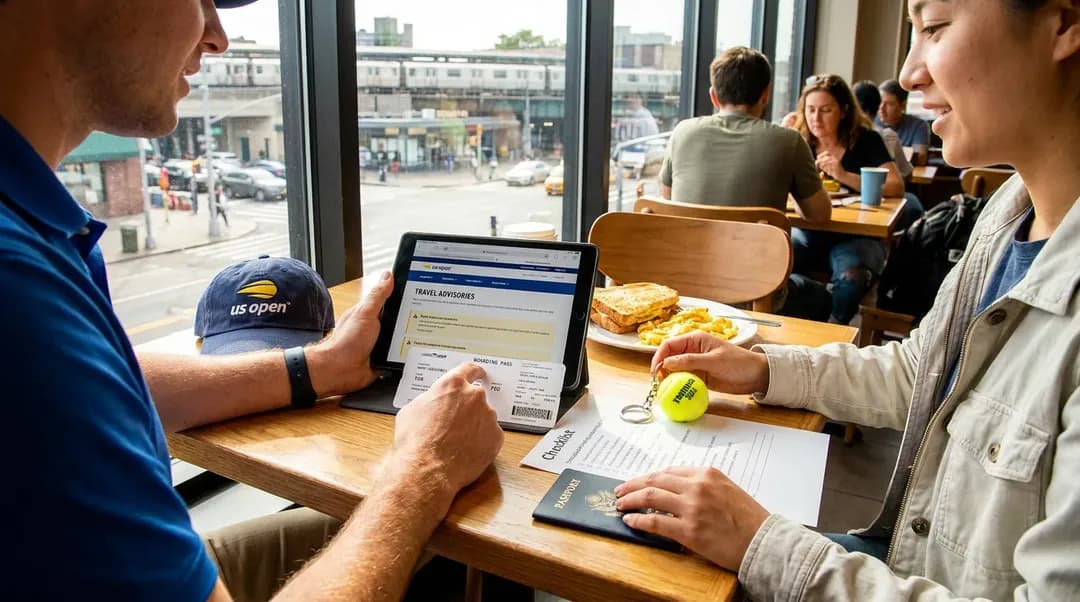
Match Tickets to Gate Times
A ticketed session time is not the same thing as the time you should arrive at the grounds. Fans need to account for official gate opening times, screening, walking distance, and the natural unpredictability of tennis. Matches can move quickly or last longer than expected, and a grounds visit may involve deciding which court to visit first. If you arrive at the exact time you hope to begin watching, you may already be late for the experience you pictured.
Advice: separate three moments in your plan. The first is arrival in New York. The second is arrival at the tournament site. The third is the time you want to be seated or positioned for tennis. Those are different checkpoints. A fan who treats them as one appointment may underestimate the day. A fan who separates them can see where the schedule is fragile before the trip begins.
Evening sessions need special care because the day can fill up before tennis starts. Sightseeing, restaurant timing, hotel check-in, and cross-borough travel can all consume more time than expected. Keep the stadium night in mind when choosing afternoon plans. A lighter schedule before tennis can make the difference between enjoying the arrival and rushing through entry while checking scores on your phone.
Choose Airport-to-Queens Routes
New York arrival plans vary by airport, hotel location, luggage, group size, and comfort with transfers. The official US Open transportation and directions page should be the anchor for tournament-specific choices, but your personal route also has to fit the way you travel. The fastest route on a map is not always the easiest route with a roller bag, a tired child, or a group that has never navigated the city together.
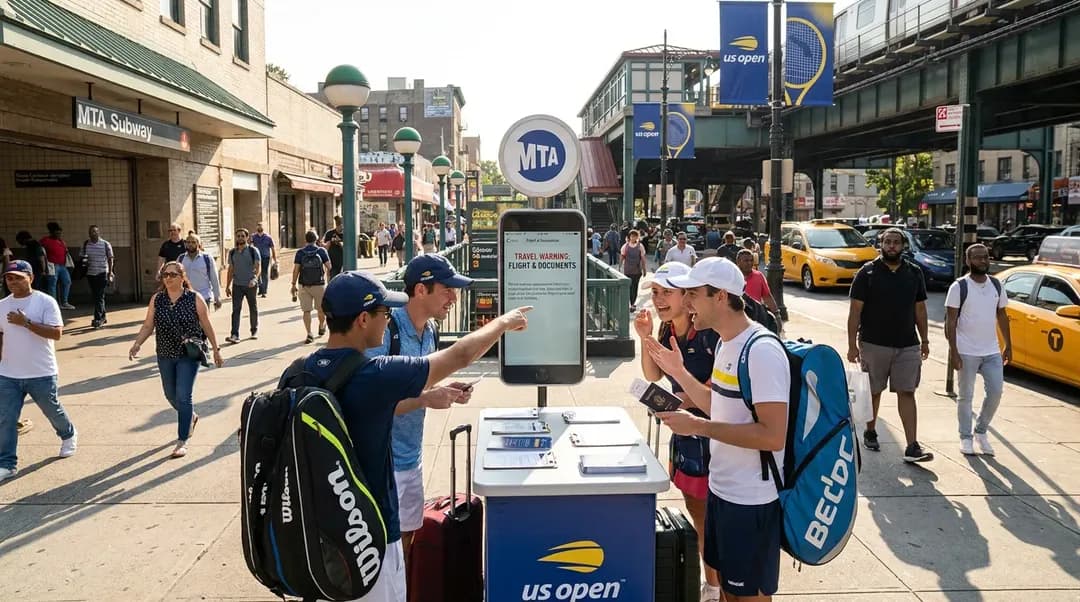
Advice: decide before departure whether your first stop is the hotel or the grounds. Going straight to the tournament can save time if you travel light and have only items permitted under current venue rules. It can backfire if your bags are too large, your phone battery is low, or your group needs food and a reset after the flight. Stopping at the hotel can add time, but it may reduce stress later by letting you drop bags, recharge, and reorganize tickets.
- If you check luggage, assume baggage claim can affect your match-day timeline.
- If you use a taxi or rideshare service, plan for pickup-area walking and possible roadway slowdowns.
- If you use public transit, review transfers before you are carrying bags through a crowded station.
- If you rent a car, consider whether parking, traffic, and post-match exits fit your plans.
Groups should agree on a simple communication plan before landing. If one person has the tickets, another has the hotel reservation, and a third is watching transportation, a delay can become confusing quickly. Share confirmation details where appropriate, keep key addresses accessible, and choose a meeting point in case mobile service feels crowded near the grounds. The best plan is the one every traveler can explain without opening several apps.
Practical Notes
Before leaving for the airport, check the official US Open event schedule, transportation and directions page, and gate opening times for your ticketed date. Because “Travel Warning Checks Before Your US Open Flight” depends on live operations, verify the specific schedules, gates, transit conditions, local hours, inventory, and venue rules that affect this plan. Before acting on “Travel Warning Checks Before Your US Open Flight,” recheck the official security page; its current limit is one searchable bag per guest, no larger than 12 by 12 by 16 inches. Advice: keep tennis-day essentials in a small compliant bag, charge your phone fully, save important trip details where you can access them, and leave one flexible hour in your New York arrival plan for the delay you did not expect.
Tags: #USOpen2026 #Tennis #NewYork #Queens #FlushingMeadows #USOpenGuide #TennisFans #SportsTravel #NYCEvents #HardCourt #KarpoFinds #Karpo
Sources consulted: usopen.org — Official reference · usopen.org — Official reference · usopen.org — Official reference
All trademarks are the property of their respective owners.
Ask Karpo first
Want to know what is confirmed, when to show up, and what is actually open to the public? Ask Karpo for the latest US Open updates and a practical New York plan for travel warning checks before your us open flight.
Ask Karpo for more information.
Keep reading
- Where to Eat Near Penn Station That Isn't a Chain
 Andytown Coffee in the Outer Sunset: The Snowy Plover Explained
- Best Things to Do in Chicago: What the City Gives Away