 Soap Making Workshop Near Me in Edogawa: Eight Wakuwaku
Weekend Plans
Science Museum Near Me in Ueno: National Nature and Science
Visit Kahaku at 7-20 Ueno Park for dinosaur paleontology, Theater 360 spherical cinema, and extensive Japanese scientific innovation galleries.
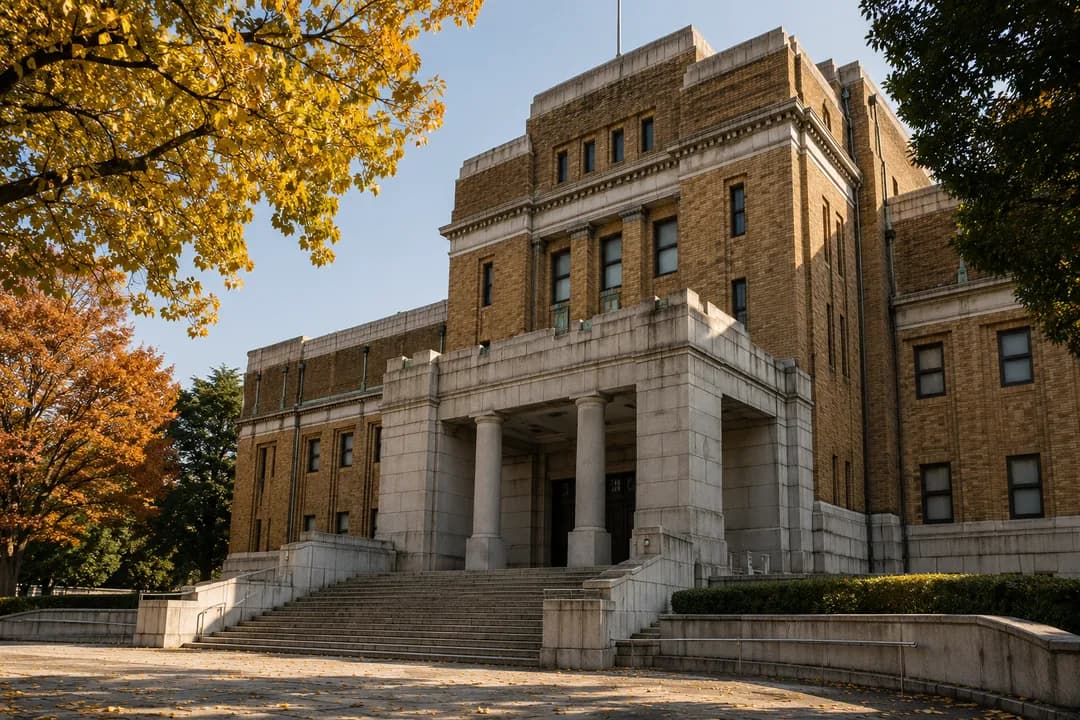
Situated inside the cultural grounds of Ueno Park at 7-20 Ueno Park, Taito-ku, Tokyo 110-8718, the National Museum of Nature and Science—widely known as Kahaku—is Japan's oldest and most comprehensive national science and natural history museum. Spanning two vast exhibition complexes, the historic Japan Pavilion and the modern six-story Global Pavilion, Kahaku houses more than four million scientific specimens spanning astrophysics, paleontology, geophysics, and indigenous technological history. From full-scale dinosaur fossil mounts and deep-sea exploration submersibles to seismological recording instruments and spherical immersive cinemas, Kahaku delivers an unparalleled exploration of natural science. General admission to the permanent galleries is priced at ¥630 for adults and university students, while high school students and children enter free at ¥0.
Exploring the Global Pavilion and Paleontology Galleries
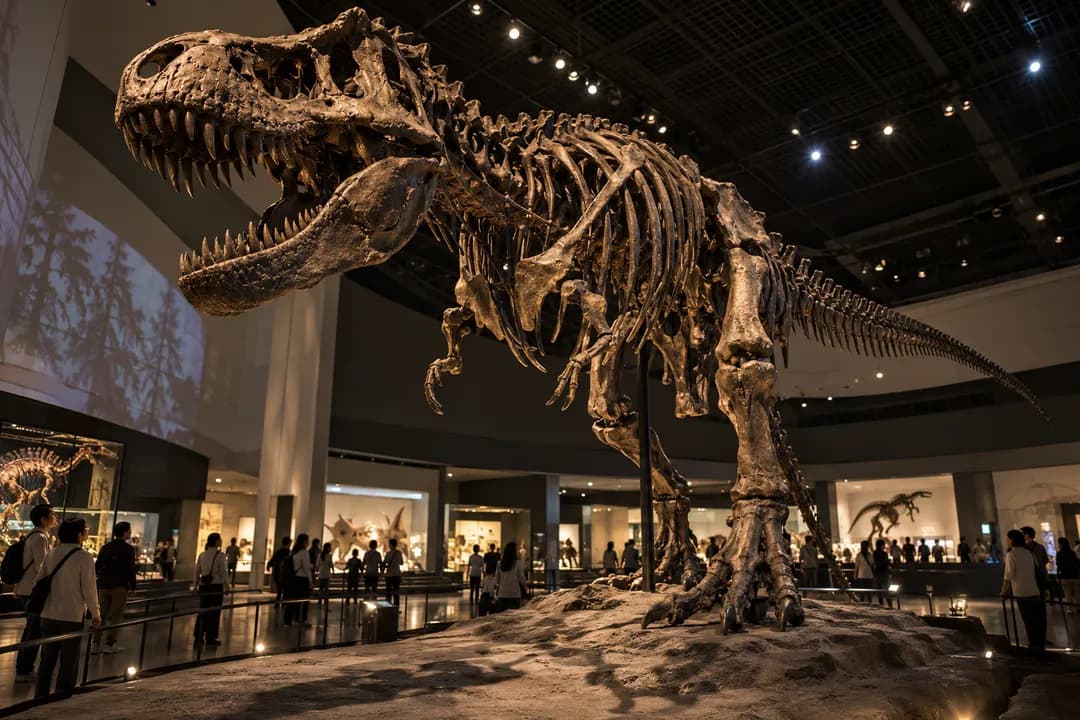
The Global Pavilion (Chikyu-kan) contains six levels of immersive scientific displays arranged along the themes of evolution, biodiversity, and technology. On the lower basement levels, visitors enter one of Asia's most spectacular paleontology halls, anchored by complete mounted skeletons of Tyrannosaurus rex, Triceratops, and Apatosaurus. Uniquely, the Tyrannosaurus is mounted in a crouching, prowling posture based on contemporary biomechanical studies of dinosaur locomotion.
Higher floors in the Global Pavilion transition to the physics of light, mechanics, and molecular chemistry. Hands-on laboratory stations let visitors test the speed of sound through different materials, generate magnetic fields using hand-cranked copper dynamos, and examine physical samples of meteorite impacts from Antarctica. The third-floor animal biodiversity gallery displays hundreds of taxidermy mammal mounts from across seven continents, illustrating evolutionary adaptation across polar, savanna, and rainforest ecosystems.
In the subterranean earth history wing, fossil exhibits showcase the marine reptiles of the Mesozoic Era, including the prehistoric plesiosaur Futabasaurus suzukii discovered in Fukushima Prefecture. Interactive stratigraphic columns reveal how paleontologists date sedimentary rock layers using index fossils such as ammonites and microscopic radiolarians.
Theater 360 and Particle Physics Laboratories
A highlight of Kahaku is Theater 360, a revolutionary spherical movie theater originally designed for the 2005 Aichi World Expo. Visitors walk onto a transparent bridge suspended precisely in the center of a hollow sphere twelve meters in diameter. Seamless projections cover the entire interior surface of the sphere, creating a breathtaking sensation of floating freely through space, flying alongside prehistoric pterosaurs, or descending into the depths of the ocean trenches.
In the physical science pavilion on the second floor, exhibits explore atomic physics, particle accelerators, and semiconductor engineering. Scale models demonstrate the mechanics of the Super-Kamiokande neutrino detector and Japan's H-IIA space rockets. Visitors can operate miniature cloud chambers to watch real-time alpha and beta radiation tracks, demystifying the invisible quantum particles constantly passing through our atmosphere.
Surrounding consoles illustrate the historical development of atomic spectroscopy and electron microscopy. Visitors study how transmission electron microscopes magnify crystal lattice structures up to millions of times, providing the foundational analytical capability for modern nanotechnology, superconductivity, and advanced materials engineering.
The 1931 Airplane-Shaped Japan Pavilion and Seismic Heritage
The historic Japan Pavilion (Nippon-kan) was designed in the Neo-Renaissance architectural style by Ministry of Finance architect Kenzo Kasahara and completed in 1931. When viewed from above, the building's floor plan forms the silhouette of a twin-engine passenger airplane, celebrating early aviation engineering. The building's central rotunda features a soaring stained-glass dome and bronze light fixtures, designated as an Important Cultural Property of Japan in 2008.
Inside the Japan Pavilion, exhibits focus on the natural history, endemic wildlife, and seismic resilience of the Japanese archipelago. Displays showcase historic seismographs, including the Omori horizontal pendulum seismograph developed in 1899 to measure lateral earthquake waves. Visitors also encounter famous historical taxidermy specimens, including Hachiko, the legendary loyal Akita dog of Shibuya, and Antarctic sled dog Jiro, who survived a year stranded in the polar ice.
Geological displays present volcanic cross-sections and active fault line models tracing the tectonic intersection of the Pacific, Philippine Sea, Eurasian, and North American plates. Guests examine rare mineral crystals, native gold nuggets from Sado Island, and obsidian tools shaped by prehistoric hunter-gatherers during the Paleolithic era.
From an 1877 Ministry Exhibition to National Landmark
Kahaku's institutional roots trace back to January 1877, when it was established as the Educational Museum by the Ministry of Education following the 1872 Shojakukan exhibition in Yushima Seido. Over the subsequent century and a half, the institution weathered the Great Kanto Earthquake of 1923 and World War II, continuously expanding its scientific collections across botany, zoology, geology, and mechanical engineering history.
The museum preserves pivotal artifacts from Japan's industrial modernization, including the nation's earliest domestically manufactured steam locomotives, antique astronomical telescopes, and a rare World War II Mitsubishi Zero fighter plane. By juxtaposing ancient Jomon pottery technology against Edo-period clockwork karakuri automata and modern quartz electronic watches, Kahaku documents the continuous evolution of Japanese mechanical craftsmanship.
The museum's astronomical heritage wing displays the telescoping instruments used by 18th-century surveyor Ino Tadataka, who walked thousands of miles to complete Japan's first mathematically accurate coastal maps. By pairing manual brass quadrants with modern radio telescope receivers, the collection celebrates the rigorous empirical traditions underlying modern Japanese scientific inquiry.
Practical Visiting Notes for Ueno Park and Ticket Timing
The National Museum of Nature and Science welcomes visitors from 9:00 AM to 5:00 PM Tuesday through Sunday, with entry permitted until 4:30 PM. The museum is closed on Mondays, or on Tuesday when Monday is a national holiday. General admission costs ¥630 for adults and university students, while high school students, children, and visitors aged 65 and older enter free of charge at ¥0. The telephone contact for general inquiries and accessibility services is +81 50-5541-8600.
Kahaku is located in northeastern Ueno Park, just a five-minute walk from the Park Exit of JR Ueno Station. It is also easily reached via Tokyo Metro Ginza Line, Hibiya Line, and Keisei Electric Railway lines. Outside the museum entrance stands a full-scale outdoor blue whale statue and an authentic D51 steam locomotive. Visitors can easily pair a morning at Kahaku with afternoons exploring the nearby Tokyo National Museum, the Ueno Royal Museum, or strolling around Shinobazu Pond.
Visitors should plan for at least two to three hours to explore both the Japan and Global Pavilions. Audio guides are available for rental in multiple languages at the central entrance, and the museum cafe on the intermediate floor serves dinosaur-themed lunches and specialty coffee. The main museum store near the exit offers fossil specimens, scientific field guides, and custom museum stationery.
Ask Karpo for more information.
Keep reading
- Soap Making Workshop Near Me in Edogawa: Eight Wakuwaku
 Soap Making Workshop Near Me in Nakameguro: Luxum
 Soap Making Workshop Near Me in Ikebukuro: And S