 Soap Making Workshop Near Me in Edogawa: Eight Wakuwaku
Weekend Plans
Science Museum Near Me in Toyosu: Gas Science Museum Experiments
Tour Gas Science Museum Gas-tenani on the Toyosu waterfront for free hands-on cryogenic physics, energy engineering, and bayview gardens.
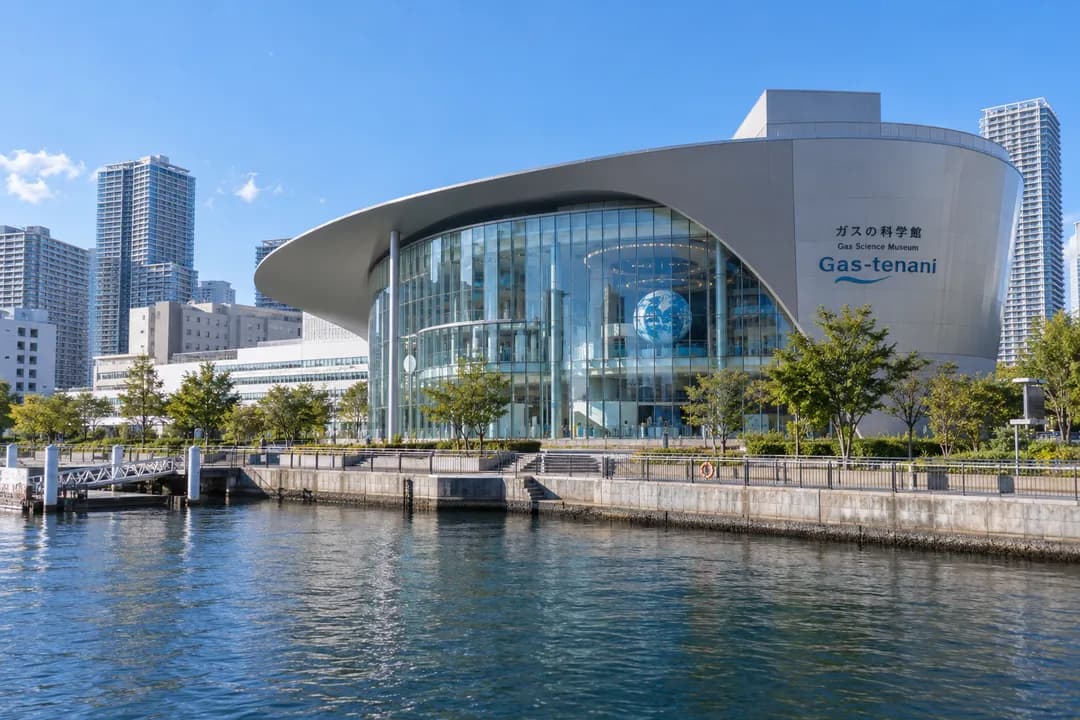
Perched along the open canal waters of Tokyo Bay at 6-1-1 Toyosu, Koto-ku, Tokyo 135-0061, the Gas Science Museum—affectionately known as Gas-tenani—is an expansive interactive discovery center operated by Tokyo Gas. Spanning two sun-drenched exhibition levels and a landscaped coastal rooftop observation terrace, the museum transforms the science of energy, thermodynamics, and city infrastructure into engaging sensory experiments. Visitors explore real cryogenic phenomena, combustion chemistry, subterranean pipeline networks, and future hydrogen fuel cycles through hands-on apparatuses. With completely free admission for all ages, the museum stands as a flagship science destination anchoring Toyosu's modern waterfront district.
Cryogenic Liquid Natural Gas Physics and Thermodynamics
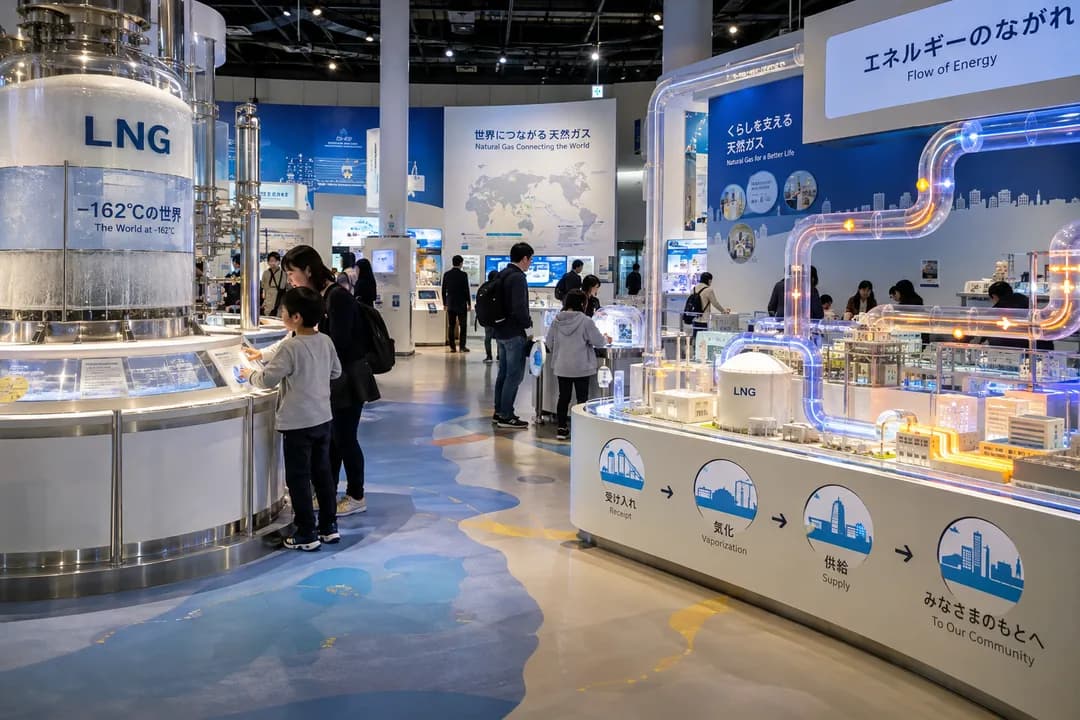
The physical centerpiece of the museum's ground-floor energy gallery is dedicated to the surprising thermodynamic properties of liquefied natural gas (LNG). Interactive exhibits explain how natural gas extracted from deep subterranean reservoirs is chilled down to minus 162 degrees Celsius, causing it to condense into a clear, non-toxic liquid that occupies just one six-hundredth of its gaseous volume. This immense volume contraction makes maritime transportation across global oceans economically viable via specialized insulated LNG carrier ships.
At the Cryogenic Science Demonstration Stage, resident laboratory instructors perform live physical experiments revealing extreme low-temperature behavior. Audiences observe rubber balls immersed in liquid nitrogen become as brittle as delicate porcelain, shattering upon light contact with a steel plate. Other demonstrations showcase how cold gaseous vapor expands rapidly when exposed to ambient room temperature, powering miniature thermal turbines through rapid phase change pressure.
Transparent cutaway cross-sections of cryogenic storage tanks demonstrate the advanced vacuum-insulated double-wall engineering and Perlite insulation powder utilized at coastal receiving terminals. Visitors touch chilled conductive metal plates to directly perceive thermal conductivity rates between copper, aluminum, and stainless steel, discovering how industrial engineers prevent boil-off gas leakage during long-distance oceanic transits.
Combustion Chemistry and City Lifeline Engineering
On the second floor, the exhibition focuses on combustion mechanics and municipal lifeline distribution networks. The Flame Chemistry Lab introduces the science of clean methane oxidation, demonstrating why well-regulated gas burners produce intense blue flames indicating complete combustion with minimal carbon monoxide production. Guests manipulate airflow dampers to observe yellow lazy flames, learning how stoichiometric air-to-fuel ratios dictate thermal efficiency in domestic and industrial burners.
A major gallery section is dedicated to disaster resilience and Tokyo's subterranean utility infrastructure. Visitors inspect real ductile iron and polyethylene gas main pipes engineered to bend and deform without rupturing during violent ground displacements. Interactive seismic consoles demonstrate Tokyo Gas's proprietary seismic monitoring network, which automatically triggers emergency district shutoff valves when ground motion sensors detect tremors exceeding fifty kine.
Cutaway smart gas meters illustrate the internal microcomputer shutoff mechanisms that instantly isolate individual household gas lines during unexpected pressure drops or prolonged seismic shaking. Children and adults operate miniature backhoe simulators and pneumatic testing tools, learning how utility repair crews locate underground leaks using sensitive acoustic listening rods and infrared methane detectors.
Hydrogen Energy, Methanation, and Future Climate Solutions
Looking toward the future of urban energy, the museum's upper gallery highlights innovative carbon-neutral technologies, focusing on hydrogen energy and synthetic methanation. Informational displays explain how surplus renewable electricity from wind and solar farms can be utilized to electrolyze water, producing clean green hydrogen. Visitors operate hand-pumped electrolysis cells to separate water molecules into visible hydrogen and oxygen bubbles, subsequently recombining them inside a miniature fuel cell to drive an electric motor.
The carbon recycling exhibit introduces catalytic methanation technology, where captured industrial carbon dioxide emissions are reacted with green hydrogen to produce synthetic e-methane. Because synthetic methane shares identical chemical properties with conventional natural gas, it can be transported and consumed using Tokyo's existing pipeline grids and appliances without requiring costly infrastructure replacement.
Interactive digital touchscreen tables feature city energy management games, challenging teams of visitors to balance daily municipal electrical and heating loads across variable weather conditions. Players allocate energy resources between battery banks, rooftop solar installations, district cogeneration plants, and hydrogen storage reserves to maintain zero grid blackouts while minimizing carbon dioxide emissions.
Tokyo Gas Heritage and the Evolution of the Waterfront Campus
The Gas Science Museum possesses a rich corporate and civic heritage rooted in Tokyo's post-war industrial modernization. Tokyo Gas initially established the facility in Toyosu in 1986 on the site of its former waterfront gas manufacturing works, which had produced town gas from coal and heavy oil from the 1950s until natural gas conversion was completed. As Toyosu transitioned from a heavy industrial wharf into a vibrant residential and cultural waterfront, Tokyo Gas completely rebuilt the museum, reopening it in June 2006 under the welcoming nickname Gas-tenani.
The name Gas-tenani playfully merges the word gas with the inquisitive Japanese phrase 'te-nani' ('what is that?'), reflecting the institution's primary mission to stimulate child-led curiosity through unhurried hands-on discovery. The museum's contemporary low-slung architecture incorporates broad glass curtain walls, natural ventilation towers, and integrated solar panel arrays, earning high honors for sustainable urban design.
A distinctive architectural highlight is the expansive rooftop lawn garden, which slopes gently toward the Toyosu canal. Open to all museum visitors, this breezy green terrace features native coastal grasses and offers panoramic vantage points overlooking the Tokyo Bay waterfront, the soaring Harumi high-rise district, and the iconic white towers of Rainbow Bridge spanning the harbor.
Practical Planning, Free Admission Details, and Waterfront Transit
Gas Science Museum Gas-tenani welcomes visitors Tuesday through Sunday from 9:30 AM to 5:00 PM, with final building admission permitted until 4:30 PM. The museum observes its regular weekly closure on Mondays, as well as during the year-end and New Year holiday period. When a Japanese national holiday falls on a Monday, the facility welcomes guests as normal and closes on the following Tuesday instead. General admission to all exhibition galleries, science theater presentations, and the rooftop observation terrace is completely free of charge (¥0) for all individual guests.
The museum is exceptionally convenient to reach via Tokyo's public transit network. Visitors can take the Tokyo Metro Yurakucho Line or the automated Yurikamome Line to Toyosu Station. From Toyosu Station's Exit 7, follow the clearly marked signs for an easy six-minute pedestrian stroll through lush Toyosu Park directly to the museum's waterside plaza. For visitors traveling with young children or mobility considerations, the entire facility provides barrier-free step-free ramps, spacious elevators, and family restrooms. The information desk can be reached by telephone at +81-3-3534-1111.
The Toyosu waterfront offers abundant opportunities to extend a day of scientific exploration with scenic coastal strolls. Directly adjacent to the science center sits the bustling Urban Dock LaLaport Toyosu shopping and dining complex, featuring waterside cafes and a restored historic shipyard crane. A pleasant fifteen-minute waterside walk southwest leads to the famed Toyosu Fish Market, where travelers can watch wholesale seafood auctions and sample fresh sashimi at bustling market restaurants.
Ask Karpo for more information.
Keep reading
- Soap Making Workshop Near Me in Edogawa: Eight Wakuwaku
 Soap Making Workshop Near Me in Nakameguro: Luxum
 Soap Making Workshop Near Me in Ikebukuro: And S