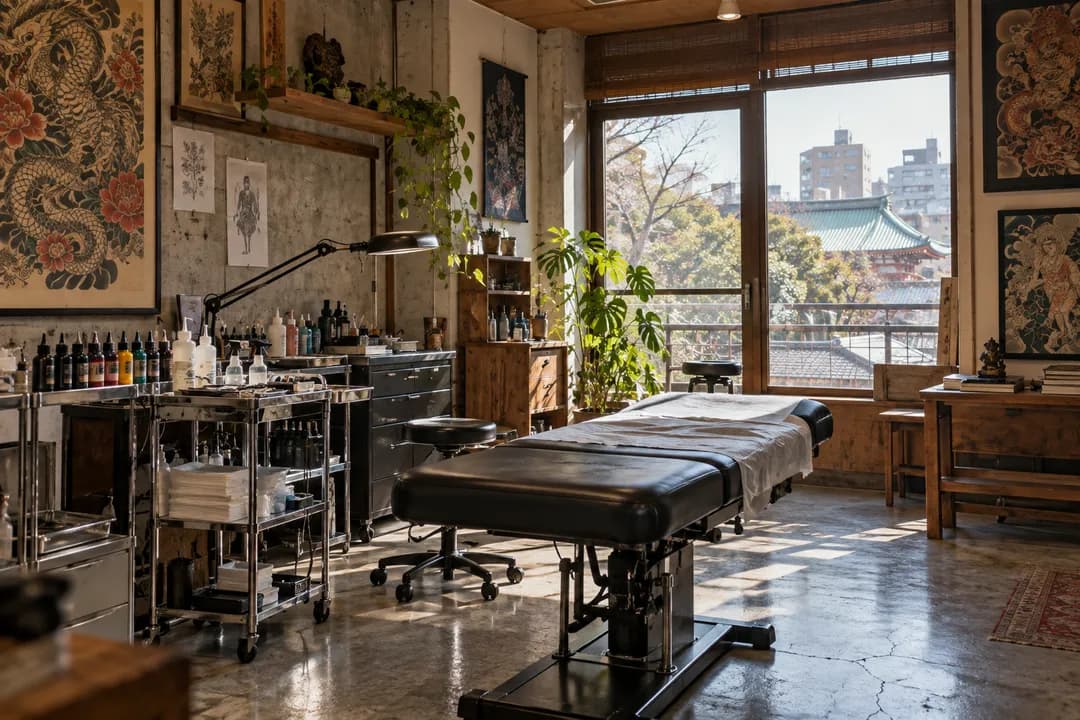
 Tattoo Parlor Near Me in Ueno: NEEDLING TATTOO Tokyo
Hidden Gems & Odd Finds
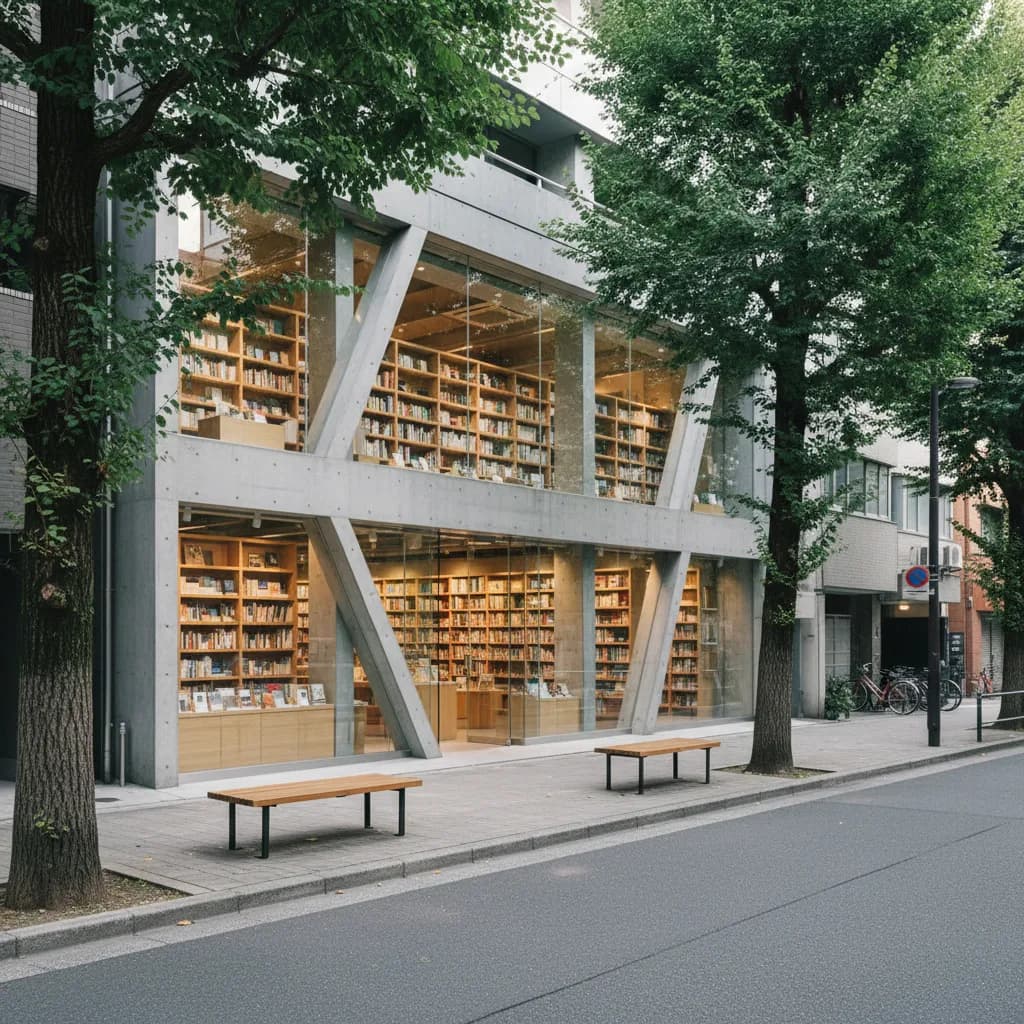
Independent Bookshop Near Me in Okushibu: SPBS Kamiyamacho Tokyo
SHIBUYA PUBLISHING & BOOKSELLERS in Kamiyamacho unites a working glass-walled publishing office with curated design titles and indie goods.
SHIBUYA PUBLISHING & BOOKSELLERS, widely known across Tokyo as SPBS, anchors the stylish Oku-Shibuya creative district from the ground floor of Terrace Kamiyama at 17-3 Kamiyamacho, Shibuya-ku, Tokyo 150-0047. Conceived in 2007 by visionary publisher Seita Fukui and opened in 2008, SPBS revolutionized retail bookselling by physically integrating a working editorial publishing house inside a dynamic retail showroom. For designers, travelers, and local culture enthusiasts searching for an independent bookshop near me beyond Shibuya's crowded commercial corridors, SPBS stands as a beacon of boundary-pushing print curation and artisanal collaboration.
The store occupies a prominent street-front position along Kamiyamacho's pedestrian thoroughfare, easily identifiable by its expansive floor-to-ceiling plate glass windows and minimalist poured-concrete floor. SPBS welcomes patrons seven days a week with generous daily operating hours from 11:00 am to 9:00 pm. The store maintains an open-door policy without fixed weekly closing days, though brief operational closures occasionally occur when the central retail floor is cleared for evening author symposiums or book launch parties.
Direct telephone communication connects to the customer service counter at 03-5465-0588 during business hours, handling inquiries regarding small-press book availability and workshop registrations. General entry to browse the retail collection and observe the active publishing desks is completely free. Visitors are invited to wander past the custom plywood book tables, explore limited-edition risograph zines, and inspect bespoke stationery items bathed in warm studio track lighting.
The Glass Publishing House Concept in Oku-Shibuya
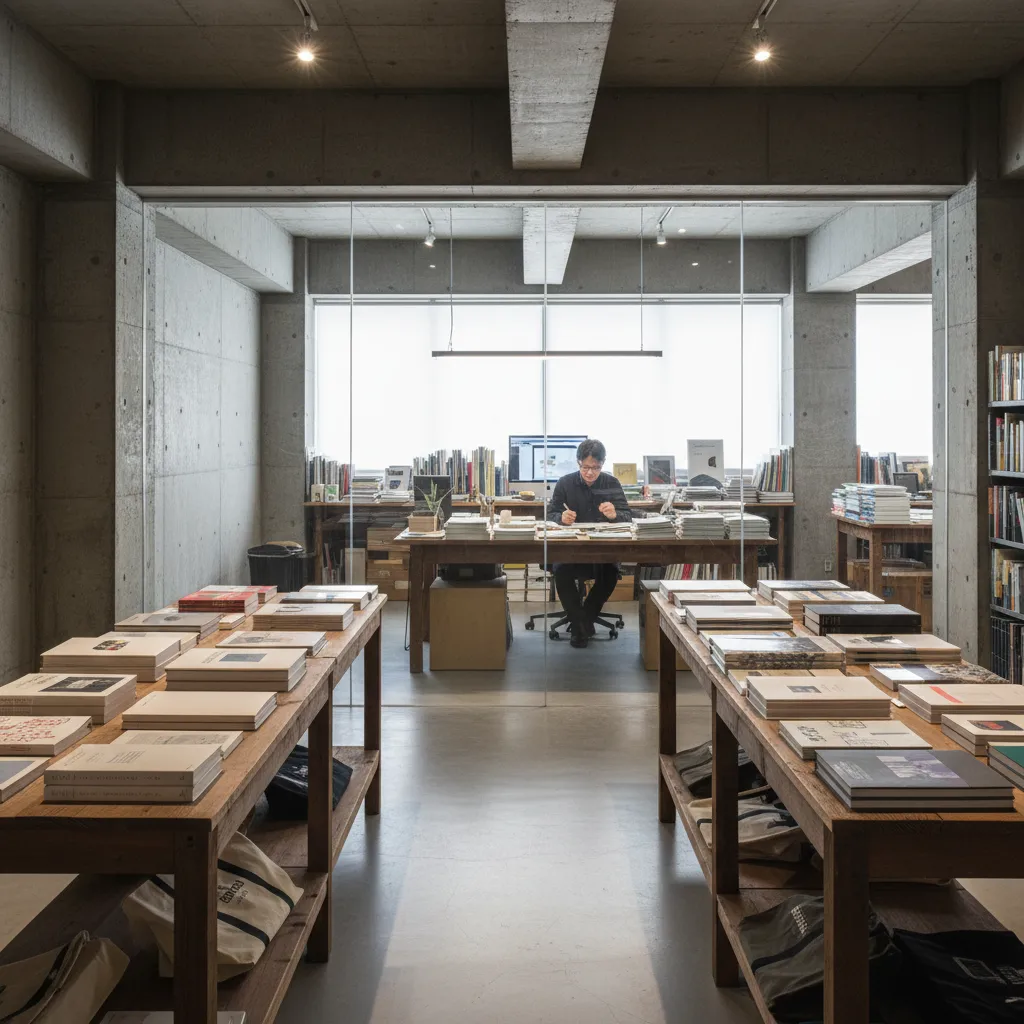
The architectural layout of SPBS embodies a radical commitment to transparency between book creation and book consumption. The long, rectangular room is bisected lengthwise by a massive floor-to-ceiling glass partition. On one side of the glass sits the retail bookshop open to the public; on the other side sits the fully operational editorial headquarters of Shibuya Publishing, where professional editors, graphic designers, and production managers research manuscripts and coordinate print runs at shared timber desks.
Fukui conceived this configuration to demystify the publishing process and foster an intimate bond between bookmakers and everyday readers. Customers browsing new fiction paperbacks can glance through the glass to observe an editor reviewing proof sheets or an illustrator sketching preliminary cover drafts. This lively interplay turns the act of buying a book into a shared cultural encounter, reminding patrons that every printed volume on the shelves began as an idea debated across an editorial table.
The interior aesthetic reflects industrial honesty and modern Japanese minimalism. Polished concrete flooring and exposed structural ceiling pipes are balanced by warm blonde birch plywood display tables, blackened steel brackets, and adjustable spotlights. Generous spacing between tables allows two readers to browse side-by-side without jostling, creating an airy, comfortable cadence that encourages prolonged afternoon visits.
Centennial Literary Selection and Global Art Monographs
SPBS organizes its retail inventory around an intriguing foundational curatorial theme: books published within the last one hundred years that remain urgently relevant to contemporary urban life. Rather than sorting titles into conventional distributor categories, the shelves are grouped intuitively by human interests, juxtaposing contemporary architecture monographs against translated social science treatises, independent poetry journals, and radical essays on environmental design.
The selection places special emphasis on independent art publishing, photography monographs, and small-batch self-published zines from independent creators across Tokyo, Seoul, London, and New York. International quarterly publications and imported visual arts journals range between 1800 yen and 3500 yen. Standard Japanese literary paperbacks begin at 850 yen, while hardbound architectural monographs typically retail between 2800 yen and 6500 yen, providing accessible choices for both casual readers and professional collectors.
Every few weeks, SPBS transforms its front display tables into curated pop-up exhibitions highlighting independent regional presses from across Japan. Booksellers frequently highlight publications from artisan publishers in Kyoto, Kanazawa, and Sendai, displaying the books alongside raw print proofs, unbound signatures, and printing plates. This dedicated commitment to independent publishing ensures that each visit presents fresh, unexpected literary discoveries that cannot be found in conventional department store chains.
Original Silk-Screened Goods and Stationery Collaborations
Beyond books, SPBS is celebrated for its distinctive collection of original lifestyle goods and custom collaborations created in partnership with emerging artists. The store's signature merchandise line includes limited-edition cotton canvas tote bags, such as the collaborative lis0p × SPBS original tote bag priced at 4000 yen, designed by the acclaimed Korean illustrator to celebrate the enduring significance of print in modern society. In-house staff also produce silk-screened cotton book bags retailing at 1800 yen.
The stationery displays feature specialized writing instruments and desktop tools curated from historic Japanese manufacturing regions. Patrons can purchase precision brass mechanical pencils from Tokyo workshops starting at 1500 yen, fountain pen ink bottles custom-blended in Kyoto for 2200 yen, and Japanese washi paper notebooks priced between 600 yen and 1400 yen. Many of these artisan products are produced exclusively for SPBS, making them sought-after gifts for discerning creative professionals.
An honest insider observation is to skip shopping during the crowded peak between 1:00 pm and 3:00 pm on Sunday afternoons, when stylish brunch crowds from nearby cafes frequently fill the aisles, making quiet reading difficult. Instead, the prime visiting hour is weekday evenings around 7:30 pm, when the surrounding Kamiyamacho street falls peaceful, soft ambient light emanates through the front glass, and the editorial office across the partition is winding down for the night.
Visiting Practicalities and Kamiyamacho Stroll Guide
Navigating to SPBS is an enjoyable urban walk from several transport hubs. From Yoyogi-Koen Station on the Tokyo Metro Chiyoda Line or Yoyogi-Hachiman Station on the Odakyu Line, exit southward and walk approximately eight minutes down the quiet residential slope into Kamiyamacho. Alternatively, travelers walking from Shibuya Station can take the Hachiko Exit and follow the bustling pedestrian shopping streets northward through Udagawacho into the calm neighborhood of Oku-Shibuya, arriving at SPBS within twelve minutes.
The surrounding Kamiyamacho neighborhood is celebrated as one of Tokyo's most vibrant artisanal enclaves. Immediately neighboring SPBS are independent specialty coffee roasters, traditional Norwegian bakery cafes, and boutique wine shops. After concluding your visit, walk five minutes north into Yoyogi Park to read on the wide grass lawns beneath the zelkova trees, or explore the quiet residential backstreets of Shoto to admire modernist residential architecture.
Payment options at SPBS are comprehensive and modern, accepting Visa, Mastercard, American Express, Japanese JCB cards, and electronic transportation cards including Suica and Pasmo alongside Japanese QR code services such as PayPay. If SPBS is temporarily occupied by an evening ticketed literary workshop, a wonderful nearby alternative is the independent art bookshop POST in Ebisu, located a short bus ride southward, which rotates its entire collection by international art publisher.
By blurring the traditional boundary between author, publisher, and consumer, SHIBUYA PUBLISHING & BOOKSELLERS continues to redefine what an independent bookstore can accomplish in the twenty-first century. SPBS serves as an essential gathering place for creative minds, demonstrating that print culture thrives with extraordinary vitality when nurtured by transparent craftsmanship and boundless curiosity.
Ask Karpo for more information.
Keep reading
- Tattoo Parlor Near Me in Ueno: NEEDLING TATTOO Tokyo
 Tattoo Parlor Near Me in Shibuya: GRAY TATTOO on Dogenzaka
 Tattoo Parlor Near Me in Harajuku: INSCRIBE Tattoo Studio