 Soap Making Workshop Near Me in Edogawa: Eight Wakuwaku
Weekend Plans
Botanical Garden Near Me in Koto: Yumenoshima Tropical Greenhouse Dome
Discover Yumenoshima Tropical Greenhouse Dome in Koto, Tokyo's striking geodesic botanical conservatory powered by clean municipal steam heat, featuring Ogasawara island flora and tropical waterfalls.
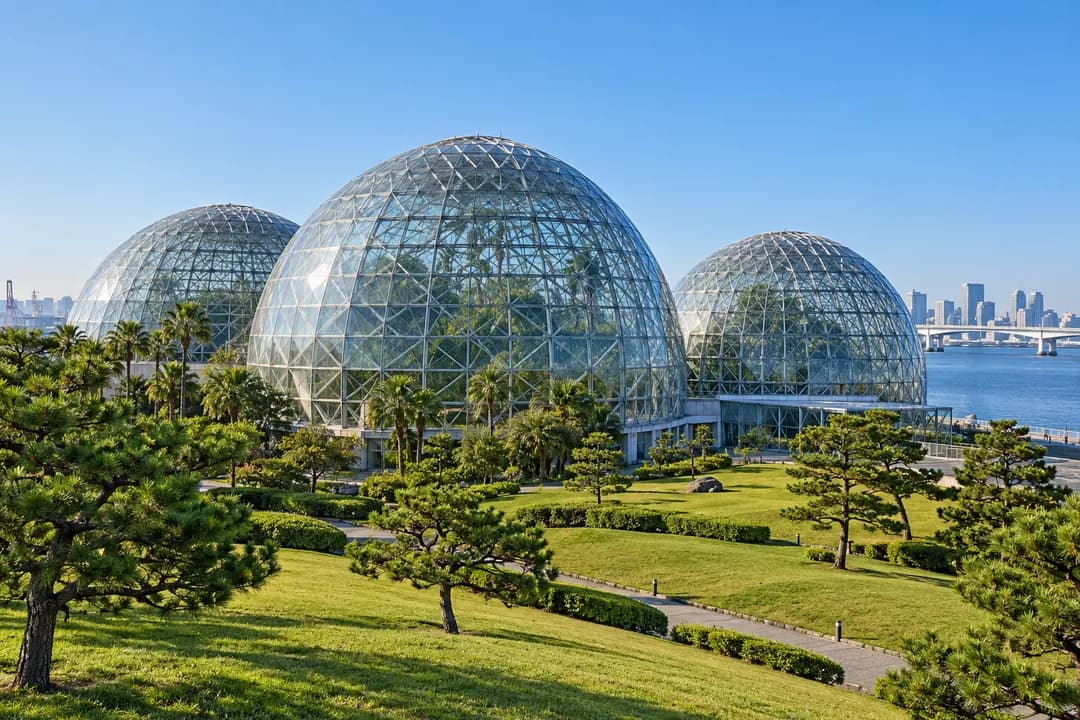
Rising gracefully above the coastal waterfront of Tokyo Bay, the Yumenoshima Tropical Greenhouse Dome at 2-1-2 Yumenoshima, Koto City, Tokyo is one of the capital's most striking architectural and ecological wonders. Conceived as a landmark environmental recovery project on artificial land that previously served as a municipal waste reclamation landfill, the botanical center opened in 1988 as a tribute to urban environmental regeneration. Today, its three soaring interconnected geodesic glass domes shelter more than one thousand species of exotic tropical and subtropical flora in an eternal summer climate. For anyone looking for an inspiring, weather-proof botanical garden near me in Tokyo, Yumenoshima offers an extraordinary indoor journey into lush equatorial rainforests and isolated oceanic island ecosystems.
From Industrial Reclaimed Land to Tropical Glass Sanctuary in 1988
The transformation of Yumenoshima (meaning 'Dream Island' in Japanese) represents a triumphant chapter in Tokyo's environmental history. Throughout the rapid economic growth of the late 1950s and 1960s, the artificial island served as the capital's primary landfill site, processing millions of tons of domestic refuse. In the late 1970s, the Tokyo Metropolitan Government launched an ambitious ecological reclamation initiative to convert the landfill into an expansive green public park. Construction on the tropical botanical domes commenced in 1985, creating a state-of-the-art biological conservatory that stands today as a living symbol of urban environmental renewal and biodiversity conservation.
What makes Yumenoshima uniquely sustainable is its ingenious heating mechanism. Maintaining an authentic tropical jungle climate year-round in temperate Tokyo requires immense thermal energy. Instead of burning fossil fuels, the entire botanical dome complex is heated using surplus high-temperature waste steam generated by the incineration of municipal refuse at the neighboring Shin-Koto Waste-to-Energy Plant. The steam is piped directly beneath the glass foundations, warming subterranean heating ducts and overhead misting systems that keep ambient temperatures above fifteen degrees Celsius even during freezing January snowfalls, all with zero additional greenhouse gas emissions.
Eco-Friendly Geodesic Domes Heated by Municipal Steam Energy
The botanical exhibition is ingeniously choreographed across three interconnected geodesic domes designated as Dome A, Dome B, and Dome C, each rising up to twenty-eight meters in height. Visitors step first into Dome A, which recreates a dense tropical rainforest. A wooden elevated footbridge guides guests past towering traveler's palms, weeping fig trees, and climbing philodendrons, culminating in a dramatic indoor rock waterfall that cascades into a clear pool teeming with freshwater flora. The rhythmic sound of tumbling water and humid air immediately transports visitors thousands of miles away from metropolitan Tokyo.
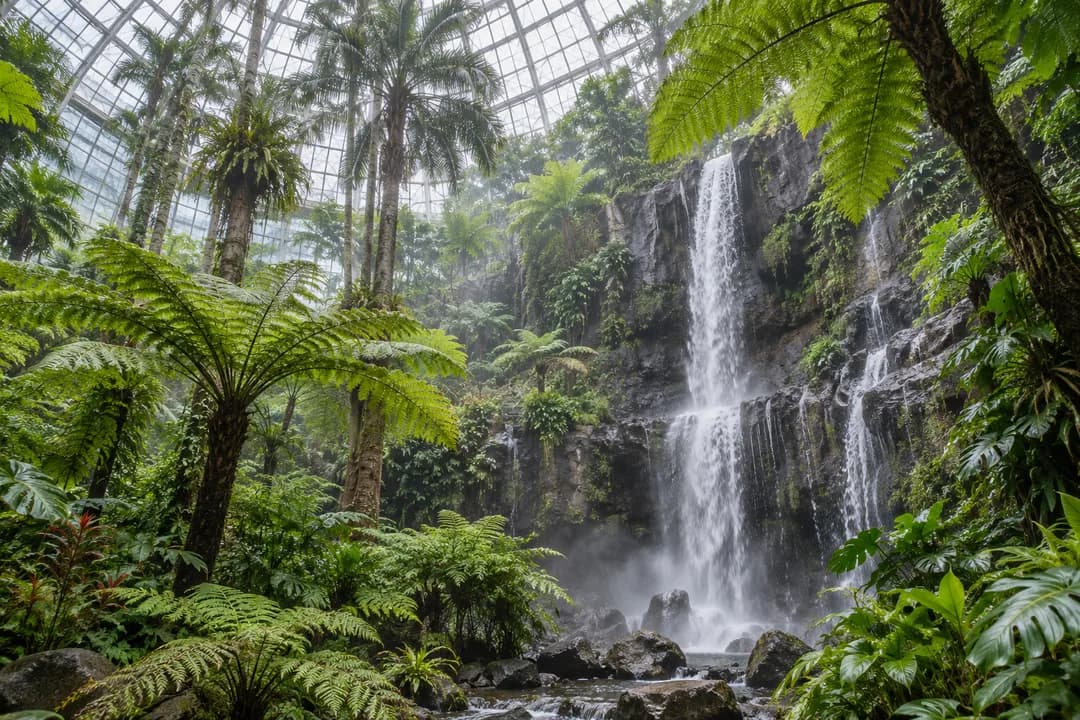
Transitioning into Dome B, the scenery shifts to a tropical village landscape and orchard, where banana trees, papaya groves, and breadfruit plants flourish alongside a traditional thatched roof open-air hut. Finally, Dome C houses the botanical garden's most scientifically vital collection: the endemic flora of the Ogasawara (Bonin) Islands. Situated approximately one thousand kilometers south of Tokyo in the Pacific Ocean, the Ogasawara archipelago is often described as the 'Galapagos of the East' due to its high proportion of unique species. In Dome C, visitors can observe rare Bonin hibiscus (Hibiscus glaber), endemic Melastoma tetramerum, and giant tree ferns that exist nowhere else on the planet.
Towering Ferns, Indoor Waterfalls, and Rare Ogasawara Endemic Flora
Visiting Yumenoshima Tropical Greenhouse Dome is exceptionally budget-friendly. Standard adult admission is priced at just ¥250, seniors aged 65 and over pay ¥120, junior high school students pay ¥100, while elementary school children and toddlers enter free of charge. Junior high school students who reside in Tokyo or attend Tokyo schools also enjoy free entry upon showing their school pass. The greenhouse is open from 9:30 am to 5:00 pm, with final admissions accepted until 4:00 pm. The facility closes every Monday (or the next business day if Monday is a national holiday) and during the year-end holiday period from December 29 to January 3. The greenhouse administrative information desk can be reached for visitor inquiries at +81 3-3522-0281.
The indoor facility provides outstanding visitor comfort, featuring coin-operated luggage lockers, accessible restrooms with infant facilities, and a tranquil greenhouse cafe where guests can sip tropical guava juice and iced tea while gazing into the lush canopy of Dome B. Photography is enthusiastically welcomed, though tripods and commercial filming equipment require advance administrative permits. Because the interior maintains an authentic tropical humidity of approximately seventy to eighty percent, wearing layered clothing that can be easily removed inside is highly recommended during the chilly autumn and winter months.
Admission Lockers, Visiting Etiquette, and Rainy Day Tropical Warmth
Rainy days offer one of the finest opportunities to visit Yumenoshima, as the entire conservatory experience is fully enclosed under weather-proof glass domes. The gentle patter of raindrops on the exterior glass skin combined with warm tropical scents creates a deeply relaxing, therapeutic atmosphere. Wheelchairs and strollers can comfortably navigate the primary pathways via well-graded ramps, and elevator access connects the upper gallery level to the main conservatory floor.
Access to Yumenoshima Tropical Greenhouse Dome is quick and convenient via public rail. The nearest station is Shin-Kiba Station, an important rail junction served by the JR Keiyo Line, Tokyo Metro Yurakucho Line, and the Tokyo Waterfront Area Rapid Transit (Rinkai Line). From Shin-Kiba Station, exiting through the North Exit and taking a pleasant, signposted walk through Yumenoshima Park brings visitors to the greenhouse entrance in approximately thirteen minutes. From Tokyo Station, the rapid JR Keiyo Line reaches Shin-Kiba in just nine minutes.
Strolling Through Yumenoshima Park Along Tokyo Bay Waterfront Trails
For visitors driving private vehicles, Yumenoshima Park maintains two large public surface parking facilities (North Parking Lot and South Parking Lot). Parking rates are affordable, charging ¥300 for the initial two hours and ¥100 for each additional hour, providing ample space for weekend travelers. Dedicated bicycle parking racks are also available immediately adjacent to the main ticketing plaza for local cyclists exploring Tokyo Bay's coastal trails.
After concluding your botanical tour, take time to explore the broader Yumenoshima Park, which features scenic waterfront walking promenades, sprawling eucalyptus groves, and the Tokyo Metropolitan Fifth Fukuryu Maru Exhibition Hall, which preserves the historic 1954 wooden fishing vessel. Across the coastal channel, visitors can gaze across the sparkling waters of Tokyo Bay toward Odaiba and Toyosu, capping off a remarkable afternoon that seamlessly blends botanical discovery, modern architectural design, and inspiring urban environmental renewal.
Ask Karpo for more information.
Keep reading
- Soap Making Workshop Near Me in Edogawa: Eight Wakuwaku
 Soap Making Workshop Near Me in Nakameguro: Luxum
 Soap Making Workshop Near Me in Ikebukuro: And S