 Soap Making Workshop Near Me in Edogawa: Eight Wakuwaku
Weekend Plans
Botanical Garden Near Me in Bunkyo: The Historic Trails of Koishikawa
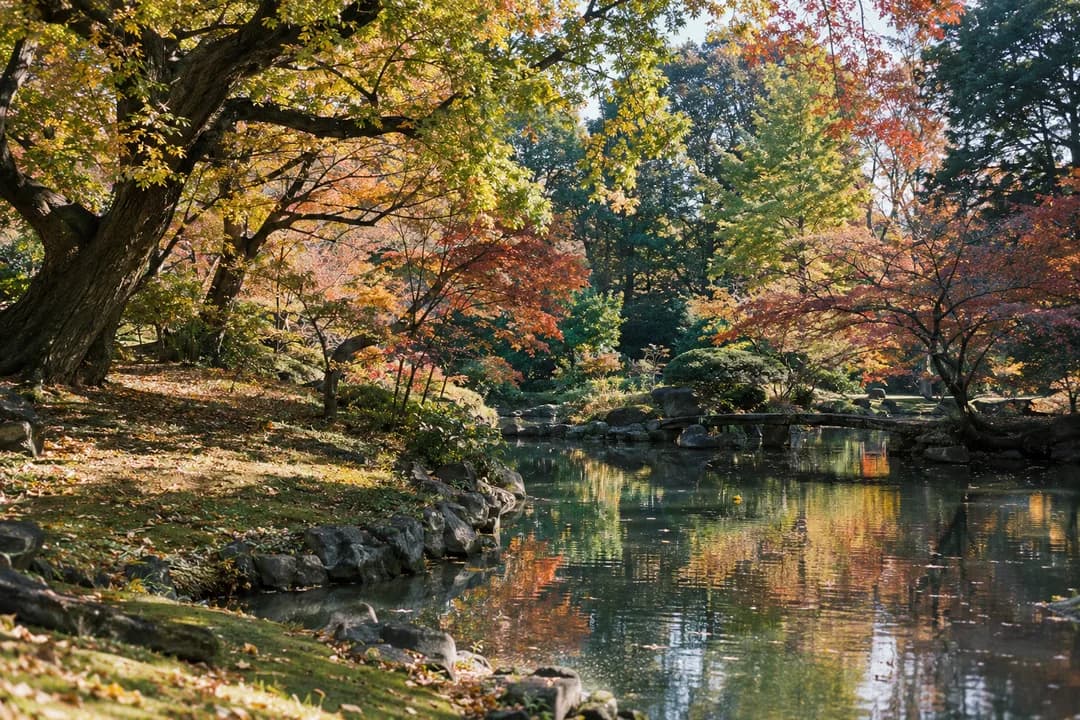
Explore Koishikawa Botanical Gardens in Bunkyo, Tokyo's historic research sanctuary founded in 1684, featuring ancient medicinal plots, Newton's apple tree, and heritage Japanese landscape ponds.
Nestled in the quiet residential quarters of Bunkyo City, Koishikawa Botanical Gardens stands as an unmatched historic botanical garden near me for travelers seeking profound scientific heritage in Tokyo. Located at 3-7-1 Hakusan, Bunkyo City, Tokyo 112-0001, this sixteen-hectare research sanctuary is officially operated by the Graduate School of Science at the University of Tokyo. Originally established in 1684 by the fifth Tokugawa Shogun, Tsunayoshi, as the Koishikawa Medicinal Herb Garden (Koishikawa Oyakuen), it is the oldest botanical garden in Japan and one of the oldest continuously operating scientific gardens anywhere in East Asia. Walking through its rustic timber gate transports visitors away from the high-rise bustle of central Tokyo into a deeply peaceful wooded realm populated by towering heritage trees and rare medicinal cultivars.
A Tokugawa Shogunate Herbal Garden Established in 1684
The history of Koishikawa is intimately woven into the scientific modernization of Japan during both the Edo and Meiji periods. In the early eighteenth century, under the eighth Shogun Tokugawa Yoshimune, the grounds expanded to include the legendary Koishikawa Sanjo, a free charitable dispensary established by town physician Ogawa Shosen to provide medical care and herbal remedies for impoverished citizens. Following the Meiji Restoration of 1868, the garden was placed under the administration of the newly founded University of Tokyo in 1877, quickly evolving into the primary center for pioneering botanical research in Japan. It was here that legendary botanists like Jinzo Matsumura and Tomitaro Makino conducted groundbreaking taxonomic studies and identified hundreds of new plant species native to the Japanese archipelago.
Unlike manicured public stroll parks like Shinjuku Gyoen, Koishikawa has deliberately preserved its rugged academic character as a functioning scientific research arboretum. Paved concrete walkways are rare; instead, broad gravel lanes and earthen woodland trails meander under towering deciduous canopies that feel more like a secluded mountain forest than central Tokyo. The garden curates over four thousand living plant species, including ancient cycads, endangered endemic wildflowers from the Ogasawara Islands, and extensive research beds dedicated to systematic angiosperm taxonomy.
Historic Scientific Specimens from Mendel's Grapevine to Newton's Apple Tree
A fascinating highlight for visiting science enthusiasts is Koishikawa's collection of historic clonal trees directly connected to landmark scientific discoveries in world history. Near the central research office stands a vigorous apple tree grafted directly from the famous tree in Woolsthorpe Manor, England, which inspired Sir Isaac Newton's formulation of the law of universal gravitation in 1666. Presented to the University of Tokyo by the National Physical Laboratory of the United Kingdom, this living descendant produces small green apples each autumn, symbolizing the enduring friendship between British and Japanese scientific institutions.
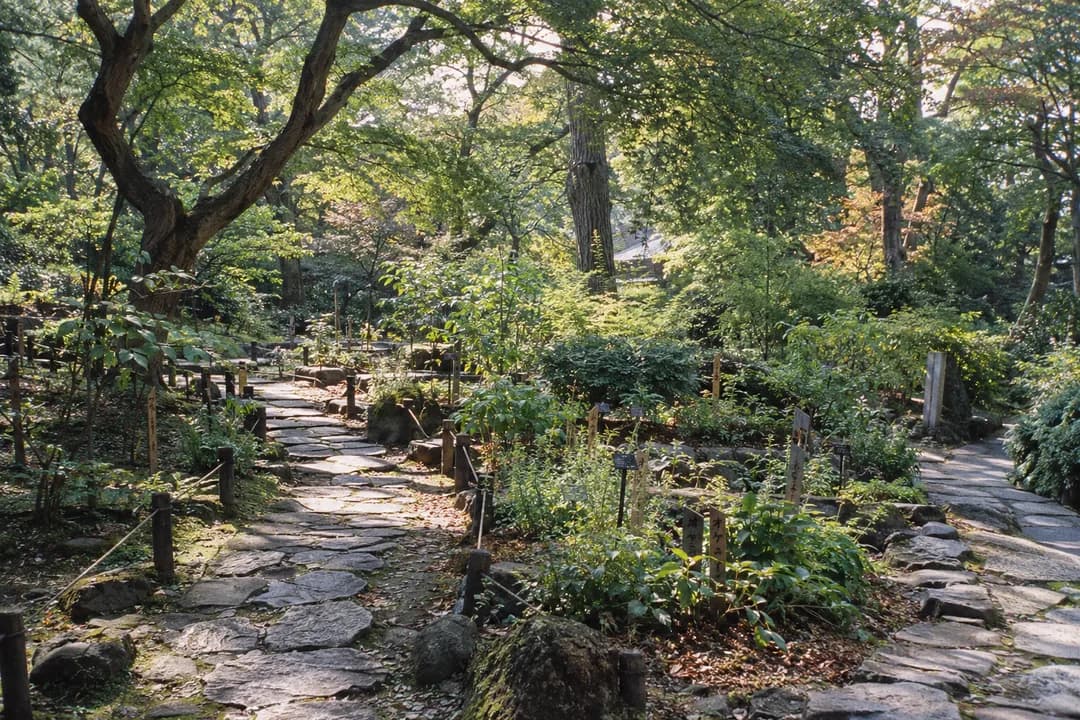
Just a few paces away grows a thriving grapevine grafted from the original common grape vine (Vitis vinifera) cultivated by Gregor Mendel in the monastery gardens of Brno during his pioneering experiments on genetic inheritance. The garden also preserves historical ginkgo trees where Japanese botanist Sakugoro Hirase made the historic 1896 discovery of motile flagellated sperm cells in gymnosperms, proving an evolutionary link between primitive ferns and seed-bearing plants. Descriptive timber markers in both Japanese and English chronicle the exact scientific breakthroughs achieved beneath these historic branches.
Seasonal Camellias, Towering Metasequoia, and the Classic Japanese Pond
As visitors wander deeper into the sixteen-hectare estate, the landscape shifts from academic research plots to breathtaking traditional garden vistas. The southern depression cradles a classic Edo-period Japanese landscape pond surrounded by weeping willows, irises, and massive stone lanterns that were originally installed when the land was part of the feudal estate of the Hakusan branch of the Tokugawa clan. In late winter and early spring, the camellia forest bursts into rich crimson and blush pink blossoms, showcasing over a hundred traditional cultivars that have bloomed here since the eighteenth century.
Further north, a stately grove of towering Metasequoia glyptostroboides (dawn redwoods) creates an awe-inspiring cathedral of feathery green needles that turn fiery bronze in late November. Thought to have been extinct for millions of years, living dawn redwoods were rediscovered in Hubei province in the 1940s, and Koishikawa was among the first botanical institutions in Asia to successfully propagate and cultivate seedlings sent by American paleobotanists after World War II. The quiet rustle of these living fossil trees against the autumn sky remains one of Tokyo's most enchanting hidden seasonal spectacles.
Ticket Window Etiquette and Shaded Gravel Path Strategies
Planning a rewarding excursion to Koishikawa Botanical Gardens requires noting its academic ticketing rules and seasonal operating schedules. Admission tickets cost ¥500 for adults (high school students and older) and ¥150 for elementary and junior high school students, with tickets purchased directly at the small manned ticket window beside the main gate. The garden opens daily from 9:00 am until 4:30 pm, with last admission strictly enforced at 4:00 pm. The grounds are closed every Monday (or the following Tuesday if Monday is a national holiday) and during the New Year holiday period from December 29 through January 3.
Because Koishikawa maintains natural unpaved earthen paths and rustic gravel tracks, wearing sturdy, comfortable walking shoes is essential for an enjoyable visit. The garden does not permit athletic sports, bicycles, pets, or alcoholic beverages, preserving a tranquil contemplative atmosphere favored by nature photographers, birdwatchers, and sketch artists. The best time to visit is on a crisp weekday morning around 9:30 am when the sun filters softly through the canopy and the trails are virtually deserted.
Walking to the Old Tokyo Medical School Building and Hakusan Neighborhood
Reaching the property is convenient via Tokyo's extensive subway system. The garden gate at 3-7-1 Hakusan is approximately a ten-minute walk from Hakusan Station on the Toei Mita Line, or a fifteen-minute stroll from Myogadani Station on the Tokyo Metro Marunouchi Line. Walking from Hakusan Station takes you through charming residential lanes lined with traditional wooden townhouses, neighborhood soba shops, and historic neighborhood shrines that evoke the authentic atmosphere of historic Tokyo.
Before concluding your visit, head toward the southeastern corner of the grounds to view the striking two-story wooden facade of the former Tokyo Medical School building. Constructed in 1876, this elegant red-and-white Western-style structure was relocated to the gardens in 1969 and stands as the oldest surviving school building from the University of Tokyo, now housing specialized research archives. Afterward, stroll through the surrounding Hakusan neighborhood to enjoy a bowl of handmade buckwheat noodles or hot matcha tea at a local tearoom. For visiting inquiries and seasonal botanical schedules, guests can contact the administrative office at 03-3814-0138 during regular weekday opening hours.
Ask Karpo for more information.
Keep reading
- Soap Making Workshop Near Me in Edogawa: Eight Wakuwaku
 Soap Making Workshop Near Me in Nakameguro: Luxum
 Soap Making Workshop Near Me in Ikebukuro: And S