 Soap Making Workshop Near Me in Edogawa: Eight Wakuwaku
Weekend Plans
Botanical Garden Near Me in Chofu: Jindai Botanical Gardens Heritage
Explore Jindai Botanical Gardens in Chofu, Tokyo's premier 42-hectare metropolitan floral sanctuary featuring award-winning sunken rose parterres, tropical greenhouses, and ancient Jindai-ji Temple.
Spanning approximately forty-two sweeping hectares in the green western outskirts of Tokyo, Jindai Botanical Gardens at 5-31-10 Jindaiji Motomachi, Chofu, Tokyo is the metropolis's sole designated metropolitan botanical park. Established originally as a municipal nursery in the pre-war era to cultivate street trees for a rapidly modernizing capital, the grounds were transformed into a public botanical research park in 1961. Today, the park shelters over one hundred thousand trees, shrubs, and flowering perennials distributed across four thousand eight hundred botanical species. For travelers and nature lovers seeking a magnificent, comprehensive botanical garden near me in Tokyo, Jindai provides an expansive outdoor retreat that blends world-class European floral architecture with serene Japanese horticultural traditions.
The Postwar Evolution of Tokyo's Premier Metropolitan Botanical Haven
The historical narrative of Jindai Botanical Gardens reflects Tokyo's post-war green reconstruction. After surviving World War II as an agricultural nursery, the Tokyo Metropolitan Government recognized the urgent necessity for a permanent scientific repository to preserve native Musashino flora and showcase international horticultural advancements. The site was formally christened Jindai Greenery Park before receiving its prestigious botanical garden designation in October 1961. Over the succeeding decades, dedicated curators assembled benchmark germplasm collections of native camellias, flowering plums, azaleas, and heritage cherries, establishing the gardens as an essential scientific institution for Japanese plant conservation.
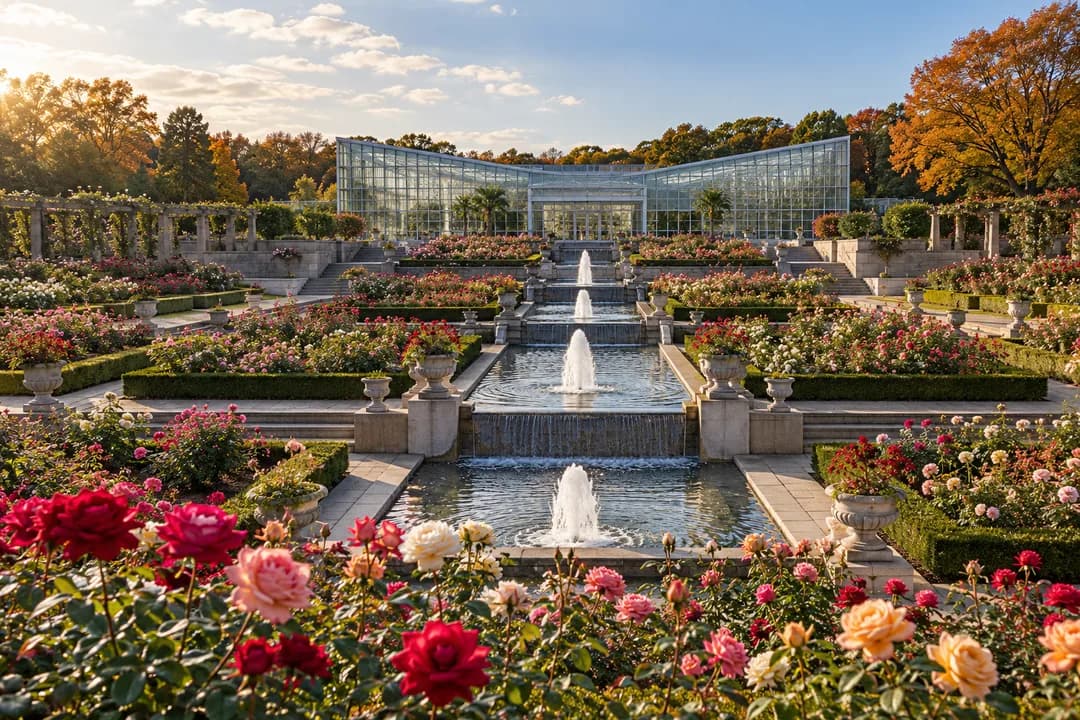
The crowning jewel of Jindai is its magnificent sunken Rose Garden, an internationally celebrated formal parterre that was honored in 2009 with the World Federation of Rose Societies' prestigious Award of Garden Excellence. Arranged symmetrically around central fountains and classical stone terraces, the sunken garden showcases over four hundred distinct cultivars and more than five thousand two hundred rose bushes. In spring from late May through June, and again during the brilliant autumn flush throughout October and early November, the air fills with rich fragrance as heirloom European gallicas, modern hybrid teas, and floribundas burst into blossom. Elevated viewing terraces allow photographers to capture sweeping vistas of symmetrical flowerbeds with the grand glasshouse rising in the background.
Award-Winning Sunken Rose Parterres and Autumn Floral Spectaculars
Beyond the sunken rose parterre, Jindai features thirty distinct thematic plant zones organized by botanical families. Highlights include the Camellia and Sasanqua Garden, preserving over six hundred historic Edo-period camellia cultivars, and the sprawling Plum Grove, which explodes into soft pink and white blossoms in February. During late spring, the Azalea Garden presents more than twelve thousand azalea shrubs bursting in brilliant magenta and scarlet, drawing admirers from across the Kanto region. A dedicated native plant preserve reconstructs the ancient marshy wetlands and deciduous oak forests of the Musashino plateau as they existed centuries ago.
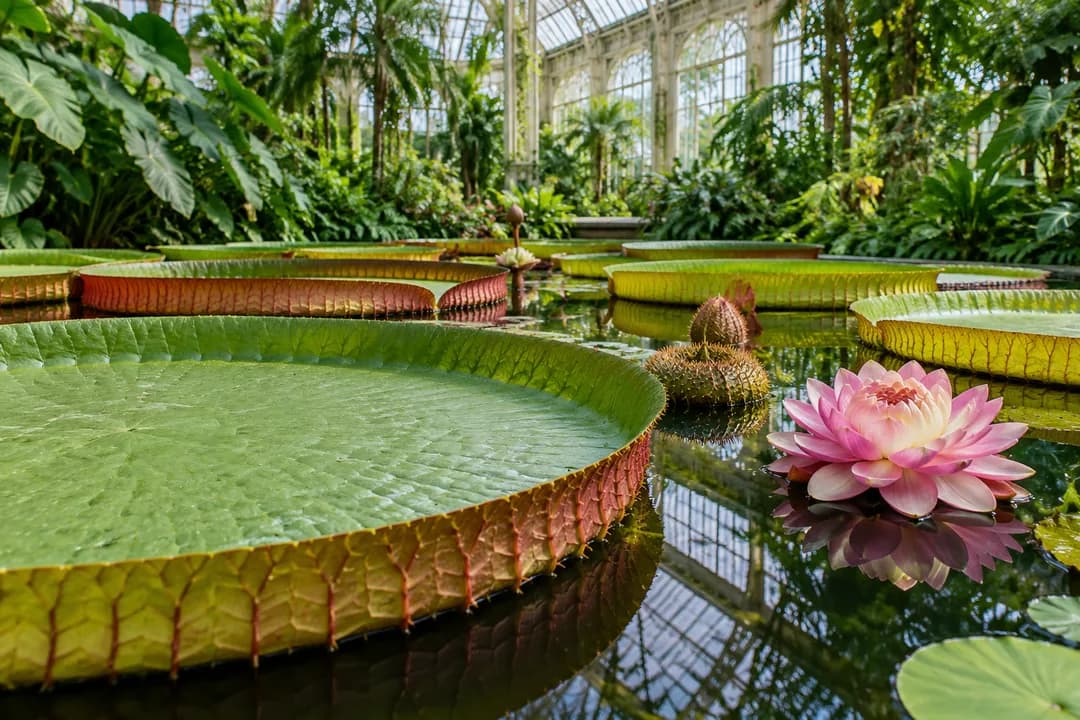
Dominating the northern edge of the rose parterre is the Grand Tropical Greenhouse, originally opened in 1984 and comprehensively modernised in 2016. Enclosed beneath sweeping steel and glass arches, this climate-controlled pavilion is divided into six specialized environments, including tropical rainforest, orchidarium, begonia showcase, and succulent arid zones. The centerpiece is the heated tropical aquatic pool where giant Victoria amazonica water lilies display enormous floating pads capable of supporting small wildlife. Nearby, cascading Vanda orchids and rare South American epiphytes flourish alongside towering papyrus reeds, providing year-round botanical color regardless of the winter cold outside.
Tropical Amazon Water Lilies and Orchids Under Grand Glasshouse Arches
Visiting Jindai Botanical Gardens is remarkably affordable: standard adult admission costs ¥500, seniors aged 65 and over pay ¥250, junior high school students pay ¥200, while elementary school students and preschoolers enter free of charge. Tokyo residents enrolled in junior high school also enjoy free admission upon presenting their student identification. Annual passes are available for ¥2,500, offering unlimited entry for frequent visitors. The gardens open from 9:30 am to 5:00 pm, with last entry admitted at 4:00 pm; the facility closes every Monday (or the following Tuesday if Monday is a national holiday) and is closed for the New Year holidays from December 29 through January 1. General visitor inquiries and bloom updates can be confirmed directly with the garden office at +81 42-483-2304.
Because Jindai encompasses extensive walking grounds, comfortable athletic footwear is strongly recommended for exploring the unpaved earthen trails and crushed gravel alleys. While the main promenades are barrier-free and accessible for wheelchairs and prams, several scenic trails in the aquatic garden and native forest contain stepping stones and gentle dirt inclines. Bicycles, roller skates, drones, and pets are prohibited inside the perimeter to preserve botanical specimens and maintain a peaceful walking atmosphere. Restrooms, baby-changing stations, and beverage vending machines are thoughtfully distributed throughout the main central lawn and greenhouse pavilion.
Ticketing Procedures, Peak Morning Hours, and Gravel Garden Etiquette
Arriving in the early morning around 9:30 am allows visitors to experience the sunken rose garden and tropical greenhouse before the midday crowds arrive, while morning light provides the finest illumination for botanical photography. During peak autumn rose season in October, the park occasionally hosts evening illumination events where classical music concerts and subtle floodlights showcase the blossoms under the night sky. In the event of light rain, the expansive greenhouse pavilion, exhibition gallery, and garden shop provide pleasant, fully covered indoor shelters.
Reaching Jindai Botanical Gardens by public transit is straightforward from central Tokyo via the Keio Line or JR Chuo Line combined with frequent local buses. From Shinjuku Station, take the Keio Line express train to Chofu Station (approximately fifteen minutes), then board the Odakyu Bus or Keio Bus from the North Exit bus terminal bound for Kichijoji or Mitaka, alighting directly at the Jindaiji Shokubutsuen-mae stop. Alternatively, take the JR Chuo Line to Mitaka or Kichijoji Station, where regular municipal buses transport passengers southward directly to the garden gates in about twenty minutes.
Historic Jindai-ji Temple Grounds and Soba Noodle Taverns Nearby
For motorists, a large municipal toll car park is situated directly adjacent to the garden's main north entrance along Chofu municipal road, with hourly rates of ¥300 for the first hour and ¥100 for each subsequent twenty minutes. Parking fills up quickly during the weekend rose festivals in May and October, making public transit the preferred option for weekend excursions.
A visit to Jindai Botanical Gardens is wonderfully paired with exploring the adjacent Jindai-ji Temple, Tokyo's second-oldest Buddhist temple founded in 733 AD. A dedicated south gate allows ticket holders to exit into the temple's charming preserved approach street lined with over twenty traditional buckwheat soba noodle restaurants, green tea teahouses, and folk pottery shops. Sitting beside a babbling clear spring to enjoy freshly kneaded Jindaiji soba noodles and sweet dango dumplings under ancient maple trees provides an authentic and deeply satisfying cultural finale to an inspiring Tokyo botanical journey.
Ask Karpo for more information.
Keep reading
- Soap Making Workshop Near Me in Edogawa: Eight Wakuwaku
 Soap Making Workshop Near Me in Nakameguro: Luxum
 Soap Making Workshop Near Me in Ikebukuro: And S