 Soap Making Workshop Near Me in Edogawa: Eight Wakuwaku
Weekend Plans
Botanical Garden Near Me in Shirokanedai: Institute for Nature Study
Explore the Institute for Nature Study in Shirokanedai, Tokyo's pristine 20-hectare national nature sanctuary preserving ancient Musashino primeval forests, marshland ponds, and feudal clan pines.
Concealed behind high green walls in one of Tokyo's most upscale central districts, the Institute for Nature Study at 5-21-5 Shirokanedai, Minato City, Tokyo is a breathtaking twenty-hectare wilderness enclave operating under the auspices of the National Museum of Nature and Science. Unlike manicured municipal parks designed for public picnics, this living biological monument preserves a rare fragment of the ancient, untouched Musashino primeval forest exactly as it flourished centuries ago before urban sprawl transformed the Kanto plain. Walking through its heavy cedar gate feels like stepping backward into feudal history, where ancient evergreen oaks, marshland wetlands, and soaring pines shelter native wildlife. For city dwellers seeking an authentic, tranquil botanical garden near me in Tokyo, this scientific sanctuary provides an extraordinary masterclass in wild ecology.
Preserving Ancient Musashino Primeval Woodland Since the Edo Era
The unique historical legacy of the Institute for Nature Study is the primary reason this forest survived modern urbanization intact. During the medieval Muromachi period in the fifteenth century, a local warlord established a fortified residence on this site, remnants of whose earthwork embankments remain visible today. In the Edo period, the estate served as the suburban villa of the Matsudaira clan (Lords of Takamatsu), who strictly guarded the woodland from logging. Following the Meiji Restoration of 1868, the land fell under the administration of the Imperial Japanese Army and Navy as an ammunition and gunpowder storage depot, continuing its complete isolation from commercial development.
In 1949, acknowledging its priceless scientific and ecological heritage, the Japanese government designated the entire property as a National Natural Monument and Historic Site. Formal biological administration was transferred to the National Museum of Nature and Science, and the reserve was cautiously opened to the public for scientific education in 1953. Today, botanists and ecologists treat the twenty hectares as an invaluable living laboratory, tracking long-term biological succession, plant phenology, and natural woodland regeneration within the heart of a twenty-first-century megalopolis.
Feudal Daimyo Pines, Shaded Oak Groves, and Natural Marshland Ponds
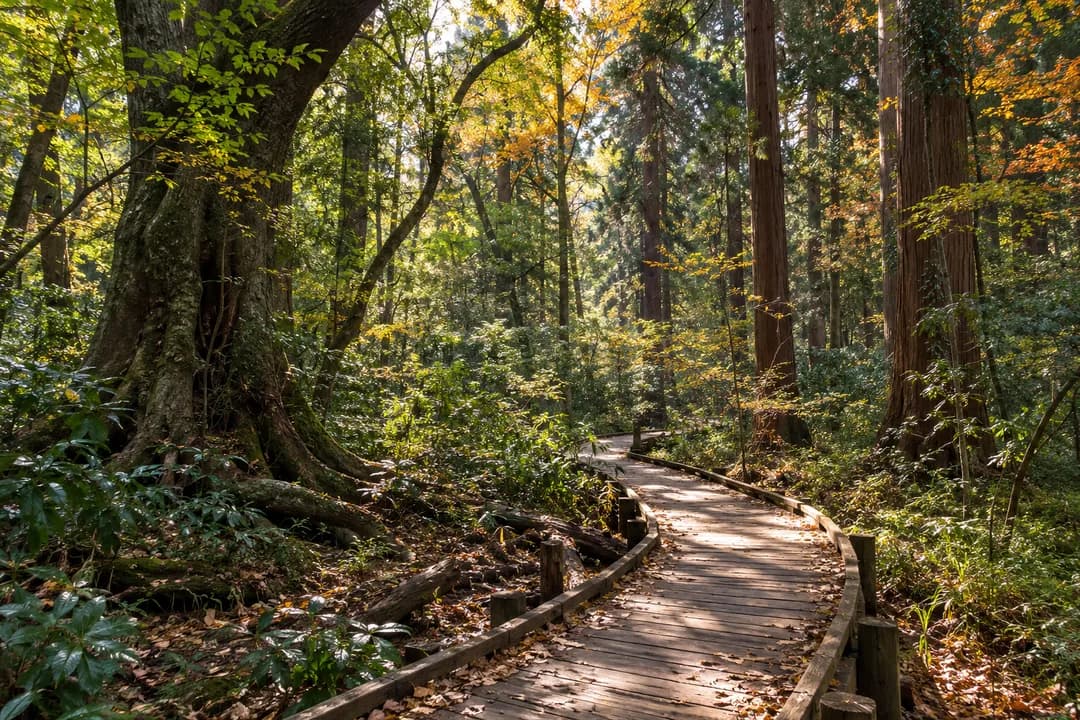
The reserve encompasses three distinct ecological zones that showcase indigenous botanical diversity: evergreen broad-leaved forest, deciduous broad-leaved forest, and freshwater wetlands. As visitors follow the rustic timber boardwalks, they walk beneath towering Castanopsis sieboldii chinquapins, Machilus thunbergii bay oaks, and multi-century-old Japanese black pines. Several historic pines, known affectionately as the 'Story of the Pines', date directly back to the Matsudaira clan's seventeenth-century estate landscaping. Beneath the dense canopy, wild forest perennials including Solomon's seal, native Arisaema jack-in-the-pulpit, and Asian wild ginger carpet the damp, nutrient-rich woodland soil.
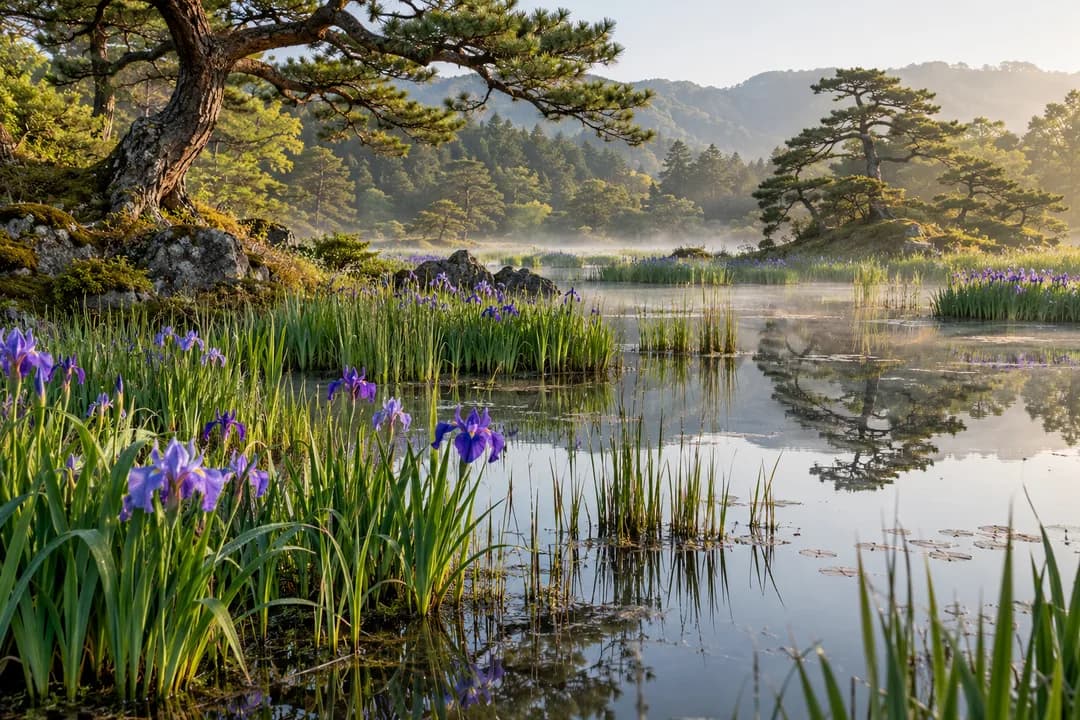
Water courses naturally through the lower valley, forming the Water Botanical Garden and Mizuki Marshland. Fed by natural subterranean springs emerging from the Musashino gravel layer, these pristine wetlands host thriving populations of native Japanese irises (Iris ensata), yellow water lilies, cattails, and marsh marigolds. Wooden observation platforms positioned beside the reed-lined ponds allow visitors to observe wild kingfishers diving for small fish, dragonflies skimming over the surface, and mandarin ducks resting among overhanging hazel branches, offering peaceful contemplation that feels entirely disconnected from the surrounding city.
Botanical Conservation Protocols and the Strict Visitor Capacity Rule
To safeguard fragile botanical specimens and prevent soil compaction around tree root systems, the Institute enforces a strict visitor capacity cap: no more than three hundred visitors are permitted inside the reserve at any single time. When this threshold is reached, newcomers must wait patiently at the entry gate until departing guests exit, ensuring that the forest remains uncrowded, serene, and undisturbed. Admission is exceptionally reasonable: general adult and university student tickets cost ¥320, while seniors aged 65 and over and young people of high school age and under enjoy completely free admission (¥0). General inquiries regarding reserve capacity and nature trail conditions can be directed to the institute office at +81 3-3441-7176.
The institute operates on seasonal hours: from May 1 through August 31, the gates are open from 9:00 am to 5:00 pm (last admission at 4:00 pm); from September 1 through April 30, the reserve closes slightly earlier at 4:30 pm (last entry at 4:00 pm). The facility is closed on Mondays (or the following Tuesday if Monday is a national holiday) and is also closed on the day immediately following national holidays, as well as during the year-end and New Year period from December 28 through January 4.
Wooden Boardwalk Etiquette and Quiet Observation Along Forest Trails
Visiting etiquette reflects the reserve's status as a protected nature reserve. Guests must remain strictly on the designated boardwalks and gravel paths; stepping into the soil, gathering fallen leaves, picking wildflowers, and removing seeds or insects are strictly prohibited and subject to legal penalties under cultural heritage protection laws. Food consumption is confined to the educational exhibition hall's entry rest area; only drinking water is permitted on the trails. Wheelchair access is available along the paved entrance loop and leading to the Education Center, though the unpaved forest boardwalks are best navigated on foot with comfortable walking shoes.
The Education Center at the entrance features informative seasonal displays, botanical microscopes, dried herbarium collections, and interactive computer monitors detailing the four hundred species of birds, butterflies, and beetles recorded on site. Visitors are encouraged to pick up the free monthly nature map published by the resident curators, which highlights which rare wild orchids, camellias, or autumn maples are currently blooming along the numbered trail markers.
Shirokanedai Platinum Street Boutiques and Meguro Station Rail Links
Transit access to the Institute for Nature Study is remarkably convenient. The reserve is located just a seven-minute walk from Shirokanedai Station (Exit 1) on the Tokyo Metro Namboku Line and Toei Mita Line. Alternatively, passengers can walk from Meguro Station (East Exit) on the JR Yamanote Line, Tokyu Meguro Line, and subway lines in approximately nine minutes, walking straight eastward along Meguro-dori. Because the institute does not provide visitor parking, taking public transit is the recommended method of arrival.
After an immersive forest stroll, visitors can step directly next door to explore the Tokyo Metropolitan Teien Art Museum, a celebrated 1933 Art Deco palace originally built for Prince Asaka, surrounded by historic French and Japanese landscaped gardens. Alternatively, wander northward down Shirokanedai's fashionable Platinum Street (Platinum-dori), where refined patisseries, European bistros, and tranquil terrace cafes offer a sophisticated, leisurely setting to reflect upon central Tokyo's most pristine historic botanical sanctuary.
Ask Karpo for more information.
Keep reading
- Soap Making Workshop Near Me in Edogawa: Eight Wakuwaku
 Soap Making Workshop Near Me in Nakameguro: Luxum
 Soap Making Workshop Near Me in Ikebukuro: And S