 Soap Making Workshop Near Me in Edogawa: Eight Wakuwaku
Weekend Plans
Tokyo Art Museum Guide to The National Art Center in Roppongi
Explore The National Art Center, Tokyo in Roppongi, featuring Kisho Kurokawa's undulating glass facade, free atrium access, and premier special exhibitions.
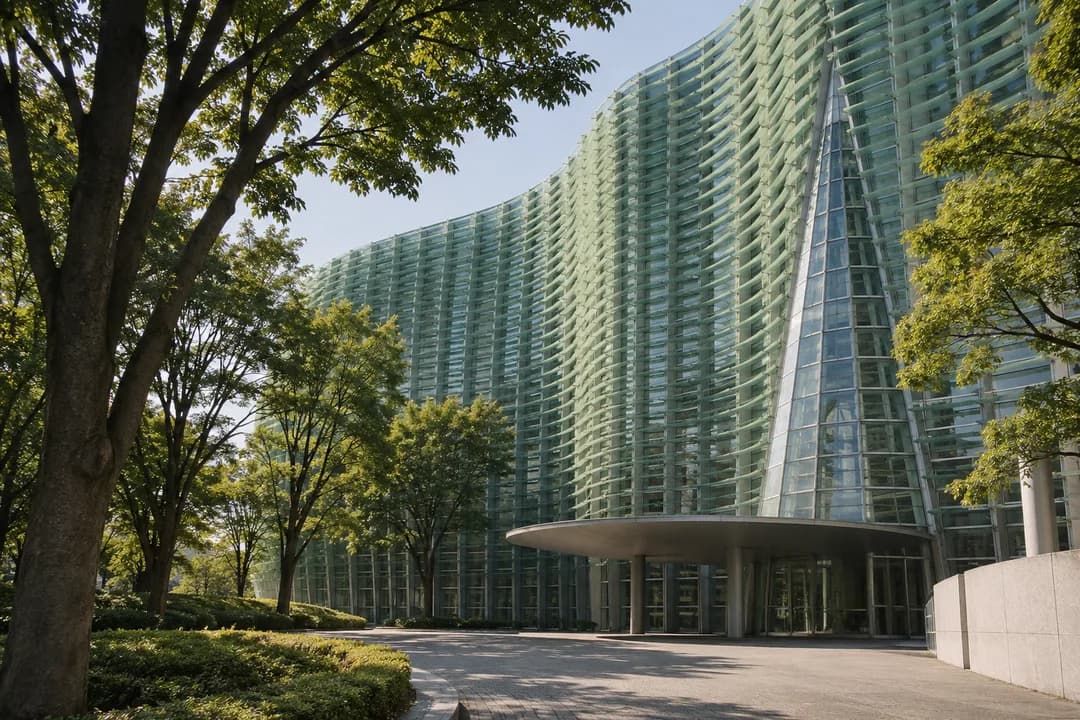
For discerning travelers and art enthusiasts searching for an architecturally stunning and culturally vital art museum near me in Tokyo, The National Art Center, Tokyo stands as an essential destination in the vibrant Roppongi cultural corridor. Situated at 7-22-2 Roppongi, Minato City, Tokyo 106-8558, this remarkable cultural institution is celebrated throughout Asia for its radical exhibition philosophy and breath-taking late-modernist engineering. Conceived as an open art center rather than a conventional collecting repository, the center dispenses with a permanent collection to host a rotating roster of premier international loan presentations, national artist society salons, and experimental multimedia retrospectives.
Kisho Kurokawa's Organic Architecture and Elevated Concrete Cones
The National Art Center opened its doors to the public in January 2007 as Japan's fifth national museum facility and the final masterpiece designed by the legendary Metabolism architect Kisho Kurokawa. Kurokawa envisioned the building as a sanctuary in the city, engineering a sweeping, undulating glass curtain wall that ripples like ocean waves or bamboo forest leaves across a massive south-facing facade. The monumental glass envelope consists of energy-efficient horizontal louvers that diffuse bright Tokyo daylight into a serene, sun-dappled interior atrium soaring over twenty meters high.
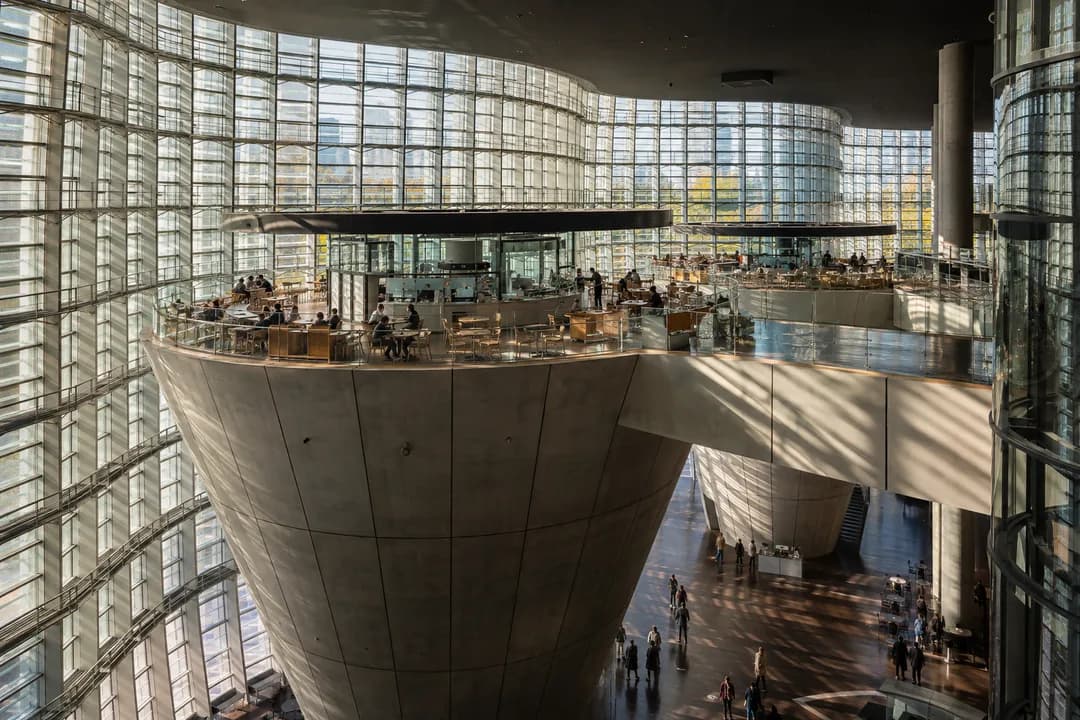
Dominating this cavernous public atrium are two colossal inverted concrete cones that appear to hover weightlessly above the polished wooden flooring. Constructed from exposed reinforced concrete with subtle timber-grain patterning, these monolithic conical forms house dining destinations suspended in mid-air. The smaller cone supports the chic Salon de Thé ROND, an open-air cafe popular for delicate fruit tarts and iced matcha lattes, while the larger upper cone cradles Brasserie Paul Bocuse Le Musée, where diners enjoy classic Lyon-style French gastronomy alongside sweeping panoramic views through the glass rippling facade.
Encompassing over fourteen thousand square meters of exhibition space, the facility ranks as the largest art venue in Japan. Kurokawa designed twelve expansive column-free gallery modules equipped with movable acoustic partitions, ceiling tracks, and climate-controlled microenvironments capable of presenting fragile Edo-period folding screens alongside monumental contemporary steel sculptures and delicate oil paintings.
The building's environmental design integrates advanced sustainable technologies that were revolutionary at the time of construction. Rainwater harvesting cisterns buried deep beneath the foundation irrigate the exterior bamboo groves and zelkova trees, while natural thermal ventilation channels warm air toward the roof dampers, reducing cooling demands during Tokyo's humid summer months.
Curatorial Breadth, Roppongi Art Triangle, and Rotating Blockbusters
Because the institution maintains no permanent collection, its curatorial staff collaborates directly with the world's leading cultural organizations to mount world-class temporary showcases. Historic highlights have included comprehensive retrospectives of Alberto Giacometti, René Magritte, Cartier-Bresson, Makoto Shinkai, and Andreas Gursky, alongside massive historic loan shows from the Musée d'Orsay, the Louvre, and the Centre Pompidou.
The center is also the primary civic home for Japan's premier independent artist associations, including the venerable Nitten and Nika exhibitions, where thousands of contemporary sculptors, Nihonga painters, Western-style oil painters, and master calligraphers display their annual salon entries. This democratic balance between accessible public amateur art societies and world-renowned museum retrospectives creates an electrifying cultural energy found nowhere else in Japan.
Together with the Mori Art Museum atop Roppongi Hills and the Suntory Museum of Art in Tokyo Midtown, the center forms the third anchor of the prestigious Roppongi Art Triangle. The three institutions coordinate exhibition programming and extend mutual ticket discount privileges to visitors presenting a valid stub from another triangle partner, enabling visitors to enjoy a rewarding full-day cultural walking tour across the district's tree-lined avenues.
Museum Boutique Curations, Conical Cafes, and Nogizaka Strolling
Beyond its gallery chambers, the center functions as an open civic lounge where guests can relax without purchasing an exhibition ticket. In the basement concourse, the celebrated Souvenir From Tokyo museum shop offers an exquisite selection of contemporary Japanese industrial design, ceramics from Arita and Mashiko, stationery, graphic posters, and artisanal snacks curated from small workshops across Tokyo's historic downtown districts.
After browsing the galleries, a leisurely stroll leads north into the verdant grounds of Aoyama Cemetery or south into the lively dining lanes of Roppongi. Architecture aficionados can admire Kisho Kurokawa's neighboring Nogizaka streetscapes, pause for pour-over coffee at neighborhood specialty roasteries, or explore the leafy garden paths connecting Tokyo Midtown's Hinokicho Park, where historic samurai estate ponds blend seamlessly into sleek modern sculptures. Along the perimeter of the center, manicured public plazas offer sheltered granite benches where visitors can sit under flowering dogwood trees and watch local residents walk their dogs in the morning breeze.
Admission Policies, Transit Connections, and Practical Visiting Notes
General admission to enter the building, stroll the atrium concourses, and access the public cafes and bookstore is completely free for all guests. Individual exhibition tickets are purchased separately at the outdoor ticket pavilion or through official digital ticketing portals. Major international loan showcases typically charge ¥2,000 for adult general admission and ¥1,400 for college students, while smaller artist society showcases often range between ¥500 and ¥1,000, and high school students and younger visitors are frequently admitted free of charge.
The museum operates from 10:00 am to 6:00 pm from Wednesday through Monday, with extended evening hours until 8:00 pm on Fridays and Saturdays to accommodate after-work visitors. The galleries and public concourses remain closed on Tuesdays, though the facility opens if Tuesday coincides with a national holiday. Visitors requiring exhibition schedules, accessibility accommodations, or audio guide information can contact the museum's telephone service at 050-5541-8600, or +81 50-5541-8600 for international inquiries.
Transit connectivity to the center is exceptionally convenient. An underground pedestrian tunnel provides direct, barrier-free access from Nogizaka Station on the Tokyo Metro Chiyoda Line via Exit 6 directly into the museum's basement concourse, shielding travelers completely from inclement weather. The center is also an easy four-minute walk from Roppongi Station on the Toei Oedo Line via Exit 7, or a five-minute walk from Roppongi Station on the Tokyo Metro Hibiya Line via Exit 4a.
When curating an inspiring cultural afternoon in the heart of Tokyo, let the Karpo APP be your dedicated travel companion. Use the application to discover premier museum events, discover intimate third-wave espresso bars nearby, or plan an evening dinner reservation in Roppongi with the confidence of a seasoned local friend.
Ask Karpo for more information.
Keep reading
- Soap Making Workshop Near Me in Edogawa: Eight Wakuwaku
 Soap Making Workshop Near Me in Nakameguro: Luxum
 Soap Making Workshop Near Me in Ikebukuro: And S