 Soap Making Workshop Near Me in Edogawa: Eight Wakuwaku
Weekend Plans
Tokyo Art Museum Guide to The Serene Aoyama Nezu Museum
Discover the Nezu Museum in Minamiaoyama, featuring Kengo Kuma's architecture, pre-modern Japanese National Treasures, and a private strolling garden.
For cultured travelers and design lovers searching for a tranquil, world-class art museum near me in Tokyo, the Nezu Museum in Minamiaoyama represents an exquisite synthesis of fine art and classical nature. Located at 6-5-1 Minamiaoyama, Minato City, Tokyo 107-0062, this peerless private institution sits at the peaceful southern terminus of fashionable Miyuki Street, just steps from the high-fashion boutiques of Omotesando. Renowned for its National Treasure folding screens, masterworks of ancient East Asian Buddhist sculpture, and a breathtaking seventeen-thousand-square-meter forested strolling garden, the museum offers a deeply restorative cultural retreat from the bustling Tokyo metropolis. Within this quiet green sanctuary, historic Japanese tea culture, rare Chinese ritual bronzes, and modernist timber architecture merge into an unforgettable artistic pilgrimage.
Kaichiro Nezu's Legacy and Kengo Kuma's Bamboo-Lined Architecture
The Nezu Museum was founded in November 1941 to preserve and display the magnificent private collection of pre-modern Japanese and East Asian art assembled by Kaichiro Nezu Sr., a visionary railway entrepreneur and president of the Tobu Railway. Nezu collected voraciously with a deep passion for the traditional Japanese tea ceremony, acquiring invaluable masterpieces of lacquerware, bronze, painting, and ceramics that had historically belonged to prominent daimyo samurai clans and temples.
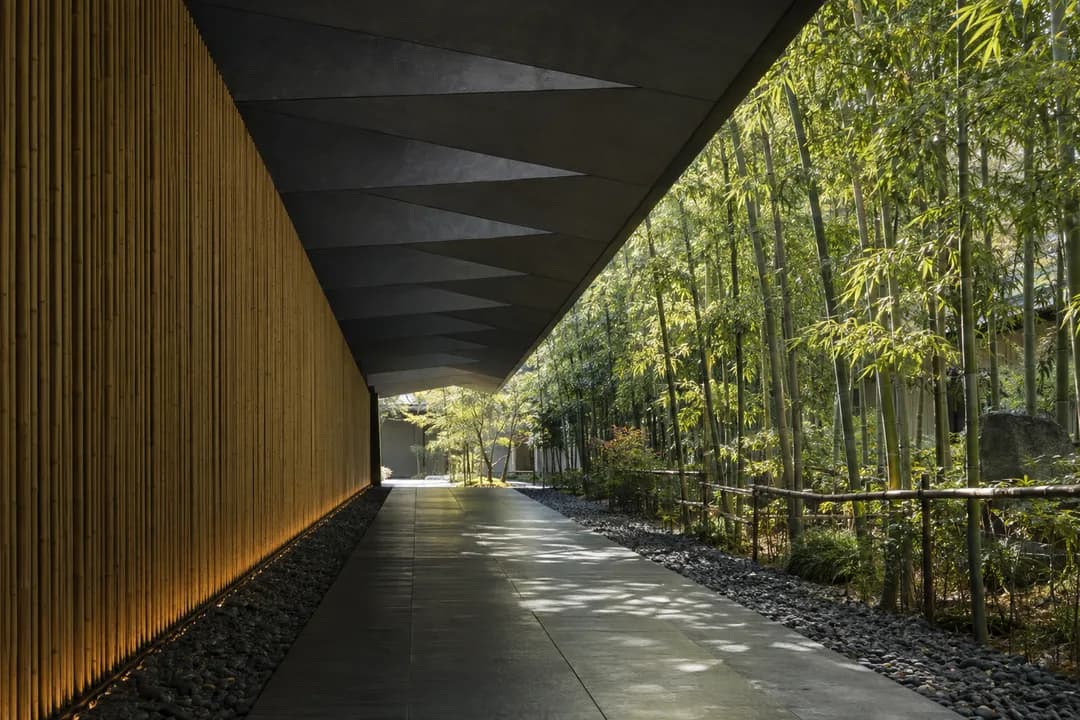
In October 2009, the museum unveiled its current main building, designed by globally acclaimed architect Kengo Kuma. Kuma crafted a serene architectural threshold that seamlessly transitions visitors from the chic concrete streetscape of Aoyama into an oasis of classical contemplation. Visitors approach the entrance via an evocative, bamboo-lined glass-and-gravel corridor sheltered beneath deep, dark-toned overhanging eaves inspired by traditional Japanese irimoya hip-and-gable rooflines.
Inside the museum's grand double-height entrance hall, massive glass walls open onto the dense green forest of the garden, while a curated row of ancient Chinese and Japanese stone Buddhist statues stands silhouetted against the natural light. Kuma's innovative use of smoked bamboo ceilings, dark granite flooring, and warm timber accents creates a contemplative atmosphere where centuries-old calligraphy scrolls and fragile gold-leaf screens can be enjoyed in quiet harmony.
The transition corridor shields visitors acoustically from neighborhood automotive sounds, allowing the gentle rustle of bamboo leaves and crushed gravel footsteps to prepare the mind for aesthetic appreciation.
National Treasures, Tea Ceremony Wares, and East Asian Bronzes
The Nezu Museum's collection encompasses more than seven thousand four hundred registered objects, including seven designated National Treasures, eighty-eight Important Cultural Properties, and ninety-four Important Art Objects. The museum organizes thematic exhibitions rotated throughout the year, focusing on specific dynastic periods, seasonal tea gatherings, or historical regional craft techniques.
The institution's most celebrated treasure is Ogata Korin's iconic early-eighteenth-century masterpiece, the National Treasure folding screens titled Irises (Kakitsubata-zu). Painted in vivid lapis lazuli blues and malachite greens across gleaming gold leaf, the monumental six-panel screens depict blooming Japanese water irises inspired by The Tales of Ise. Every spring, when the living irises bloom in the museum's outdoor garden ponds, the museum mounts its special annual exhibition of the famous screens, attracting art lovers from across the globe.
Other permanent gallery highlights include monumental ritual bronze vessels from China's Shang and Zhou dynasties, delicate Southern Song celadon ceramics, masterwork lacquered inro boxes, samurai swords and armor, and prized tea bowls crafted by legendary ceramic masters such as Chojiro, Hon'ami Koetsu, and Nonomura Ninsei.
In the upper-floor galleries, dedicated display cases with fiber-optic micro-illumination showcase rare monochrome ink landscapes from the Muromachi period by Sesson Shukei, revealing the profound influence of Zen Buddhist philosophy on historical Japanese ink painting.
The 17,000-Square-Meter Strolling Garden and NEZUCAFE Oasis
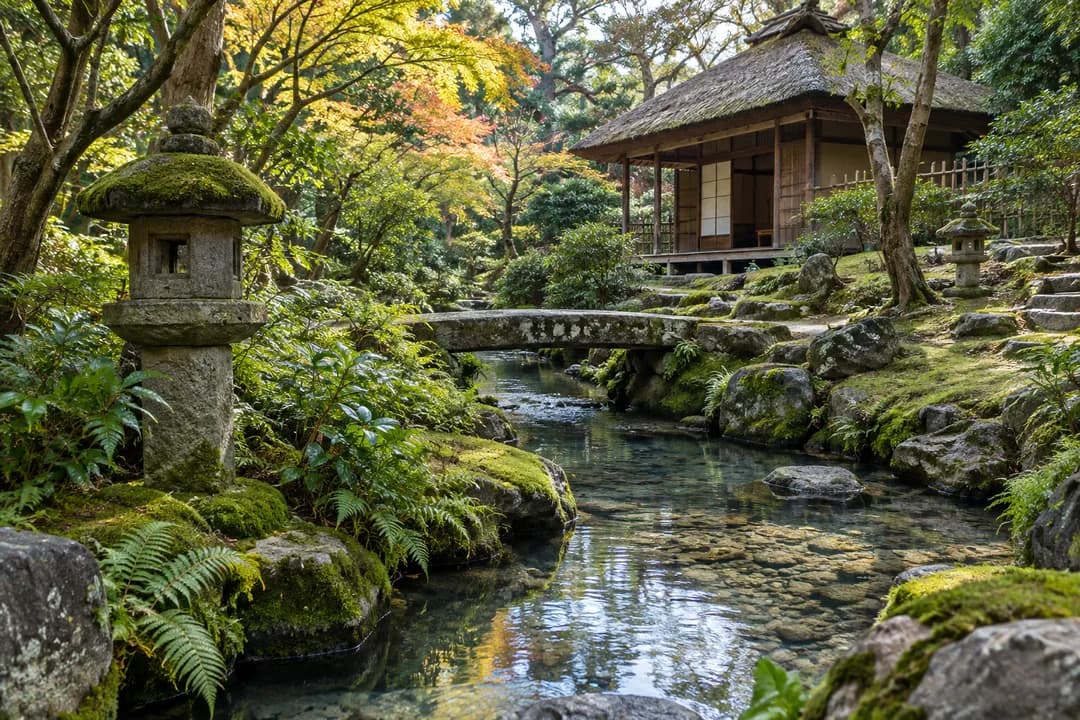
A visit to the Nezu Museum is incomplete without exploring its sprawling seventeen-thousand-square-meter classical Japanese strolling garden, which occupies a natural valley landscape once part of a samurai estate. Meandering stone pathways wind past tranquil natural springs, cascading waterfalls, moss-covered stone bridges, and dozens of centuries-old stone lanterns and Buddha statues nestled among towering maple and pine trees.
Tucked within the garden's secluded clearings are four historic wooden tea houses, including the thatched-roof Konin-an and the rustic Fushin-an, where traditional seasonal tea gatherings have been celebrated for over a century. Hidden in the center of the garden, the contemporary NEZUCAFE invites visitors to enjoy specialty matcha chiffon cake, warm meat pies, and fragrant green teas surrounded on three sides by floor-to-ceiling glass walls immersed in lush forest foliage. The garden's changing palette shifts from early camellias in winter to vibrant azaleas in May, cool bamboo shade in midsummer, and brilliant crimson maple leaves throughout late autumn.
Advance Online Ticketing, Guidelines, and Omotesando Access
To protect the delicate artwork and ensure an unhurried visitor experience, the Nezu Museum utilizes a timed-entry advance ticketing system through its official online portal. Standard online advance tickets are priced at ¥1,400 for adults and ¥1,100 for high school and university students. For major special exhibitions, online advance tickets are ¥1,600 for adults and ¥1,300 for students. Junior high school students and younger children are admitted free of charge. The museum shop adjacent to the lobby sells exquisite folding fans, art cards reproducing the Irises screens, incense blends, and fine ceramic vessels crafted in Kyoto.
The museum opens Tuesday through Sunday from 10:00 am to 5:00 pm, with final entry permitted at 4:30 pm. The galleries and garden are closed on Mondays, except when Monday coincides with a national holiday, in which case the museum opens and remains closed the following Tuesday. Visitors seeking exhibition updates, accessibility guidelines, or garden access details can call the museum office at 03-3400-2536, or +81 3-3400-2536 for international inquiries.
The museum is conveniently reached via Tokyo's subway network. From Omotesando Station, served by the Tokyo Metro Ginza Line, Chiyoda Line, and Hanzomon Line, visitors take Exit A5 and enjoy a scenic eight-minute stroll straight down elegant Miyuki Street, passing boutique architecture designed by Herzog & de Meuron and SANAA before arriving at the museum's bamboo threshold.
To discover more architectural gems, historic tea houses, and tranquil green oases tucked across Tokyo, turn to the Karpo APP. Whether you are seeking museum tickets in Minato City or looking for quiet neighborhood kissaten cafes in Aoyama, the app curates your Tokyo exploration with sophisticated local taste.
Ask Karpo for more information.
Keep reading
- Soap Making Workshop Near Me in Edogawa: Eight Wakuwaku
 Soap Making Workshop Near Me in Nakameguro: Luxum
 Soap Making Workshop Near Me in Ikebukuro: And S