 Soap Making Workshop Near Me in Edogawa: Eight Wakuwaku
Weekend Plans
Tokyo Art Museum Guide to The National Museum of Western Art
Discover The National Museum of Western Art in Ueno Park, showcasing Le Corbusier's World Heritage architecture, Rodin sculptures, and the Matsukata Collection.
For global travelers and cultural explorers seeking a world-class art museum near me in Tokyo, The National Museum of Western Art in Ueno Park represents an unparalleled artistic treasure house. Positioned prominently at 7-7 Ueno-koen, Taito City, Tokyo 110-0007, this revered national institution is the sole public museum in Japan devoted exclusively to Western fine art. From its world-famous outdoor sculpture plaza featuring monumental bronzes by Auguste Rodin to its luminous galleries of French Impressionism and Renaissance painting, the museum bridges continents and centuries in the heart of Tokyo's historic cultural district.
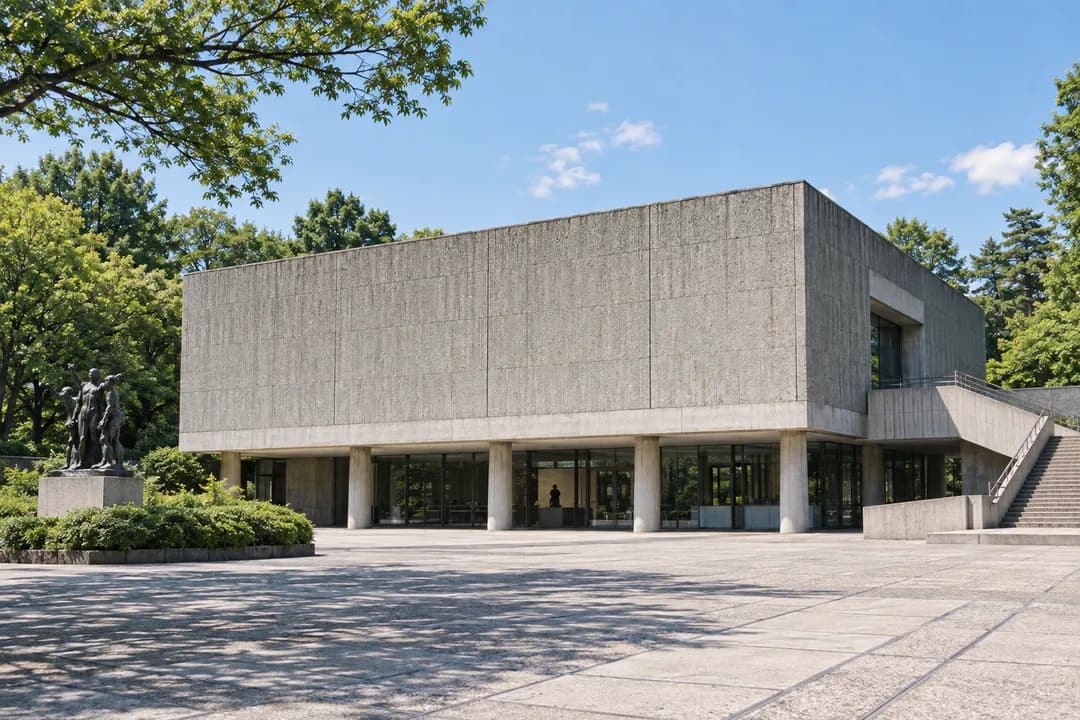
Le Corbusier's UNESCO World Heritage Architecture and the Pilotis Plaza
The National Museum of Western Art was officially opened in June 1959 to house the historic Matsukata Collection, an extraordinary assemblage of European paintings and French sculptures originally gathered by Japanese industrialist Kojiro Matsukata and repatriated by the French government after World War II. To design this historic civic monument, the Japanese government commissioned the pioneering Swiss-French master architect Le Corbusier, assisted by his prominent Japanese apprentices Kunio Maekawa, Junzo Sakakura, and Takamasa Yoshizaka.
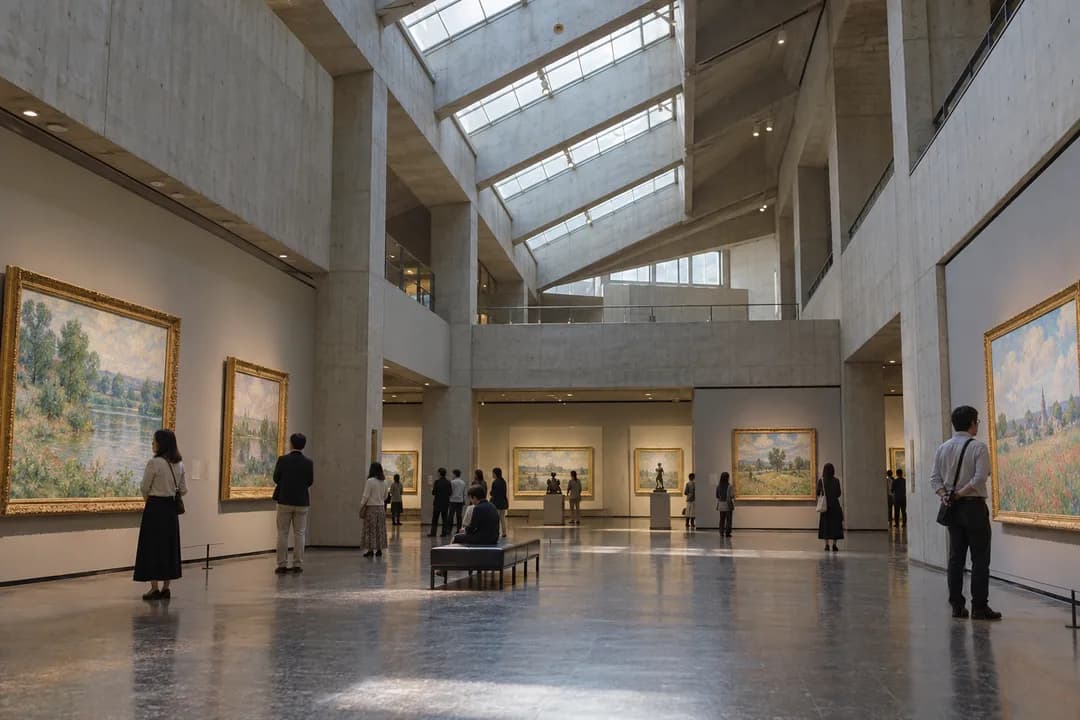
In July 2016, the museum's Main Building was formally inscribed onto the UNESCO World Heritage list as part of a transnational nomination celebrating The Architectural Work of Le Corbusier. The structure brilliantly embodies Le Corbusier's legendary Museum of Unlimited Growth concept, featuring a square ground plan elevated on slender reinforced concrete pilotis. Visitors enter through a spacious ground-level courtyard and ascend into the skylit 19th Century Hall, where a gentle spiral ramp unfolds upward around exposed concrete pillars, evoking a sacred journey toward artistic enlightenment.
The outdoor forecourt serves as an open-air public sculpture garden that visitors can admire freely before entering the ticketed galleries. Here, monumental bronze castings created from Auguste Rodin's original plasters stand proudly under the Ueno cherry trees, including The Gates of Hell, The Thinker, and The Burghers of Calais, alongside expressive mythological bronzes by Antoine Bourdelle.
The building's innovative lighting concept features triangular pyramid roof skylights that channel soft northern daylight down through light shafts, illuminating the central hall without exposing delicate canvases to direct ultraviolet rays. Concrete aggregate walls cast with local river gravel provide tactile warmth that contrasts gracefully with the crisp structural geometry.
The Matsukata Collection, Renaissance Treasures, and Impressionist Canvases
Within the permanent collection galleries, visitors encounter an extraordinary chronology of Western art spanning the late medieval era through the mid-twentieth century. The early galleries present rare Renaissance, Baroque, and Dutch Golden Age canvases by Lucas Cranach the Elder, Paolo Veronese, Peter Paul Rubens, and Jacob van Ruisdael, offering Japanese and international audiences a rare direct encounter with European religious and landscape traditions.
The crown jewel of the institution is its incomparable holdings of French Impressionism and Post-Impressionism. Claude Monet is represented by numerous masterworks, most notably his luminous 1916 composition Water Lilies, alongside vibrant canvases by Pierre-Auguste Renoir, Camille Pissarro, and Edgar Degas. Continuing into the modern wing, galleries feature seminal works by Paul Cezanne, Vincent van Gogh, Paul Gauguin, Chaim Soutine, and Pablo Picasso, demonstrating the radical aesthetic breakthroughs that revolutionized modern visual culture.
The museum also maintains an active schedule of ambitious international loan exhibitions organized in collaboration with the Prado, the National Gallery in London, and the Uffizi. In the subterranean special exhibition wing designed by Kunio Maekawa and completed in 1979, sophisticated climate and lighting systems allow the display of delicate old master drawings, prints, and royal tapestries.
Cafe Suiren Dining, Courtyard Vistas, and Ueno Park Exploration
After touring the galleries, visitors can unwind at Cafe Suiren, the museum's refined restaurant situated in the Annex overlooking an intimate inner courtyard garden. Through expansive floor-to-ceiling glass windows, diners gaze out at tranquil seasonal foliage while enjoying Western-style set lunches, beef stew prepared with red wine, and decadent cakes paired with freshly brewed coffee or French wines. The cafe's outdoor patio seating provides a lovely vantage point for observing how Le Corbusier's concrete pilotis create sheltered breezeways beneath the galleries.
The museum's prime setting inside Ueno Onshi Park positions it at the nexus of Tokyo's most concentrated cultural district. Within a gentle five-minute radius, art lovers can stroll across tree-shaded plazas to the Tokyo National Museum, the Tokyo Metropolitan Art Museum, and the National Museum of Nature and Science, or meander down the stone steps toward the historic lotus beds of Shinobazu Pond. During the spring sakura bloom and crisp autumn foliage seasons, the approach from the station through Ueno's grand zelkova avenues forms an essential part of the museum experience.
Admission Fees, Transit Access, and Essential Visiting Guidelines
Admission to the permanent collection is remarkably affordable, priced at ¥500 for adults, ¥250 for college students, and completely free for visitors aged eighteen and under as well as seniors aged sixty-five and over with valid identification. Furthermore, the museum offers free permanent collection admission to all visitors on the second and fourth Saturdays of every month, making world-class European fine art accessible to everyone in the Tokyo metropolitan area.
The museum opens Tuesday through Sunday from 9:30 am to 5:30 pm, with extended evening hours until 8:00 pm on Fridays and Saturdays to accommodate leisurely night visits. The facility is closed on Mondays, except when Monday falls on a national holiday, in which case the museum opens and remains closed the following Tuesday. General inquiries, exhibition details, and accessibility requests can be directed to the museum's telephone information line at 050-5541-8600, or +81 50-5541-8600 for callers from abroad.
Reaching the museum is effortless due to Ueno's status as a major rail hub. The museum entrance sits just a one-minute walk from the Park Exit of JR Ueno Station, which is served by the Yamanote Line, Keihin-Tohoku Line, and numerous Shinkansen bullet train routes. Visitors traveling via subway can reach the museum in approximately seven minutes on foot from Ueno Station on the Tokyo Metro Ginza and Hibiya lines, or Keisei Ueno Station on the Keisei Main Line connecting to Narita Airport.
To discover more architectural masterpieces, historic museums, and scenic park cafes throughout the Japanese capital, consult the Karpo APP. Whether you are mapping out an in-depth gallery marathon through Ueno or seeking an authentic tonkatsu dinner in nearby Okachimachi, the app ensures your Tokyo adventures are effortless and memorable.
Ask Karpo for more information.
Keep reading
- Soap Making Workshop Near Me in Edogawa: Eight Wakuwaku
 Soap Making Workshop Near Me in Nakameguro: Luxum
 Soap Making Workshop Near Me in Ikebukuro: And S