 Art Gallery Near Me: Ginza Graphic Gallery in Tokyo
Free Things to Do
Art Gallery Near Me: The National Art Center Tokyo
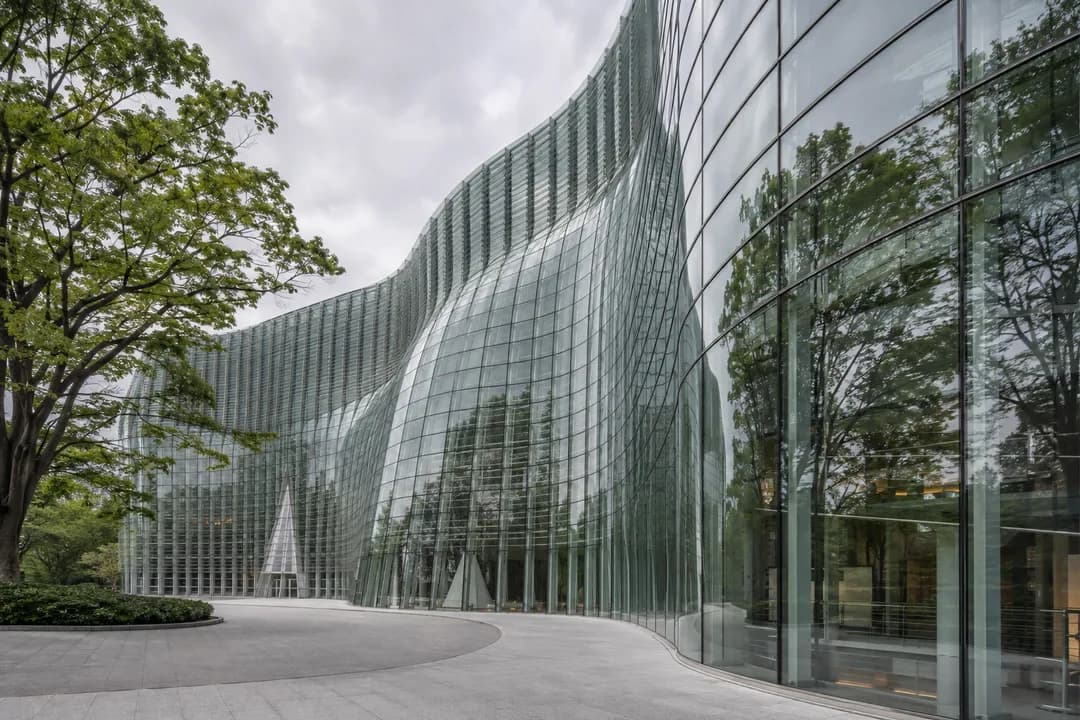
Explore The National Art Center Tokyo in Roppongi, featuring Kisho Kurokawa's undulating glass architecture, vast contemporary exhibition spaces, and French brasserie dining.
When culture enthusiasts and international travelers search for an architecturally stunning, world-class art gallery near me in Tokyo, The National Art Center, Tokyo at 7-22-2 Roppongi, Minato-ku, Tokyo represents an essential cultural pilgrimage. Opened to the public in January 2007, this breathtaking institution stands as the final major masterpiece designed by legendary Japanese Metabolist architect Kisho Kurokawa. Situated in the heart of Tokyo's fashionable Roppongi district, the building serves as an anchor of the celebrated Roppongi Art Triangle alongside the Mori Art Museum and the Suntory Museum of Art, establishing the district as Asia's premier visual arts hub.
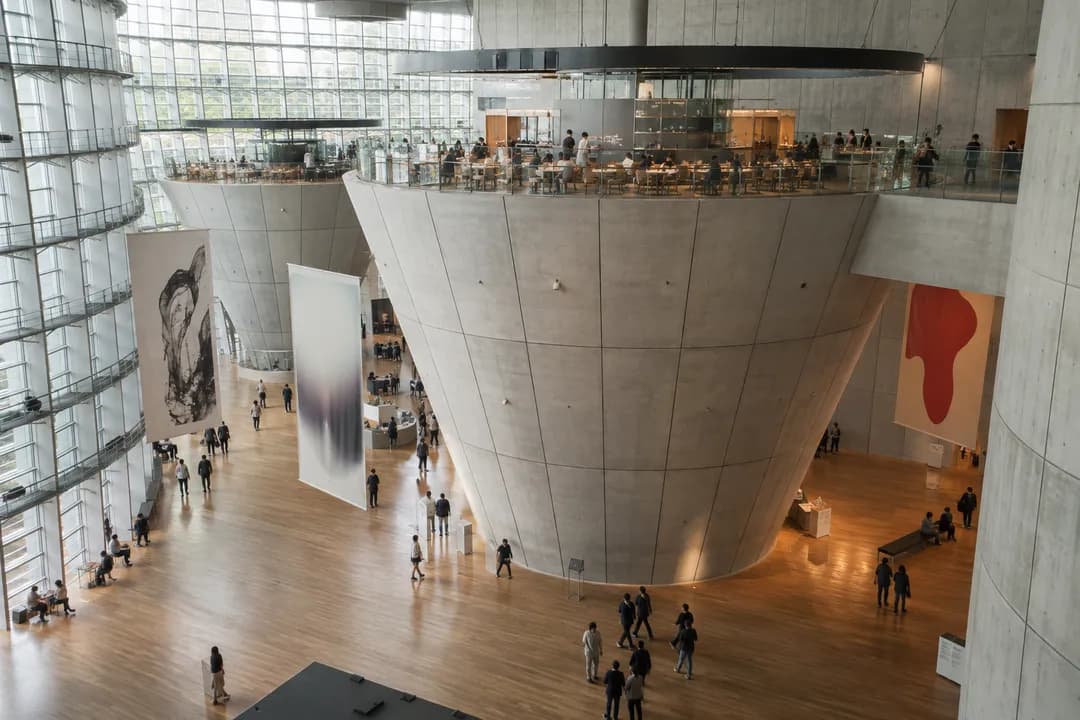
Kisho Kurokawa's Wavy Glass Facade and Monumental Roppongi Atrium
The exterior of the building is defined by a massive, organic undulating glass curtain wall composed of thousands of custom louvred glass panels. This dramatic glass wave filters radiant natural daylight into the soaring atrium while mitigating external tropical heat and urban glare. Stepping inside reveals a cavernous, light-drenched public concourse featuring two colossal inverted concrete cones rising dramatically from the polished hardwood floor. The upper platforms of these monumental sculptural cones house elevated dining terraces that hover gracefully above the bustling gallery concourse.
The National Art Center operates on a distinctive institutional concept: it does not maintain a permanent collection of its own, instead functioning as an open exhibition venue. Boasting over 14,000 square meters of pillarless, climate-controlled exhibition floor space across three levels, it ranks among the largest and most technologically sophisticated art exhibition facilities in the Asia-Pacific region. Moveable architectural partitions, heavy floor-load engineering, and state-of-the-art climate systems enable the center to host multiple colossal retrospectives simultaneously.
Within the grand public atrium, admission is completely free for anyone who wishes to wander, sketch, or admire Kurokawa's futuristic architectural geometry. Towering concrete forms contrast warmly with smooth wooden slatted walls, while mature zelkova and gingko trees surrounding the museum grounds reflect softly against the glass facade, establishing a tranquil natural buffer in the center of Tokyo's neon-lit nightlife district.
Blockbuster International Retrospectives and Avant-Garde Japanese Curations
Free from the obligations of permanent collection storage, The National Art Center directs its immense organizational resources toward presenting world-class temporary exhibitions. The museum regularly collaborates with premier international institutions such as the Centre Pompidou, the Musée d'Orsay, the Tate, and the Metropolitan Museum of Art, mounting landmark retrospectives celebrating global modern and contemporary masters from Alberto Giacometti and René Magritte to Yayoi Kusama, Damian Hirst, and anime auteur Makoto Shinkai.
In addition to blockbuster international loans, the center provides crucial exhibition infrastructure for Japan's leading artist associations, independent contemporary collectives, and emerging creative movements. Its vast ground-floor and second-floor galleries simultaneously host diverse national art exhibitions encompassing contemporary calligraphy, Nihonga mineral-pigment painting, modern ceramics, sculpture, and innovative media art installations, fostering a vibrant cross-generational creative dialogue that reflects the breadth of Japanese visual culture.
Gallery etiquette at The National Art Center is marked by thoughtful Japanese hospitality and meticulous visitor care. Photography policies vary by individual exhibition; many contemporary presentations permit non-flash smartphone photography in designated galleries, while historic masterwork loans strictly prohibit cameras to protect fragile pigments. Informational signage in Japanese, English, Chinese, and Korean guides visitors smoothly through gallery checkpoints, and courteous invigilators ensure a quiet, contemplative atmosphere across all viewing halls.
Public Access Rules, Ticketing Guidelines, and Visitor Amenities
Access to The National Art Center's public concourse, architectural viewing platforms, museum library, and gift shops is completely free of charge to all visitors every day. Admission tickets are required only to enter specific special exhibition galleries, with regular adult admission prices typically ranging from ¥1,800 to ¥2,400 depending on the scale and international loan requirements of the show. Substantial discounts are available for university students, high school students, and seniors aged 65 and over, while junior high school students and younger children enter free of charge.
The center operates from Wednesday through Monday from 10:00 to 18:00, with final gallery admissions admitted 30 minutes before closing. On Friday and Saturday evenings, the museum extends its hours until 20:00, providing an enchanting twilight viewing experience as the glass facade glows against the Roppongi skyline. The institution remains closed on Tuesdays, or on the following Wednesday when a national holiday falls on a Tuesday.
Accessibility throughout the complex is exemplary and fully barrier-free. Smooth level entrances connect directly from street approaches, and spacious high-speed elevators transport guests effortlessly between all basement, atrium, and gallery levels. The center provides complimentary loaner wheelchairs and baby strollers at the central information desk, and accessible restrooms equipped with ostomate facilities are located on every floor. Certified assistance animals are warmly welcomed across all public and gallery zones.
For direct inquiries regarding current exhibition schedules or group booking procedures, visitors can phone the Hello Dial multilingual information desk at 03-5777-8600. Ticket purchases at the central outdoor ticketing pavilion accept major credit cards including Visa, Mastercard, and JCB, alongside Japanese Suica and Pasmo IC transit cards and contactless mobile payments like Apple Pay and PayPay.
Paul Bocuse Brasserie Dining, Museum Shop B1, and Roppongi Strolls
Reaching The National Art Center is extraordinarily convenient via Tokyo's subway network. The building connects directly via an underground concourse to Nogizaka Station (Exit 6) on the Tokyo Metro Chiyoda Line, allowing visitors to walk straight into the museum lobby without stepping outdoors. Alternatively, Roppongi Station (Exit 4a on the Toei Oedo Line or Exit 7 on the Tokyo Metro Hibiya Line) is just a short five-minute walk through Roppongi's boutique-lined side streets.
Dining within the museum offers a culinary experience of international caliber. Perched atop the larger inverted concrete cone on Level 3 sits Brasserie Paul Bocuse Le Musée, the celebrated French culinary outpost where guests can savor seasonal three-course lunch menus featuring classic Lyonnaise cuisine for approximately ¥4,500 while gazing down over the sunlit atrium. For a casual break, Salon de Thé Rond on the second-floor cone serves delicate gateaux and espresso sets for around ¥1,600.
Before departing, explore Souvenir From Tokyo, the museum's design-forward gift shop located in the basement concourse, featuring Japanese design objects, artisanal stationery, and contemporary art catalogs. The museum is a brief ten-minute walk from Tokyo Midtown and Roppongi Hills, offering visitors the opportunity to spend a complete cultural day immersed in world-class art, architecture, and dining. For curated Tokyo gallery itineraries, architectural walking guides, and seasonal event listings, consult the Karpo APP.
Ask Karpo for more information.
Keep reading
- Art Gallery Near Me: Ginza Graphic Gallery in Tokyo
 Art Gallery Near Me: Tokyo Opera City Art Gallery
 Art Gallery Near Me: Watari Museum of Contemporary Art